
Last updated August 25, 2026
Free visual inspection and a written scope of work before any mitigation begins - photos, moisture readings, and drying logs go in your claim file
The scope we write is the scope we bill. Anything new gets shown to you, in writing, before we touch it.
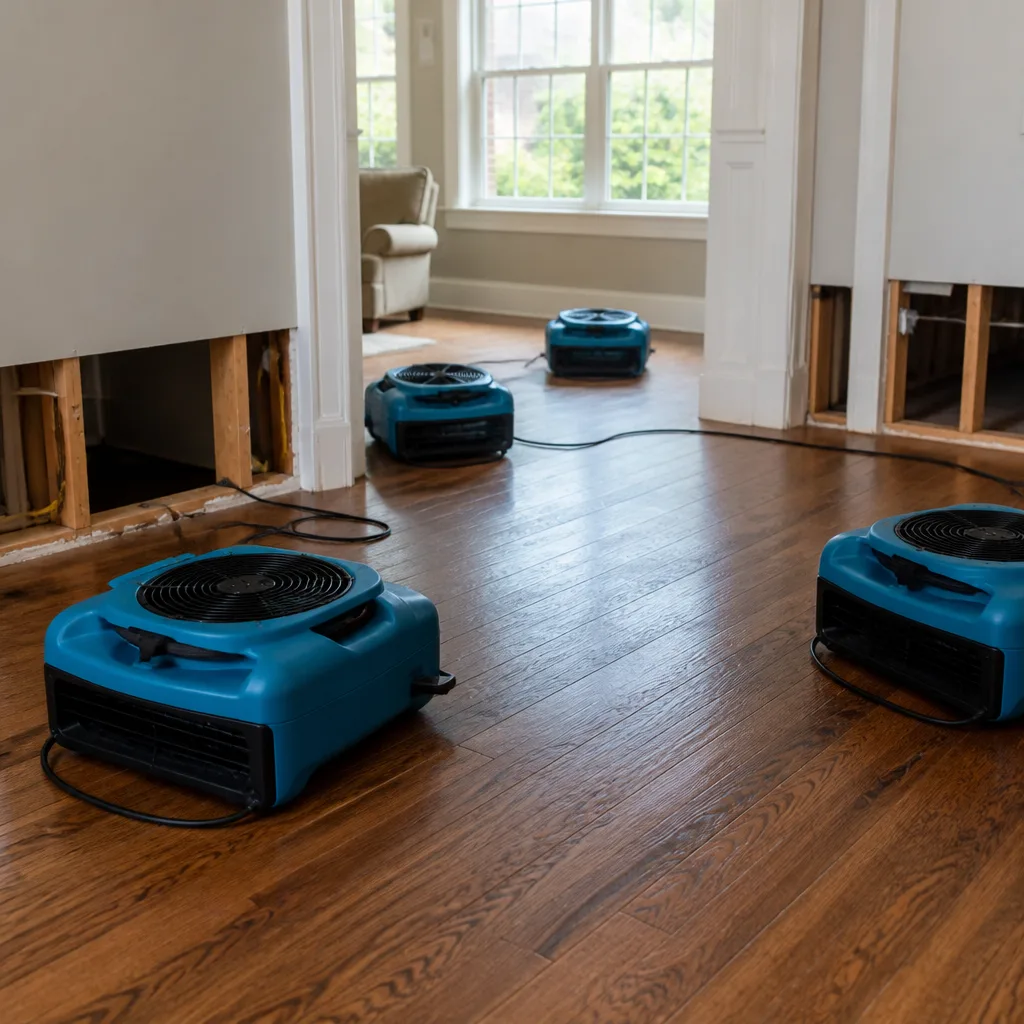

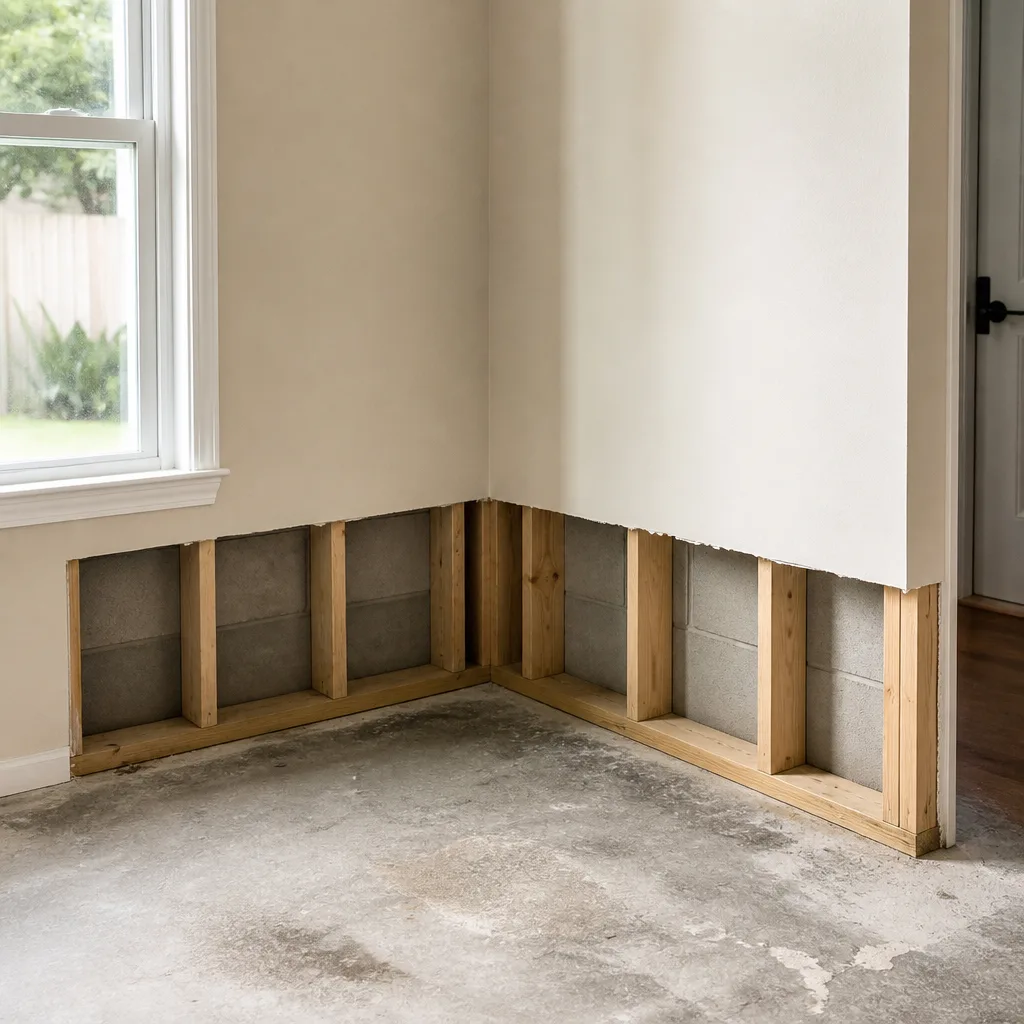

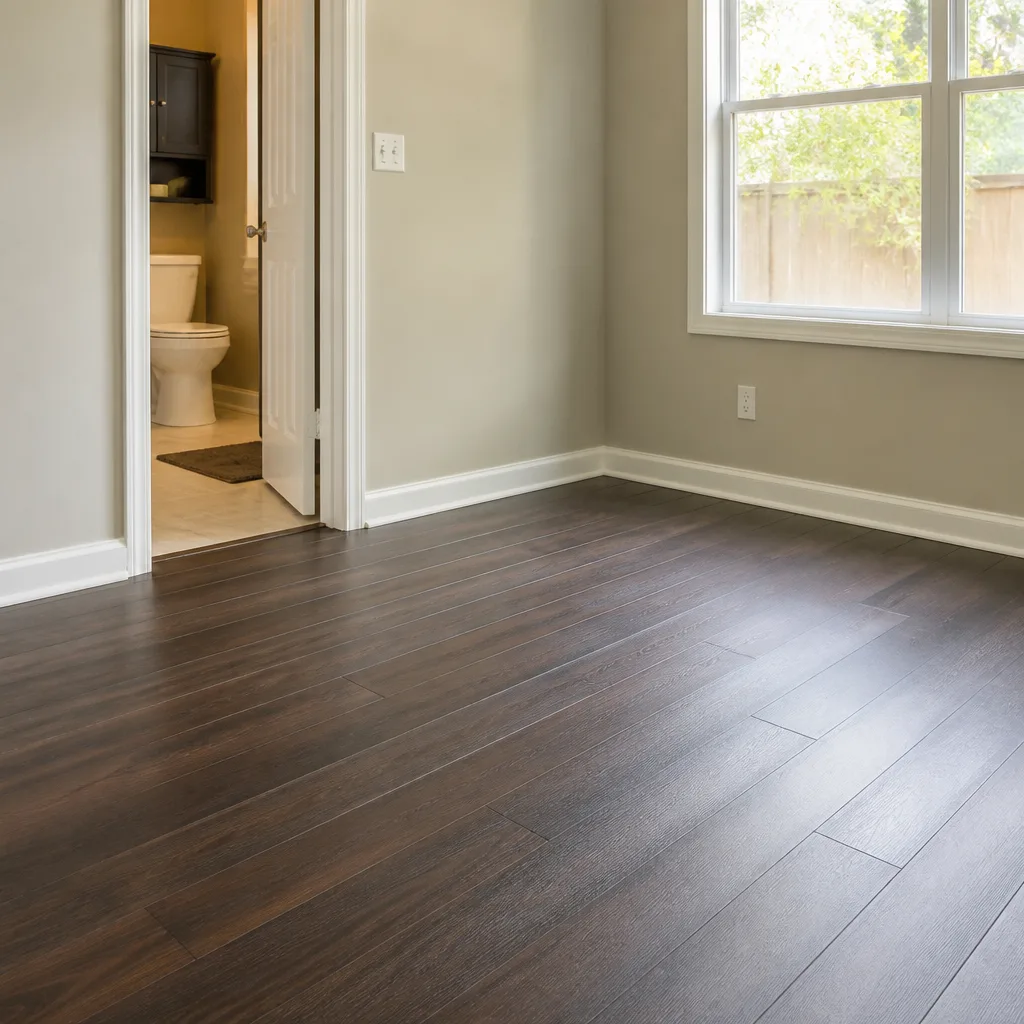

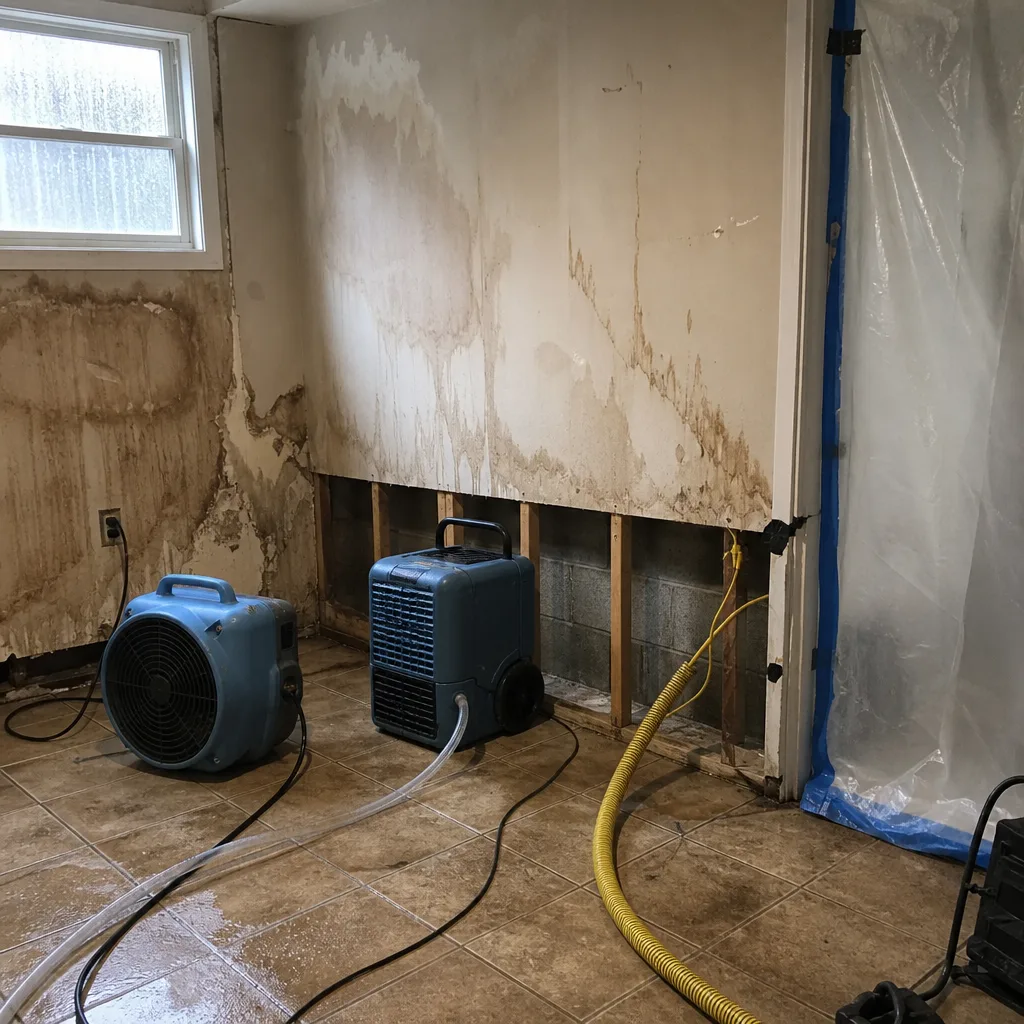 Before
 After
After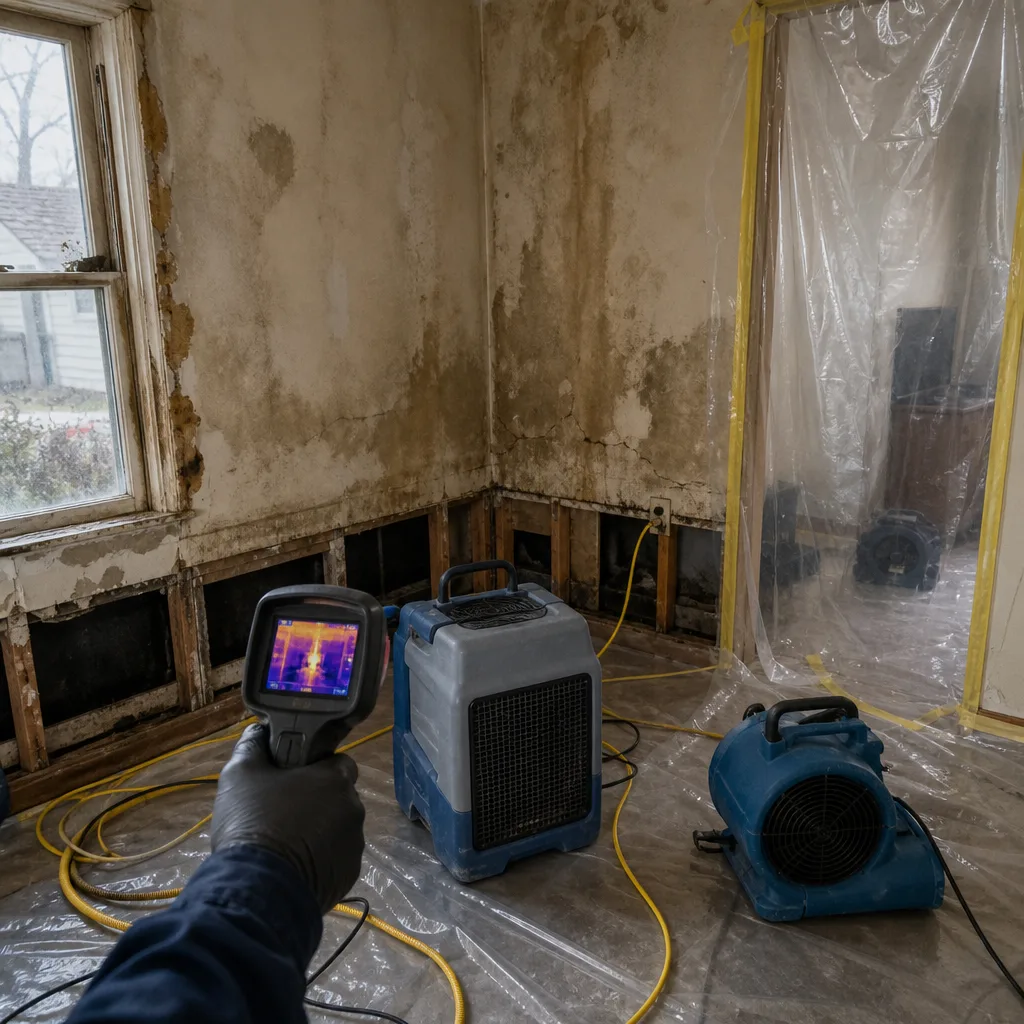 Before
 After
After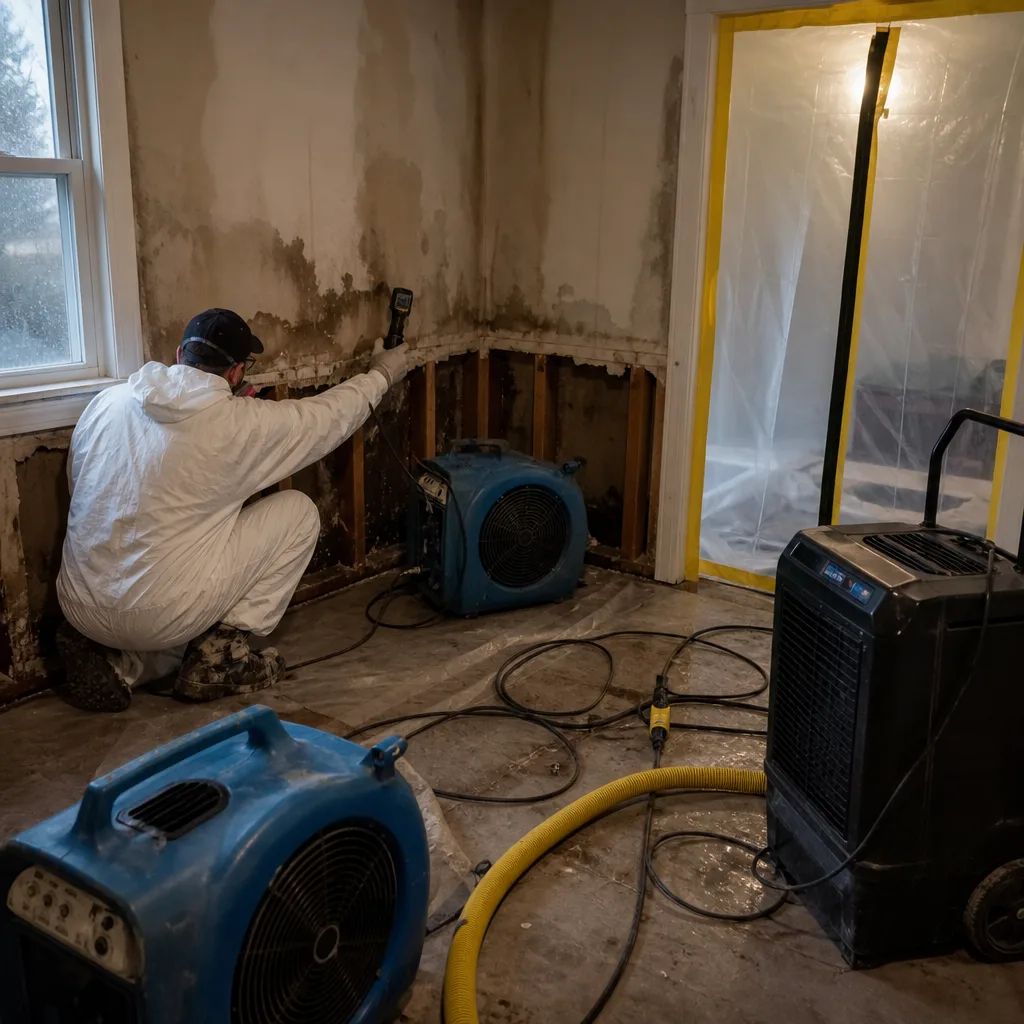 Before
 After
AfterSeasonal Damage Restoration Care for Kearny: Year-Round Homeowner’s Guide
In Kearny, the average home is 85 years old. That stat matters more than most homeowners realize. The cast-iron drain lines, original roof flashing, and fieldstone foundations that give these houses their character are the same things that turn a March nor’easter or a July cloudburst into a basement full of water. This guide walks through what Kearny’s seasons actually do to a home, what to check each quarter, and when a problem is small enough to handle yourself versus when it needs a certified crew. We’ve been restoring homes in Kearny since 2010, and we’ve learned that the houses here fail in patterns. Once you know the patterns, you can get ahead of them.
Quick Answer
Seasonal damage restoration in Kearny means doing four things, every year, in order: inspect drainage and waterproofing each spring, address humidity and ventilation each summer, clear gutters and grade soil each fall, and check for ice dams, frozen lines, and condensation each winter. Most damage in Kearny comes from water, and most water damage is preventable if you catch it in the first 48 hours. If you already have standing water, visible mold, or a sewage smell, stop reading and call (551) 373-5246 - extraction is running the same visit, and a live person answers 24/7.
Table of Contents
- Spring in Kearny: Water Table, Sump Pumps, and the Thaw
- Summer in Kearny: Humidity, Condensation, and Hidden Mold
- Fall in Kearny: Gutters, Grading, and the Migration Inside
- Winter in Kearny: Ice Dams, Frozen Lines, and Pipe Bursts
- What Seasonal Restoration Costs in Kearny
- Insurance and Seasonal Damage: What Kearny Homeowners Should Know
- Common Mistakes to Avoid
- When to Call a Professional
- Frequently Asked Questions
Spring in Kearny: Water Table, Sump Pumps, and the Thaw
Kearny sits low, flat, and close to the Passaic River and the Hackensack. When the snow melts and the March and April rains arrive, the water table under the town rises fast. Basements in the Arlington and Schuyler Avenue neighborhoods take on water before homeowners upstairs even know it happened. The first sign is usually a damp smell that comes up through the floorboards, or a sump pump that runs without stopping.
The biggest spring risk in Kearny is a failed sump pump. A pump that worked fine in December can choke in March when it’s moving thousands of gallons a week. Here is the seasonal check we recommend every homeowner do in late February or early March, before the thaw picks up speed:
- Lift the float. Pour a five-gallon bucket of water into the pit slowly and watch the pump cycle. If it hesitates, hums without moving water, or cycles more than once for that amount, the float or the impeller is failing.
- Check the discharge line. The pipe that carries water out of the pit should terminate at least 10 feet from the foundation, pointed downhill. In winter, this line freezes. In spring, if it’s kinked, crushed, or buried in snow, the pump pushes water out and it comes right back against the wall.
- Clean the pit. Gravel, silt, and debris accumulate over winter. A dirty pit clogs the impeller and burns out the motor fast.
- Install a battery backup. Kearny loses power in spring storms. A sump pump without a battery backup is a sump pump that quits exactly when the rain begins. We install backups with a secondary float and a high-water alarm.
If you walk down to the basement in spring and find a wet line running along the wall, a water-stained floor, or peeling paint at the baseboard, the water has already been working for hours or days. That’s the line we start from. The longer it sits, the faster drywall wicks it upward, the faster wood trim swells, and the sooner mold has the moisture it needs to grow. Spring restoration in Kearny is mostly about speed: get the water out, get air moving, and document everything for your carrier before the damage compounds.
Summer in Kearny: Humidity, Condensation, and Hidden Mold
Summer is the season when homes in Kearny get moldy, not flooded. The town’s location between two rivers means humidity levels stay high from June through September. The dew point in July regularly sits above 70 degrees. That warm, wet air finds its way into basements with poor ventilation, behind drywall that stayed damp from spring, and inside closets and crawl spaces that never circulate.
The real problem is condensation. A cold water pipe in a hot basement sweats. That sweat drips onto wood, drywall, or insulation. It never puddles deep enough to notice, so nothing triggers an alarm. But it’s constant, and it never fully dries. In our experience in Kearny, the first place mold shows up in a summer home is the bottom of a basement wall near the water main, the underside of a toilet tank, or the inside face of an exterior wall that doesn’t breathe.
Here’s what we tell homeowners to check between June and September:
- Humidity readings. A basement over 60% relative humidity for more than a few days is a mold risk. A $20 hygrometer from a hardware store will tell you. If the number stays high, you need a dehumidifier - or better, an HVAC contractor who can assess the ventilation.
- Musty smells. You can’t always see mold before you smell it. A musty or earthy smell in a closed room means spores are active. Treat it as a moisture problem first and a cleaning problem second.
- Stains that won’t dry. A water stain from June that’s still visible and slightly damp in July is your signal to call. Mold doesn’t need a flood; it needs time.
- Behind furniture. Couches, bookcases, and storage bins against exterior walls block airflow. Pull them six inches off the wall in summer, especially on the north and east sides of the house.
If you do find mold in a Kearny home, don’t bleach it and call it handled. Bleach kills surface spores but doesn’t reach mold that’s rooted in drywall or wood. Mold remediation in Kearny typically involves containing the area, removing affected material, drying the cavity to below the mold-growth threshold, and logging every reading so your insurance carrier sees the full picture. We do that with a moisture log in your hands from day one.
Fall in Kearny: Gutters, Grading, and the Migration Inside
Fall is the season that sets the table for winter damage. In Kearny, where the housing stock includes a lot of two-family homes and rowhouses, gutters matter more than in a town with wide lots and deep lawns. A rowhouse shares a wall with a neighbor. If your gutter backs up, water goes somewhere - often down the shared wall, into a window well, or along the foundation at the party line. The old brick and brownstone foundations common in the Belgrove and Manor sections soak water like a sponge.
The fall checklist we give every Kearny homeowner looks like this:
- Clean gutters after the leaves fall - all of them, not just the front. Leaves in a gutter trap water. Water overflows the back of the gutter and runs down the fascia, the soffit, and the wall. That’s a slow, steady source of hidden water damage all winter.
- Check downspout extensions. A downspout that dumps at the foundation is worse than no downspout. The water doesn’t have to travel to reach your basement; it’s already at the wall.
- Grade the soil away from the house. In dry October and early November, the ground in Kearny pulls away from foundations. Take a shovel and taper the soil so it falls at least six inches over the first ten feet. If the ground slopes toward the house, every rain and snowmelt flows against the foundation.
- Seal window wells. Window wells collect leaves and hold water. A simple clear plastic cover over a basement window well prevents a surprising number of leaks.
- Disconnect and drain outdoor hoses. A hose left attached to a spigot freezes in January and splits the pipe inside the wall. This is the single most preventable winter pipe failure we see in Kearny.
Fall is also the season when pests move toward warmth. Mice, not moisture, are the restoration trigger here. A mouse chews a wire in an attic and causes a fire. A mouse nests in insulation and soaks it with urine, which creates a biohazard cleanup that most homeowners don’t expect. Our team handles biohazard and pest-related contamination as part of the full-cycle restoration we do in Kearny. The fall work is simple, but it’s the difference between a quiet winter and a Christmas-morning emergency call.
Winter in Kearny: Ice Dams, Frozen Lines, and Pipe Bursts
Winter in Kearny is the most dangerous season for structural damage, and the least forgiving if you don’t catch it immediately. The classic scenario we see: a warm attic melts snow on the roof, water runs down to the cold eaves, and it refreezes into an ice dam. Water then backs up under the shingles, into the soffit, down the wall cavity, and into the ceiling. The first sign is usually a brown stain on the ceiling or moisture around a light fixture.
The other winter classic is a frozen or burst pipe. Most pipe bursts in Kearny happen in unconditioned basements, crawl spaces, or exterior walls - and they happen when the temperature drops fast at night. Polybutylene and old galvanized pipes, common in older Kearny houses, fail more dramatically than newer PEX.
Your winter protocol:
- After a heavy snow, look at the roof from across the street. Ice damming shows as an ice buildup at the eaves with no meltwater path. A roof rake helps, but only if you can reach the snow without climbing onto a ladder in freezing weather. If the dam is forming, you need heat cable or professional help, not a pry bar. Damaged shingles don’t fix themselves.
- Let a faucet drip on nights below 20 degrees. The faucet farthest from the water main, at the highest point in the house. Only a trickle; it keeps water moving and prevents the standing water in the line from freezing.
- Open cabinet doors under sinks. Especially on exterior walls. Warm house air circulates behind the vanity and keeps the supply lines above freezing.
- Know where your main water shutoff is. If a pipe does burst, you have about five minutes to turn off the water before the damage doubles. In a Kearny two-family, the shutoff may be in the basement, in a shared stairwell, or behind an access panel. Know it before you need it.
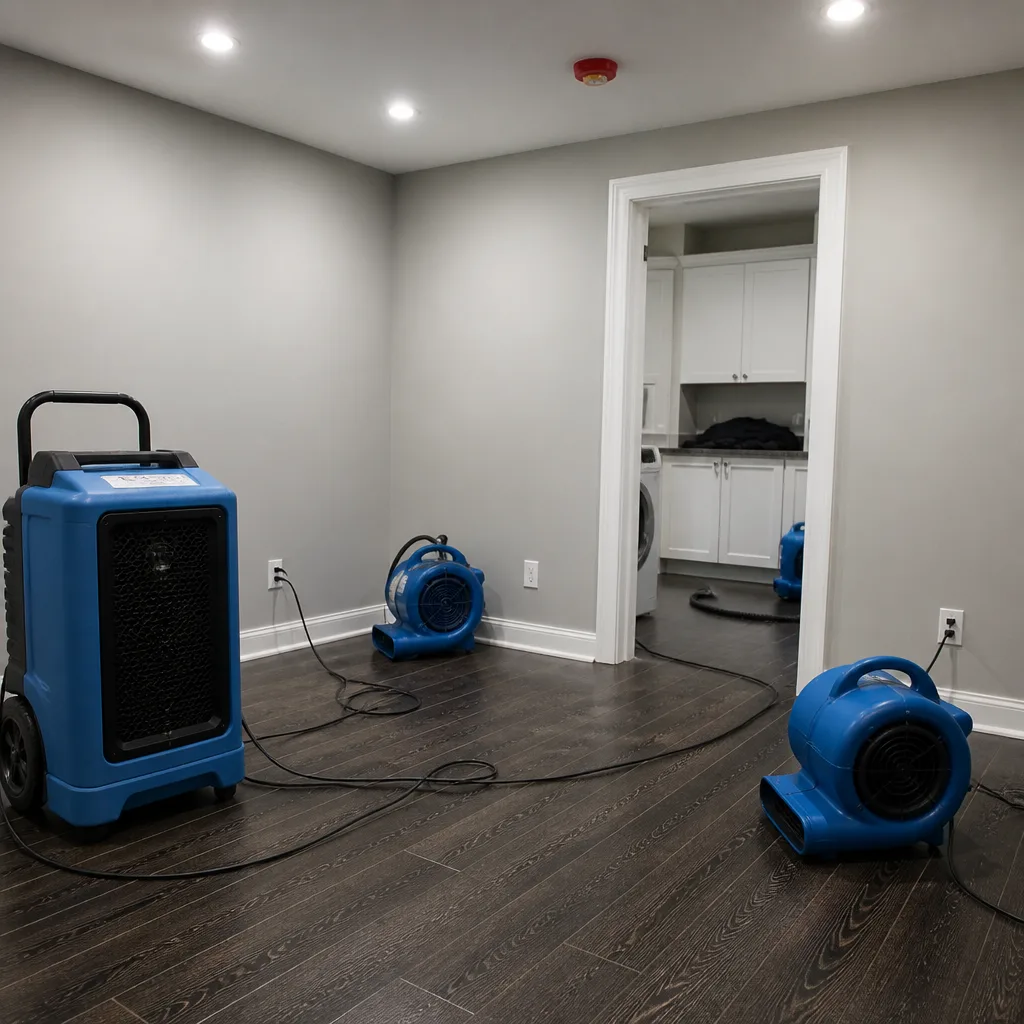
If a pipe freezes and bursts, the water is under pressure. It’s not a slow leak; it’s a spray that can fill a ceiling cavity in minutes. The first call is to shut the water. The second is to us. Our extraction crews run professional-grade equipment from brands like B-Air and Phoenix, and we take moisture readings on day one with the same meter we use at the end, until the structure hits the dry standard. Some flooding from a winter burst is so fast that you can hear it before you see it. The dry-out takes days, not hours, and it has to be done right the first time or the mold comes in spring.
What Seasonal Restoration Costs in Kearny
Restoration costs in Kearny run a little lower than in Manhattan or Jersey City, but not by much. The town’s dense housing stock means access can be tight, and old construction often means surprises behind walls. Here’s what you can expect to pay, based on jobs we’ve done in Kearny:
- Water extraction and drying (single room, no rebuild): $1,200 to $3,400. This covers pump-out, containment, professional drying with Dri-Eaz or B-Air equipment, and moisture logging until dry.
- Water damage with light rebuild (drywall, baseboard, paint): $3,500 to $8,000. This is the most common scope after a burst pipe or gutter backup.
- Mold remediation (basement or single room): $1,800 to $6,000, depending on affected square footage and whether drywall or insulation has to be cut out and replaced.
- Sewage backup cleanup: $2,500 to $7,500. This includes removal of contaminated material, sanitizing, drying, and often new subflooring or drywall.
- Ice dam leak with ceiling repair: $1,500 to $4,000. The cost swings based on whether the ceiling has to be opened up and how much insulation is saturated.
These ranges don’t replace a written scope, and we wouldn’t expect you to decide anything from a list. We give Kearny homeowners a written scope and a no-surprises price before work begins. That price is exactly what you pay, and the 90-Day Done Right Promise is in the same paperwork. If it’s not done right, we make it right. No arguing, no paperwork battles.
Insurance and Seasonal Damage: What Kearny Homeowners Should Know
Most seasonal damage is covered by a standard homeowner’s policy. Burst pipes, wind-driven rain, ice damming, and even mold that results from a covered water event are usually in the policy. Sewage backup is often excluded unless you carry a specific endorsement - this surprises a lot of people in Kearny, especially in older homes with older drain lines.
The biggest mistake homeowners make with insurance is not documenting damage before cleanup starts. An adjuster can’t approve a claim for a wet wall that’s already been torn out and disposed of. We take photo documentation on every job, log moisture readings daily, and bill your carrier directly. You don’t play messenger between us and the insurance company. The goal is a claim that gets approved the first time, without the homeowner making a dozen phone calls.
Here’s what to do, in order, when damage happens:
- Stop the source of water if you safely can - shut the main, clear the blockage, close the window.
- Take your own photos before moving anything.
- Call us to begin extraction and drying. The sooner the equipment runs, the less the claim costs, and the better the outcome for everyone.
- Call your carrier and open a claim. Reference the date, the cause, and the fact that mitigation has already started.
- Keep the moisture log and all documentation. Your adjuster will ask for it. We provide it.
We’ve been doing direct insurance billing in Kearny for over a decade, and the carriers know us. That matters. When the adjuster sees a moisture log with professional readings, a photo set, and a written scope, the claim moves faster than when a homeowner submits a cellphone video and a guess.
Common Mistakes to Avoid
- Waiting to call because the damage “isn’t that bad.” Water damage in a Kearny basement is never small. By the time you see it, it’s been working for hours or days. The first 48 hours decide whether a cleanup stays a cleanup or becomes a full remediation.
- Using a shop vac and a box fan and calling it dry. A shop vac gets surface water. It doesn’t reach water that’s soaked into drywall, subfloor, or wall cavities. When that trapped moisture warms up, mold starts.
- Ignoring a musty smell because you can’t see the mold. By the time mold is visible on drywall, it’s likely throughout the cavity. A smell is the early warning your senses are giving you for free.
- Raking snow off a roof with an ordinary garden rake. A metal rake tears shingles and voids the roof warranty. A plastic roof rake with a slide, used from the ground only, is the right tool. If you can’t reach it safely, don’t. A fall from a ladder in January is a life-changing injury.
- Not knowing your water shutoff location. In a pipe burst, the first five minutes are the most important of the entire restoration. Find the shutoff today, not during the emergency.
- Paying a contractor out of pocket before the claim is settled. Our crews bill insurance directly on covered losses. You should never pay a restoration company in full up front, before the carrier has reviewed the scope. We don’t ask you to.
- Treating every home in Kearny as if it’s the same. A balloon-framed two-family from 1920 drains water differently than a 1990s split-level. The right drying plan pays attention to how the house was built. A one-size-fits-all plan leaves hidden moisture.
When to Call a Professional
Call a professional if you have standing water more than a few inches deep, a sewage smell or visible sewage, water coming through a ceiling, an active mold patch larger than about three square feet, or a musty smell that you can’t source. Call if the water touched drywall, insulation, or finished flooring - those materials don’t dry on their own. Call if the damage was caused by a burst pipe, a roof leak, or an appliance, because the water is rarely clean and the affected area is almost never limited to what you can see. Floodline Restoration Co. home offers free estimates in Kearny - call (551) 373-5246 and a live person answers, 24 hours a day, every day.
Frequently Asked Questions
Water damage restoration in Kearny typically runs $1,200 to $3,400 for extraction and drying of a single room, and $3,500 to $8,000 when drywall, baseboard, and paint replacement are included. The final number depends on how much water, how long it sat, and what materials absorbed it. Call (551) 373-5246 for a written scope and a free estimate - we don’t charge hidden fees.
Yes, most standard policies cover sudden water damage from burst pipes, roof leaks, ice dams, and wind-driven rain, as well as mold that results from a covered event. Sewage backup often requires a specific endorsement that many Kearny homeowners don’t have until they need it. We bill insurance directly for covered losses, and we’ll tell you early if something looks like it will be excluded.
Same visit, in most cases. Calls to (551) 373-5246 are answered by a live dispatcher who sends a certified, background-checked crew. We’re local to Kearny, so response times are measured in minutes, not days. Extraction equipment is running the same visit so the damage doesn’t compound while you wait.
If water reached drywall, insulation, wood, or finished flooring in a Kearny home, it’s not just a cleaning job. Professional drying with moisture mapping and daily readings is the only way to verify the structure is actually dry below the surface. A surface that looks dry can be 20% moisture content inside the wall cavity, and that’s an open invitation for mold. We give you a moisture log in writing so you know the dry standard was met.
No patch of mold is harmless, because the patch you can see is usually the smallest part of the problem. Mold roots into the material it’s growing on, and it spreads inside cavities where you can’t see it. Some species are health concerns for older Kearny homeowners with respiratory issues. We contain the area, remove affected material, dry it, and confirm the spores are gone - not just covered with paint.
Our team does. We handle the photo documentation, the moisture log, the written scope, and the direct billing to your carrier. You don’t play messenger between us and the adjuster. That’s the way we’ve worked in Kearny since 2010, and it’s the reason most of our projects move from first call to approved claim without a fight.
The Bottom Line
Seasonal damage in Kearny is mostly water damage, and water damage is mostly about time. The house that gets checked each season, that has clean gutters in fall and a functioning sump pump in spring, rarely needs a major restoration. The house that gets ignored needs us at 2 a.m. in January, and we’ll be there. Check your sump pump in March, your humidity in July, your gutters in October, and your eaves in January. Find your water shutoff. Take photos before anything moves. If the water has already crossed the line where you can handle it yourself, call (551) 373-5246 - that’s a free estimate, a live person on the phone, and a 90-Day Done Right Promise in writing, no matter the season.
Written by Curt Bowman, Owner at Floodline Restoration Co., serving Kearny since 2010.