

Free visual inspection and a written scope of work before any mitigation begins - photos, moisture readings, and drying logs go in your claim file
The scope we write is the scope we bill. Anything new gets shown to you, in writing, before we touch it.
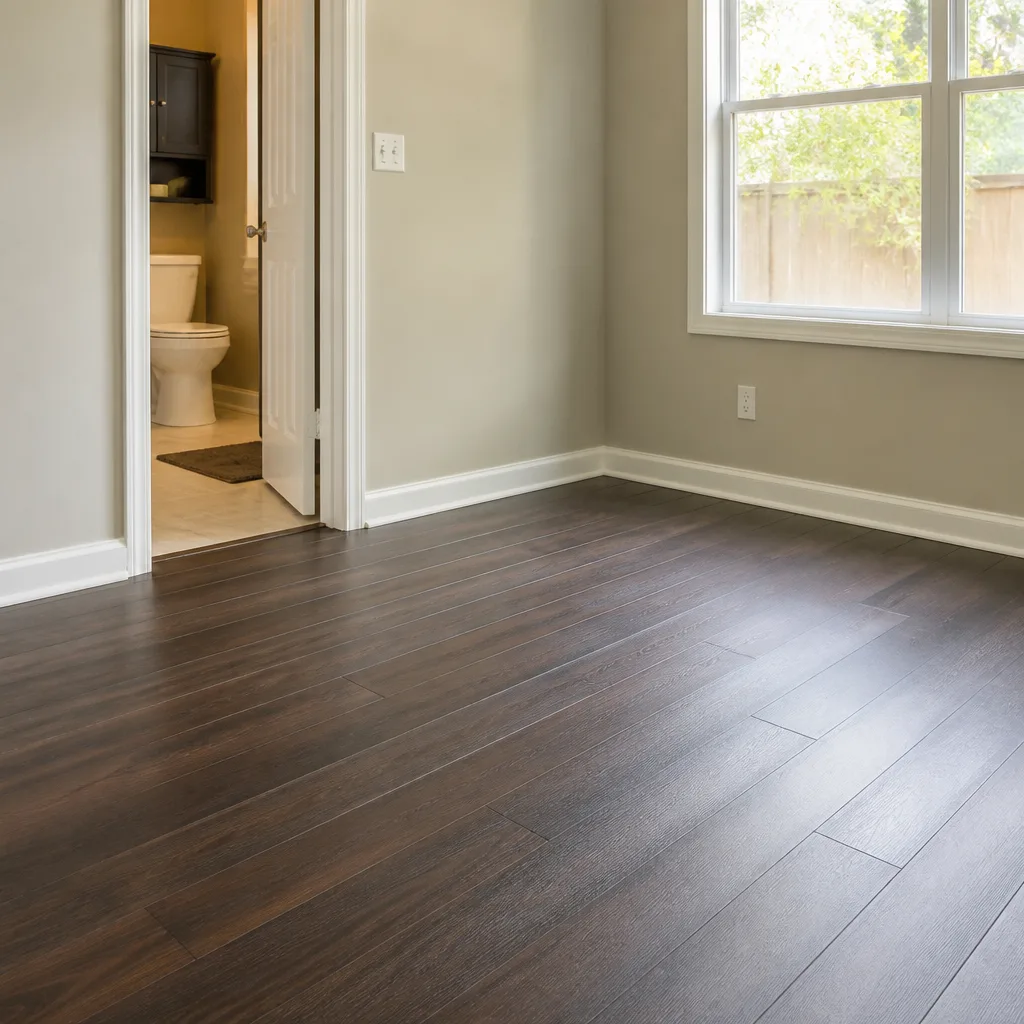
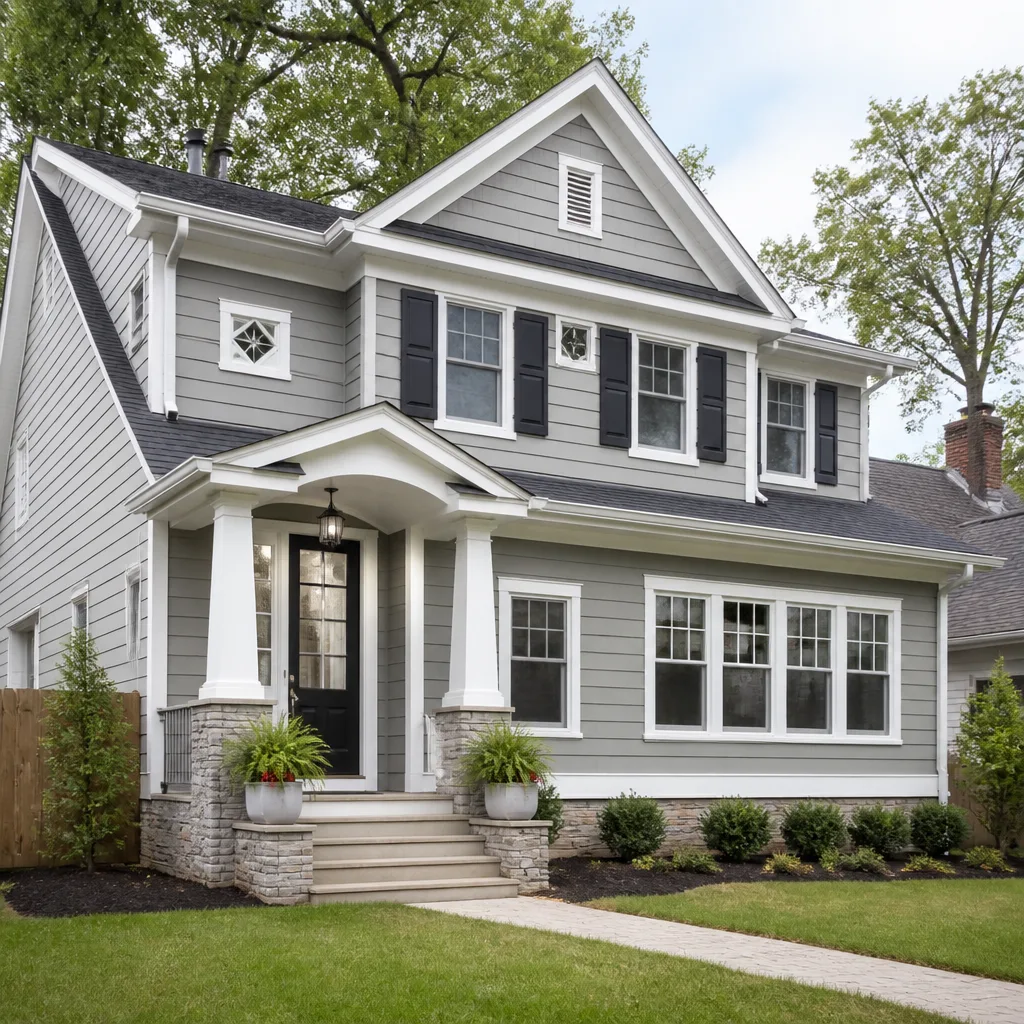
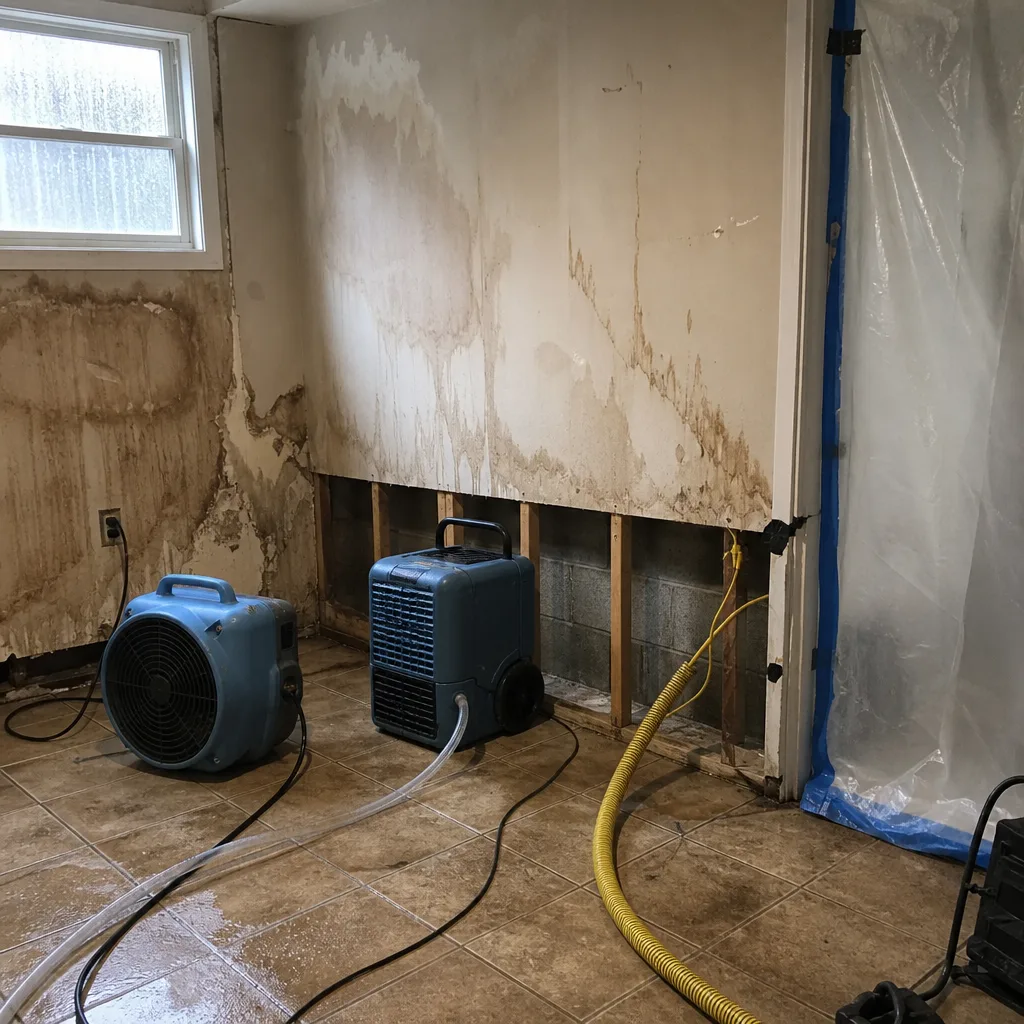 Before
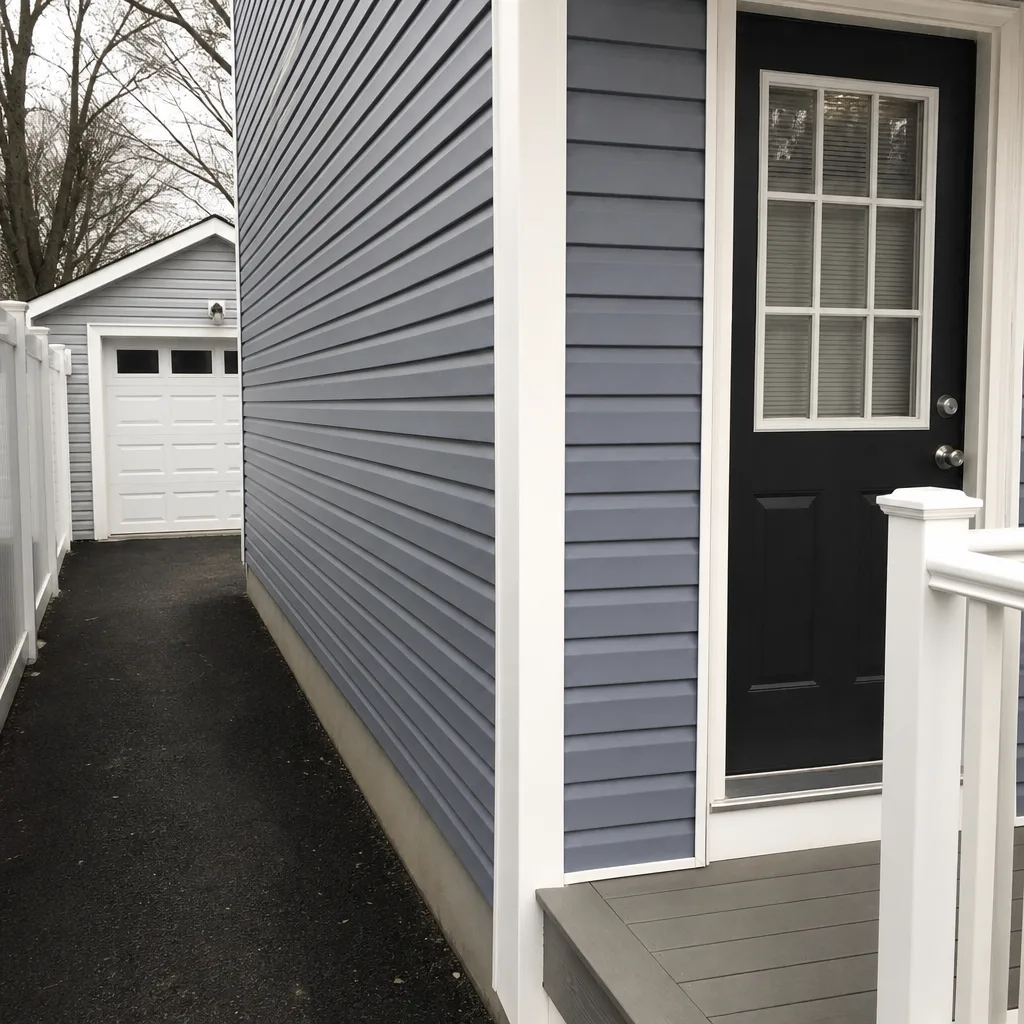 After
After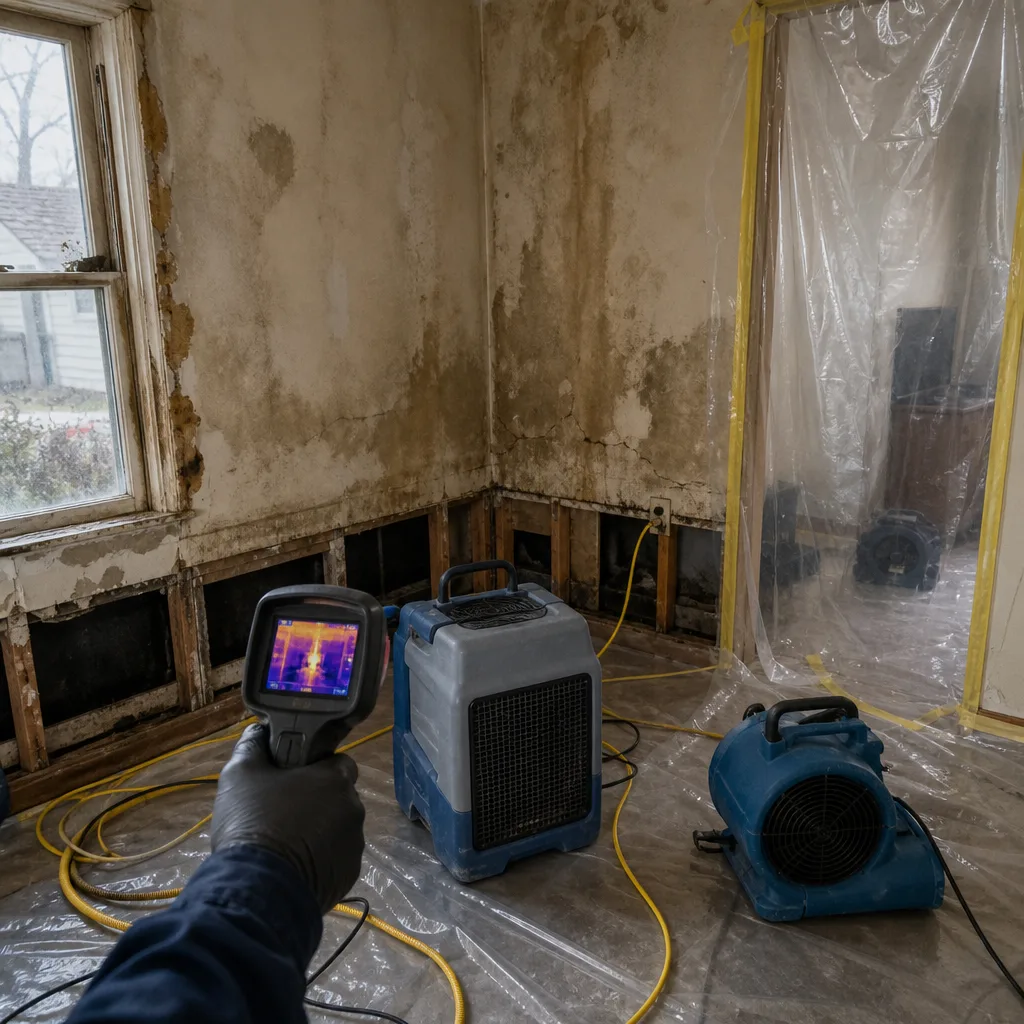 Before
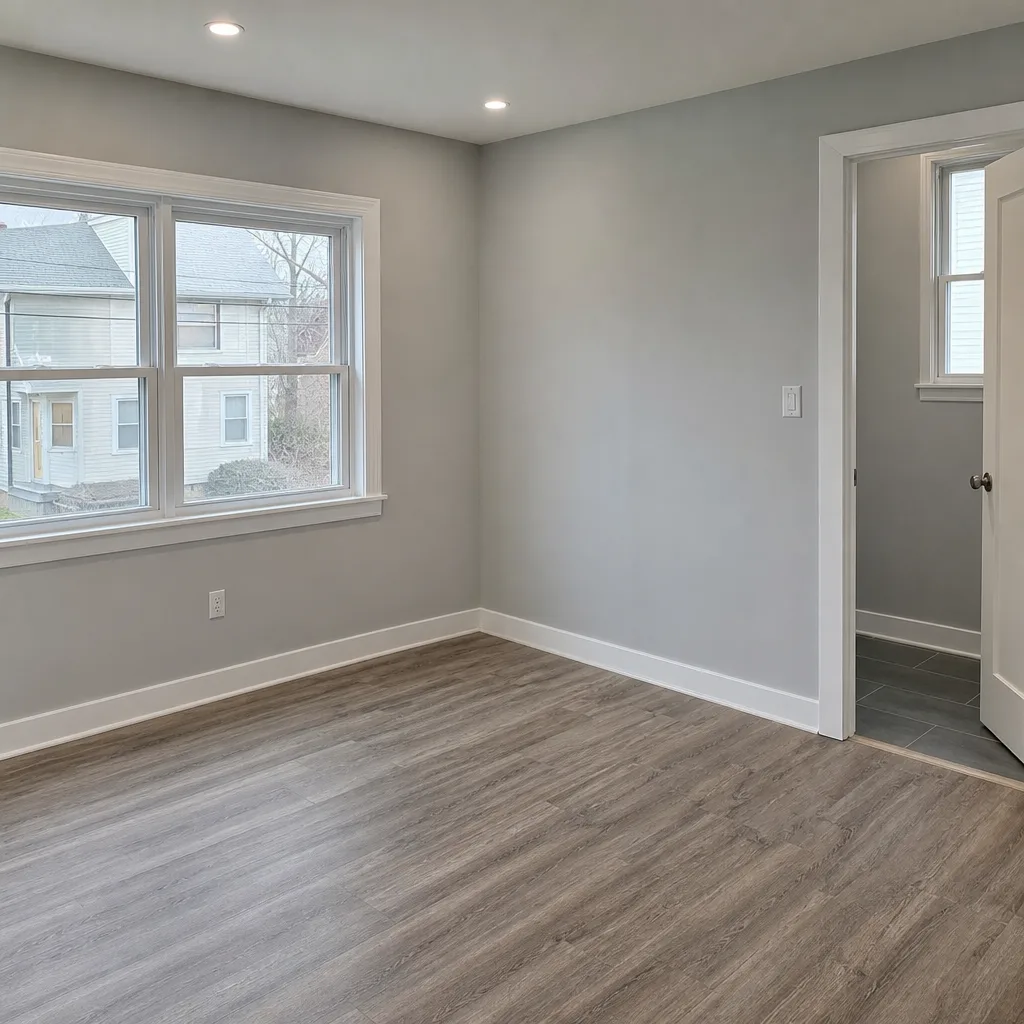 After
After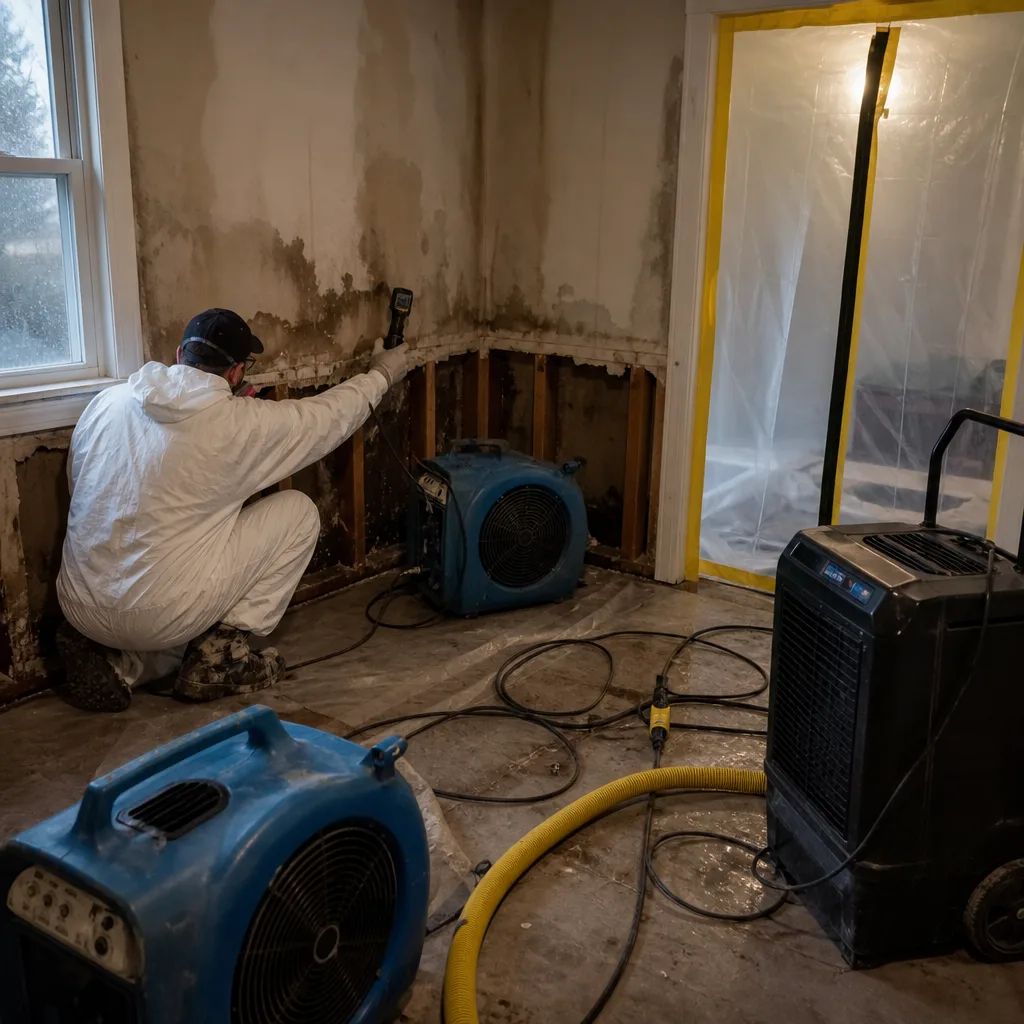 Before
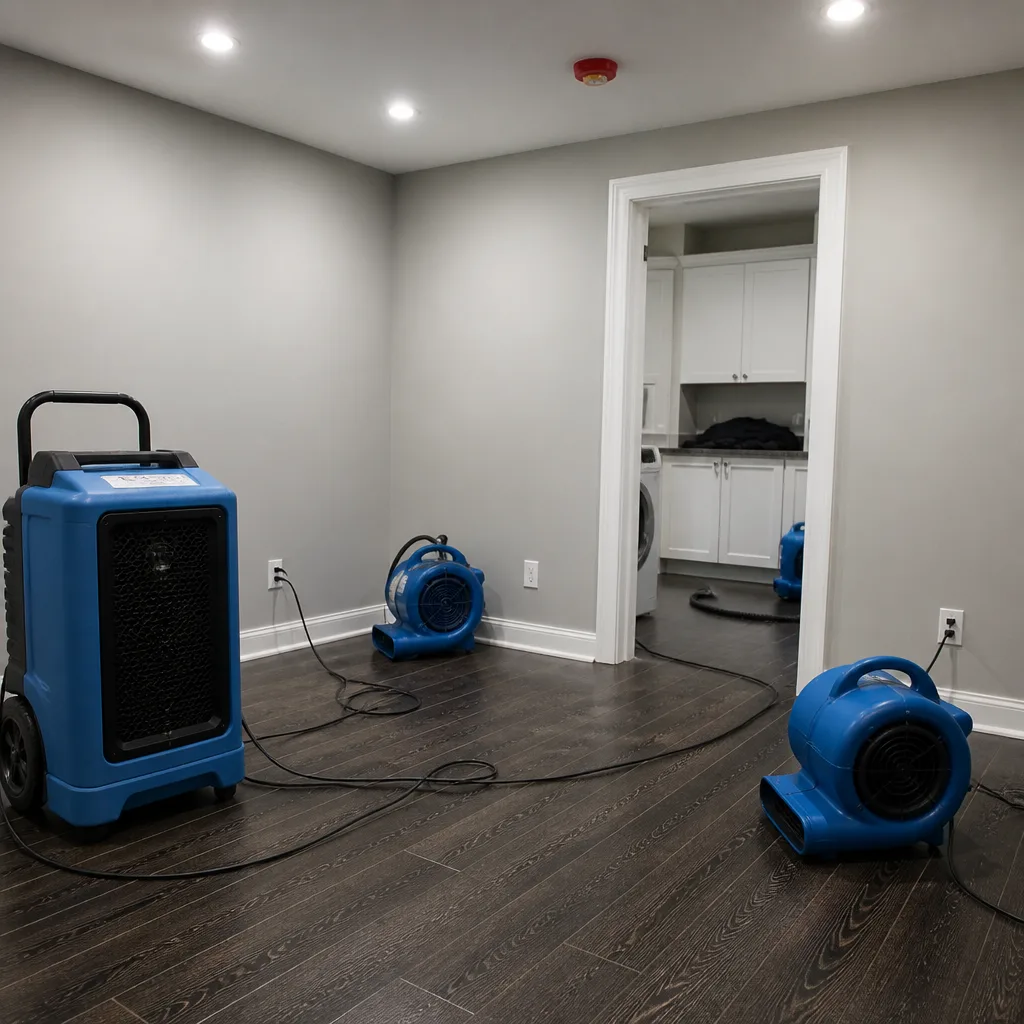 After
After24/7 Emergency Storm & Disaster Restoration in Harrison
Storm damage in Harrison doesn’t wait for business hours, and neither do we. Heavy rain over the Passaic River flood plain or a nor’easter pushing through Hudson County can put water in your basement within hours. One call to (551) 373-5246 connects you with a live dispatcher who gets a certified crew moving toward your street, not a recording promising a callback. Harrison’s combination of century-old brick row houses and a shared sewer system that backs up in heavy rain means the first hour determines whether you’re dealing with a dry-out or a full Category 3 biohazard job. We arrive, assess the damage with moisture meters and thermal imaging, and start extraction the same visit. The visual inspection is free. The sooner water and sewage stop sitting against 1890s brick and old timber, the less it costs to make right.
Understanding Storm & Disaster Restoration Severity in Harrison Properties
Every water event in Harrison gets classified by what’s actually in the water. Category 1 comes from a supply line or clear rainwater. Category 2 carries detergent, soil, or other contaminants. Category 3 contains sewage, and in Harrison that’s not a rare occurrence. The town’s combined sewer infrastructure, shared with Newark, surcharges during heavy rainfall and pushes raw sewage back through floor drains in low-lying blocks near Frank E. Rodgers Boulevard. A nor’easter or a two-inch summer downpour can leave a basement under Category 3 water within hours. We don’t guess that it’s clean. We test, then build the response around the classification. Category 3 means HEPA containment, antimicrobial treatment, stud-level drywall removal, and disposal of porous materials that absorbed sewage. It means moisture mapping every wall cavity because Harrison’s brick construction wicks water upward long after the floor is dry. Skipping any of these steps in a brick row house built before 1930 is how a $2,000 extraction becomes a $20,000 mold remediation ninety days later.
Why Harrison Property Owners Choose Floodline Restoration Co.
- 45-minute response commitment in the Harrison area. Our dispatch board is built for speed. A certified crew is moving toward your street within 45 minutes of your call.
- A live person answers, 24 hours a day, every day. At 2 a.m. on a Tuesday, a dispatcher picks up. No phone tree, no voicemail, no waiting for a text back.
- IICRC-certified crews. Our technicians carry WRT, FSRT, and AMRT certifications and train to RIA and IFA standards. Background-checked and uniformed on every job.
- Free visual inspection with moisture readings. We don’t charge to look. We bring thermal imaging and hygrometers to give you a straight read on the extent before anything gets torn out.
- Direct insurance billing. We bill your carrier directly and send documentation from the first hour on site. You never play messenger.
- One team from extraction to reconstruction. The same crew that pumps the water reads the daily moisture log, treats the antimicrobial, and rebuilds the walls. No mid-job handoff.
Our Storm & Disaster Restoration Process
Inspection & Assessment
We walk the full property with moisture meters, thermal imaging, and hygrometers. In Harrison, that means checking basement walls, the rim joist, and the floor drain path for sewer surcharge. You get a written scope before any demolition starts.
Extraction & Stabilization
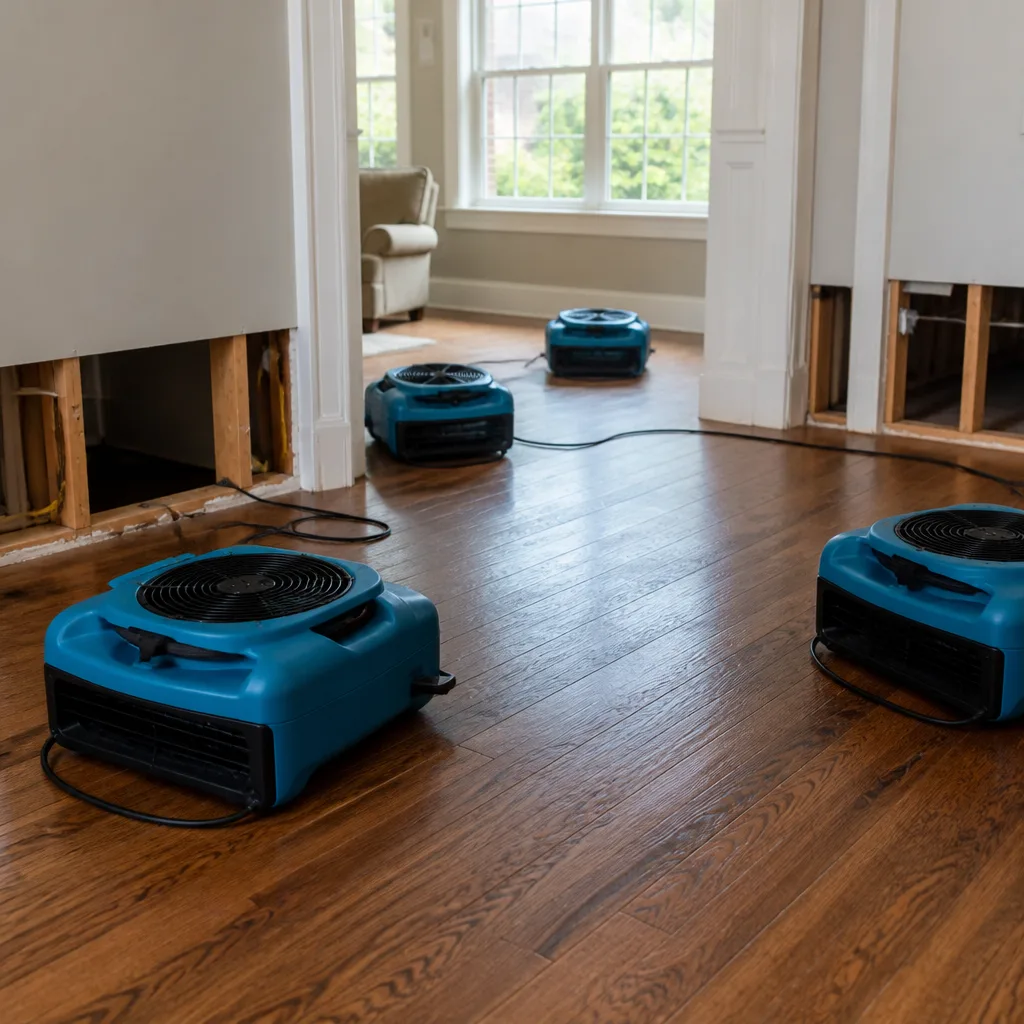
Water and solids come out first. We run truck-mounted extraction units and submersible pumps suited to the depth, then hit the floors with XPOWER air movers to begin breaking the water bond with concrete and masonry.
Drying & Dehumidification
Dri-Eaz and Phoenix dehumidifiers run around the clock. In Harrison’s brick row houses, we place Injectidry mats behind baseboards and inside wall cavities because masonry holds moisture far longer than wood framing. Daily moisture readings get logged until the dry standard is met.
Cleaning & Sanitization
Every affected surface gets cleaned, then treated. On Category 3 jobs, that includes full antimicrobial application on framing and concrete, followed by HEPA air scrubbing to pull suspended particulate from the air.
Containment & Material Removal
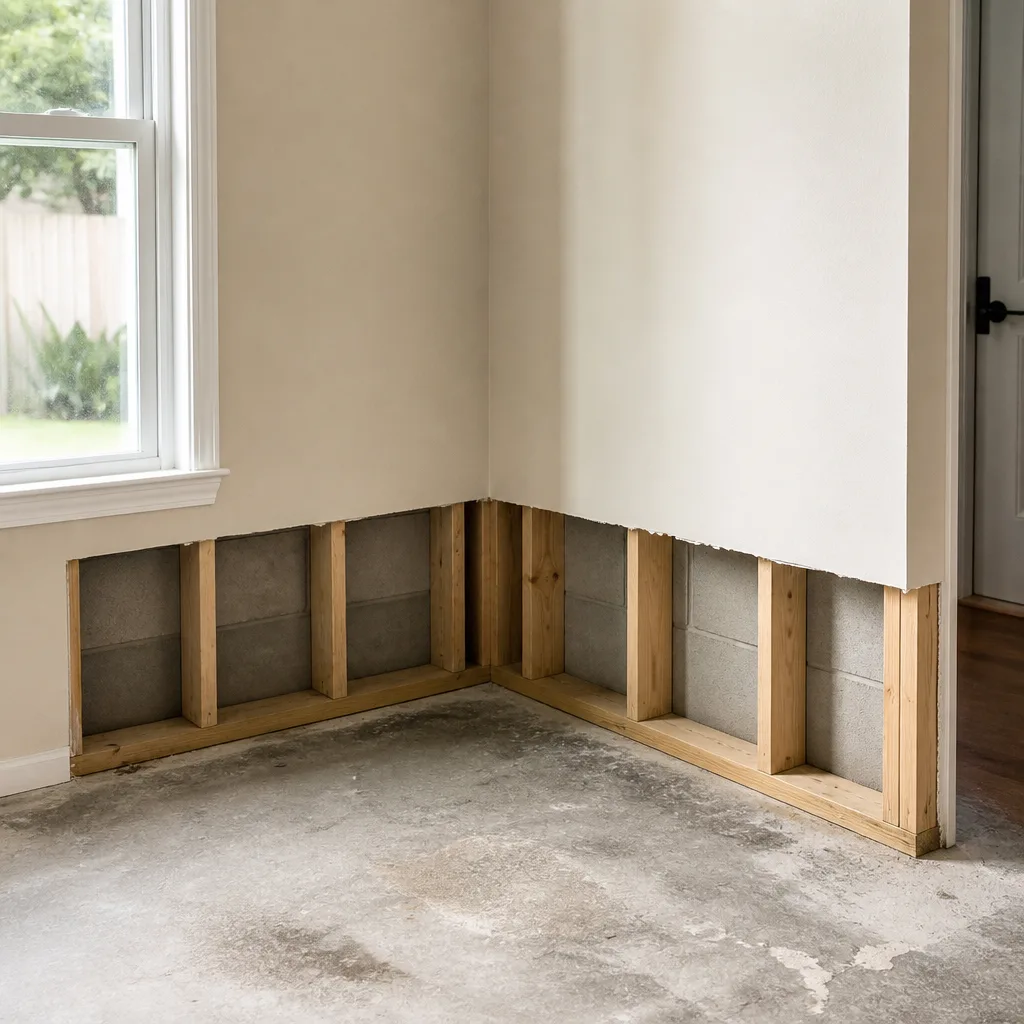
SEWAGE-CONTAMINATED MATERIALS ARE REMOVED WITH CONTAINMENT IN PLACE. We set negative-air HEPA barriers, pull affected drywall at the stud line, cut saturated carpet and pad into sealed bags, and dispose of it all under biohazard protocol. Porous contents that absorbed Category 3 water go out, too – not just dried and painted over.
Repairs & Restoration
Once moisture readings confirm the structure is dry, reconstruction begins. New drywall, insulation, baseboards, flooring – handled by the same certified crew that did the mitigation. The 90-Day Done Right Promise covers the finished work, in writing.
Need Emergency Storm & Disaster Restoration in Harrison Now?
Crews minutes away, answering live 24 hours a day. The sooner we start, the less it costs.
Working With Your Insurance Company
Insurance claims in Harrison after a Passaic River event are not new to us. We document everything from the first hour: photographs of standing water before extraction, room-by-room photos after, daily moisture logs, and a line-item scope of work that your adjuster can read without confusion. Our team coordinates directly with the carrier, so you don’t spend your evenings reviewing claim forms. What matters is that the claim reflects the true scope, not the optimistic version. If a sewer surcharge sent Category 3 water through your basement, our documentation states it plainly with supporting test results. That’s what moves a claim from “dry and patch” to a proper mitigation and rebuild. Here’s what we provide your adjuster.
What We Provide Your Insurer
- Thorough documentation of the loss
- Photos of all damage, room by room
- Moisture readings and drying logs
- A detailed, line-item scope of work
- Direct coordination with your carrier
Built for Harrison’s Loss Calendar
Harrison doesn’t have one storm season. It has four, and they each hit differently. January and February freeze old supply lines in unheated basements of 1920s brick row houses, sending clean Category 1 water across concrete floors at 2 a.m. Spring brings sustained rain that saturates the ground and finds every crack in a fieldstone or brick foundation near the Meadowlands side of town. Summer thunderstorms overwhelm the combined sewer system fast. An inch and a half of rain in an afternoon can push Category 3 water up through floor drains along Frank E. Rodgers Boulevard and the low blocks east toward the river. Fall nor’easters like the ones that hit during Sandy and Ida are the real test. The Passaic climbs, the sewer surcharges, and basements that have never flooded suddenly sit under a foot of contaminated water. Homeowners who call us after the second or third backup in ten years know the drill: full biohazard protocol, stud-level removal, and drying logs they can hand to an insurer. We’ve been on those blocks enough to know which houses need preventive attention before the next storm, not after.
Storm & Disaster Restoration Across Harrison’s Neighborhoods
The blocks off Frank E. Rodgers Boulevard, particularly south toward the river, see the worst of the combined sewer backups because they sit lowest in town. Two- and three-family brick houses dominate here, many with basement apartments that fill fast when the system surcharges. A few blocks east, near the Harrison PATH station and the newer residential buildings along Angelo Cifelli Drive, the construction is different but the flood exposure isn’t gone. Ground-floor retail and parking levels there still answer to the same water table. Up toward the Kearny border along Bergen Street and Hamilton Street, the row houses sit slightly higher but age brings its own problems: old clay sewer connections that crack under pressure from sustained rain and let Category 3 water in through the slab. And along Passaic Avenue where the river runs close, direct riverine flooding after a nor’easter leaves foundations underwater with the full mix of river silt, fuel residue, and sewage. We route crews to all of it. The response changes block by block, but the standard doesn’t.
Specialized Storm & Disaster Restoration Services We Offer in Harrison
Flood Damage Restoration
In Harrison, flood water rarely comes clean. Even when the source is river water or rain, the shared sewer system means contamination is on the table. We extract, test, treat, and dry with the assumption of Category 3 until proven otherwise. Basement apartments off Frank E. Rodgers Boulevard get HEPA containment and antimicrobial treatment as standard, because doing less has consequences.
Emergency Board-Up
A blown window or compromised door after a storm leaves a century-old brick house open to weather, vandals, and animals. We board up with lumber cut to the opening on site, not measured over the phone. Same visit, same day. It holds until full repair.
Debris Removal
Storms drop branches, shingles, and insulation across Harrison yards and roofs. But after a flood, debris includes the worse stuff: soaked carpet, sewage-contaminated drywall, and ruined furniture. We haul it out under biohazard protocol and dispose of it legally, which is not a detail you want to trust to a pickup truck and a tarp.
Roof Tarping
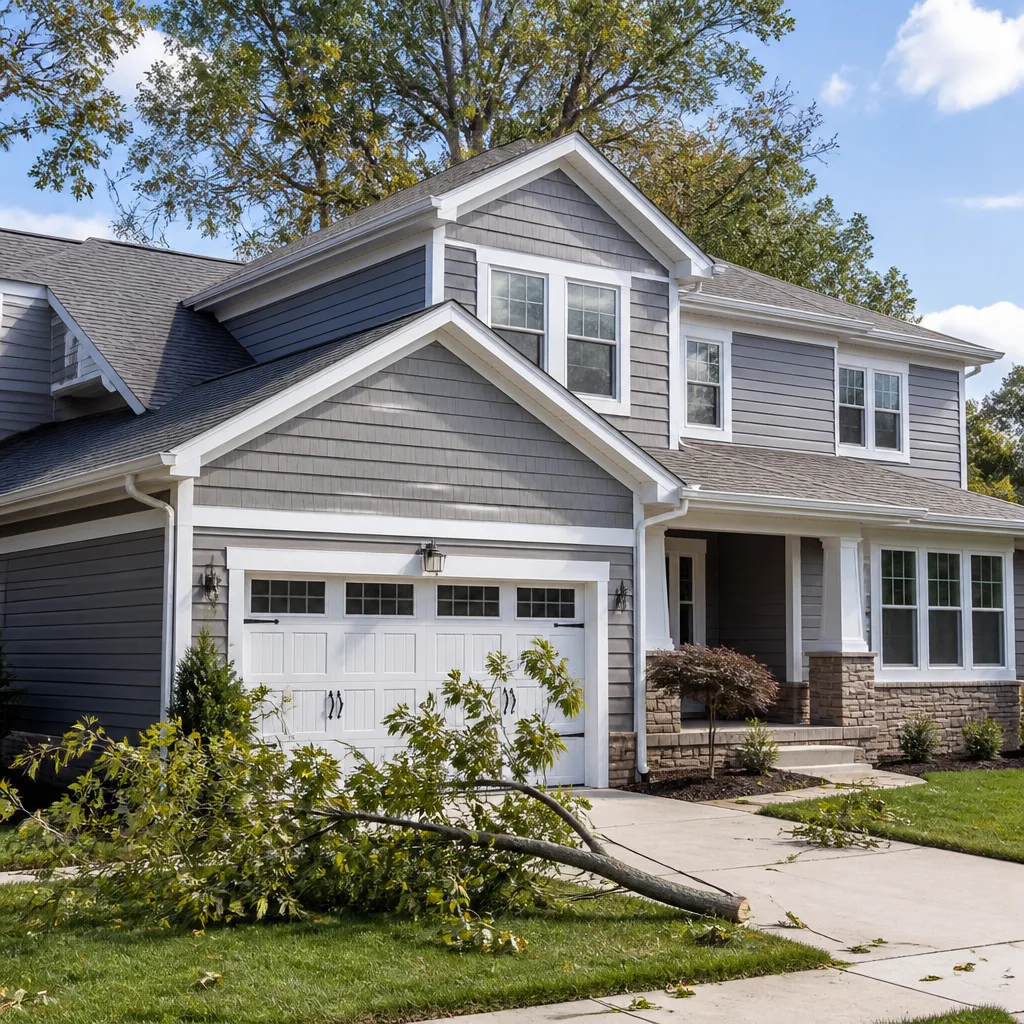
When wind strips shingles or a tree limb opens a hole over a bedroom, water follows within hours. We tarp roofs the same day with heavy-duty material secured against Hudson County wind. It buys you time to file a claim and plan permanent repair without water running down the inside of your walls.
Wind Damage Repair
Nor’easters and summer squalls push hard against Harrison’s older windows and doors. We repair wind-damaged frames, reset doors that no longer seal, and reinforce openings where repeated storms have loosened the original 1920s fasteners. A door that doesn’t seal is a moisture leak waiting to happen.
What happens when you call
- 1
A real person answersNo phone trees - you reach a local pro.
- 2
You get an upfront price rangeHonest numbers before anyone is dispatched.
- 3
A background-checked tech heads outLicensed & insured, dispatched right away.
- 4
You approve before work beginsNothing starts until you say go.
Storm & Disaster Restoration Costs in Harrison, NJ
Harrison’s price reality is shaped by two things: the age of the housing stock and the Category of water on the ground. A Category 1 dry-out in a small basement, extraction plus dehumidification and drying logs, typically runs $1,800 to $3,400 depending on square footage and how long the water sat. A Category 3 sewage job from a combined sewer surcharge is different. You’re looking at $6,500 to $14,000 for full biohazard mitigation, stud-level drywall removal, antimicrobial treatment, and drying on a standard Harrison basement. If the flood was riverine and multiple rooms sat under water for hours, $18,000 to $30,000 is honest math for larger multi-family row houses. What moves the price: depth of water, Category classification, whether we’re hauling out sewage-soaked contents, and whether masonry walls need Injectidry mat drying. What doesn’t: any guess made over the phone. Call (551) 373-5246 and we’ll inspect it in person, give you a written scope, and bill your carrier directly. Estimates are free.
We Also Serve Cities Near Harrison
Crews from Floodline Restoration Co. respond throughout Hudson County and the surrounding area. That includes storm and flood work in Kearny, North Arlington, Secaucus, and Jersey City. If you’re on the edge of Harrison or a few blocks into a neighboring town, call (551) 373-5246 and a dispatcher will tell you exactly how fast we can get there.
Harrison Storm & Disaster Restoration Questions, Answered
Does Harrison require any special flood-damage restoration documentation for insurance claims after a Passaic River overflow?
Harrison itself doesn’t mandate special documentation beyond standard insurance claim practice, but Passaic River flood claims invite extra adjuster scrutiny because of FEMA flood zone classifications and past FEMA claims on the same property. We provide what carriers actually ask for: pre-extraction water photos, Category water testing results, daily moisture logs, and a line-item scope with materials and labor separated. When the flood is riverine plus sewer surcharge, we document both so your claim doesn’t get shorted as a simple rain-water event. Call (551) 373-5246 right after the water shows up and we’ll start the paper trail before the adjuster ever sets foot in the house.
How do we handle sewage backup from the combined sewer on Frank E. Rodgers Boulevard after heavy rain?
We treat it as Category 3 from the first minute and don’t soften that assessment until water testing says otherwise. The process is full: HEPA containment barriers, extraction with truck-mounted equipment, removal of contaminated drywall at the stud line, disposal of porous contents, antimicrobial treatment on concrete and framing, then structural drying with daily moisture logs. Skipping antimicrobial or containment on a block that backs up repeatedly is inviting a mold problem you’ll be fighting in three months. Call (551) 373-5246 the moment water appears at the floor drain. Speed matters more on Frank E. Rodgers Boulevard than almost anywhere in Hudson County.
Why does mold keep returning in our Harrison basement after each storm, even though we dry it quickly?
The brick walls are the problem. Harrison’s pre-1930 row houses have masonry that soaks water up like a sponge, and without drying the wall cavities themselves, not just the floor and air, the moisture stays put. Every humid night resets the mold clock. We use Injectidry mats and cavity drying systems that pull water out of the masonry itself, and we run dehumidifiers until the dry standard is met, not until the floor feels dry. If mold keeps coming back, the water was never actually out of the walls. Call (551) 373-5246 and we’ll moisture-map the whole basement to find where it’s hiding.
Can we stay in our basement apartment during flood damage restoration if the water was clear?
In most Harrison basements, no. Clear-looking water that came up through a floor drain in Harrison probably isn’t Category 1. It’s the combined sewer backing up, and the visible clarity doesn’t tell you anything about pathogens in the water. Living in a space where Category 3 water stood, even after extraction, exposes you to bacteria and sewage residue until antimicrobial treatment and air scrubbing are done. We tell tenants and owners to stay out of the basement until clearance is established. The risk isn’t worth it. Call (551) 373-5246 for an honest assessment of whether your space is safe to occupy.
What is the typical timeline for storm damage restoration in a Harrison brick row house after a Passaic River flood?
Plan on five to ten days from water-out to dry-and-ready for rebuild, depending on how high the water got and how long it sat. Extraction takes a day or less if we’re called immediately. Structural drying of brick and masonry typically takes four to seven days because the walls release moisture slowly. If stud-level drywall removal and Category 3 treatment are required, the full mitigation phase runs a week or more before reconstruction starts. The rebuild adds whatever time scoped work requires. The biggest variable is how soon you call. Every hour of sitting water extends the dry time. Call (551) 373-5246 immediately and we’ll give you a tight, honest timeline for your specific property.
How fast can a Floodline Restoration Co. crew actually reach Harrison?
We commit to a 45-minute response from the time you call. Our dispatch board tracks crews across Hudson County, and Harrison sits well inside our regular response radius. When the Passaic floods and routes get closed, we plan alternate approaches from the north and east while the call is still live. In a worst-case storm with streets closed, you’ll know the delay before you hang up, not after waiting an hour on the curb. Call (551) 373-5246 and the dispatcher will give you a real ETA, not a promise we can’t keep.
What certifications do your Storm & Disaster Restoration technicians carry?
Our technicians are certified to IICRC standards in water damage restoration, fire and smoke restoration, and applied microbial remediation. We train to RIA and IFA standards as well. Every technician on your job is background-checked and uniformed. The certifications matter on a Harrison Category 3 job because they mean the tech setting containment and applying antimicrobial knows why it matters, not just what to spray. We’ll show you the credentials if you ask. Call (551) 373-5246 and we’ll walk you through who’s coming to your door before they arrive.
What should we do in the first 30 minutes after water appears in our Harrison basement?
Shut off electricity to the basement if you can do it safely from outside the wet area. Don’t walk through standing water in Harrison, because it’s probably Category 3, and don’t touch electrical panels or outlets anywhere near water. Move small valuables and important papers to a dry upper floor if you can reach them without stepping into the water. Then call (551) 373-5246. We’ll tell you over the phone whether to kill the main breaker, whether to open windows, and when our crew is arriving. Don’t start mopping or running a shop vac. You’ll spread sewage-bearing water into areas that are still dry.
Serving Harrison, NJ - Our Local Coverage Area
We’re based in the Harrison area and know this community well. Use the map below to see our service coverage - if you’re nearby, we can almost certainly help.
Storm & Disaster Restoration Done Right in Harrison
The Passaic River didn’t get any less predictable over the last hundred years, and Harrison’s brick row houses didn’t get any younger. What our team at Storm & Disaster Restoration brings to every job in Harrison is a commitment that holds up to the worst this town’s flood plain can deliver. We answer the phone with a person, we arrive when we say we will, and we treat every Category 3 backup as the biohazard it is. The 90-Day Done Right Promise stands behind the completed work. The moisture logs and restoration documentation go to your insurance carrier without you chasing anyone. Our founder, Curt Bowman, built Floodline Restoration Co. in 2010 around a dispatch board and a square-deal philosophy: do the job right, document everything, and stand behind it in writing. If your basement is taking on water tonight, or if you want to understand your property’s risk before the next nor’easter, call (551) 373-5246. A live person will answer.
Written by Curt Bowman, Owner at Floodline Restoration Co., serving Harrison with certified storm and disaster restoration crews.