
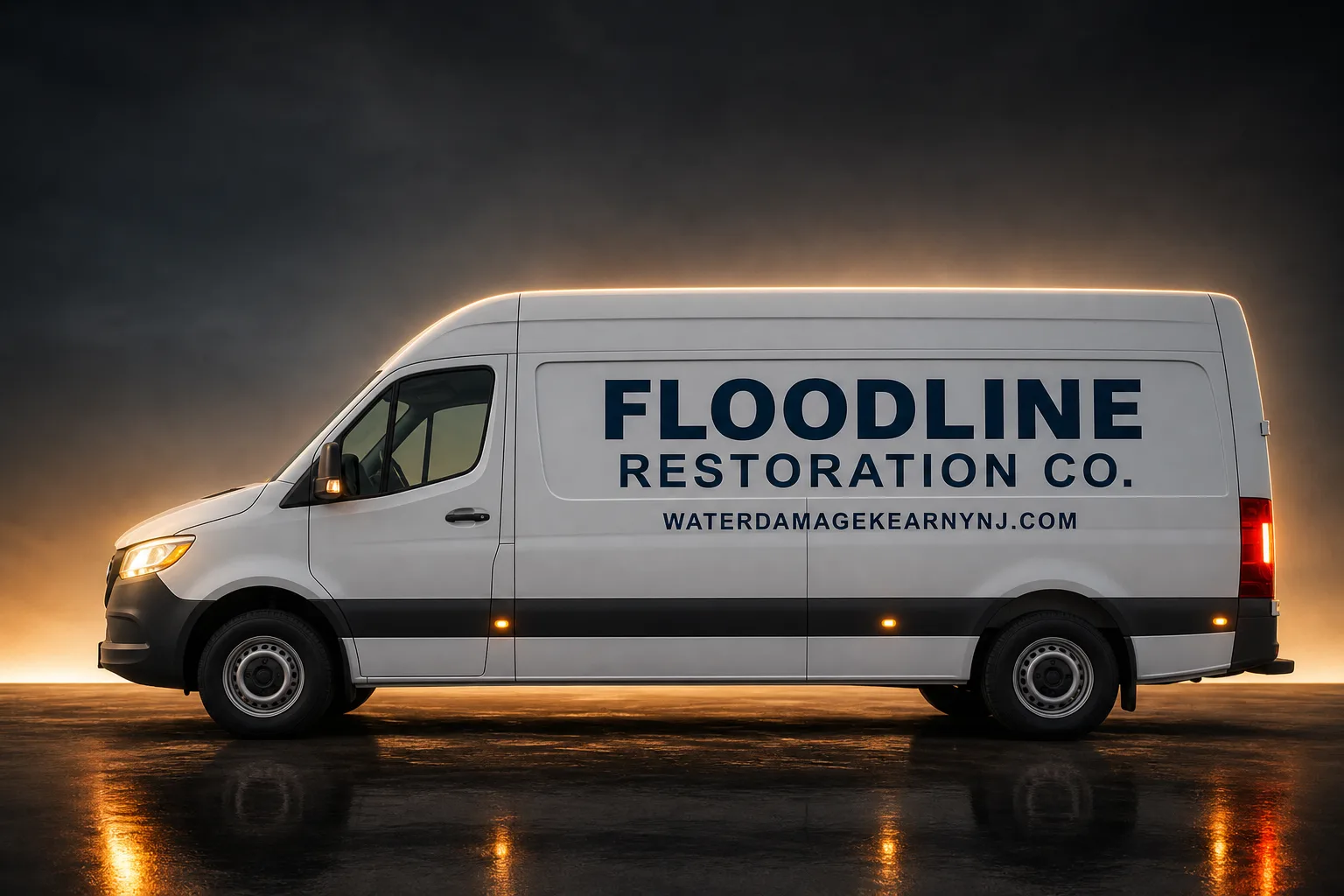
Free visual inspection and a written scope of work before any mitigation begins - photos, moisture readings, and drying logs go in your claim file
The scope we write is the scope we bill. Anything new gets shown to you, in writing, before we touch it.
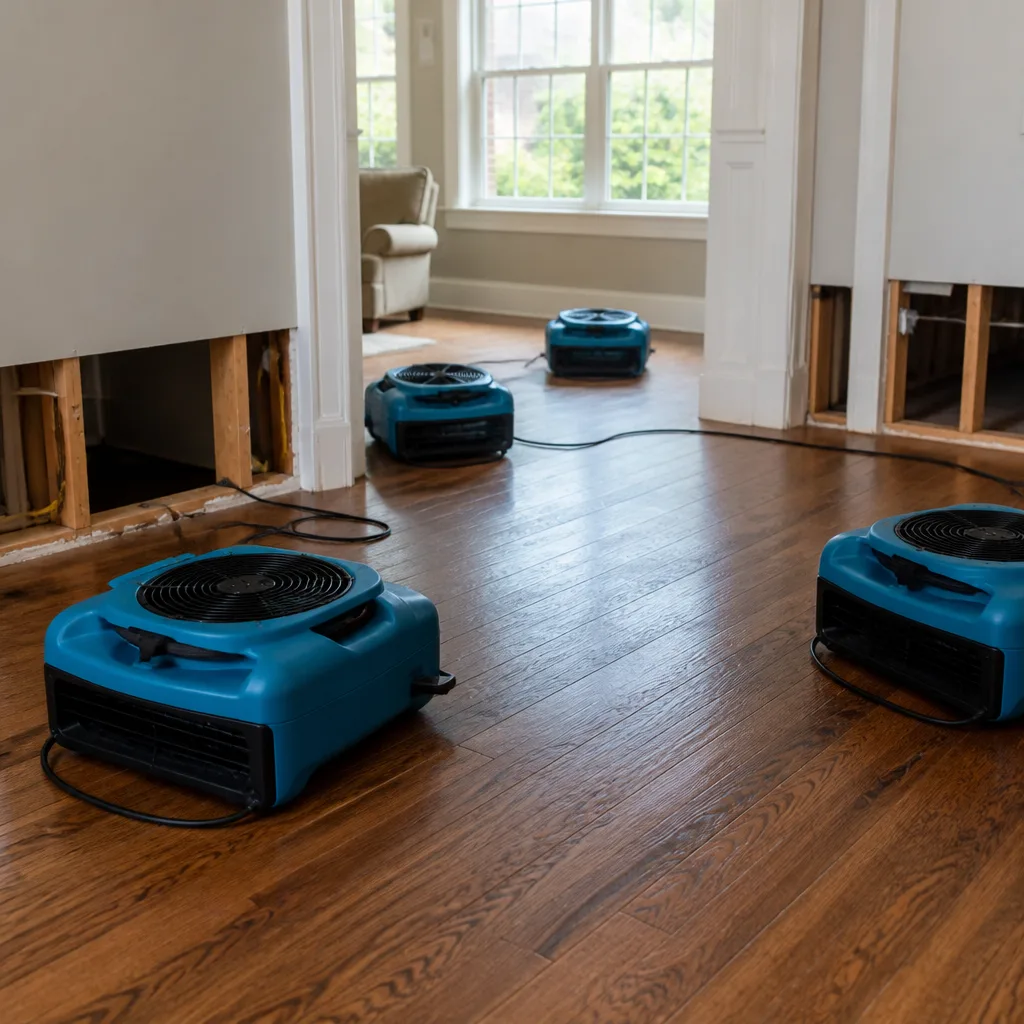
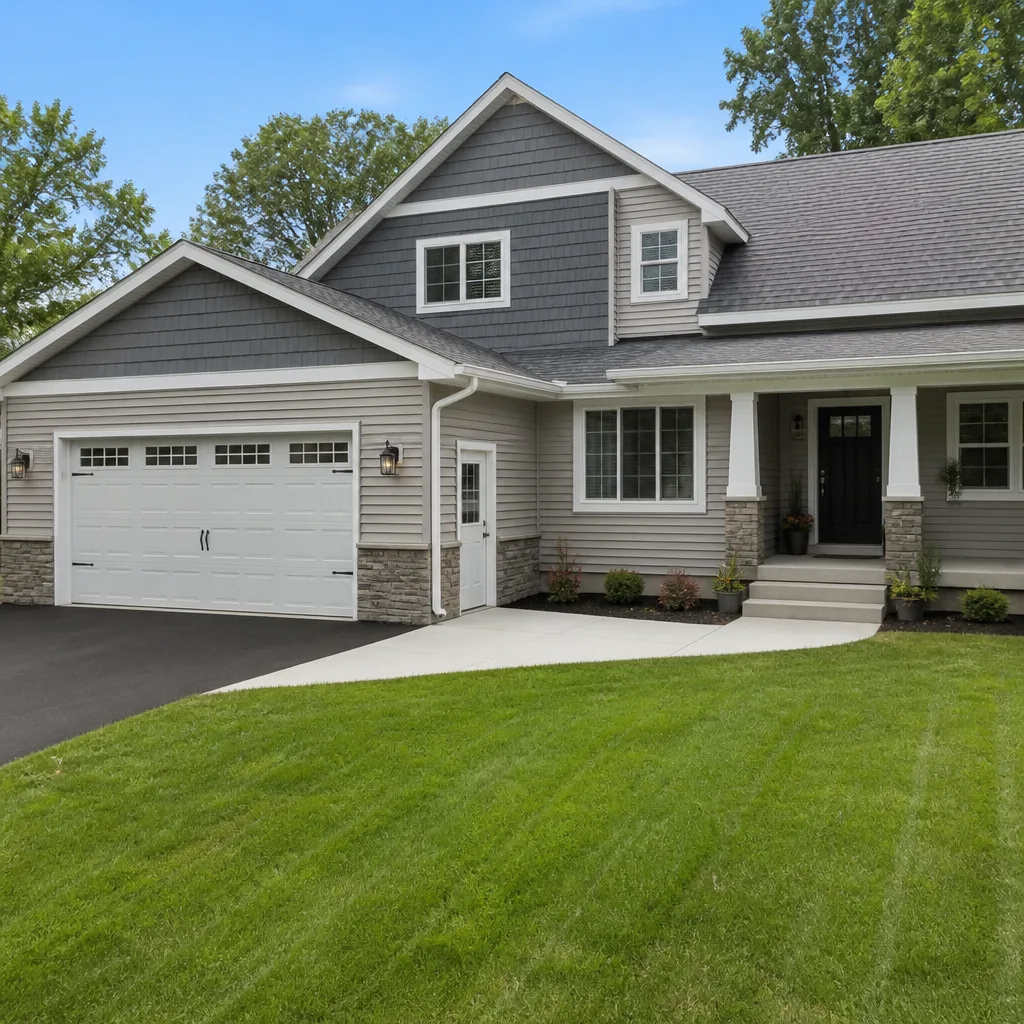
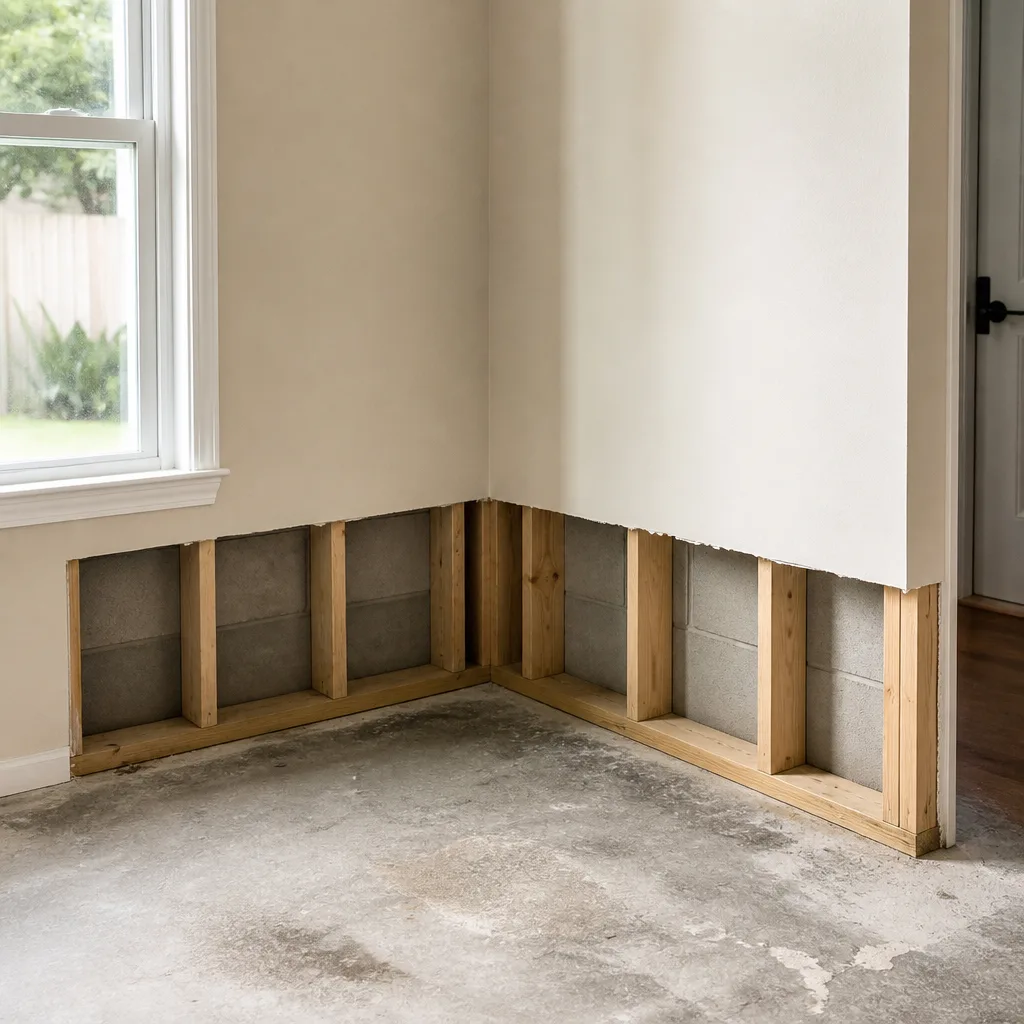
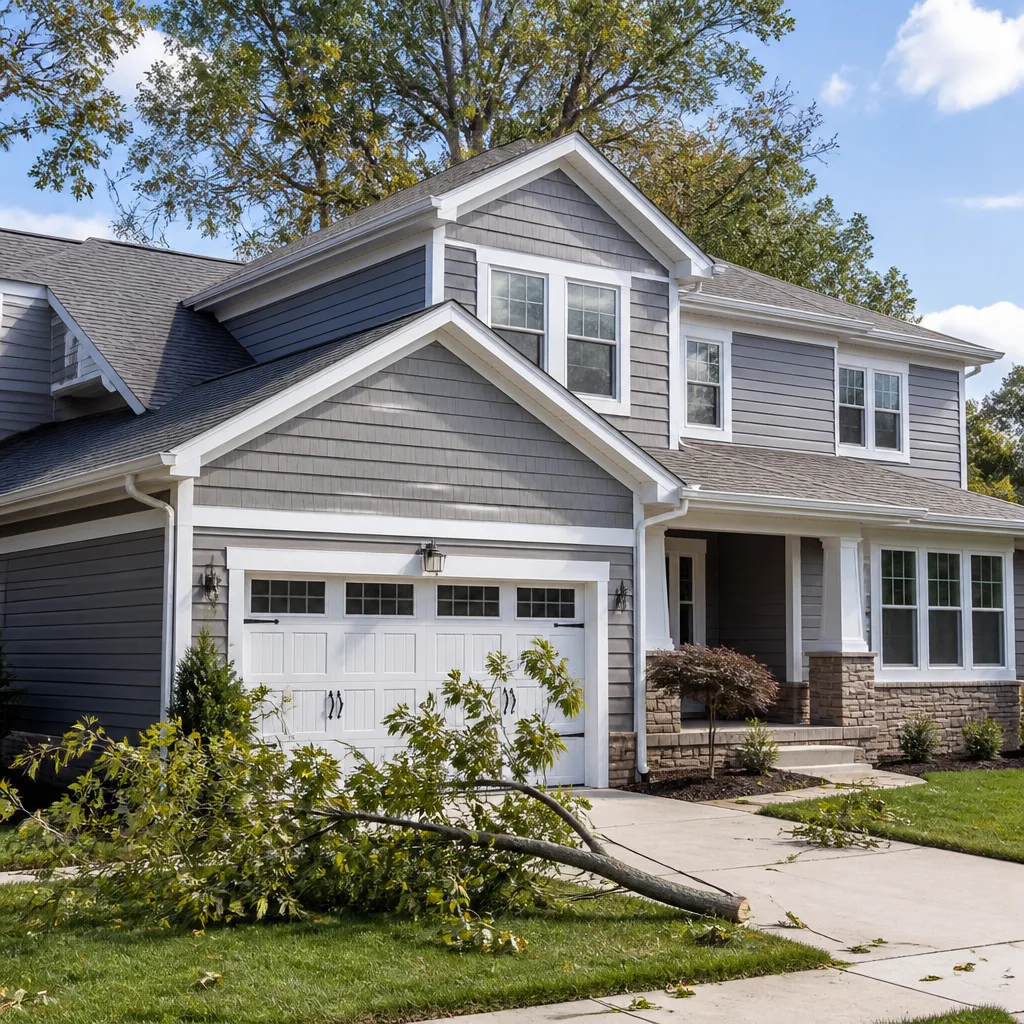
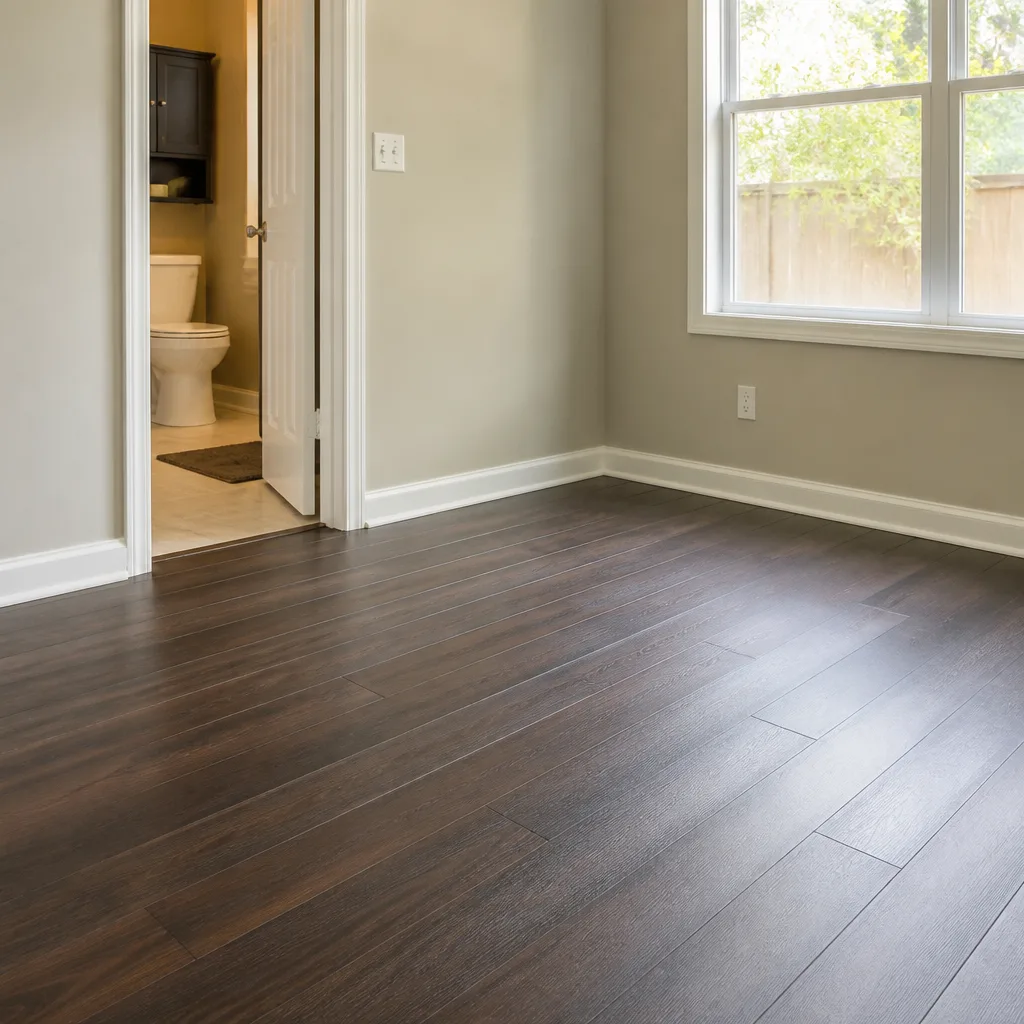
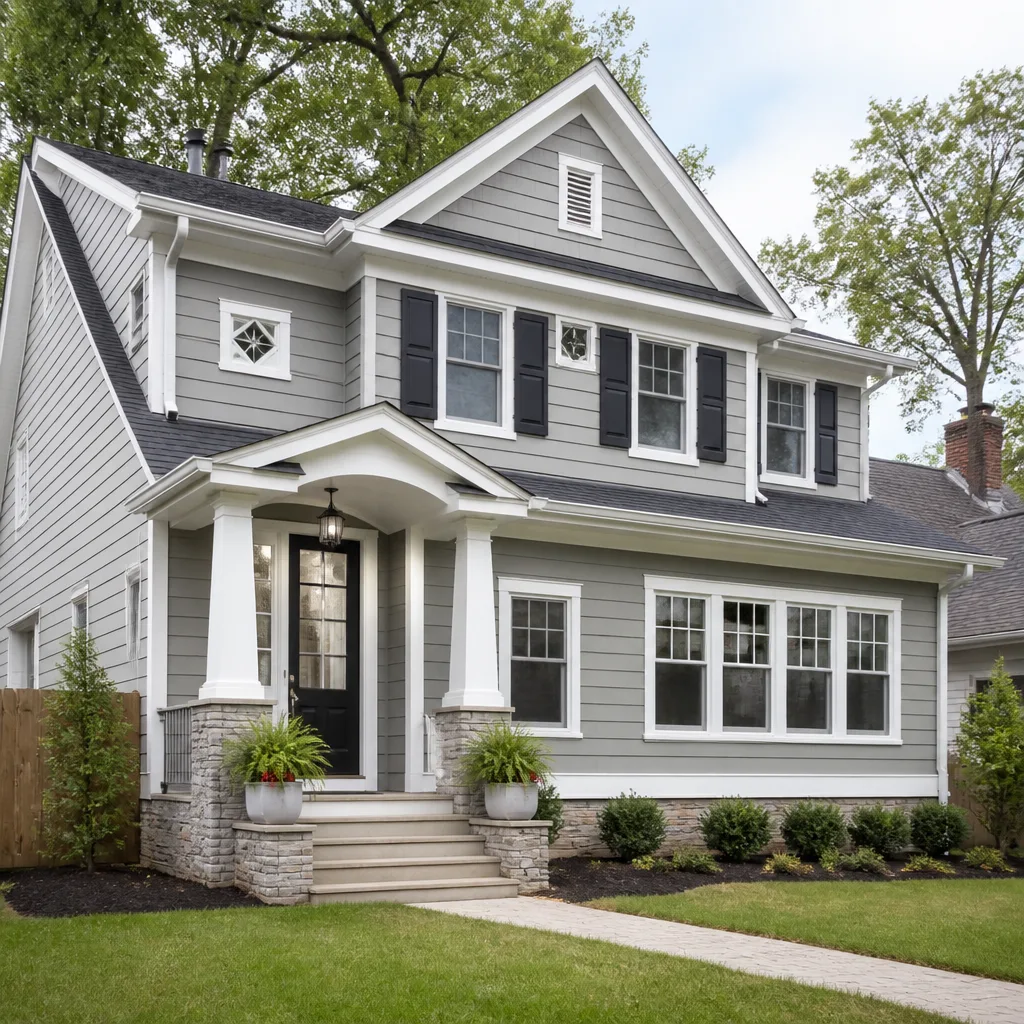
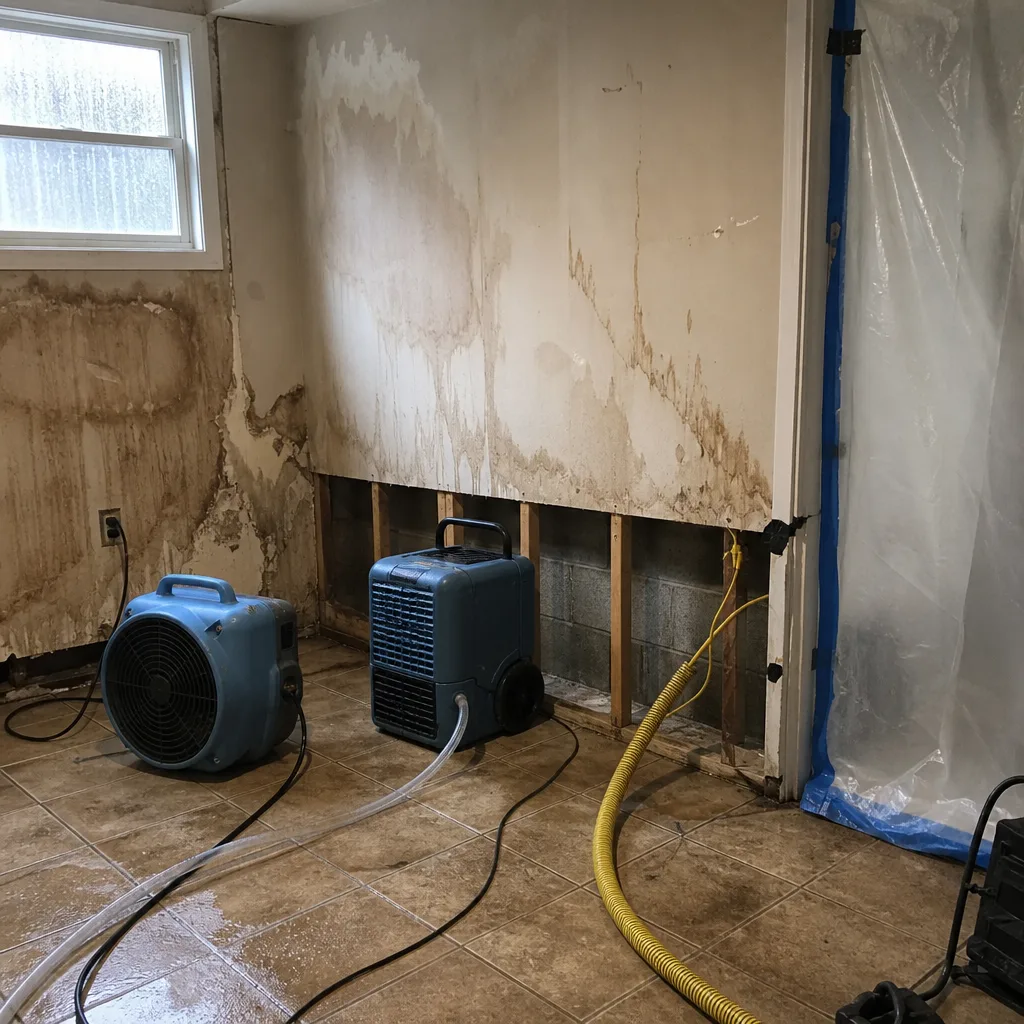 Before
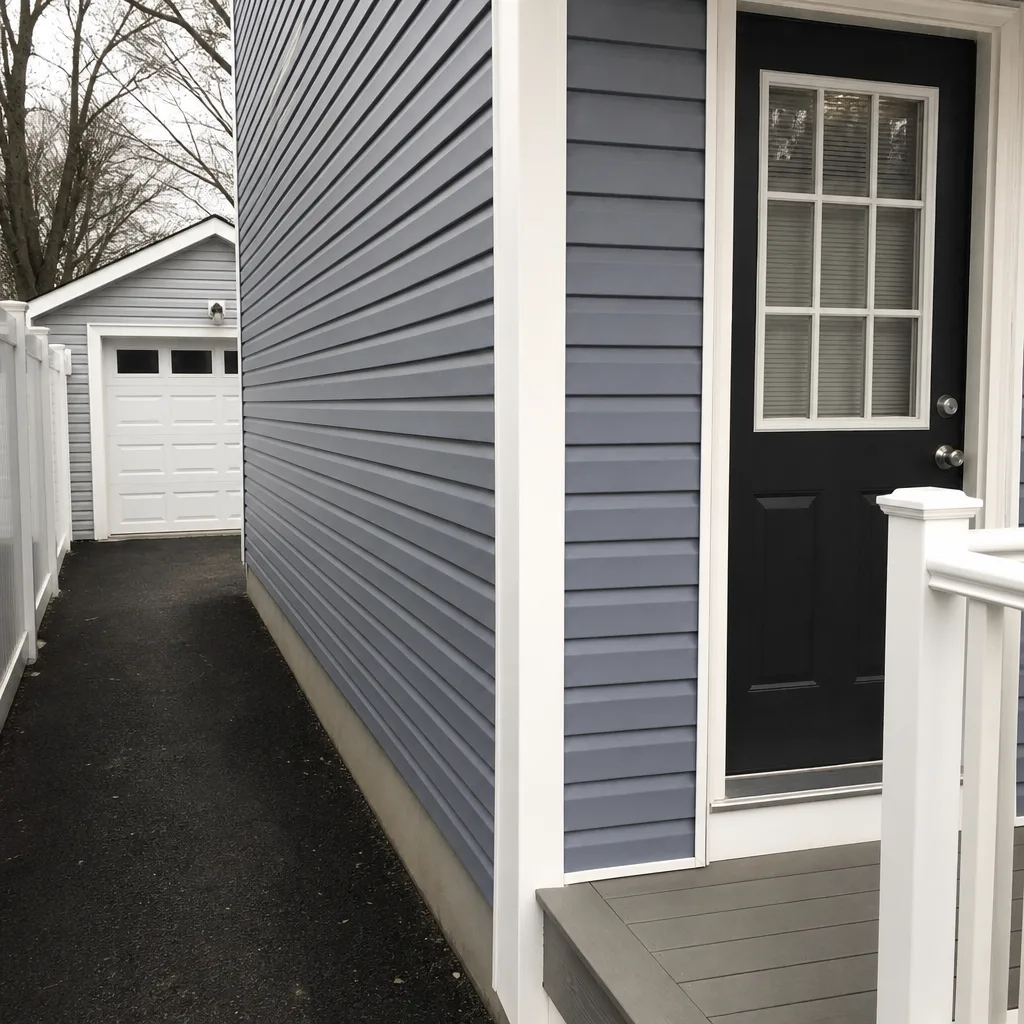 After
After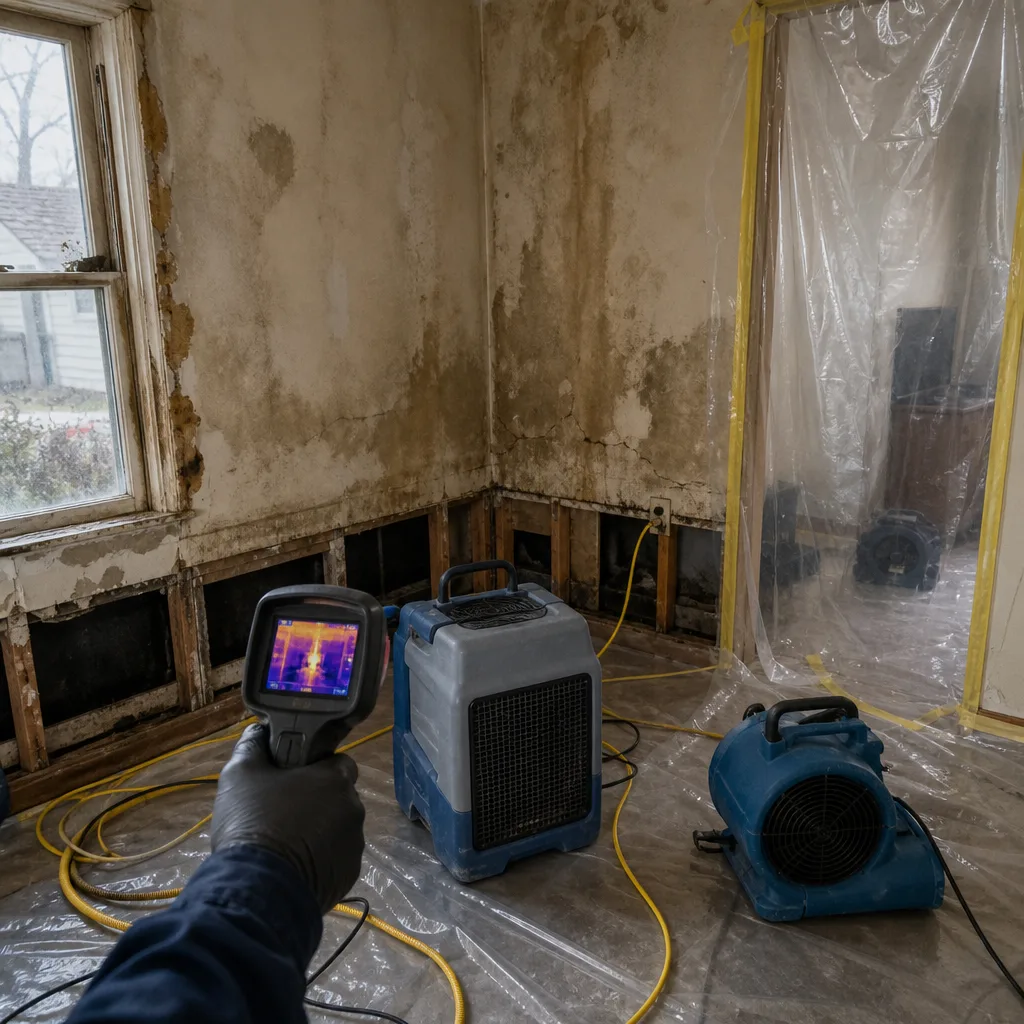 Before
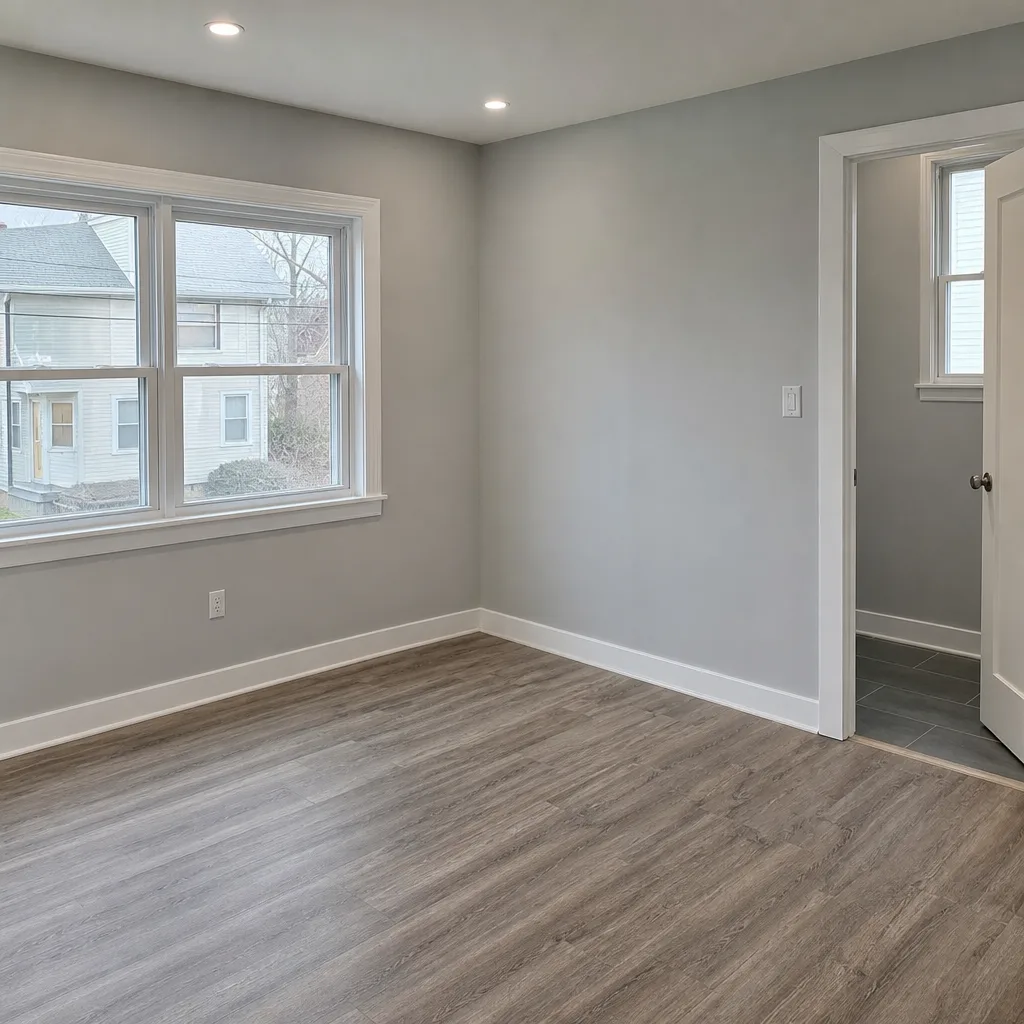 After
After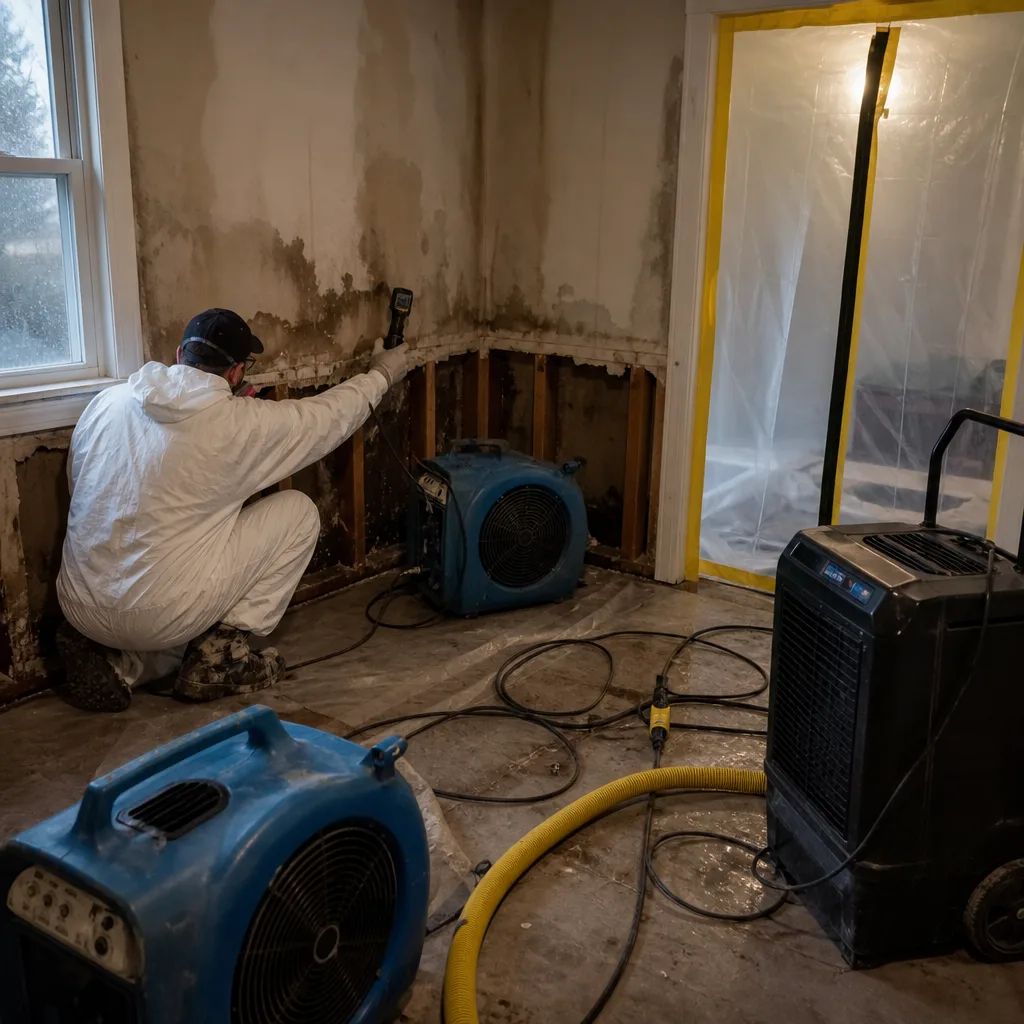 Before
 After
After24/7 Emergency Storm & Disaster Restoration in Kearny
When a storm puts water in your Kearny basement or a wind gust tears a hole in your roof at 2 a.m., you need a real person on the phone and a crew on the way. Floodline Restoration Co. answers live around the clock with local dispatch that reaches every corner of Kearny, from the Passaic River side to the eastern sections near the old Meadowlands. Call (551) 373-5246 and a certified technician walks your property the same visit. The first hour after a storm matters more than most homeowners realize: standing water soaks into 1920s-era stone foundations within minutes, and every hour it sits raises the cost of drying and rebuild. We do free visual inspections, give you a written scope before work starts, and never make you play messenger with your insurance carrier.
Understanding Storm & Disaster Restoration Severity in Kearny Properties
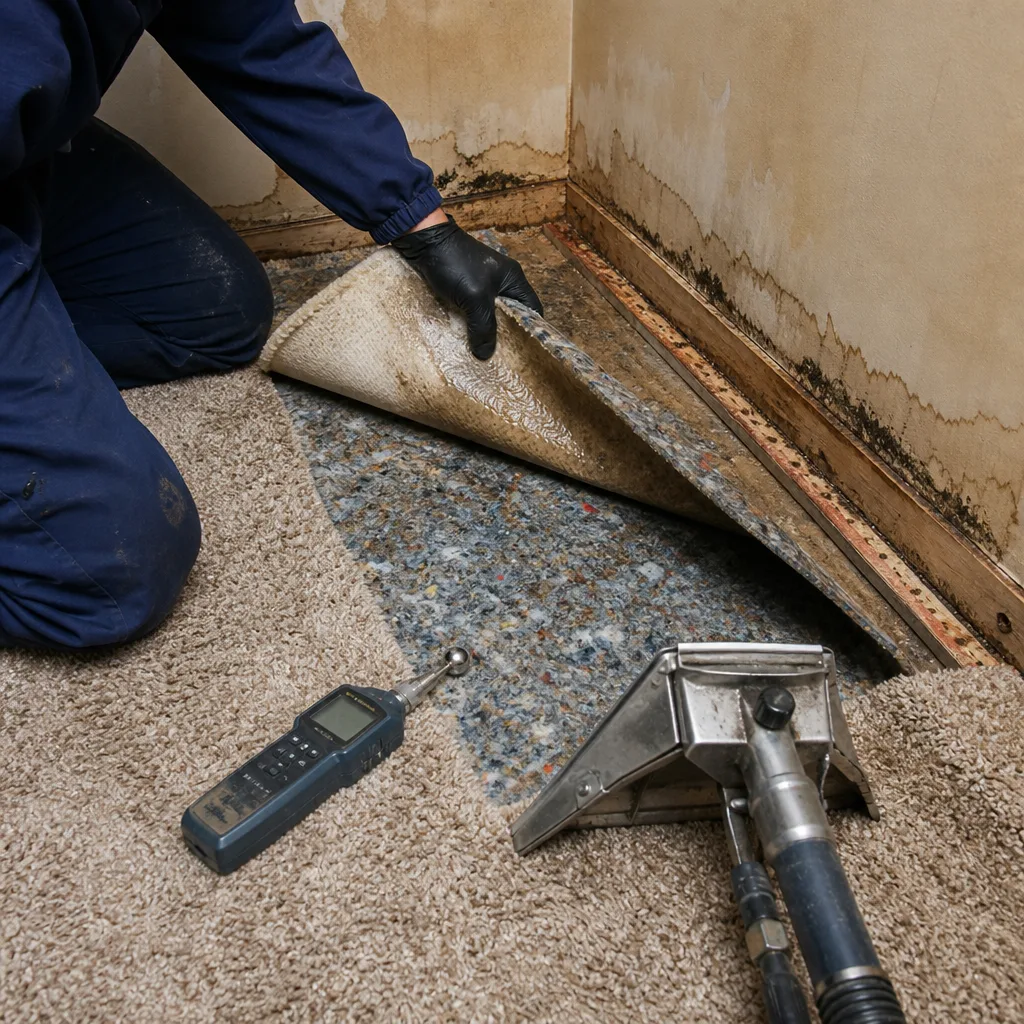
Not all storm water is the same. Restoration crews grade water intrusion by category, and that grade changes the entire job. Category 1 water is clean, from a burst supply line or rain that hasn’t touched anything dirty. Category 2 carries significant contamination, like water that has run across a flooded yard or through building materials. Category 3 is grossly contaminated, carrying sewage, river water, or anything that has backed up from a combined storm drain. Here’s what you need to know about Kearny specifically: in the lower-eastern sections of town, one heavy rain event turns what looks like a Category 1 basement incident into a Category 3 sewage job faster than anywhere else in Hudson County. The combined storm and sanitary sewer system surcharges into basements through floor drains and cleanout caps, and the water that comes back up is not the water that fell from the sky. Our crews carry moisture meters, thermal imaging cameras, and hygrometers on every truck, and we log daily readings until the drying standard is met, not until the surface feels dry. For older Kearny homes with plaster-and-lath walls and stone foundations, that’s a longer road than for a modern slab-on-grade build.
Why Kearny Property Owners Choose Floodline Restoration Co.
- 45-minute response commitment: When you call with standing water or storm damage in Kearny, a crew is dispatched immediately and reaches your door quickly, with live dispatch tracking every step.
- 24/7 live answer, always a person: No recordings, no call centers, no “leave a message.” A live dispatcher picks up at any hour, every day of the year.
- IICRC-certified crews: Our technicians hold WRT (Water Damage Restoration), FSRT (Fire & Smoke Restoration), and AMRT (Applied Microbial Remediation) certifications from the IICRC, and train to RIA and IFA standards.
- Free visual inspection: We look at the damage, check what most contractors miss, and give you a straight answer before a dollar changes hands.
- Direct insurance billing: We document from the first hour, send the paperwork to your carrier, and talk to your adjuster directly. You don’t carry messages.
- One team from extraction to reconstruction: The same certified crew that pulls the water out rebuilds the walls. No mid-job handoff to a subcontractor you’ve never met.
Our Storm & Disaster Restoration Process
Inspection & Assessment
We arrive, walk the property inside and out, and check the things that matter in Kearny: sewer cleanout caps, foundation type, wall materials, and the moisture load. Thermal imaging finds water hiding behind plaster and under floors that a visual check would miss.
Extraction & Stabilization
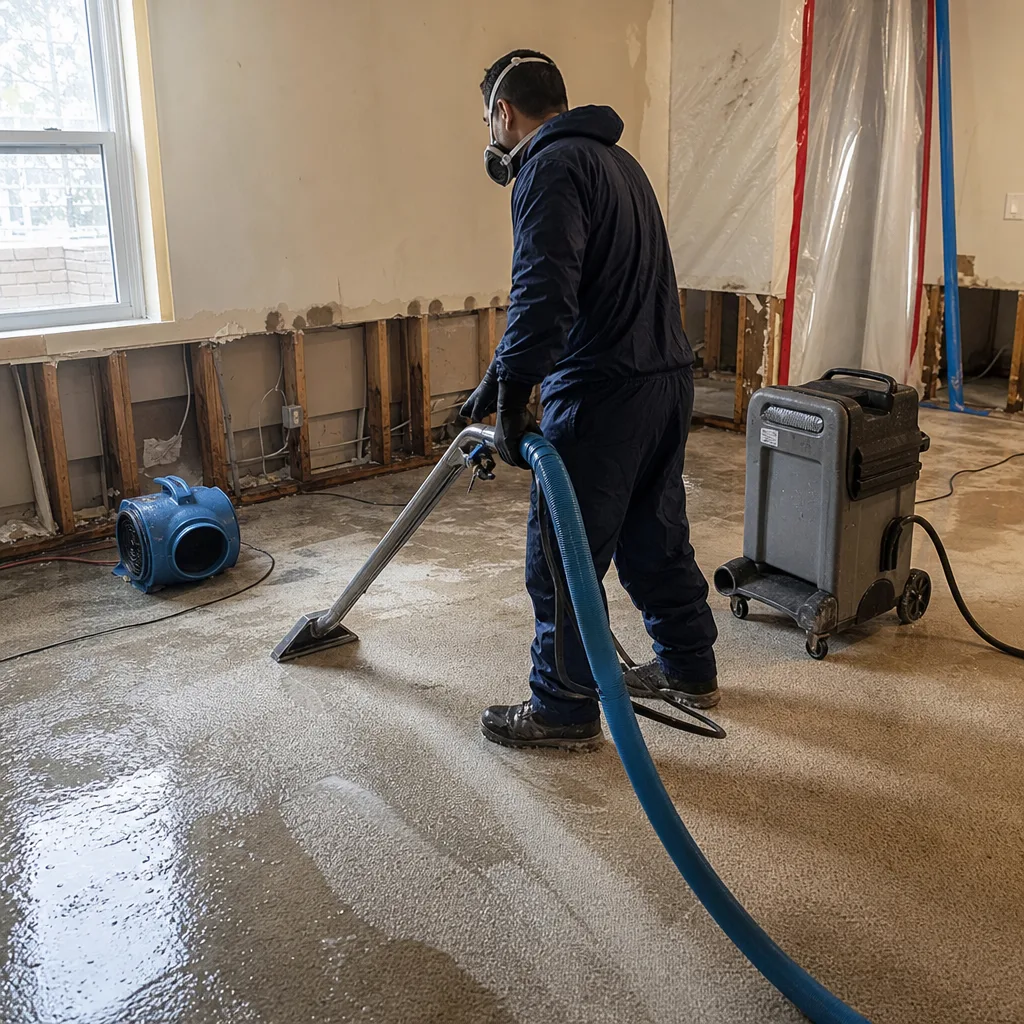
Before pumping starts, we verify the source. In lower-lying Kearny streets, that means checking whether the water came from a supply line or a surcharged combined sewer. Gravity-fed trash pumps remove standing water, truck-mounted extractors pull water from carpets and pad, and emergency board-up or roof tarping secures the envelope.
Drying & Dehumidification
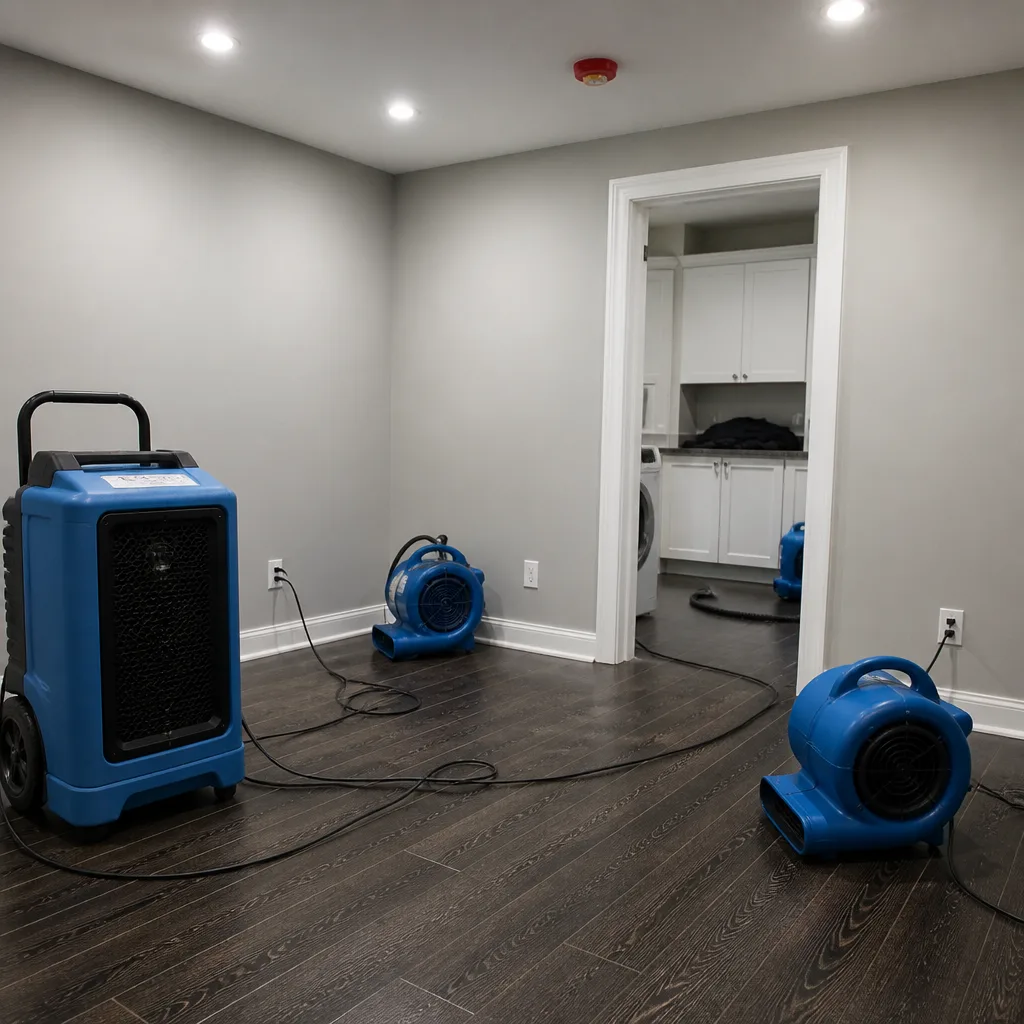
We set Dri-Eaz dehumidifiers, XPOWER air movers, and Injectidry drying systems on every wet surface. In the filled meadowlands sections of Kearny, the residual water table keeps foundation soils saturated, so we run equipment longer than standard and take daily moisture readings until the dry standard is met, never before.
Cleaning & Sanitization
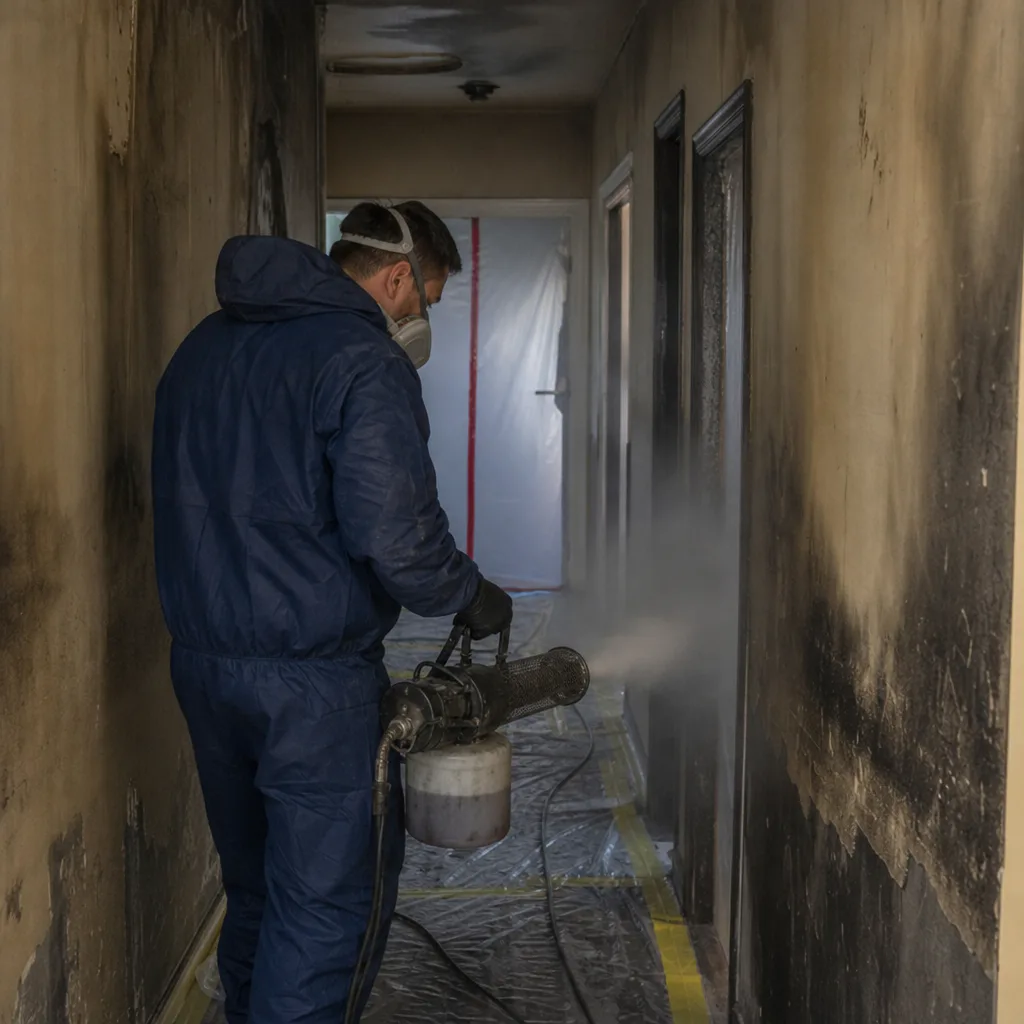
For Category 3 water, we set containment barrier on the affected area, establish negative air pressure, and apply broad-spectrum antimicrobial treatments. For storm damage with less contamination, we clean surfaces, HEPA-vacuum, and rely on our Sanitization Services in Kearny to treat what’s salvageable.
Asbestos & Hazard Coordination
Many Kearny homes from the 1890s through 1940s contain asbestos floor tile, plaster, and pipe insulation. If our crew identifies these materials, we order testing and coordinate abatement before standard structural drying proceeds, so you aren’t hit with an emergency stop mid-job.
Repairs & Restoration
Once drying is confirmed, the same crew handles Reconstruction & Cleanup in Kearny: drywall, plaster, trim, flooring, painting. You get one team, one warranty, and the 90-Day Done Right Promise in writing. If it’s not done right, we make it right. No arguing.
Need Emergency Storm & Disaster Restoration in Kearny Now?
Crews minutes away, answering live 24 hours a day. The sooner we start, the less it costs.
Working With Your Insurance Company
Storm damage claims in Kearny get complicated fast, especially when Category 3 sewage water is involved. Your carrier will want documentation: what caused the loss, what category of water it is, what’s damaged, and how the dry-out was conducted. We handle that from the first hour. Our crews photo-document every room, log moisture readings daily, and prepare a line-item scope of work using industry-standard estimating software that your adjuster already recognizes. We talk to the adjuster directly, answer their questions, and push back when a settlement shortchanges the real cost of restoring your home. You get a complete record of the loss, the response, and the rebuild. This is standard practice for us, not an add-on.
What We Provide Your Insurer
- Thorough documentation of the loss
- Photos of all damage, room by room
- Moisture readings and drying logs
- A detailed, line-item scope of work
- Direct coordination with your carrier
Built for Kearny’s Loss Calendar
Kearny’s storm problems don’t follow a neat seasonal schedule, but the patterns are real. January and February bring deep freezes that burst supply lines in uninsulated 1920s-era basements. March and April thaw fills the saturated meadowlands soil and pushes groundwater into stone foundations that have been wicking moisture for a century. Summer thunderstorms drop an inch of rain in an hour, and the combined sewer system on the eastern side of town can’t take it, so basements flood with contaminated water. Fall nor’easters and the remnants of tropical storms bring the remembered floods: Sandy in 2012, Ida in 2021. Both left homes in Kearny needing months of structural drying and rebuild. What that means for you: the water that enters your home in February is a different problem than the water that enters in August, and treating them the same is how mold takes hold in the 24-to-48-hour window. Our Storm & Disaster Restoration team plans for this calendar, not against it.
Storm & Disaster Restoration Across Kearny’s Neighborhoods
The Manor section, along the Passaic River on the west side, sees river-related flooding during major storm events and older brick homes with basement water tables that respond to the river level. The Lower East Side section, bordered by the former Hackensack Meadowlands and centered on streets like Highland Avenue and Afton Street, is the epicenter of combined sewer surcharge problems. The Arlington section on the north end, closer to the higher ground toward North Arlington, gets less standing water but still faces wind damage and roof leaks on homes that date to the 1900s. The South Kearny industrial and residential corridor along Passaic Avenue handles runoff from the truck routes and aging infrastructure that sends debris and water downhill. Along Kearny Avenue, the main commercial spine, mixed-use buildings with first-floor retail and upstairs apartments present a different challenge: water that enters at street level spreads into occupiable space fast, and drying a brick two-family with shared walls requires containment that respects the neighbors. Wherever you are in Kearny, we run the same playbook but read the block first.
Specialized Storm & Disaster Restoration Services We Offer in Kearny
Storm Damage Cleanup
Wind, rain, and debris leave messes that range from broken glass and downed branches to saturated insulation and water-logged contents. We remove the debris, assess what can be saved, and start the drying process on the same visit. On Kearny’s densely packed blocks, we’re careful about disposing of saturated materials without creating a hazard for adjacent homes.
Flood Damage Restoration
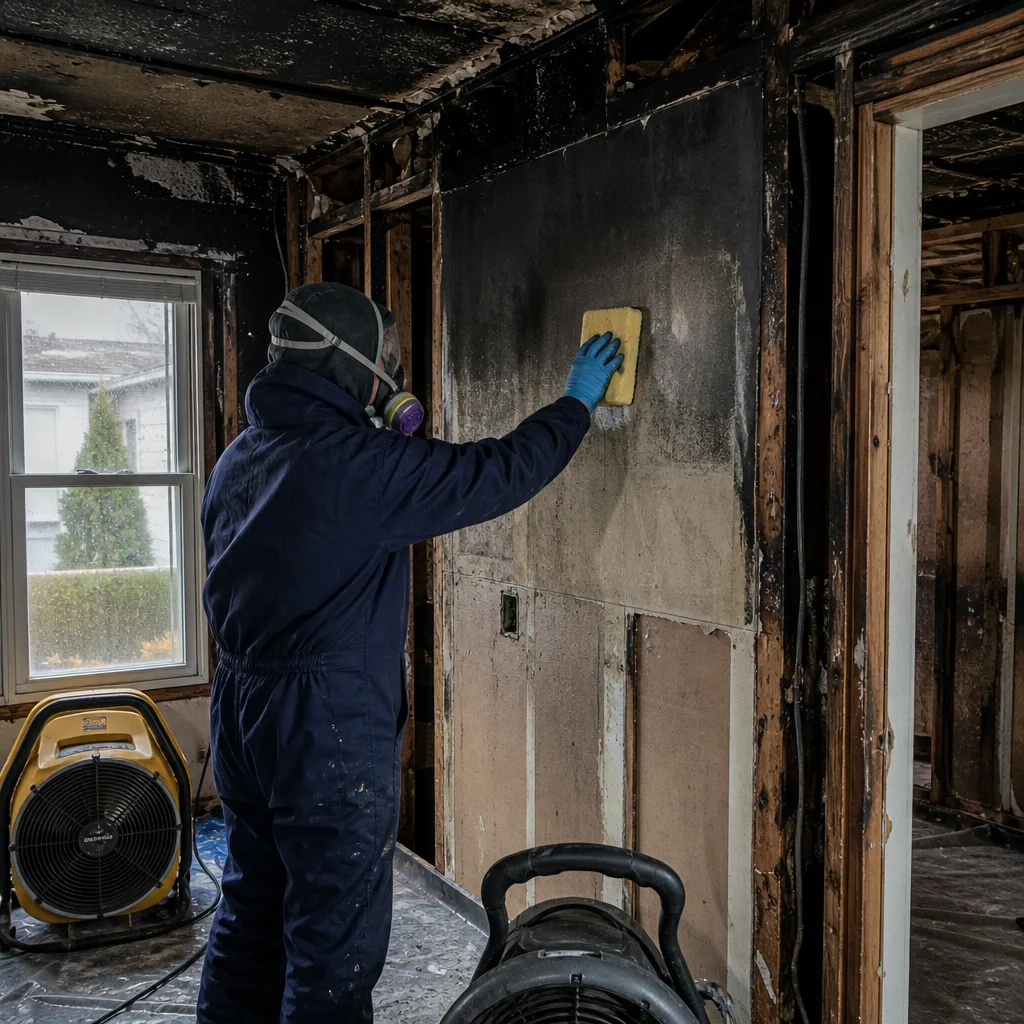
This is the job we know best in Kearny. Flood water here is not theoretical. It’s the standing water in a basement on Highland Avenue after a summer downpour, and it’s often Category 3. We check the sewer cleanout cap before pumping, set containment where required, extract, dry, and handle Biohazard & Crime Scene Cleanup - Kearny standards to sanitize and rebuild. The high water table in the eastern sections means we run drying equipment longer than standard practice, with daily moisture logs to prove the standard was met.
Emergency Board-Up
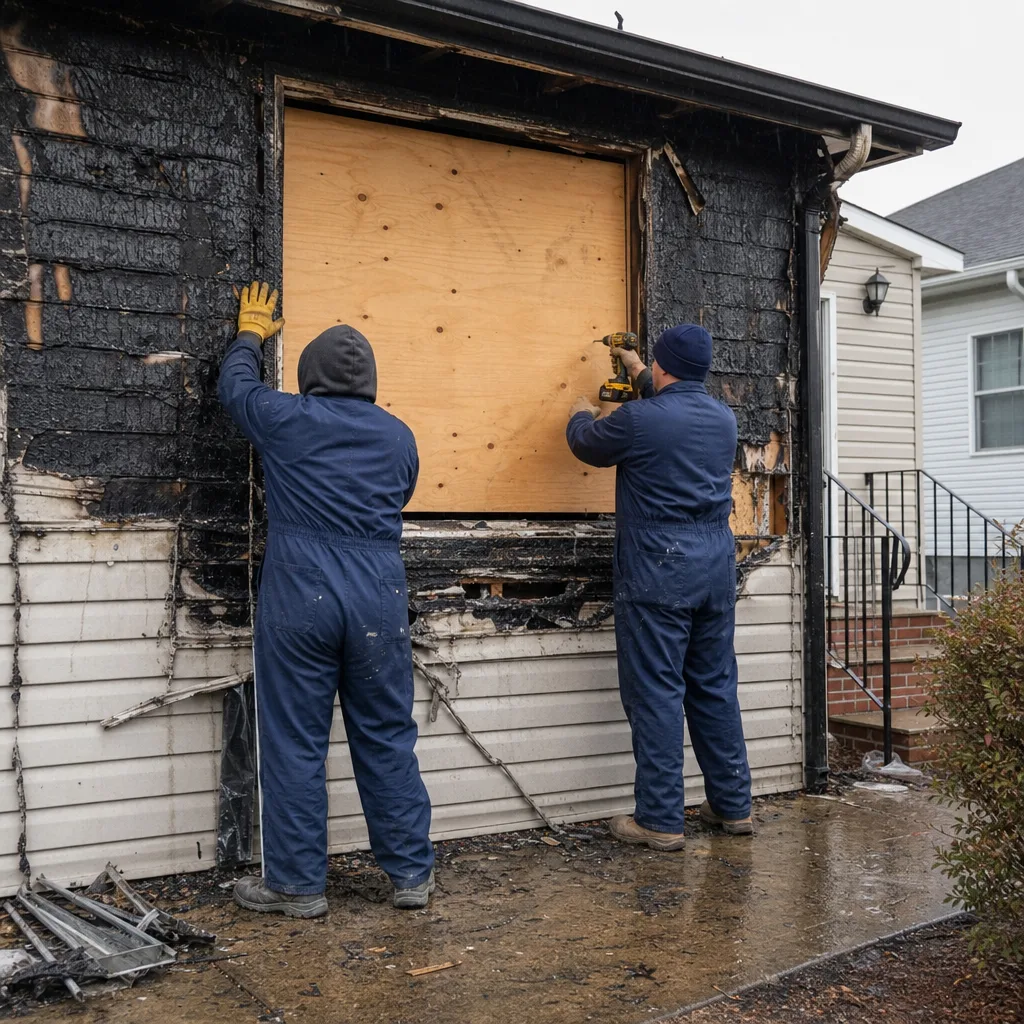
When a tree limb takes out a front window or wind pries open a door frame, an open house invites worse problems: looting, animal intrusion, more water. We respond fast, board up the opening with plywood, and make the property secure until permanent repairs are scoped and scheduled. On Kearny’s older frame homes, we anchor boards without causing more damage to original trim and siding.
Roof Tarping
Storm winds in a nor’easter can peel shingles off a 1920s roof in minutes. We tarp the affected area quickly so rain doesn’t pour into the attic and down through plaster ceilings. It’s a temporary fix, but done right it saves you from a full interior restoration later.
Debris Removal
Fallen trees, broken gutters, wind-strewn materials. We clear the property and haul it away, then check the envelope for hidden damage: lifted flashing, cracked vent pipes, compromised window seals. What looks like a yard cleanup often reveals a roof leak waiting to happen on the next rain.
What happens when you call
- 1
A real person answersNo phone trees - you reach a local pro.
- 2
You get an upfront price rangeHonest numbers before anyone is dispatched.
- 3
A background-checked tech heads outLicensed & insured, dispatched right away.
- 4
You approve before work beginsNothing starts until you say go.
Storm & Disaster Restoration Costs in Kearny, NJ
You deserve real numbers. A Category 1 water extraction and dry-out in a finished Kearny basement typically runs $2,800-$5,500, depending on square footage and how long the water sat. Category 3 sewage backup jobs add containment, antimicrobial treatment, and possible material removal, bringing the range to $5,000-$12,000+. Emergency board-up runs $300-$800 per opening. Roof tarping runs $400-$1,200, depending on access and roof pitch. Debris removal starts around $350 and goes up with volume and haul distance. What moves the price: the water category, whether asbestos-containing materials are present, the age of your plaster-and-lath walls, and how much must be removed to dry properly. Insurance covers most storm-related losses, minus your deductible; we bill your carrier directly and never ask you to front the money. The fastest way to a firm number is a free visual inspection. Call us and we’ll walk the property, check the cleanout cap, and give you a written scope before any work begins.
We Also Serve Cities Near Kearny
Our crews serve Kearny and the surrounding towns, including Harrison, North Arlington, Lyndhurst, and Secaucus. If you have storm damage or a flooded basement in any of these communities, call the same live number: (551) 373-5246.
Serving Kearny, NJ - Our Local Coverage Area
We’re based in the Kearny area and know this community well. Use the map below to see our service coverage - if you’re nearby, we can almost certainly help.
Kearny Storm & Disaster Restoration Questions, Answered
Why does a flooded basement in eastern Kearny often require Category 3 sewage protocols even when the water looks clear?
Kearny’s combined storm and sanitary sewer system shares the same pipes. During heavy rain, the system surcharges and pushes both stormwater and raw sewage back through floor drains and cleanout caps. Even water that looks clear can carry sewage pathogens from the shared lines. We check the cleanout cap and test before classifying the water category. If there’s any doubt, we treat it as Category 3, which protects your health and keeps your insurance claim honest. Call (551) 373-5246 and we’ll verify the source before anything is pumped.
How does Kearny’s high water table affect how long structural drying takes after a storm?
The filled meadowlands sections of Kearny sit on saturated soil that holds water against foundation walls. Even after standing water is extracted, moisture wicks back through stone and cinder-block foundations continuously. Standard drying timelines used in upland towns fail here. Our crews run Dri-Eaz dehumidifiers and XPOWER air movers longer, with daily moisture readings, often taking 10 to 14 days instead of 3 to 5. We don’t shut down equipment until the dry standard is met and logged.
What should I check before pumping water out of my Kearny basement after a storm?
Before anyone starts pumping, check the sewer cleanout cap and floor drains. If the water backed up from the combined sewer, it’s Category 3, and pumping it as clean water spreads sewage residue across your basement. If the water is actively rising, shut off electricity to the basement if you can do so safely from a dry location, and call us immediately at (551) 373-5246. We check the source before we pump, every time.
Will my 1920s-era Kearny home need asbestos abatement before storm damage drying can begin?
Many Kearny homes built between the 1890s and 1940s contain asbestos in floor tile, pipe insulation, or plaster. If water exposure has saturated those materials and they need to be removed or drilled for drying, we order asbestos testing first. Positive results mean abatement coordination before structural drying proceeds. Skipping this step can aerosolize asbestos fibers and force an emergency stop mid-job, plus a compliance headache. We handle the testing and coordination as part of our process.
Can my two-family Kearny home be dried in place after a sewage backup, or does everything need to come out?
Drying in place is possible for some materials, but Category 3 water changes the math. Porous materials like carpet, pad, and saturated drywall typically must be removed and disposed of as contaminated waste. Hard surfaces like concrete, studs in wall cavities treated with antimicrobials, and some plaster can be dried in place with proper containment. We set negative air and HEPA filtration in the affected area, remove what must go, and dry what can be saved. The answer depends on your home’s construction and how long the water sat.
How fast can a crew actually get to my Kearny home after I call?
We commit to a 45-minute response time for emergency calls in Kearny. Live dispatch coordinates our local crews from the metro office, and you’re not routed through a national call center. Call (551) 373-5246 and a person answers, confirms your address, and dispatches a certified crew. The goal is extraction running the same visit, because every hour of standing water in a 1920s basement adds cost and extends recovery.
Are your technicians certified to handle storm damage and sewage cleanup in Kearny?
Yes. Our technicians hold IICRC certifications including WRT (Water Damage Restoration), FSRT (Fire & Smoke Restoration), and AMRT (Applied Microbial Remediation), and train to RIA and IFA standards. Every crew member is background-checked and uniformed. The certifications matter here because Kearny’s storm work frequently involves Category 3 water and asbestos coordination, which require more than a truck and a pump.
What should I do in the first 30 minutes after a storm floods my Kearny basement?
Do not enter standing water if electricity is still on in the basement. If you can safely reach the breaker from a dry location, turn off power to the affected area. Don’t pump anything yet. Call (551) 373-5246 immediately. Our dispatcher will tell you what to check and what to leave alone. Then stay out of the water until a certified crew arrives. If the water is from a sewage backup, walking through it spreads contamination through your home.
Written by Curt Bowman, Owner at Floodline Restoration Co., providing Storm & Disaster Restoration in Kearny and surrounding Hudson County communities. Floodline Restoration Co. is led by Curt Bowman and serves property owners across the Kearny area from its metro dispatch office.