
Free visual inspection and a written scope of work before any mitigation begins - photos, moisture readings, and drying logs go in your claim file
The scope we write is the scope we bill. Anything new gets shown to you, in writing, before we touch it.
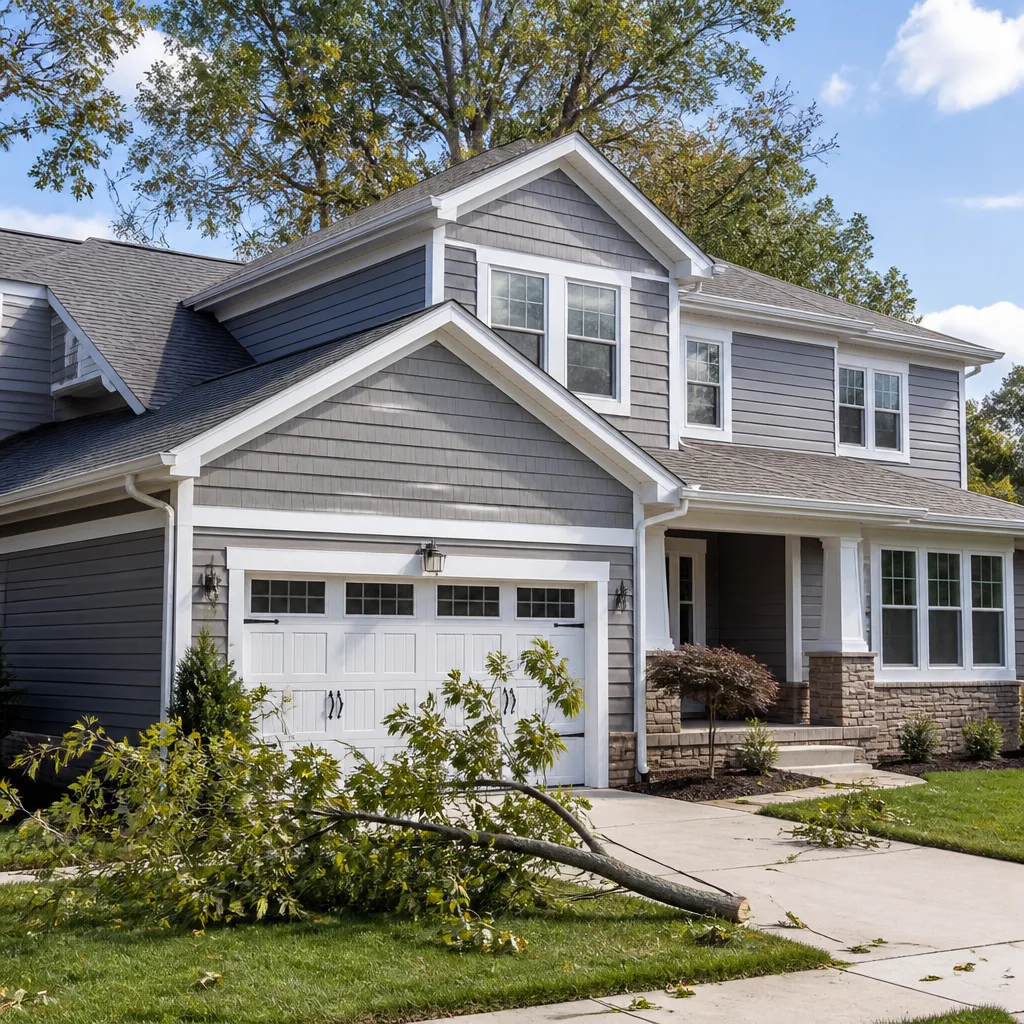
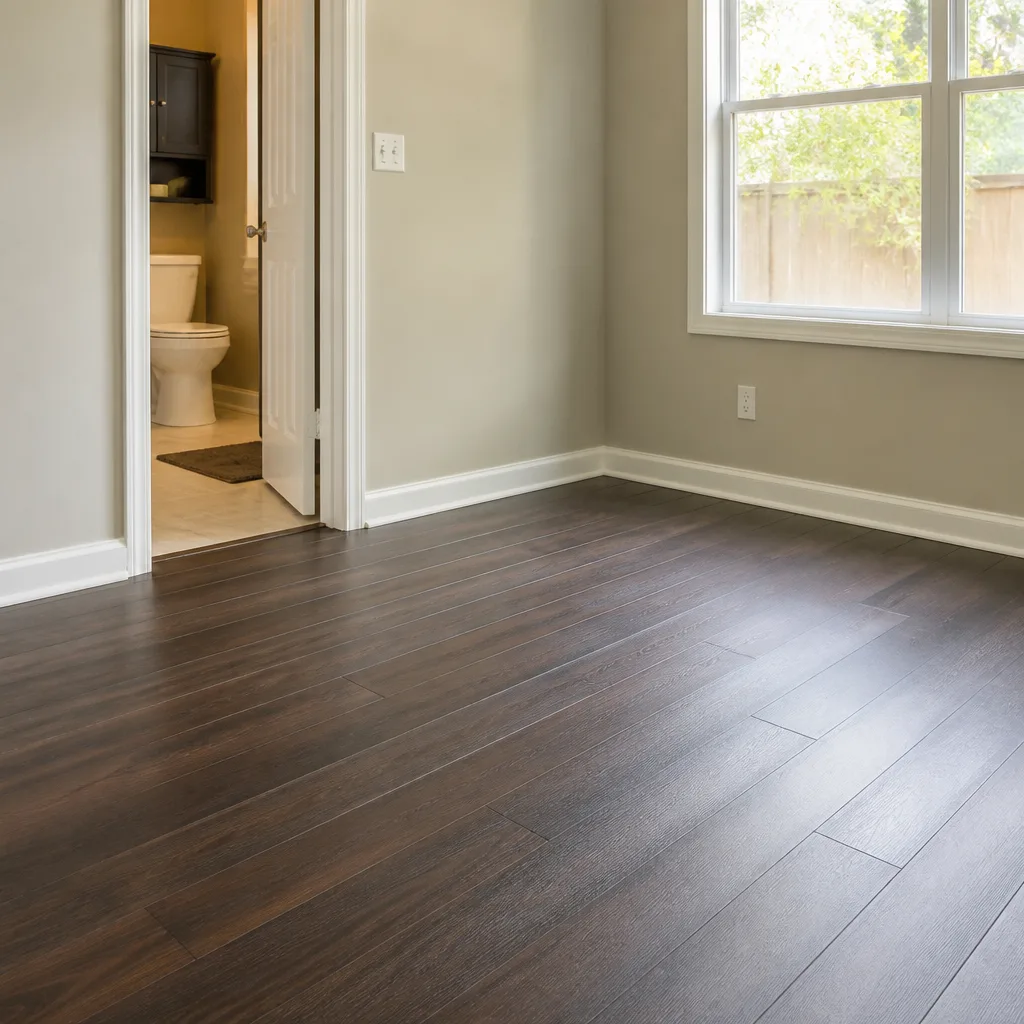
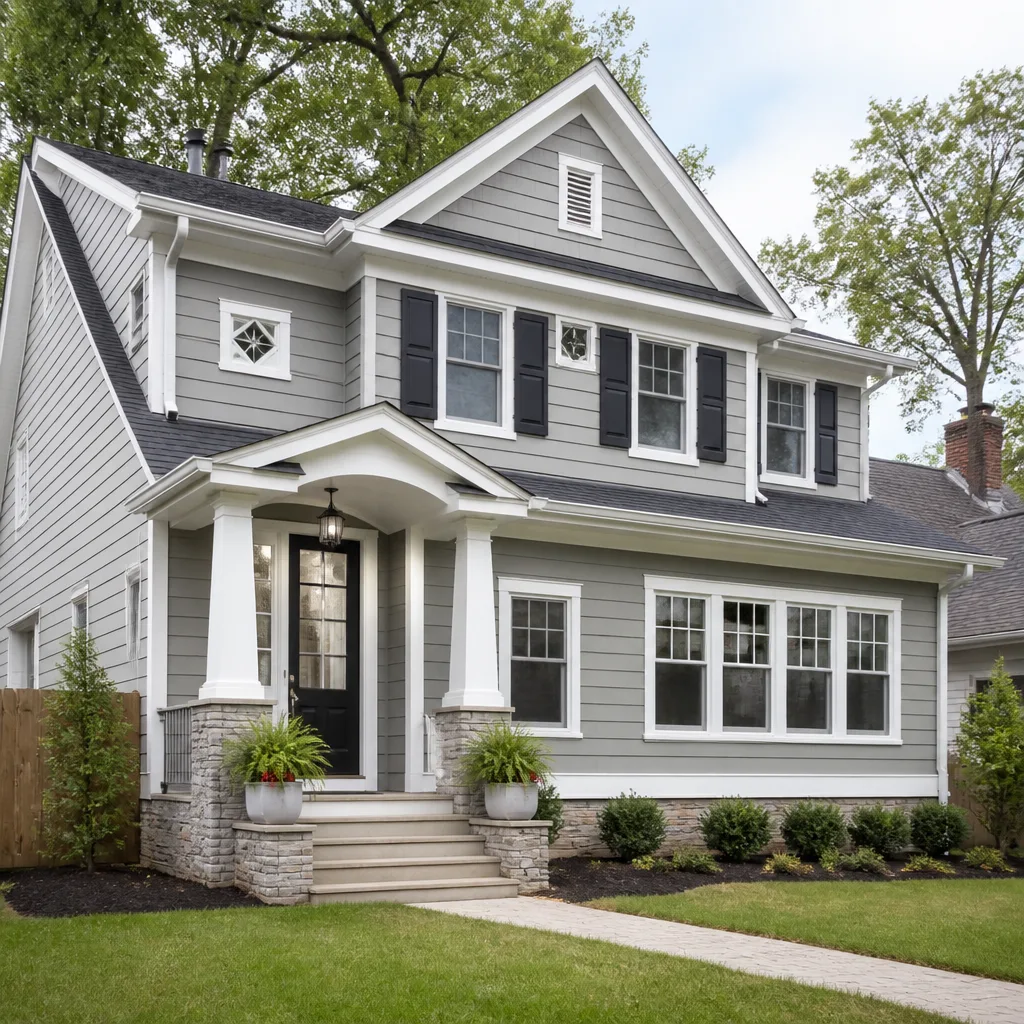
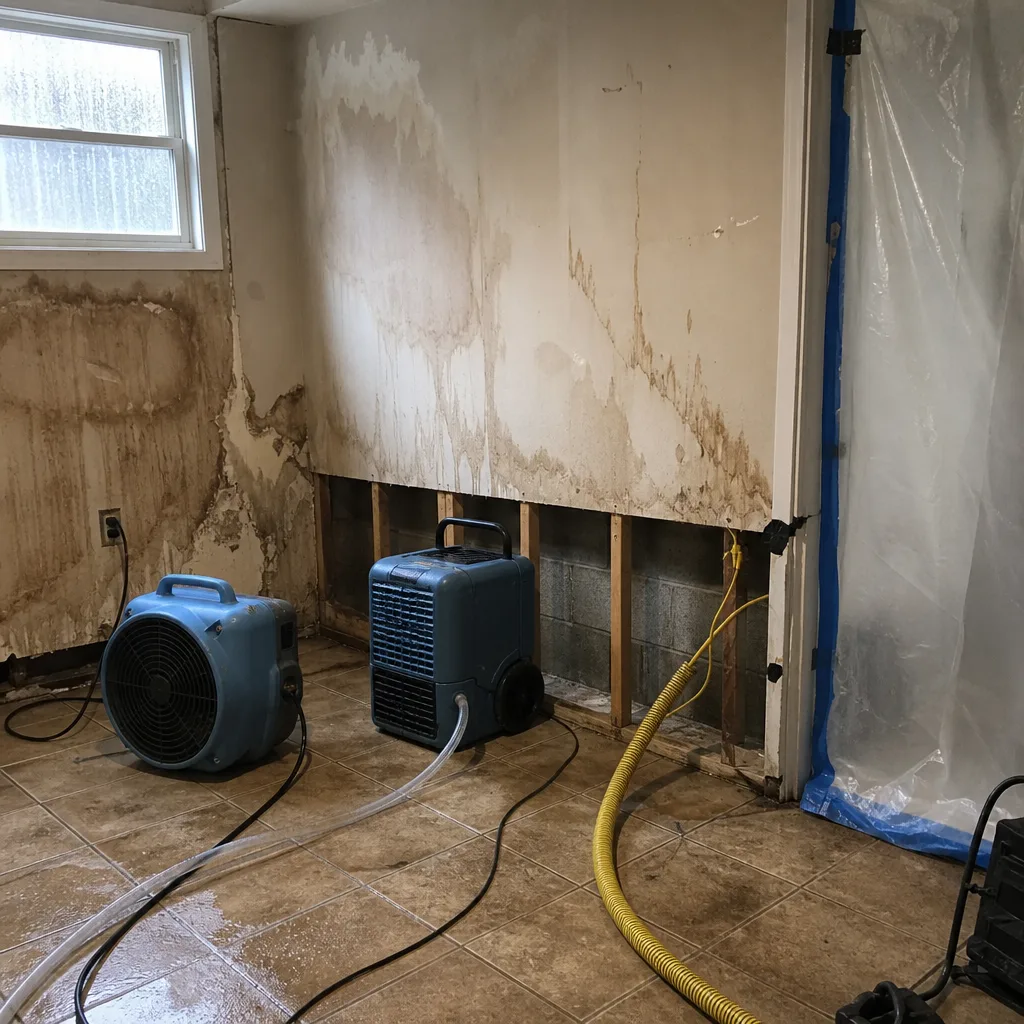 Before
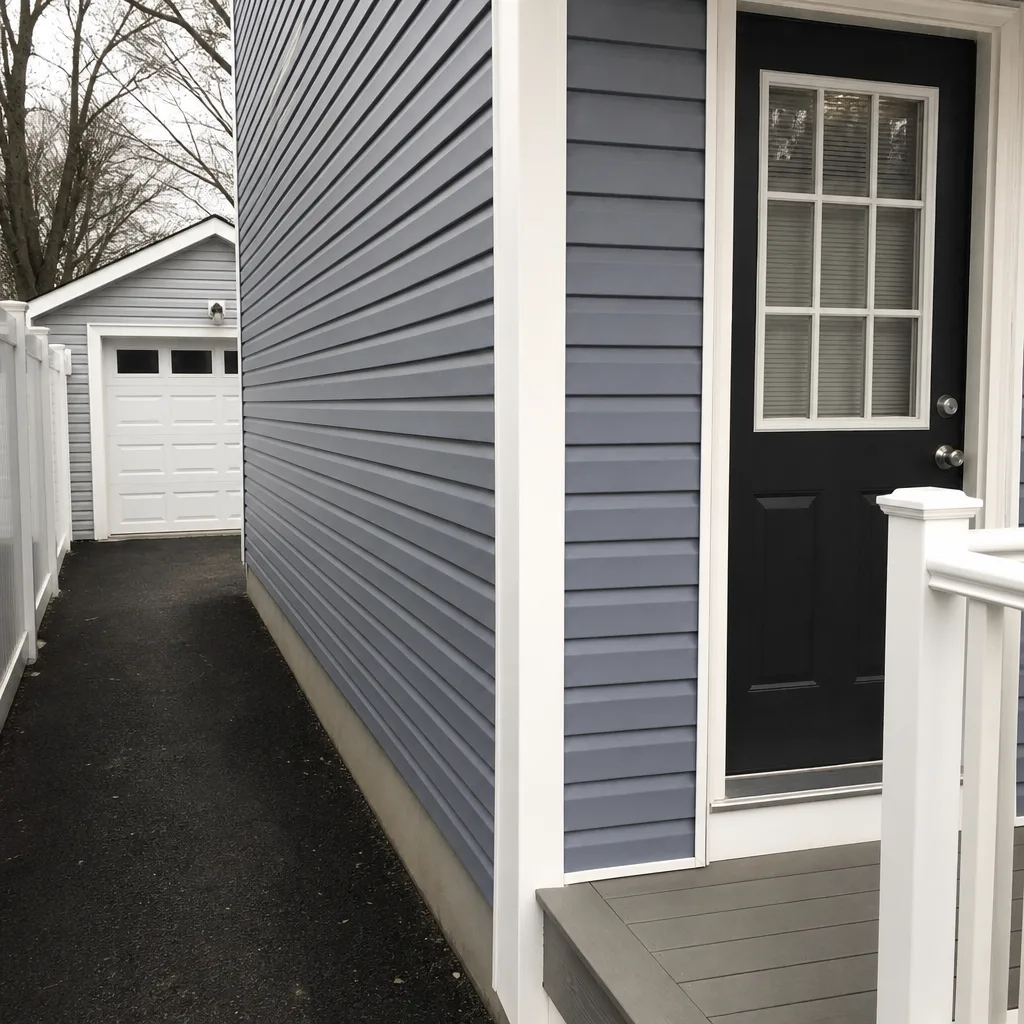 After
After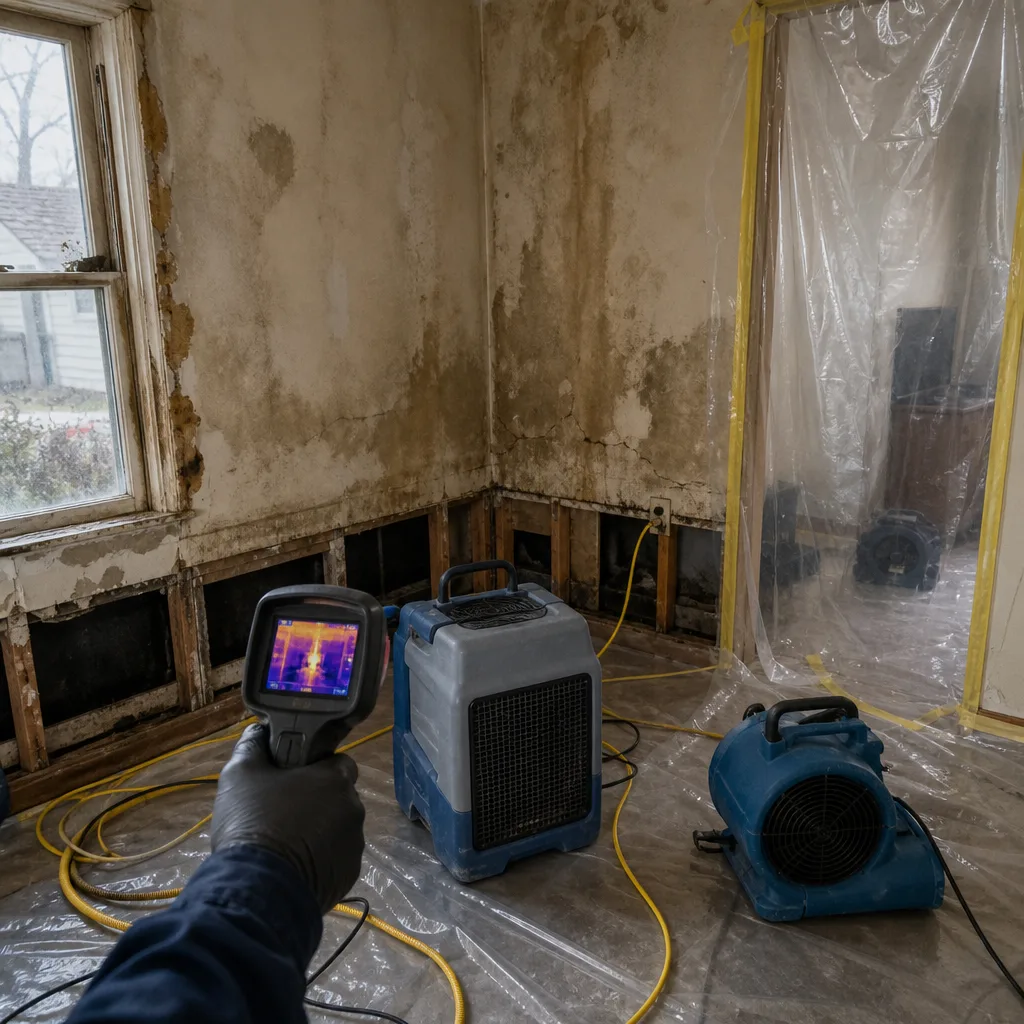 Before
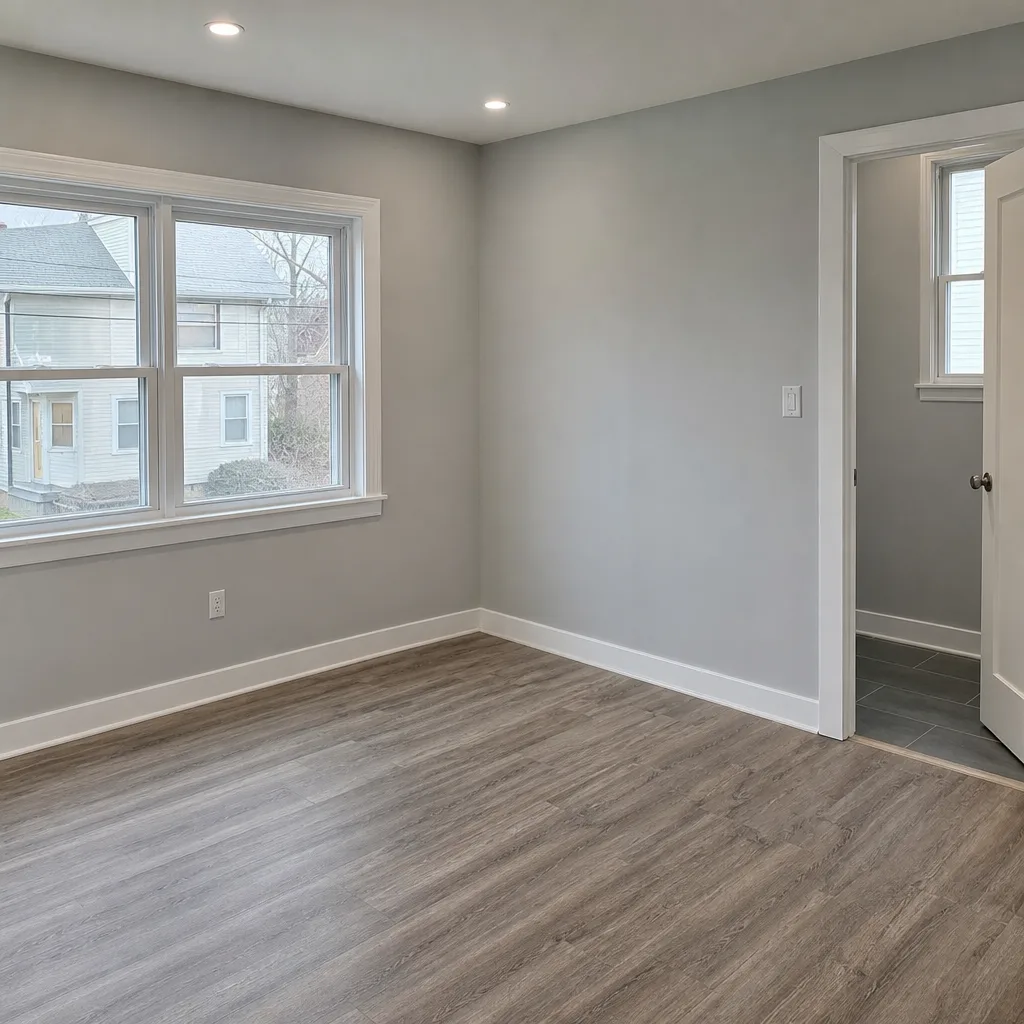 After
After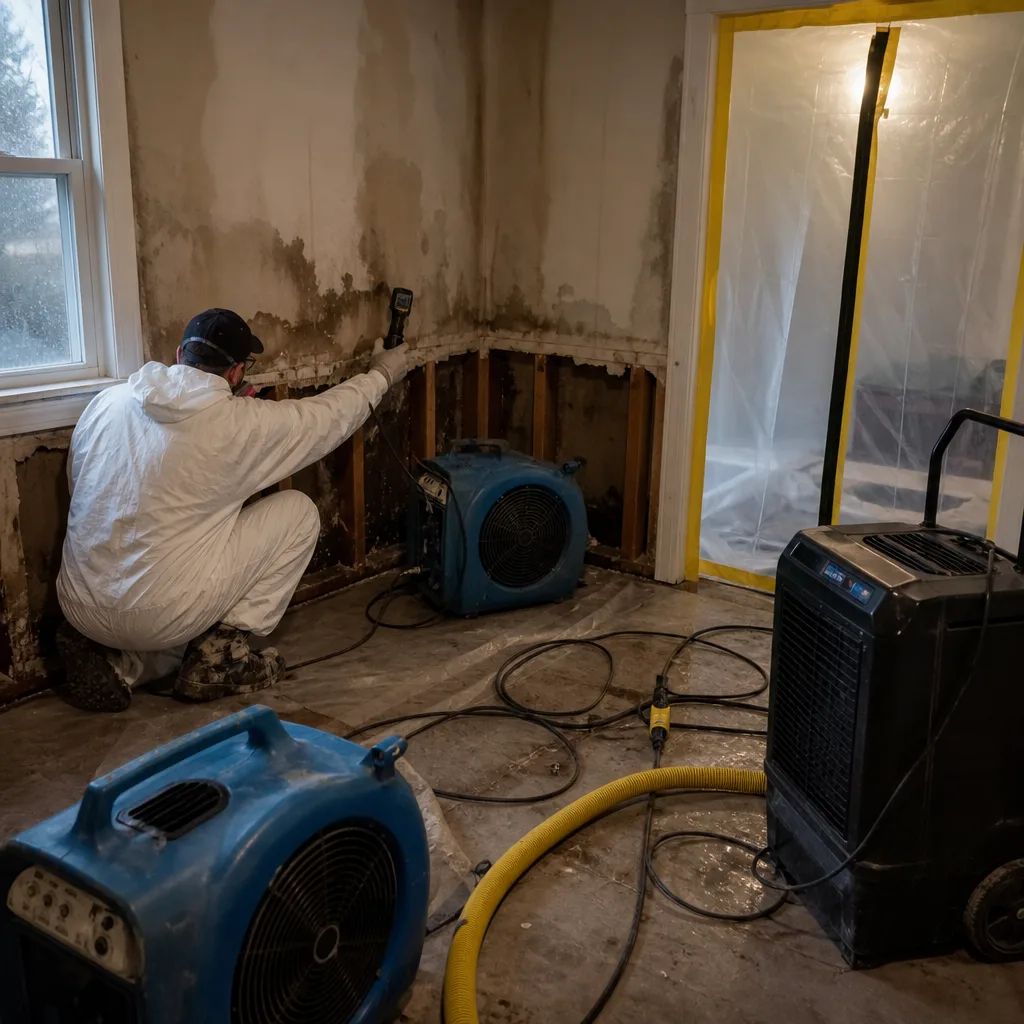 Before
 After
After24/7 Emergency Water Damage Restoration in Jersey City
Water damage restoration in Jersey City typically runs $1,500-$6,500 depending on how far the water traveled and what it touched, and the first call you make determines how much of your home we can save. Floodline Restoration Co. answers live at (551) 373-5246 around the clock, every day of the year. A dispatcher picks up, asks the right questions, and puts a certified crew on the road toward your neighborhood within 45 minutes. The first hour matters most in Jersey City because water moves fast through horsehair plaster, lath, and shared masonry before it ever shows on the surface. We start with a free visual inspection, a moisture map, and a clear written scope before any work begins. The line the water left is where we start.
Understanding Water Damage Restoration Severity in Jersey City Properties
The difference between a $1,200 cleanup and a $28,000 restoration often comes down to the category of water that entered your home. Category 1 water comes from a clean supply line or faucet. Category 2 carries significant contamination from sources like washing machine discharge or a toilet overflow without solid waste. Category 3, called black water, contains pathogens and requires full biohazard protocols, containment, and disposal. Jersey City’s dense attached housing stock complicates all three categories. Late-19th and early-20th century brick row houses with horsehair plaster walls and lath framing absorb water laterally through shared masonry cavities. What starts in your basement can migrate into a neighbor’s unit within 48 hours. Our crews use thermal imaging and penetrating moisture meters to map the full extent of saturation before we touch a wall. In waterfront districts like Paulus Hook, we also account for residual moisture from prior flood events that reactivates the moment new water arrives. Severity assessments here are not just about what you see.
Why Jersey City Property Owners Choose Floodline Restoration Co.
- 45-minute response commitment. A live dispatcher confirms your address in Jersey City and a uniformed, background-checked crew is rolling within the hour, every time.
- 24/7 live answer, never a recording. Call (551) 373-5246 at 2 a.m. and a person picks up. Not a voicemail. Not an answering service that promises a callback.
- IICRC-certified technicians. Our crews hold WRT and ASD certifications and follow RIA and IFA standards on every job. You’ll see the training in how we set containment and log moisture readings.
- Free visual inspection with a written scope. We walk the property, map the moisture, and hand you a line-item scope before any work is authorized. A square deal: no surprises on the bill.
- Direct insurance billing. We document the loss from hour one and bill your carrier directly. You never play messenger between Floodline and the adjuster.
- One team from first extraction to finished rebuild. The same certified crew that pumps the water also frames the new walls. No mid-job handoff, no inherited subcontractors.
Our Water Damage Restoration Process
Inspection & Assessment
We start with thermal imaging and penetrating moisture meters to find water you cannot see. In Jersey City row houses, that means checking shared party walls, floor joists, and crawl spaces where water hides. You get a room-by-room moisture map and a firm written scope.
Extraction & Stabilization
Truck-mounted extraction units pull standing water from basements, floors, and wall cavities. If the water is Category 3 from a combined-sewer backup, we set containment first and treat it as a biohazard scope from that moment.
Drying & Dehumidification
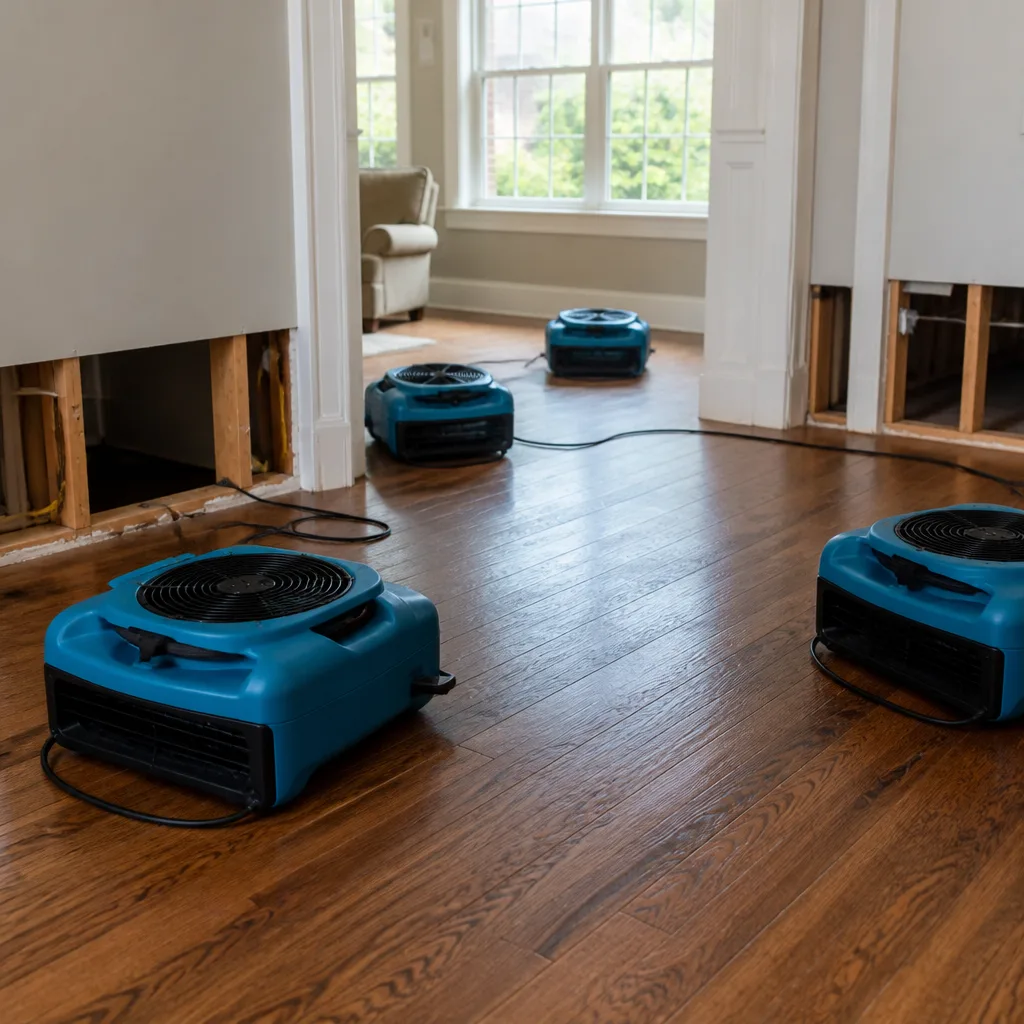
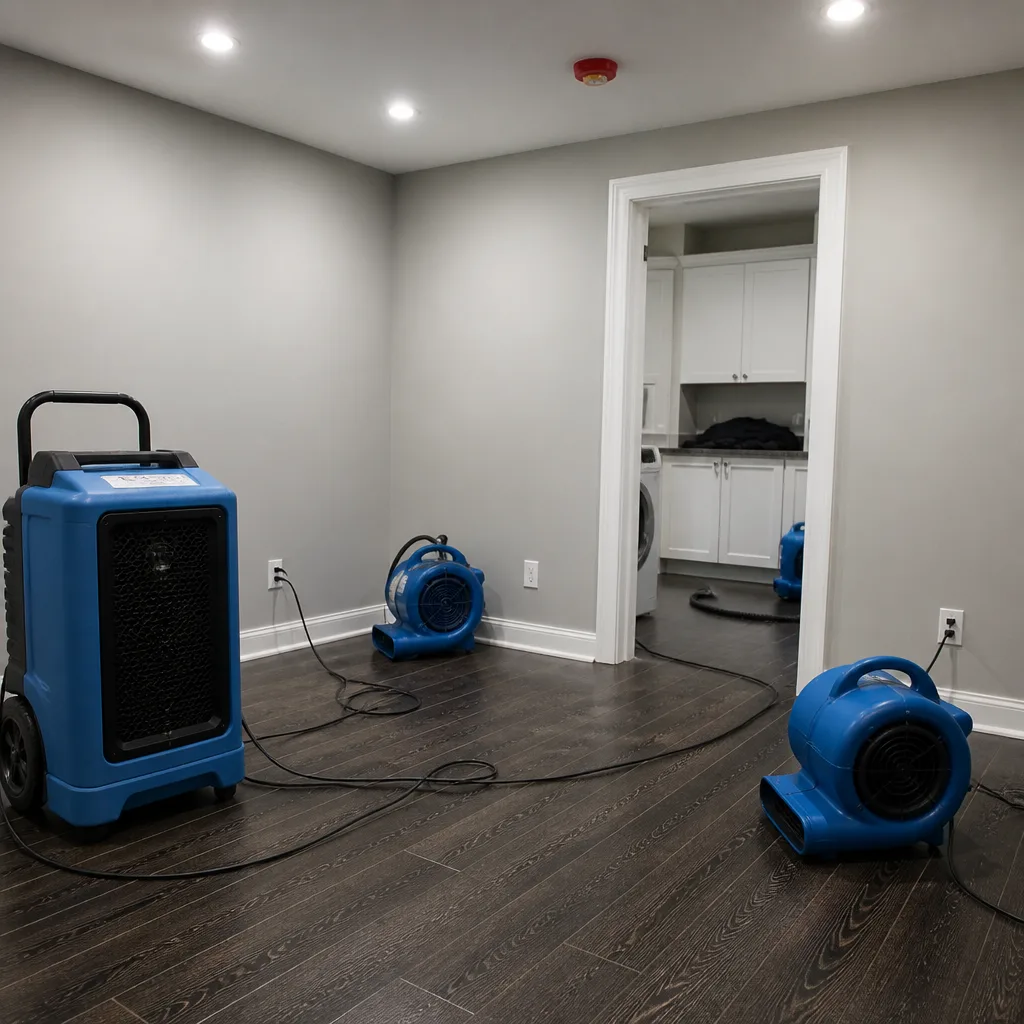
Dri-Eaz and Phoenix dehumidifiers, XPOWER air movers, and Injectidry wall-drying systems run on a calculated layout, not guesswork. We take daily hygrometer readings and log them until every affected surface meets the dry standard.
Cleaning & Sanitization
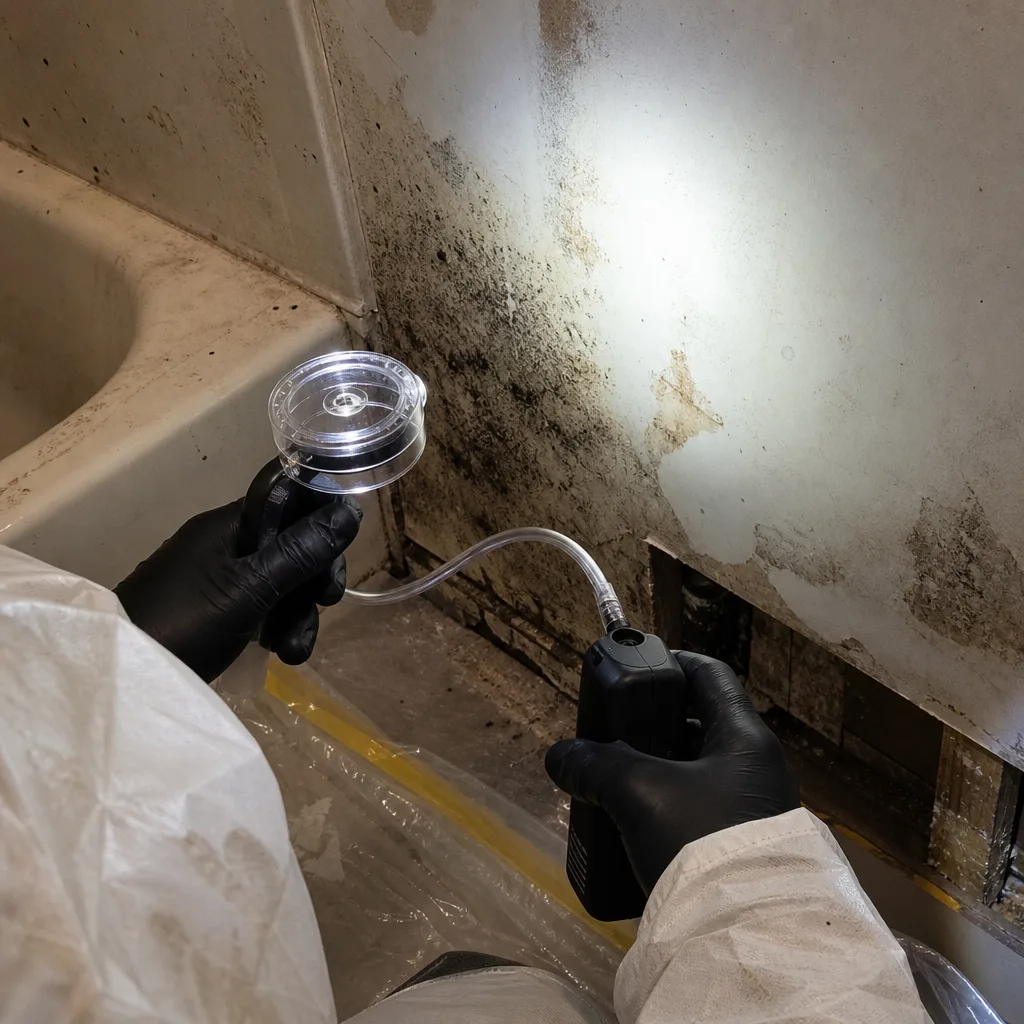
Antimicrobial treatments stop mold before it starts. HEPA air scrubbers run throughout the job to keep spores and particulates from moving into adjacent units. For attached row houses, this step protects your neighbors too.
Specialty Drying for Row-House Conditions
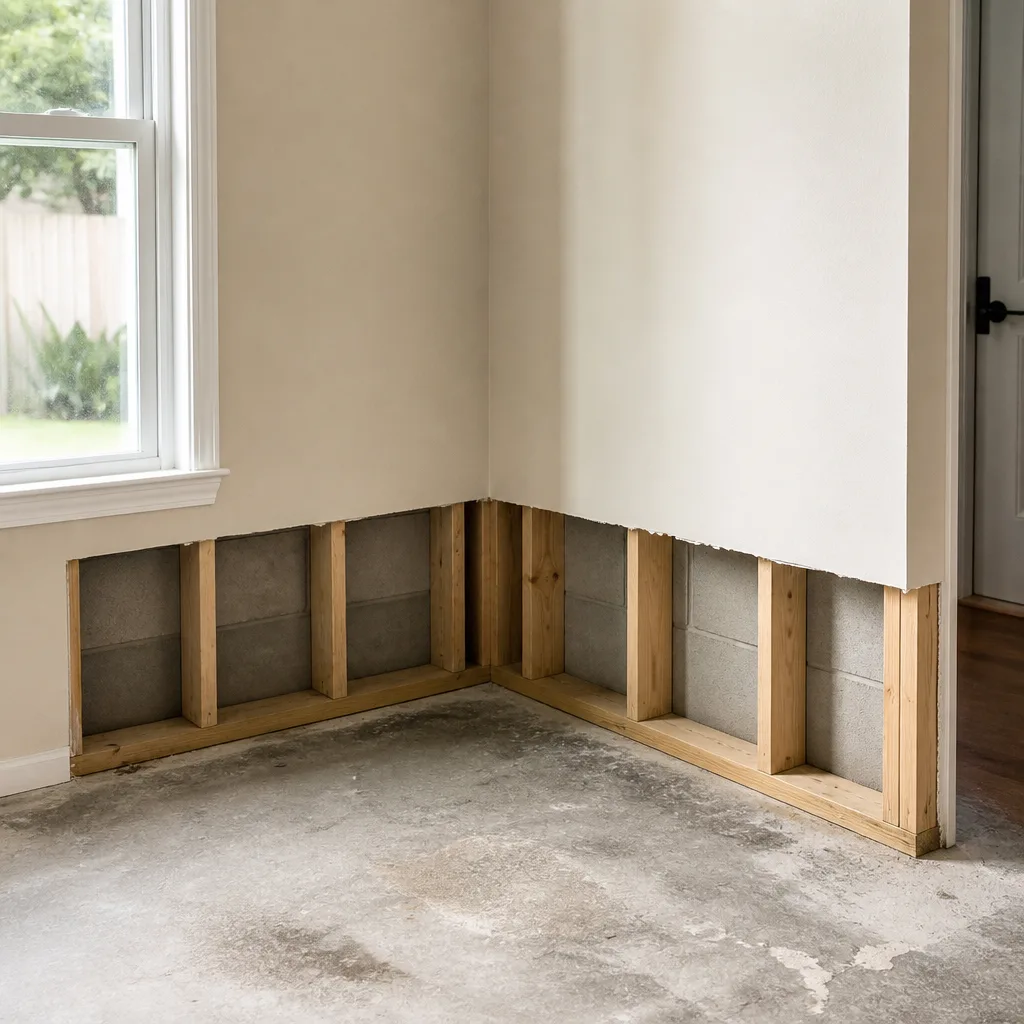
Jersey City’s attached housing requires a different approach. We open wall cavities carefully where horsehair plaster and lath meet shared masonry, dry both sides of the party wall, and verify with moisture probes that the neighbor’s side is dry too.
Repairs & Restoration
From drywall and trim to full basement rebuilds, the same Floodline crew finishes the job. Every repair is covered by the 90-Day Done Right Promise, given in writing. If it’s not done right, we make it right.
Need Emergency Water Damage Restoration in Jersey City Now?
Crews minutes away, answering live 24 hours a day. The sooner we start, the less it costs.
Working With Your Insurance Company
The first photos we take are part of your claim file. We document the loss from hour one: standing water, damaged materials, moisture readings, and the drying log with dated entries for every day we are on site. Our estimators write industry-standard, line-item scopes that Jersey City adjusters recognize. When your carrier calls with questions, we answer directly. You are not our messenger. If the adjuster wants a second opinion or an update, we send photos, readings, and documentation the same day. For row-house losses where two or three parties share a wall, we scope each unit separately and coordinate with every carrier involved. Done right, that means one drying plan across the party wall instead of three competing ones.
What We Provide Your Insurer
- Thorough documentation of the loss
- Photos of all damage, room by room
- Moisture readings and drying logs
- A detailed, line-item scope of work
- Direct coordination with your carrier
Built for Jersey City’s Loss Calendar
Jersey City’s water damage season runs almost all year, and the cause shifts with the calendar. January and February bring deep freezes that burst supply lines in unheated basements and along exterior walls in pre-war row houses across the Heights and Journal Square. March and April thaw the ground, and groundwater presses into foundations already saturated from winter. Summer thunderstorms overwhelm the combined sewer system, and that is when we see black water backups in Greenville and Downtown basements on streets like Erie and Pavonia. Coastal storms in the fall, including the occasional nor’easter, push tidal surge into waterfront neighborhoods where Sandy-era moisture still sits in old floor joists. Every season has a signature loss pattern here, and our crews know what to expect before we arrive. If you have standing water in a 100-year-old brick basement tonight, call (551) 373-5246. We’ll be there when we say.
Water Damage Restoration Across Jersey City’s Neighborhoods
In Paulus Hook and the Downtown waterfront, call volume spikes with every high tide and heavy rain event. Basements in these low-lying streets sit below the storm-surge line, and the combined sewer system backs up into floor drains with Category 3 water that requires full hazmat protocols. We run containment, extraction, and Dri-Eaz dehumidifiers in brownstones where the basement floor is below street grade. In the Heights, the challenge is age. A burst pipe in a 1920s row house on Central Avenue sends water through horsehair plaster and into the shared masonry wall before a neighbor notices a damp patch. We dry both sides and document everything for both carriers. Greenville’s housing stock, much of it post-war with finished basements, gives us room to work, but the neighborhood’s low elevation near Newark Bay means floodwater arrives with the same combined-sewer contamination risks. Journal Square sees a mix of multi-family buildings and older single-family homes where water from an upper-floor supply line failure cascades down through every unit below. Across all of ZIPs 07097, 07302, and 07303, our crews know which streets flood first and which buildings dry slowest.
Specialized Water Damage Restoration Services We Offer in Jersey City
Emergency Water Extraction
Standing water does not wait, and neither do we. Our truck-mounted extraction units pull hundreds of gallons per hour from basements, crawl spaces, and finished rooms. In Jersey City row houses, we extract from the floor, then open the wall cavities where water has already begun climbing through plaster and lath. The goal is simple: stop the migration before it reaches a shared wall.
Structural Drying & Dehumidification
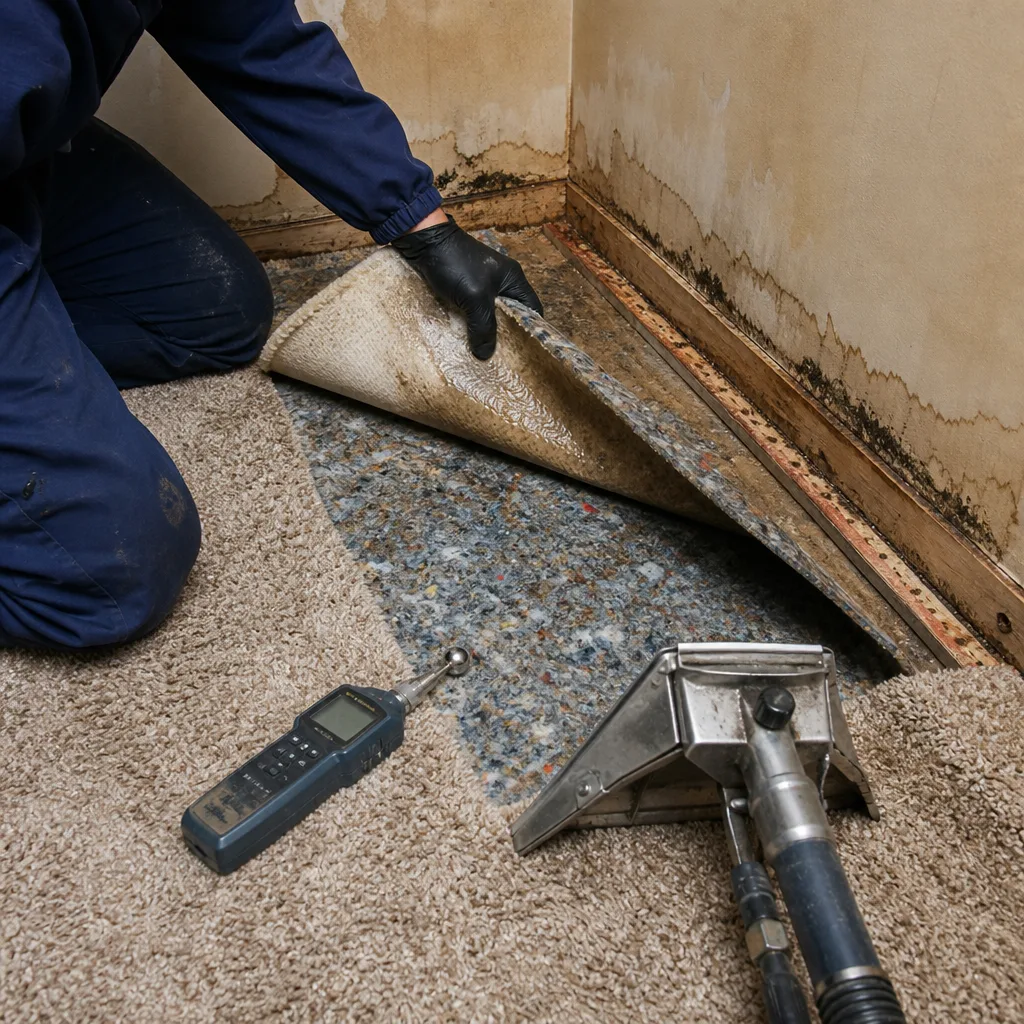
Drying a Jersey City basement is not a set-it-and-forget-it job. Dri-Eaz and Phoenix dehumidifiers run on a calculated layout, with XPOWER air movers positioned to push dry air through wall cavities and under flooring. We take daily moisture readings with penetrating and non-penetrating meters, log every number, and hand you and your carrier the drying log. We do not walk away until the dry standard is met.
Flood Cleanup
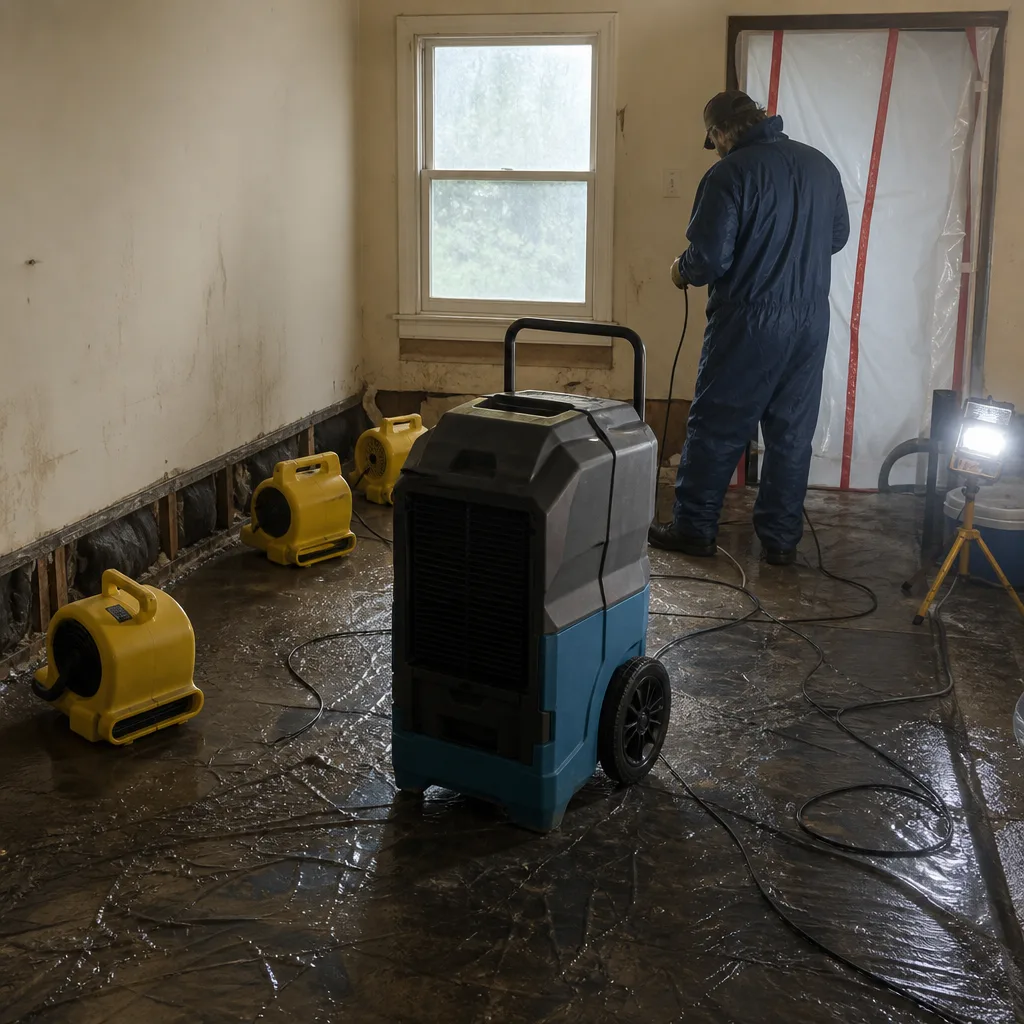
When the Raritan rises or the combined sewer backs up, you need more than a mop. We remove standing water, cut and dispose of saturated materials, treat affected surfaces with antimicrobials, and run HEPA air scrubbers until the air tests clean. For Category 3 black water events in streets like Erie and Pavonia in 07302, full containment and hazmat protocols are non-negotiable. Our crews are trained for it, and it shows.
Burst Pipe Restoration
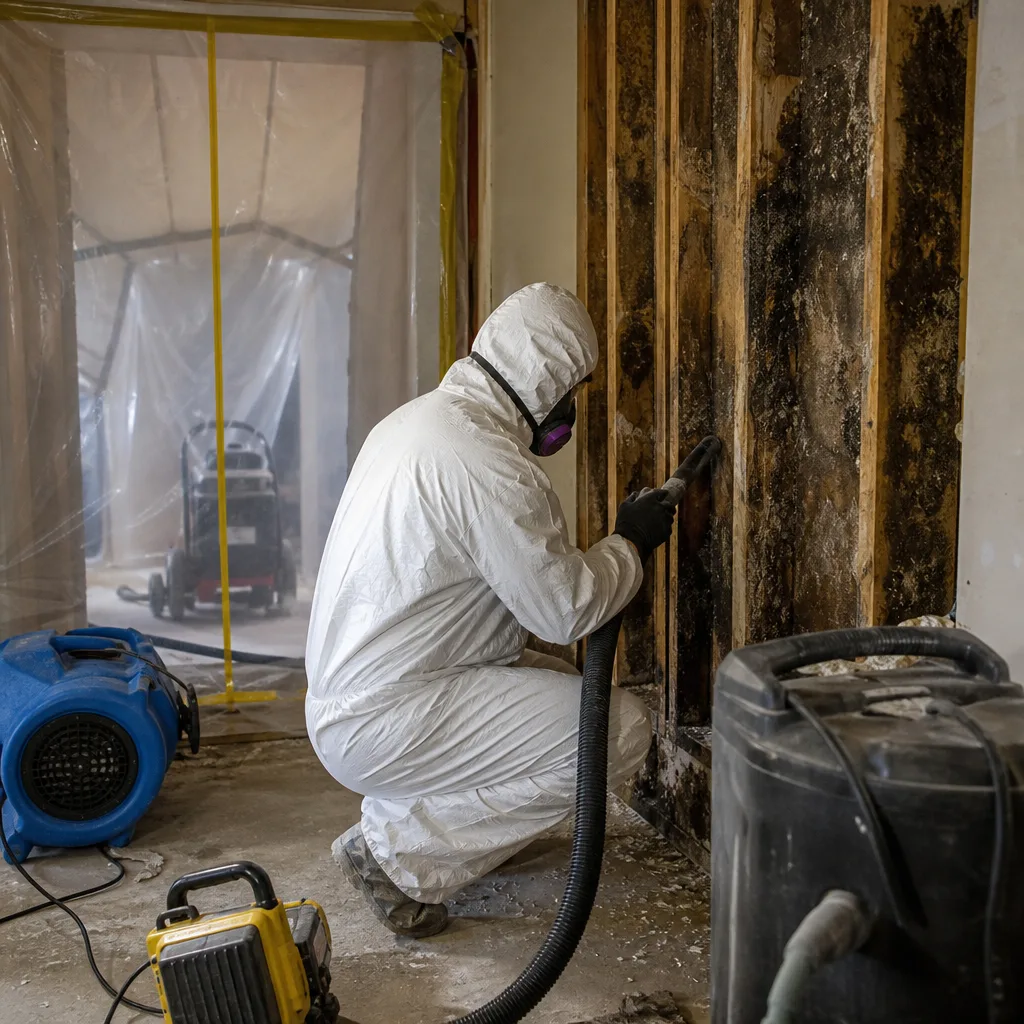
A burst supply line in a Jersey City winter can flood a basement in minutes and reach a neighbor’s wall in hours. We shut off the water, extract, dry, and rebuild. The scope often includes drywall replacement, flooring, and sometimes trim and paint. Because our crews handle reconstruction too, you do not get a dry-out crew that disappears and a separate contractor who never saw the original damage.
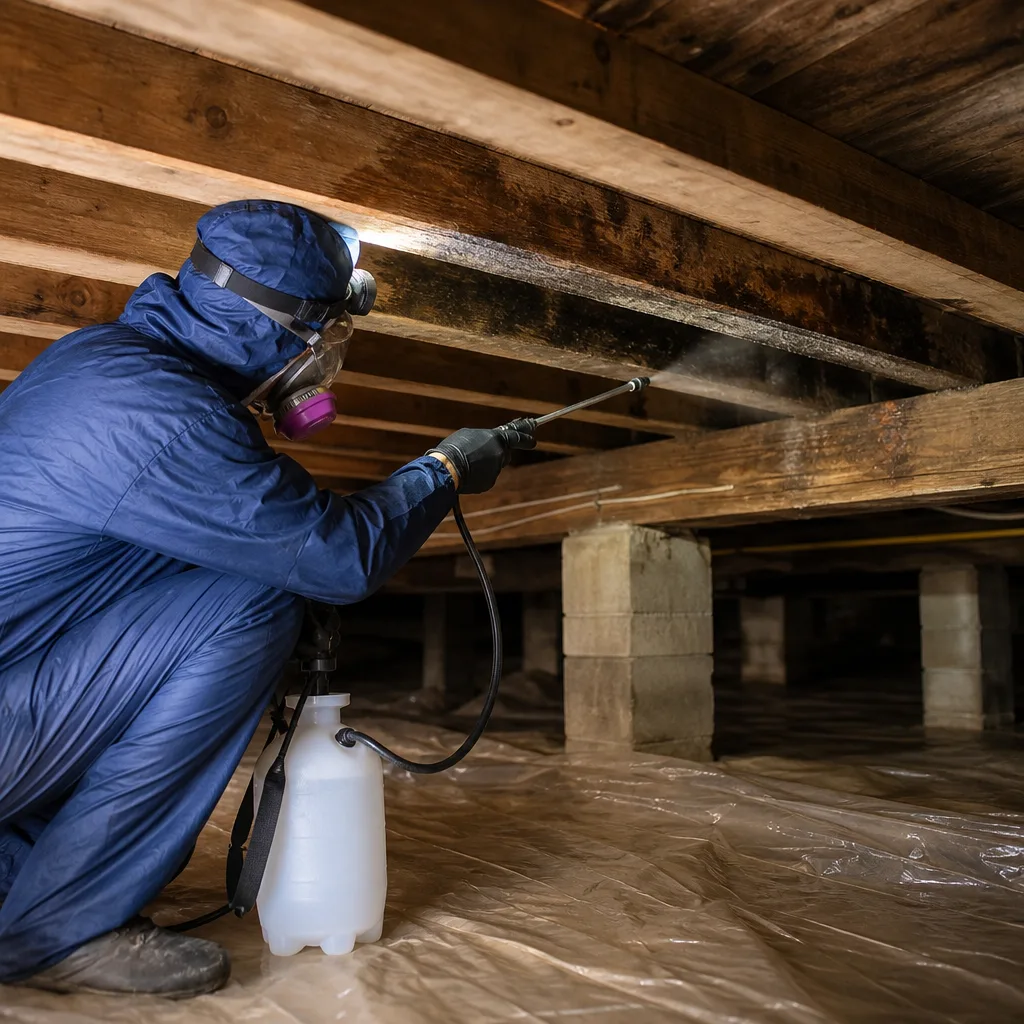
Basement Water Removal
Finished basements, unfinished basements, crawl spaces, and sub-cellars all hold water differently. We pump, extract, dry, and treat every one of them. In Greenville and Paulus Hook, basements below grade are the most common flood points in the city, and our crews know how to dry a 100-year-old joist system without leaving latent moisture that reactivates with the next high tide.
What happens when you call
- 1
A real person answersNo phone trees - you reach a local pro.
- 2
You get an upfront price rangeHonest numbers before anyone is dispatched.
- 3
A background-checked tech heads outLicensed & insured, dispatched right away.
- 4
You approve before work beginsNothing starts until you say go.
Water Damage Restoration Costs in Jersey City, NJ
A typical water damage restoration in Jersey City runs $1,500-$6,500, and that range reflects what the water touched, not what we happen to charge. A clean Category 1 water leak in a small unfinished basement with quick extraction might land between $1,200 and $2,800. A Category 3 combined-sewer backup with full containment, drywall removal, antimicrobial treatment, and four to six days of drying typically runs $4,000-$8,000. If the loss involved multiple rooms, a finished basement, or affected a shared party wall, the scope can push toward $10,000-$15,000. What moves the price is the category of water, the square footage of saturated material, and whether demolition is required. Most Jersey City homeowners pay only their deductible; we bill the carrier directly for the rest. Before any work begins, we do a free visual inspection and hand you a written, line-item scope. No surprises on the bill. Our Water Damage Restoration team also offers the $50 Off Any Repair Over $250 and the Senior & Veteran 5% discount, always honored, on every job.
We Also Serve Cities Near Jersey City
Our crews regularly respond to water damage in Hoboken, Secaucus, Union City, and Weehawken, often within the same hour we would reach a Jersey City neighborhood. The same live dispatchers, the same certified technicians, the same 90-Day Done Right Promise apply across the metro. If your basement is flooding in Hoboken right now, call (551) 373-5246.
Serving Jersey City, NJ - Our Local Coverage Area
We’re based in the Jersey City area and know this community well. Use the map below to see our service coverage - if you’re nearby, we can almost certainly help.
Jersey City Water Damage Restoration Questions, Answered
Why did my Jersey City basement flood with sewage during just a moderate rain?
Your home is connected to Jersey City’s combined sewer system, which carries both stormwater and sewage in the same pipes. During moderate to heavy rain, the system surcharges and backs up through floor drains in low-lying basements, bringing Category 3 black water into your home. Streets in Downtown, Greenville, and Paulus Hook are especially prone because they sit near or below the storm-surge line. This is a biohazard situation, not a simple cleanup. Call (551) 373-5246 and we’ll set full containment before any water is disturbed.
Do I need to worry about my neighbor’s row house after my pipe burst?
Yes. In attached Jersey City row houses, water from a burst pipe migrates through shared masonry cavities and horsehair plaster into the adjacent unit, often without visible signs for days. By the time your neighbor sees a damp patch, the moisture has already saturated framing and insulation on both sides. We scope both units, dry across the party wall, and document everything for both insurance carriers. One drying plan, two claims, no disputes.
How fast does mold start in a Jersey City basement after a flood?
Mold colonization typically begins within 24 to 48 hours in a wet basement, and Jersey City’s summer humidity shortens that window. On a humid July night, we have seen visible fungal growth on saturated drywall in under 36 hours. The clock starts the moment water touches organic material. Extraction and drying within the first day materially reduces mold risk, and our antimicrobial treatments stop it from establishing in wall cavities where you cannot see it. Call us at (551) 373-5246 as soon as you notice water; do not wait for the weekend.
Is a waterfront basement in Paulus Hook more likely to flood than one in the Heights?
Yes, by a wide margin. Paulus Hook and the Downtown waterfront sit within FEMA Special Flood Hazard Areas, and basements there are below the tidal surge line. Combined-sewer backups during rain events add to the pressure. The Heights sits higher and sees fewer flood events, but more burst-pipe losses in winter due to older unheated plumbing. Both neighborhoods generate heavy water damage work for us, but they fail for different reasons.
What does ‘Category 3 water’ mean for my Jersey City flood cleanup?
Category 3 water, often called black water, contains sewage, pathogens, and silt from the combined sewer or tidal surge. It requires full containment, personal protective equipment, antimicrobial treatment, and disposal of saturated porous materials like drywall, carpet, and insulation. You cannot simply mop it up and run a fan. Our crews are trained in biohazard protocols for exactly this scenario because Jersey City’s combined sewers make it a routine call here. We’ll be there when we say.
How fast can someone actually get to my Jersey City home?
Our commitment is 45 minutes or less from the moment a live dispatcher confirms your address. Floodline Restoration Co. operates around the clock, so the answer at 3 a.m. is the same as it is at noon. We dispatch from our metro office and our crews are already positioned to serve Jersey City locally, so call (551) 373-5246 and a certified technician will be at your door shortly.
How long does drying take in a Jersey City row house?
Most drying jobs run three to six days, depending on the extent of saturation and the materials affected. Brick row houses with horsehair plaster and lath dry slower than modern drywall, and shared party walls lengthen the timeline because we must dry both sides before closing up. Our dehumidifiers and air movers run continuously, and we take daily moisture readings until every surface meets the dry standard. You will see the log.
What should I do in the first 30 minutes after discovering water?
Shut off the water source if you can do so safely. Do not enter standing water if it may be Category 3 or if electrical outlets are submerged. Turn off power to the affected area at the breaker panel. Then call (551) 373-5246. A live dispatcher will tell you what to do next and put a certified crew on the road to your Jersey City home immediately. Do not use a shop vac on sewage. Do not wait for the landlord or the property manager if you own the unit. The sooner we start, the less it costs.
Written by Curt Bowman, Owner at Floodline Restoration Co., serving Jersey City, NJ.