
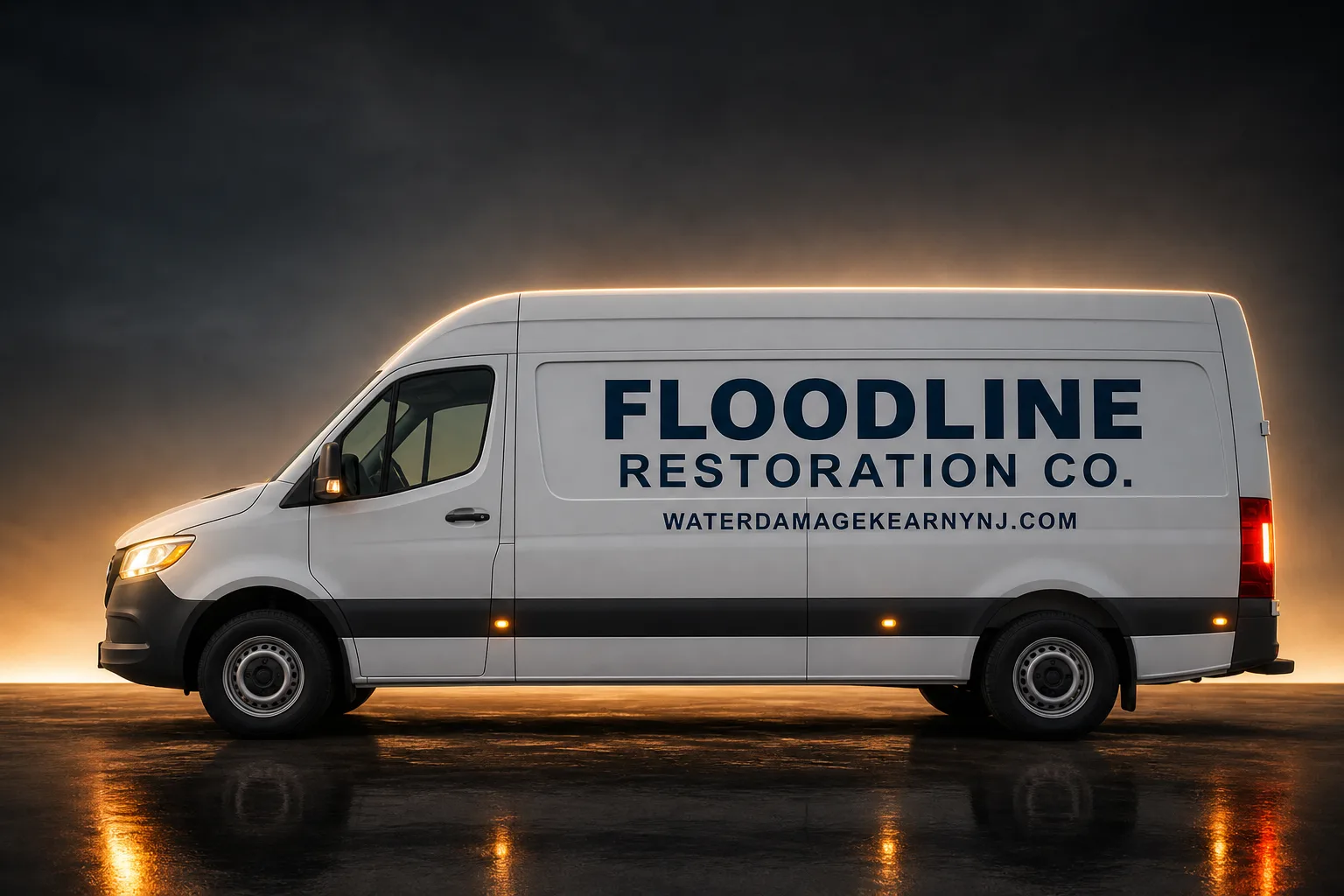
Free visual inspection and a written scope of work before any mitigation begins - photos, moisture readings, and drying logs go in your claim file
The scope we write is the scope we bill. Anything new gets shown to you, in writing, before we touch it.
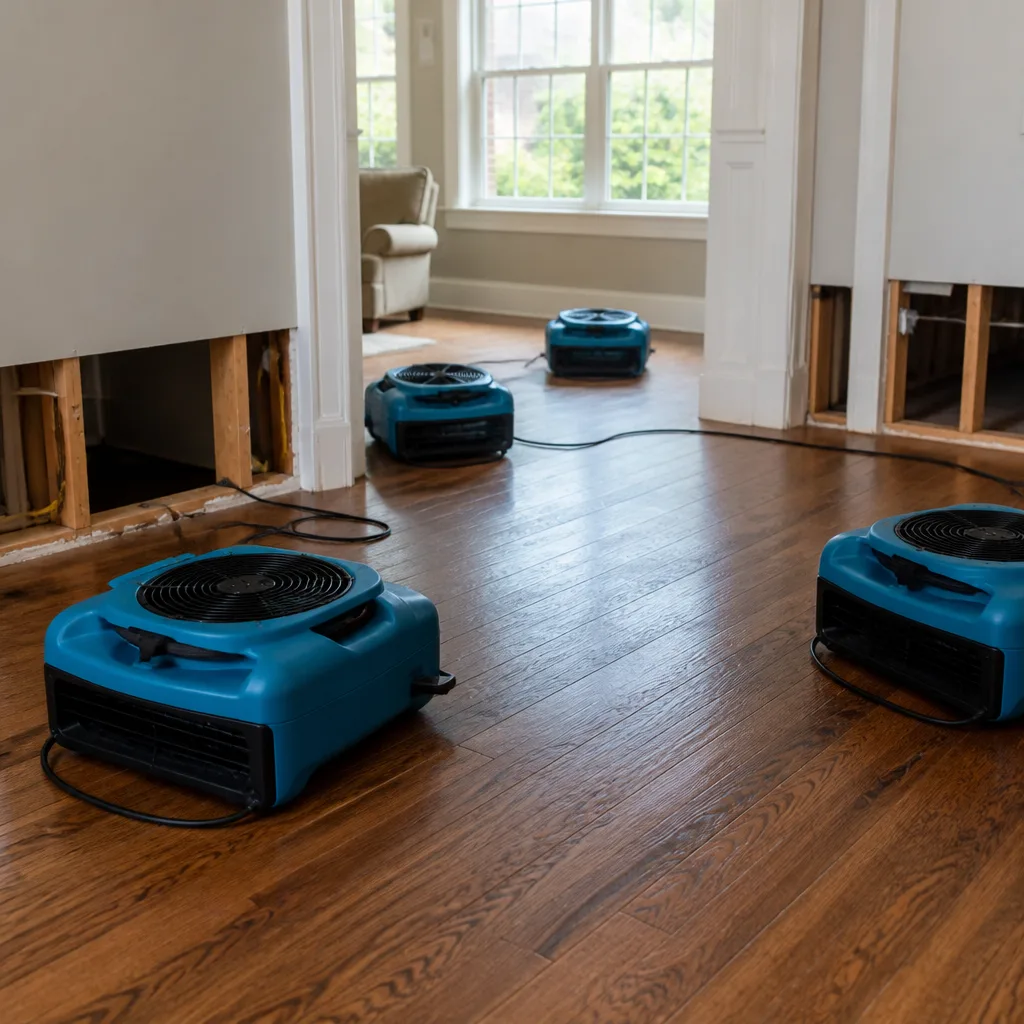
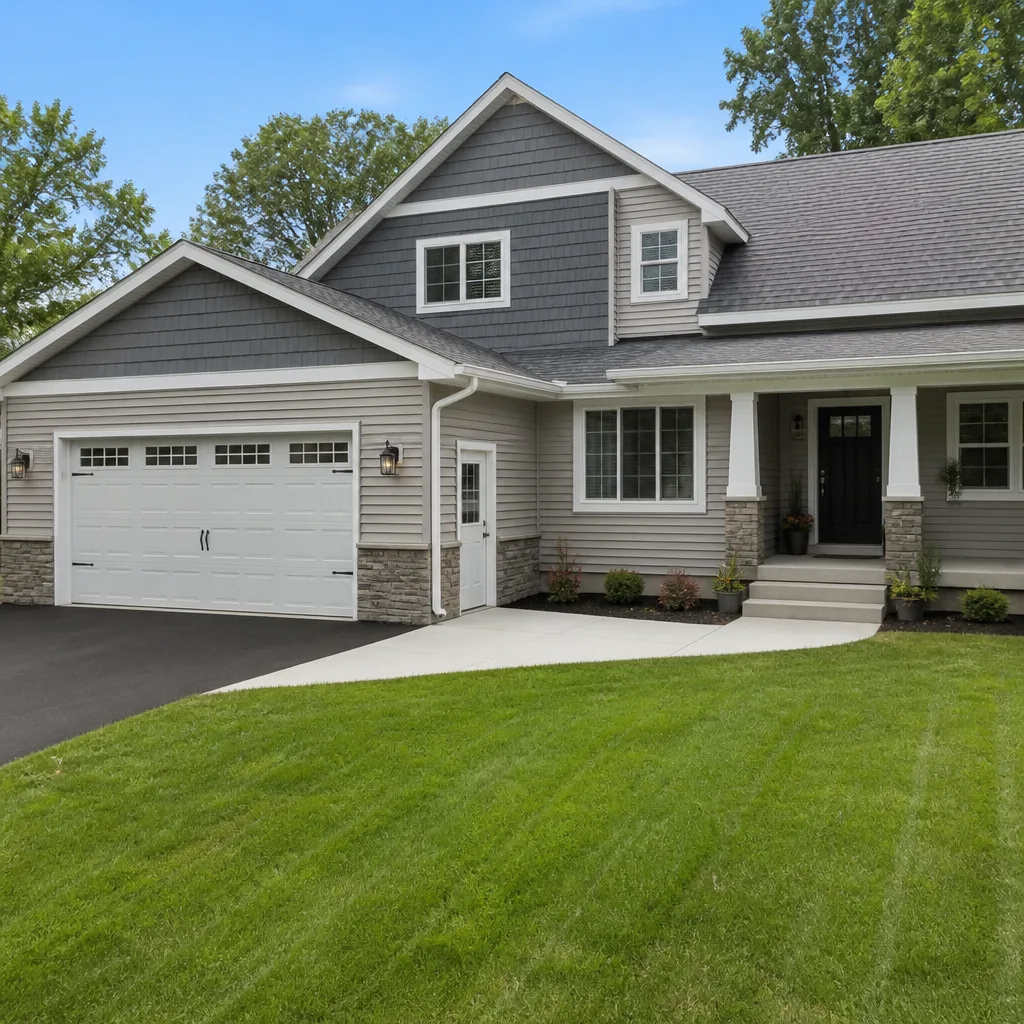
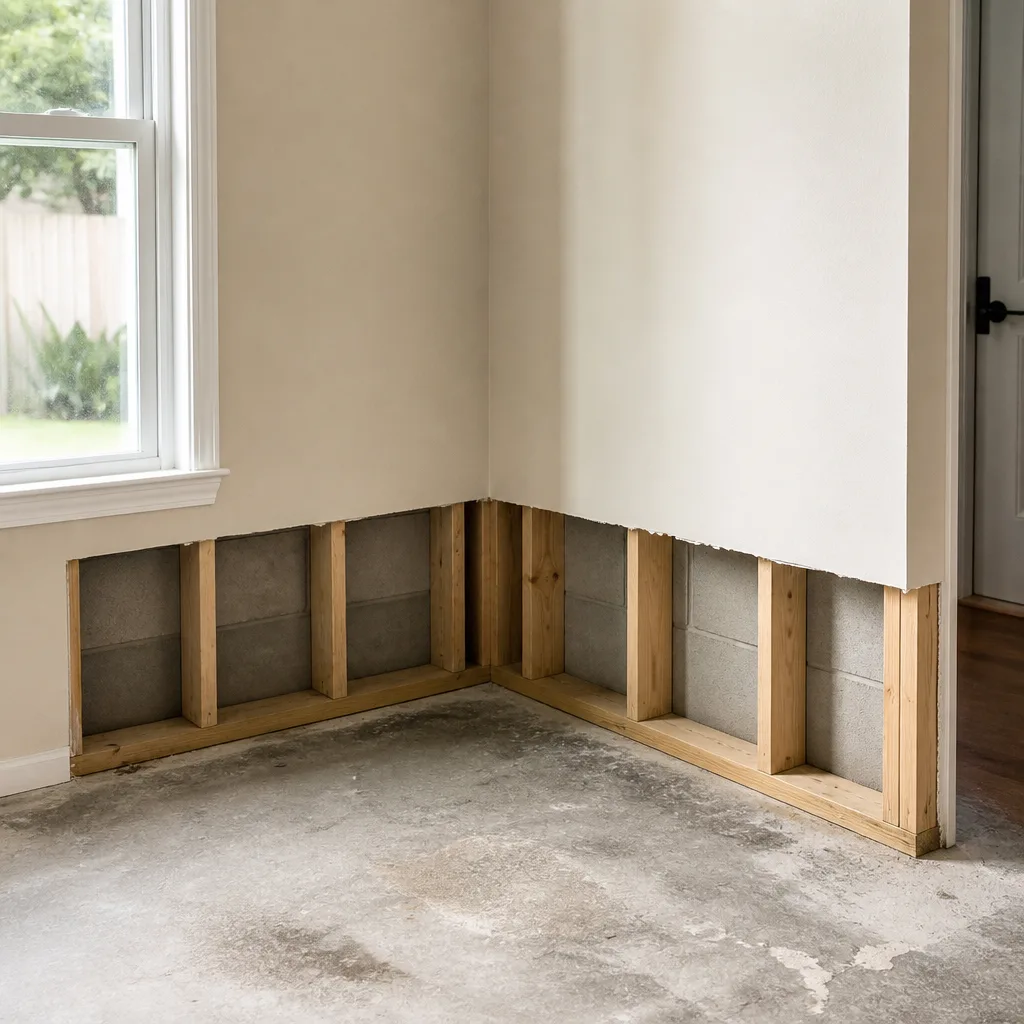
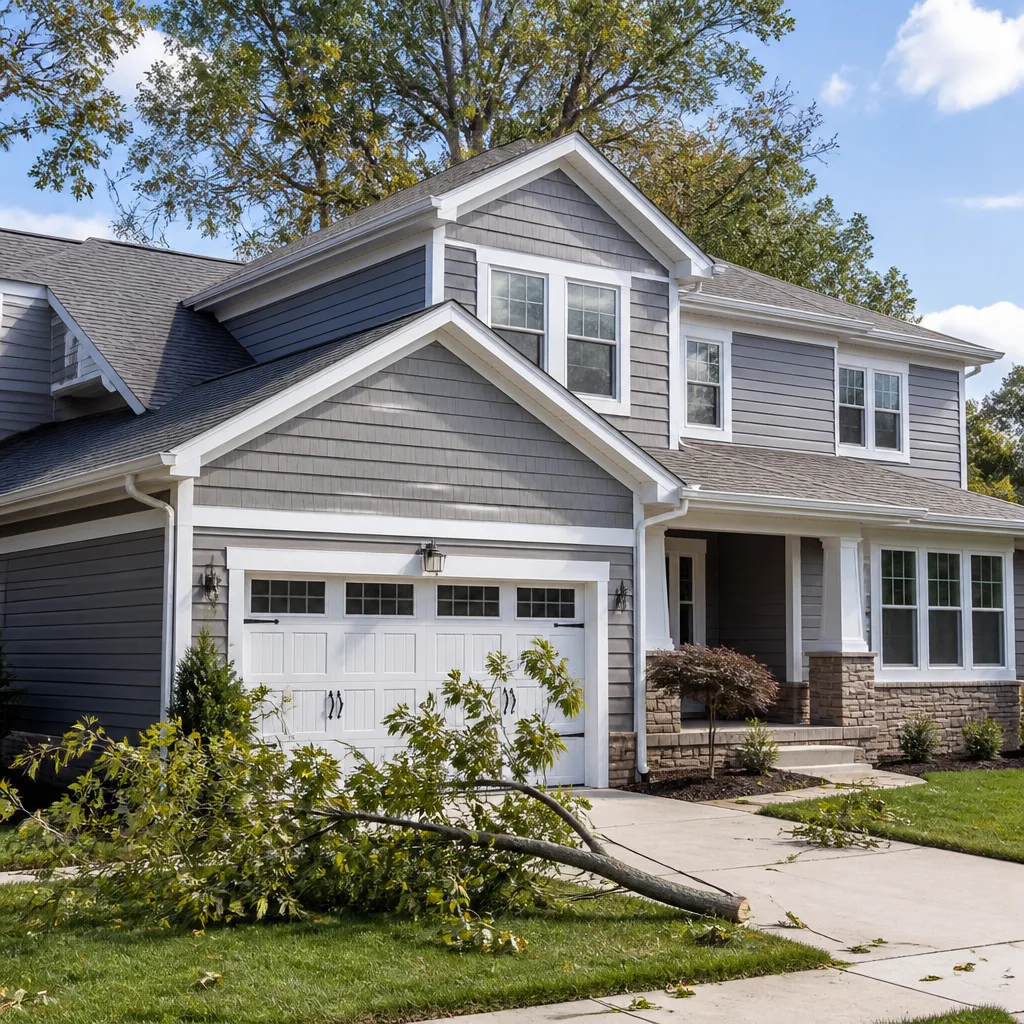
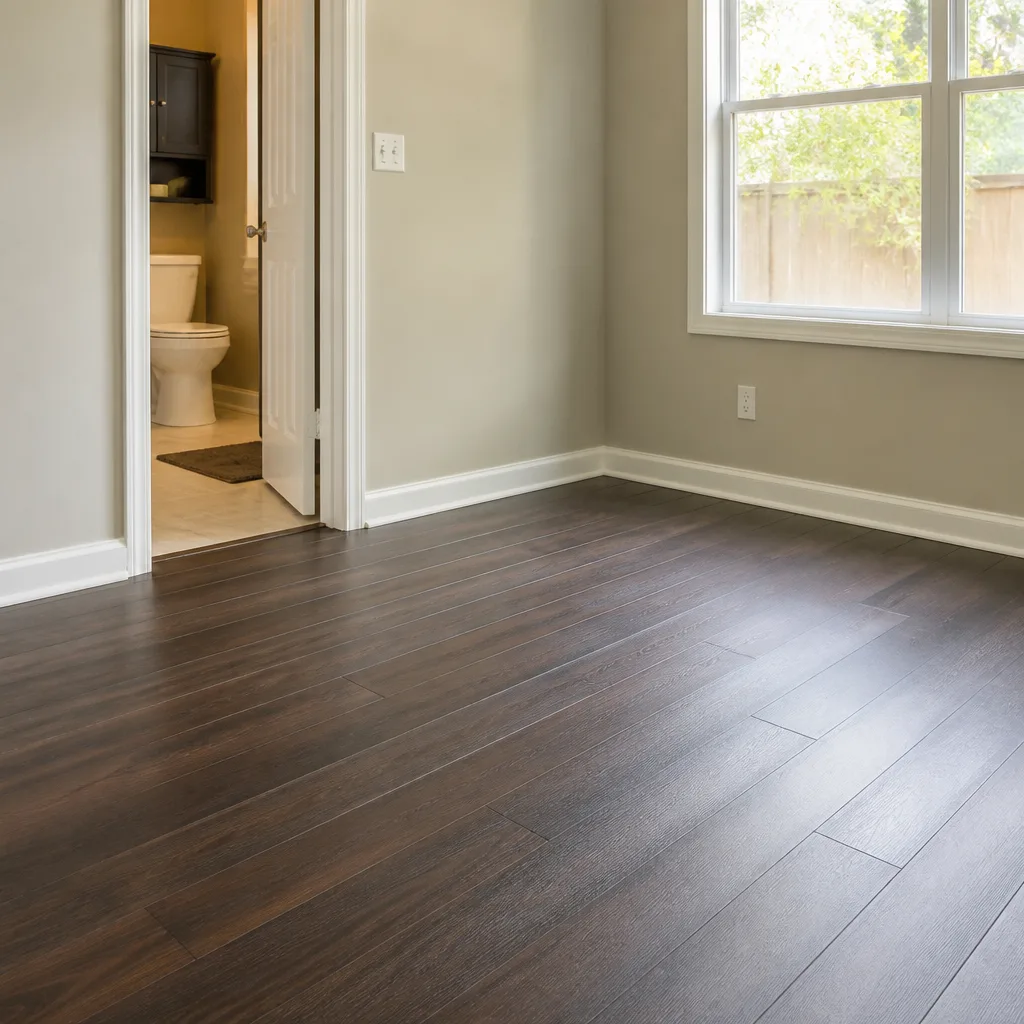
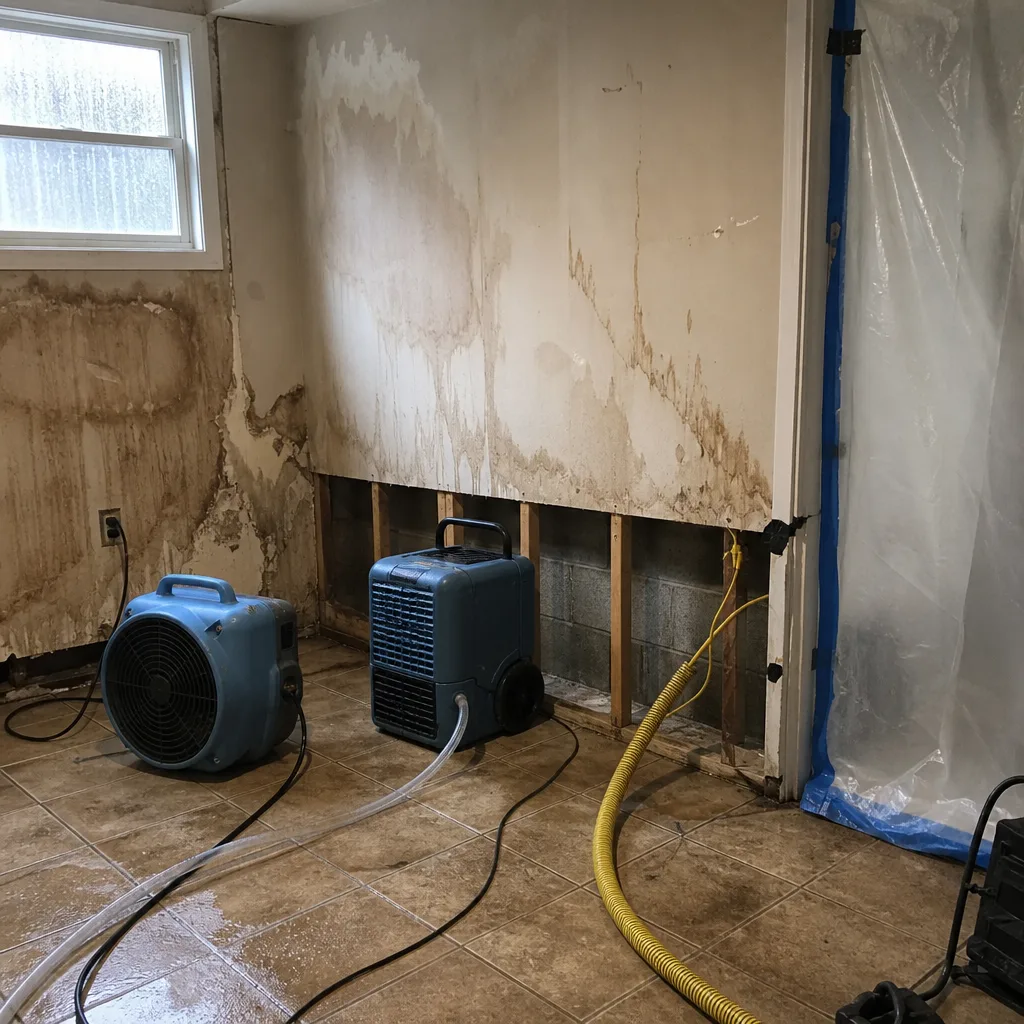 Before
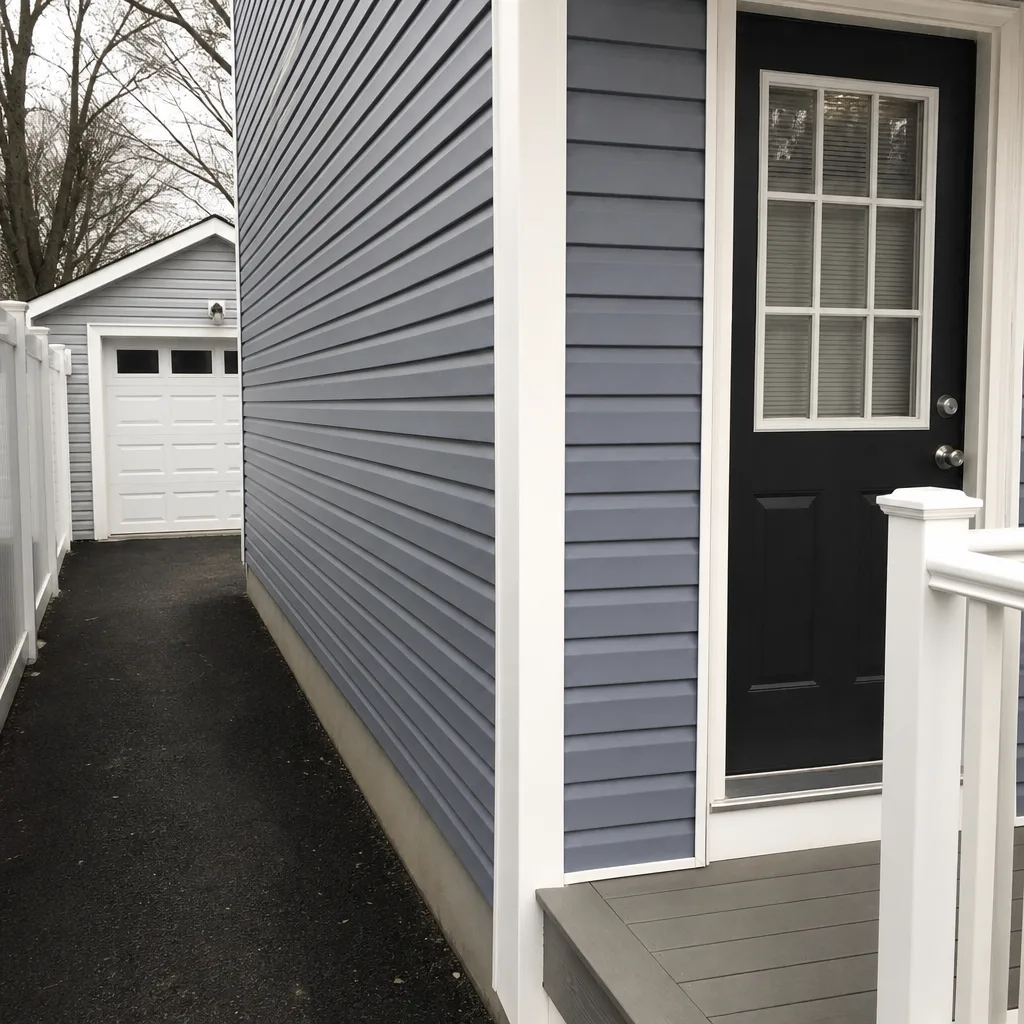 After
After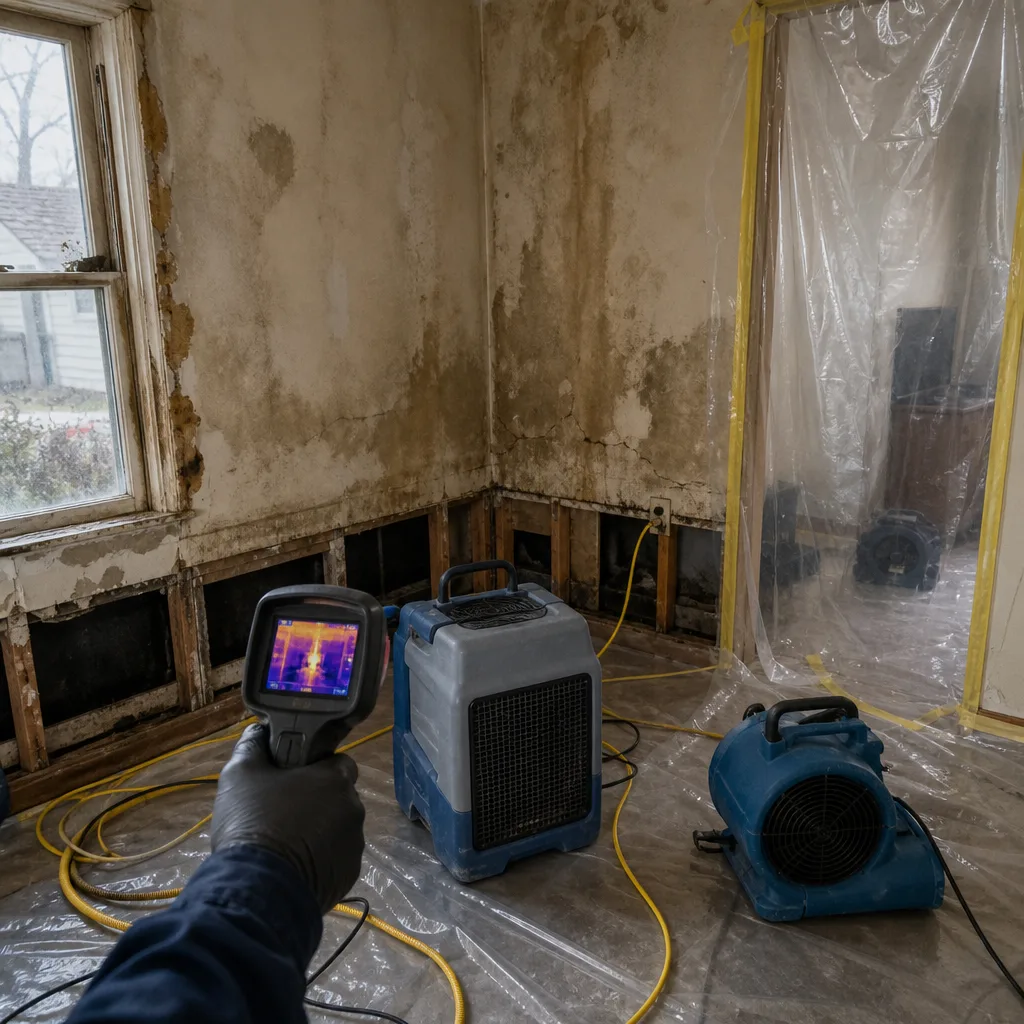 Before
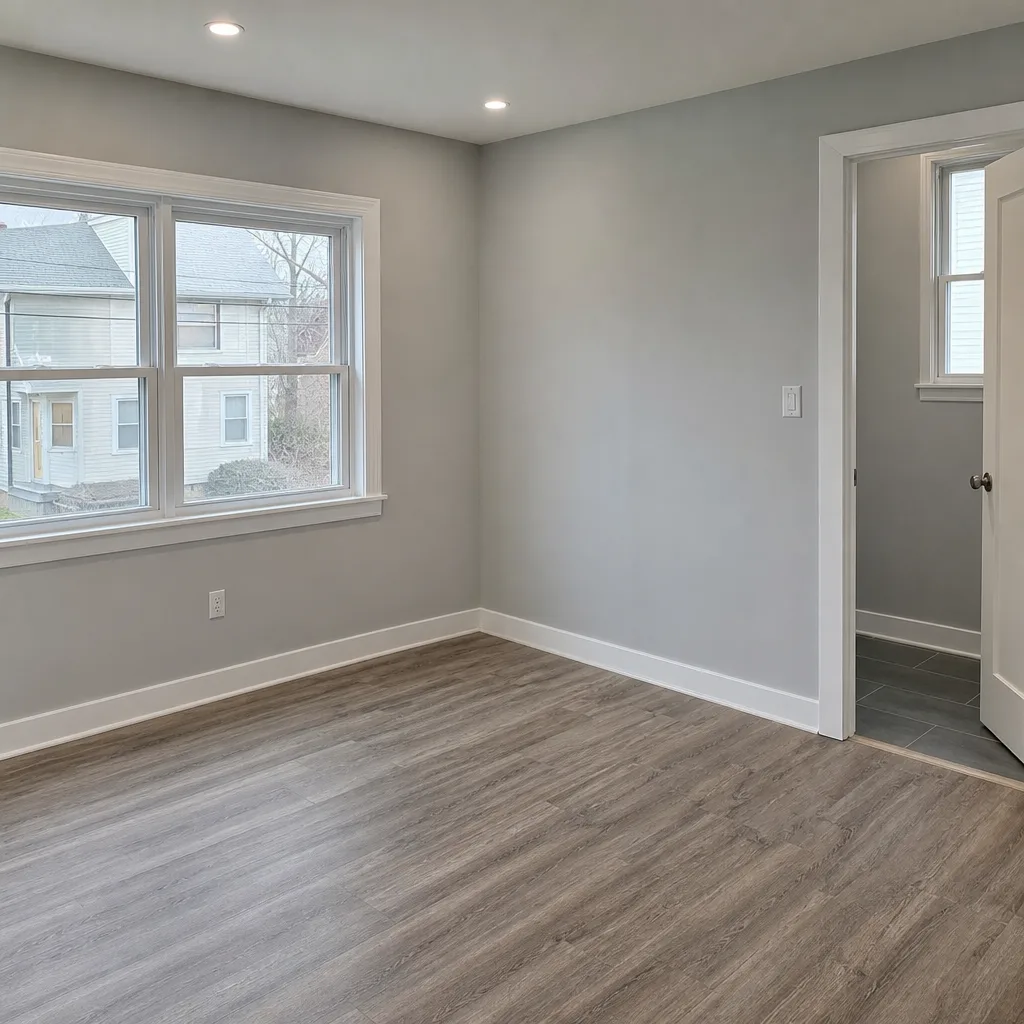 After
After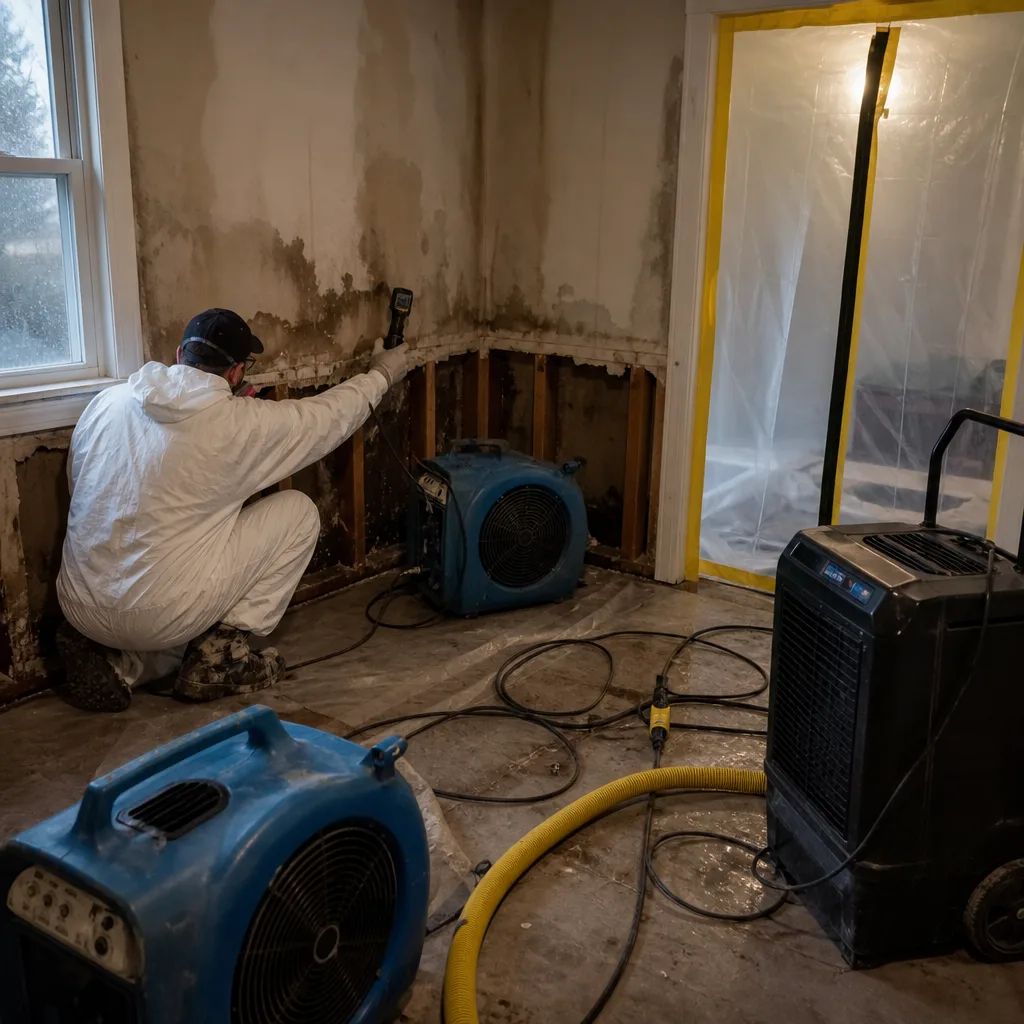 Before
 After
After24/7 Emergency Water Damage Restoration in Weehawken
Water damage in Weehawken moves fast, whether it’s storm surge at Port Imperial or groundwater pushing into a bluff-side basement. When water is standing in your home, every hour it sits means more material it soaks, more drywall it wicks into, and more of a claim your insurer has to untangle. Our crews reach Weehawken inside 45 minutes most days, and a live person answers at (551) 373-5246 at any hour. We’ll do a free visual inspection, start extraction that same visit, and hand you a written scope before any repair work begins.
Understanding Water Damage Restoration Severity in Weehawken Properties
We classify water in three categories, and Weehawken sees all three regularly. Category 1 is clean water from a burst supply line or overflowing tub. Category 2 carries contaminants, like the groundwater that seeps through cast-iron drain lines in the brick row houses atop the Palisades. Category 3 is grossly contaminated, and that’s what Hurricane Sandy pushed into waterfront units along the Hudson and what a backed-up sewer line leaves behind in any basement. Category 3 water wicks behind drywall and baseboards faster than most property owners realize. Even after surface extraction looks complete, moisture hides in wall cavities and subfloor, feeding mold and rotting framing. We moisture-map every affected room, not just the visible wet spots, because in pre-war brick construction and post-1990 drywall assemblies alike, the damage behind the surface is the part that gets expensive if it’s missed.
Why Weehawken Property Owners Choose Floodline Restoration Co.
- 45-minute response commitment: When water is spreading, the first call you make should be the one that gets a crew moving now. We log the call, dispatch the nearest team, and they’re rolling toward your address inside minutes, not hours.
- 24/7 live answer, never an automated system: Call at 2 a.m. and a dispatcher picks up. A real person who knows which equipment fits which job and can tell you what to do in the first 30 minutes while we’re on the way.
- IICRC-certified crews: Our technicians carry WRT and ASD certifications and train to IICRC, RIA, and IFA standards. They’ve handled Category 3 losses in high-rise condos and hidden moisture in century-old masonry basements.
- Free visual inspection: We’ll walk the property, map the moisture, and explain what needs extraction, what needs drying, and what can be saved. No charge, no obligation.
- Direct insurance billing: We communicate with your adjuster, provide line-item scopes and daily moisture logs, and bill the carrier directly. You never carry paperwork between us and your insurer.
- One team from extraction to reconstruction: The same crew that reads the moisture map on day one handles daily readings, hands the log to you and your carrier, and rebuilds what needs rebuilding. No mid-job handoff, no inherited crew.
Our Water Damage Restoration Process
Inspection & Assessment
We start with thermal imaging and moisture meters to find water that hasn’t shown itself yet, behind baseboards, under flooring, inside wall cavities. In Weehawken’s older brick row houses, we check basement walls and cast-iron drain runs specifically because that’s where Palisades groundwater collects. You get a written scope with line items before any billable work begins.
Extraction & Stabilization
We pull standing water with truck-mounted and portable extraction units, then stabilize the environment to halt secondary damage. For Category 3 water, we set containment first so contaminants don’t spread through the HVAC system into unaffected rooms.
Drying & Dehumidification
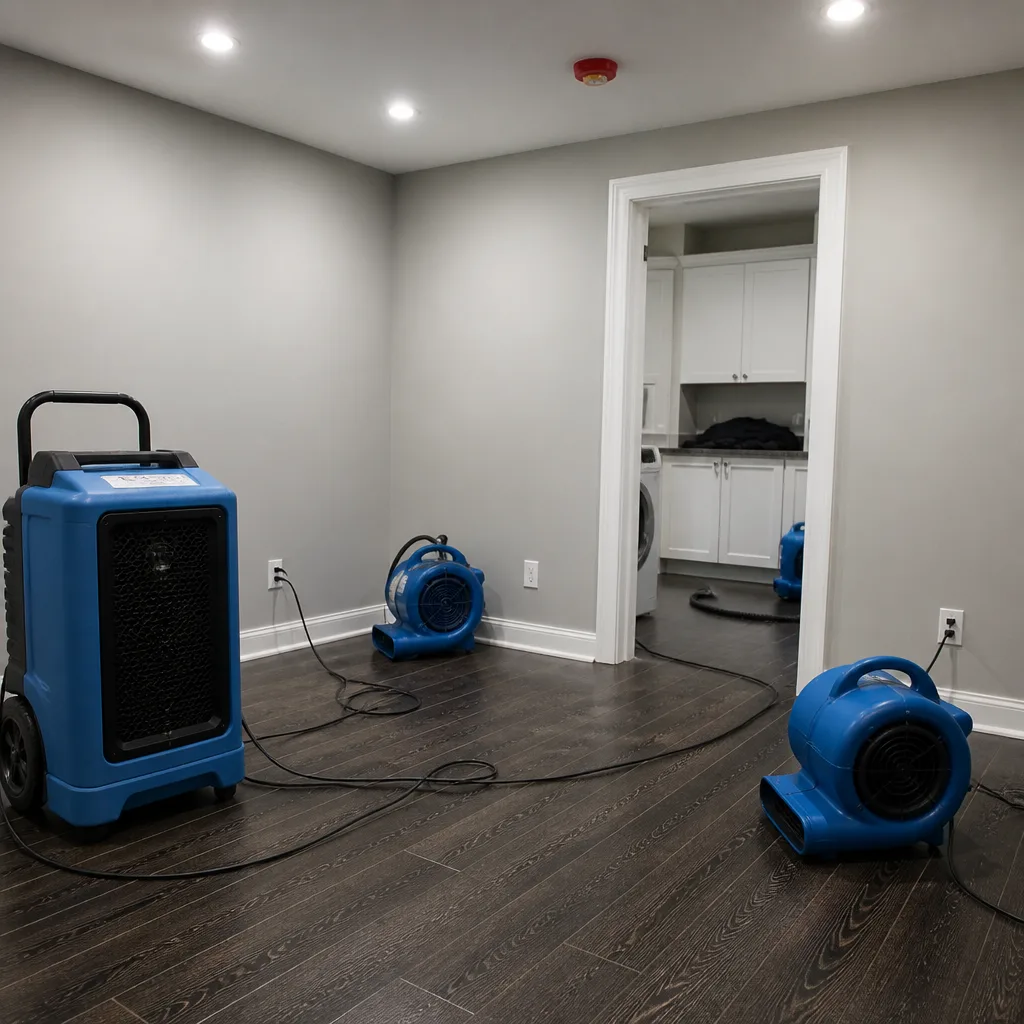
Dri-Eaz and Phoenix air movers and dehumidifiers go to work, sized to the cubic footage and moisture load of each affected space. We run daily moisture readings and log them. The dry standard doesn’t come from a guess; it comes from the numbers on the hygrometer.
Cleaning & Sanitization
Affected surfaces get cleaned and treated with antimicrobial agents appropriate to the water category. For Category 3 losses, we remove and dispose of saturated porous materials, then sanitize what remains. Contaminated drywall in a Weehawken basement comes out, not just dried.
Structural Drying & Hardwood Restoration
Engineered hardwood in Port Imperial condos and original oak floors in bluff row houses need different techniques. We use Injectidry systems to dry hardwood in place where salvageable, and monitor for cupping and warping daily.
Repairs & Reconstruction
Once the moisture log hits the dry standard, the same crew rebuilds. Drywall, baseboard, paint, trim, and any custom millwork. The 90-Day Done Right Promise covers the whole job in writing.
Need Emergency Water Damage Restoration in Weehawken Now?
Crews minutes away, answering live 24 hours a day. The sooner we start, the less it costs.
Working With Your Insurance Company
We’ve spent 15 years sitting across the table from adjusters in Hudson County. That matters in Weehawken because so many losses here involve flood insurance riders, elevation certificates, and coastal zone documentation. We photograph everything before we touch it. We log moisture readings every day, not just when the adjuster asks. We write scopes in the format carriers recognize, with line items they can process without sending back. And we communicate directly with your adjuster, so you don’t spend your evenings on hold with a claims department. The 90-Day Done Right Promise is in writing, and if the work isn’t done right, we make it right. No arguing, no paperwork battles.
What We Provide Your Insurer
- Thorough documentation of the loss
- Photos of all damage, room by room
- Moisture readings and drying logs
- A detailed, line-item scope of work
- Direct coordination with your carrier
Built for Weehawken’s Loss Calendar
January freezes burst supply lines in unheated bluff-side basements. March and April bring the spring thaw, and Palisades groundwater finds every channel through old masonry foundations. Summer thunderstorms dump an inch an hour into catch basins already full, and flash flooding in low-lying streets backs storm drains into basement fixtures. Nor’easters in fall and winter drive Hudson River surge against the Port Imperial waterfront, and the same storm that leaves a Hoboken street corner ankle-deep can push Category 3 water through a Weehawken high-rise’s ground-floor utility room. We plan our equipment staging and crew readiness around this calendar, because the loss patterns here are as regular as the tide tables.
Water Damage Restoration Across Weehawken’s Neighborhoods
Along Port Imperial and Lincoln Harbor, the high-rises sit at sea level on reclaimed land. Storm surge and nor’easter-driven Hudson water are the primary threat. These buildings have sophisticated mechanical systems, engineered flooring, and smart-home wiring, so restoration means specialty containment and precision drying, not just wet vacs. We trace water through floor assemblies and elevator shafts carefully, because in a stacked building, a 12th-floor leak can flood 11 floors below it. Up on the bluff near Boulevard East, the story changes. Brick row houses from the 1910s and 1920s hold below-grade spaces with old masonry, and the ground itself sends water. The neighborhoods near the Lincoln Tunnel approach, including the blocks around Highwood Terrace and Gregory Avenue, deal with constant truck vibration, and our techs have traced basement seepage to micro-cracks in foundations and parapets that opened slowly over years of 24/7 traffic. Down near the border with Union City and along Park Avenue, we see a mix of mid-century apartments and older walk-ups where cast-iron drain lines are past their useful life and failing in hidden, expensive ways. Each pocket of Weehawken has its own failure signature, and we read the building type before we touch the water.
Specialized Water Damage Restoration Services We Offer in Weehawken
Emergency Water Extraction
When Category 3 water is standing in a Port Imperial utility room at two in the morning, or a burst supply line is spraying inside a Boulevard East kitchen, the first move is extraction. We arrive with the equipment sized to the job and start pulling water the same visit. In waterfront buildings, speed matters double because saturated drywall wicks moisture upward faster than most property managers realize.
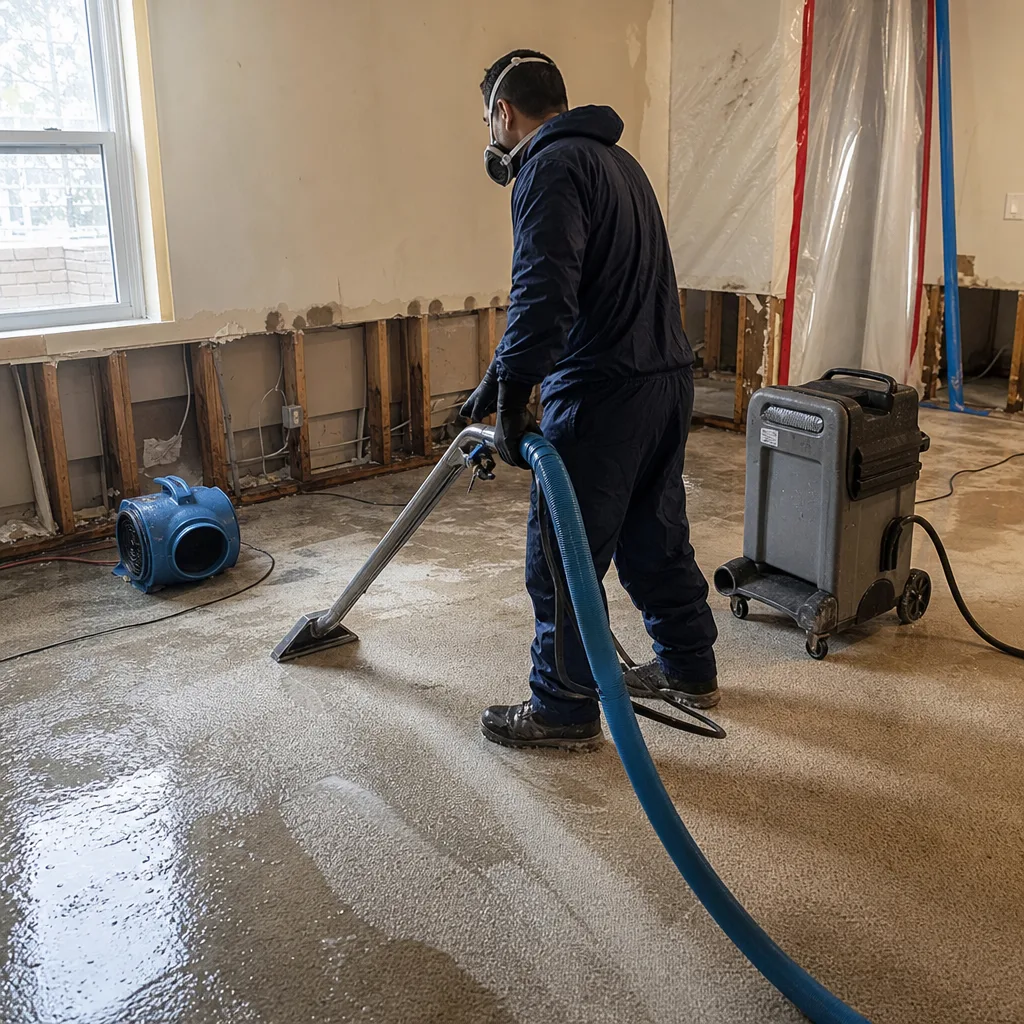
Structural Drying & Dehumidification
Drying a Weehawken basement isn’t just about running fans. The bluff side stays naturally cool and damp, and the waterfront side holds sea air. We size dehumidifiers to the cubic footage and moisture load, and we run daily readings until the moisture log shows the structure has reached the dry standard. Dri-Eaz and Phoenix equipment does the heavy lifting; the daily log is what proves the job is actually dry.
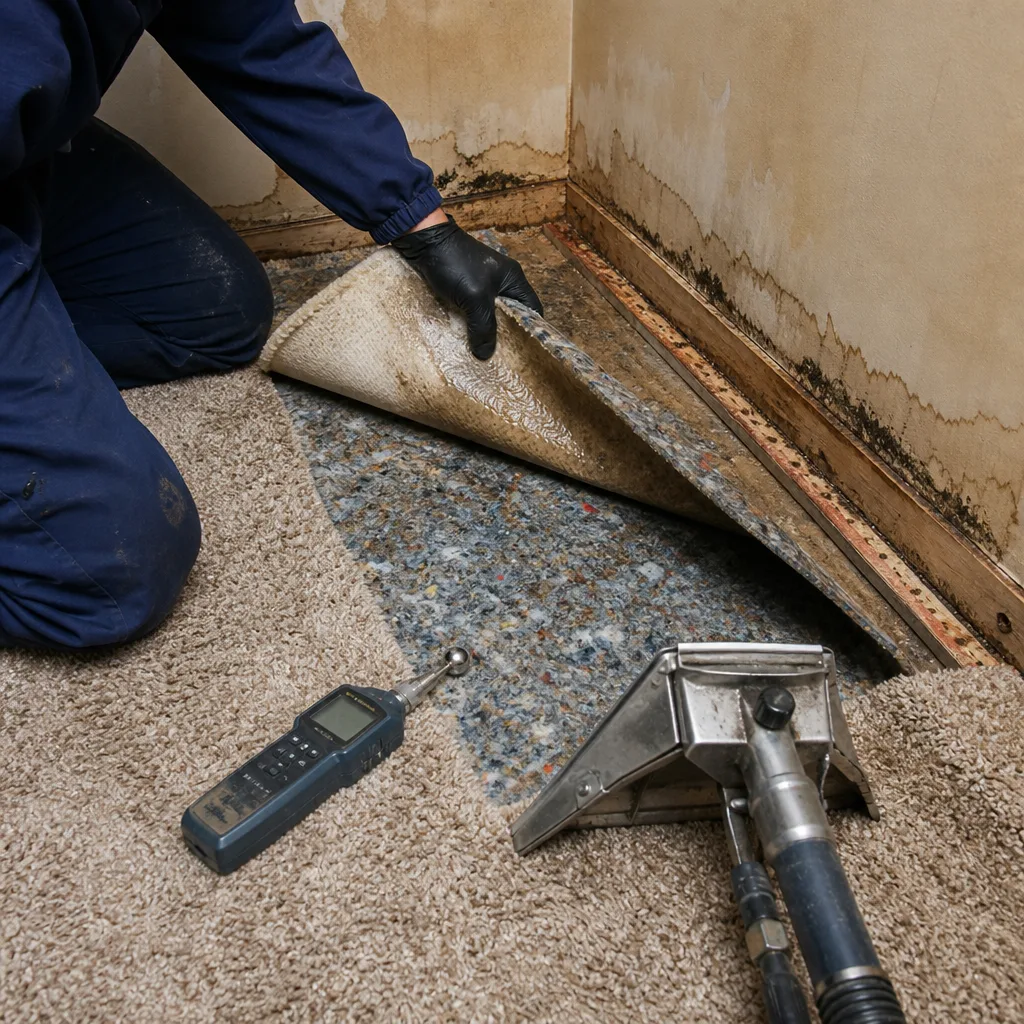
Flood Cleanup
Floodwater in Weehawken often comes with the Hudson in it. Saltwater, sewage, sediment, and whatever the storm pushed through the streets. We remove contaminated porous materials, disinfect what stays, and follow IICRC protocols that your flood insurer will recognize. We also coordinate directly with flood adjusters and handle elevation certificate compliance for waterfront claims.
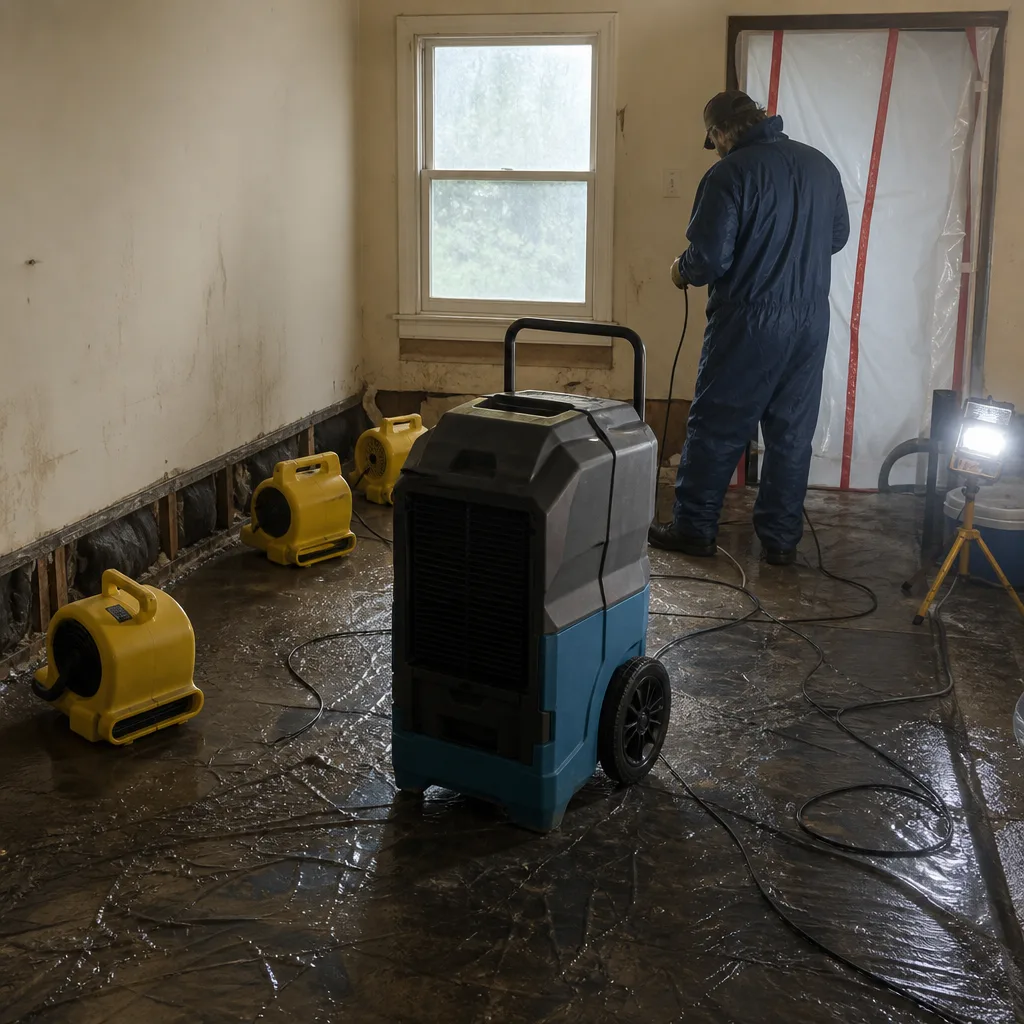
Burst Pipe Restoration
When a supply line bursts in an unheated basement in January, the clean water quickly becomes a full-scale saturation event. The pipe gets fixed by a plumber, but the restoration is ours. We map the migration path, dry the structure, and rebuild what the water ruined. The same crew handles all of it, so you’re not coordinating three different tradespeople.
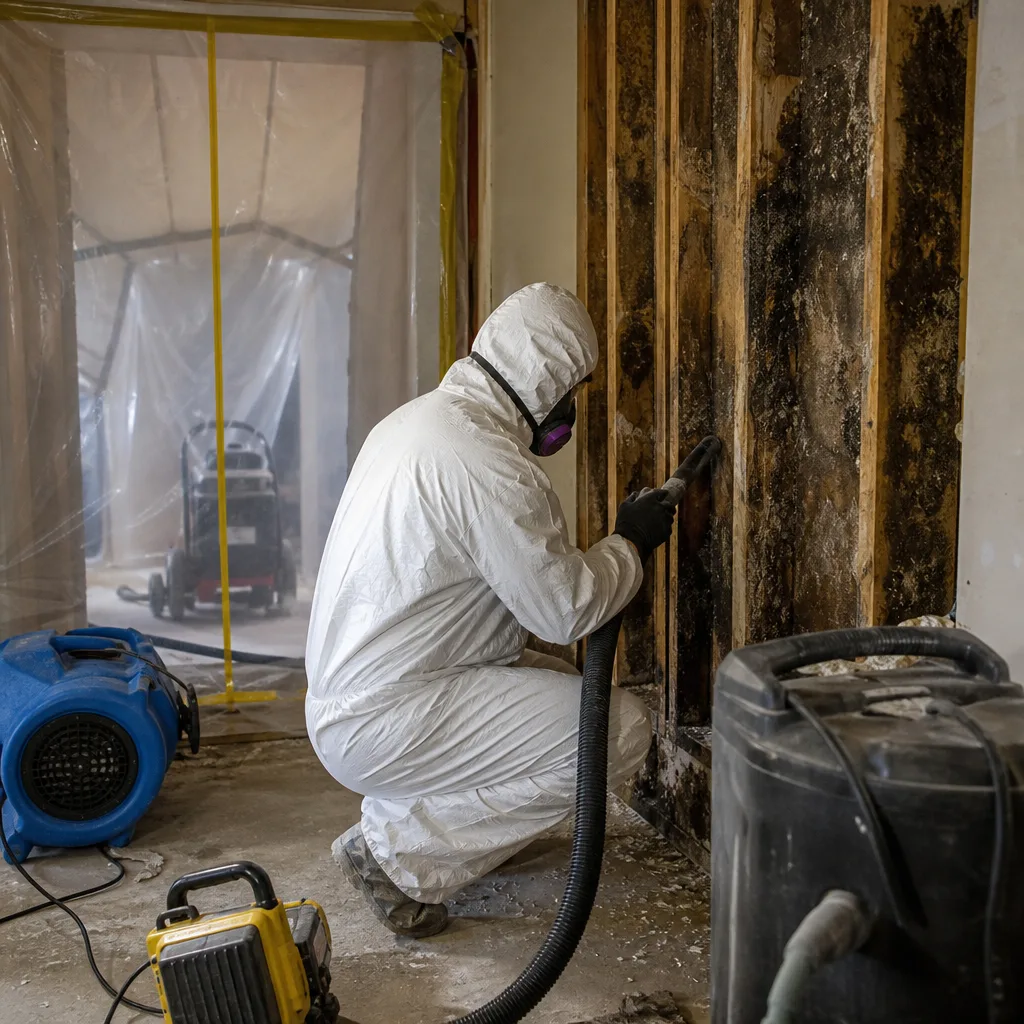
Basement Water Removal
In Weehawken, basements have three water sources: groundwater through old masonry, drain-line backups from the municipal system, and sump-pump failures during heavy rain. We extract, dry, and waterproof where needed, and we’ll tell you plainly if the source is something our restoration work can permanently solve or if you need a structural or drainage fix from a specialist.
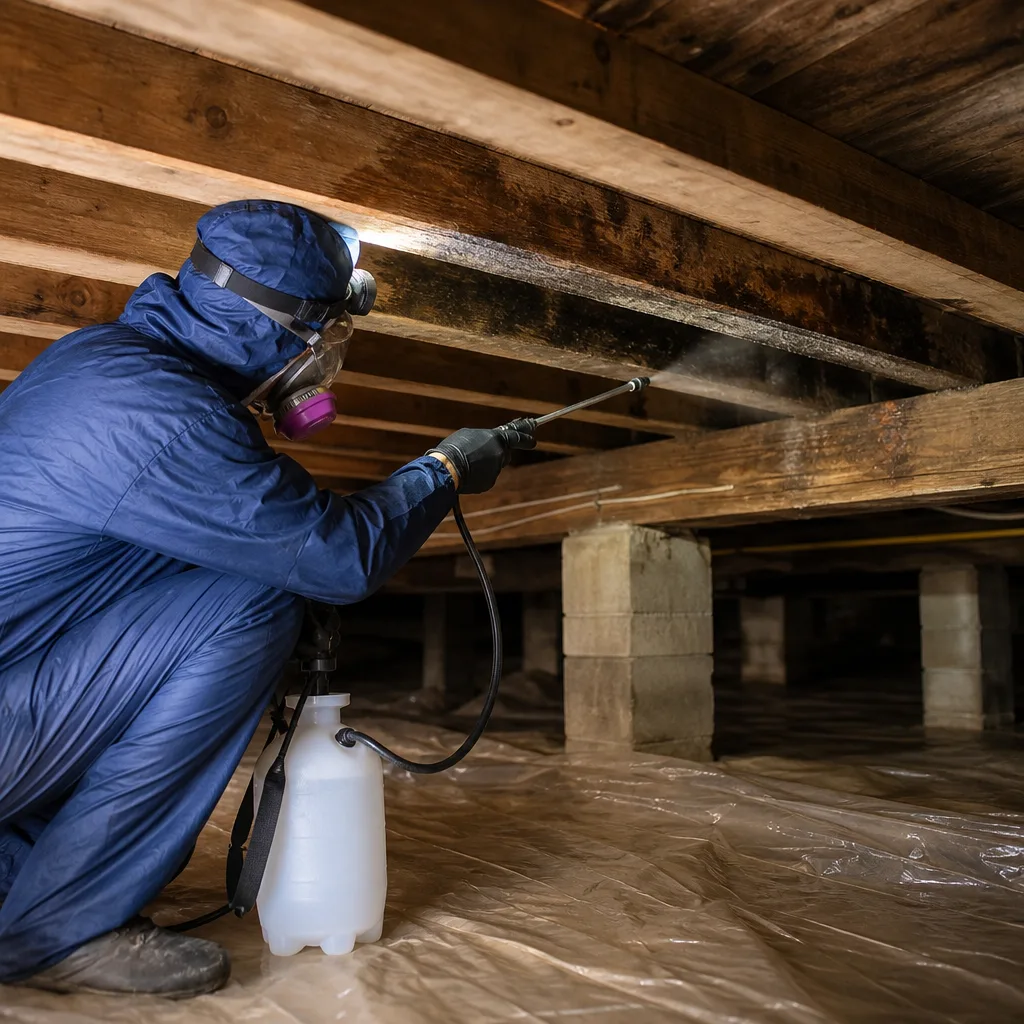
What happens when you call
- 1
A real person answersNo phone trees - you reach a local pro.
- 2
You get an upfront price rangeHonest numbers before anyone is dispatched.
- 3
A background-checked tech heads outLicensed & insured, dispatched right away.
- 4
You approve before work beginsNothing starts until you say go.
Water Damage Restoration Costs in Weehawken, NJ
A typical basement water removal and drying job in Weehawken runs $2,200 to $5,800. Emergency extraction alone, when it’s a single room with no structural damage, runs $900 to $1,800. A full-scale Category 3 loss in a Port Imperial condo with drywall removal, containment, drying, and rebuild runs $6,500 to $18,000 depending on square footage and finishes. Bluff-side row house basements with groundwater seepage tend to run $3,000 to $8,500 because the masonry often needs repair work in addition to drying. What moves the price: water category, square footage saturated, whether flooring can be dried in place or must be replaced, and whether the building requires high-rise access protocols like elevator protection covers and off-hours work rules. Insurance covers most covered perils, and we bill directly so your out-of-pocket is often just the deductible. A free visual inspection turns a guess into a firm, line-item scope.
We Also Serve Cities Near Weehawken
Our crews work throughout Hudson County. We serve Weehawken and the surrounding communities: Union City, Hoboken, North Bergen, and Secaucus. Same 45-minute response commitment, same live 24/7 dispatch, same Water Damage Restoration team.
Serving Weehawken, NJ - Our Local Coverage Area
We’re based in the Weehawken area and know this community well. Use the map below to see our service coverage - if you’re nearby, we can almost certainly help.
Weehawken Water Damage Restoration Questions, Answered
How soon after a Hudson River storm surge hits Port Imperial should I call for water extraction?
Call immediately. Storm surge water is Category 3, and it begins wicking into drywall and flooring within minutes. The first two hours are when you can save engineered hardwood and base cabinets. Call (551) 373-5246 and a crew reaches Weehawken inside 45 minutes most days.
Does Weehawken’s Palisades geology make my bluff-side basement more likely to flood?
Yes. The Palisades escarpment concentrates surface runoff and channels groundwater into the below-grade spaces of the brick row houses and walk-ups built along the upper bluff. The water pressure builds behind foundation walls and finds entry through cracks, old mortar joints, and cast-iron drain runs.
Can vibration from the Lincoln Tunnel helix actually cause water damage in my brick row house?
Yes, and we see it regularly. The constant 24/7 truck and bus traffic sends vibration through the ground into pre-war masonry. Over years, that opens micro-cracks in foundations and parapets. Rain and groundwater find those channels, and you get basement seepage or water running behind brick facades.
What’s the difference between Category 2 and Category 3 water in a Weehawken basement flood?
Category 2 contains significant contamination, like groundwater or washing machine overflow. Category 3 is grossly contaminated, carrying sewage, storm surge, or river water. Category 2 requires sanitization. Category 3 requires removal of saturated porous materials and full containment during drying.
How do you handle water damage in a Port Imperial high-rise where my neighbor’s unit flooded into mine?
We coordinate with both units, the building manager, and the insurance carriers involved. We map the water’s path through floor assemblies and wall cavities, set containment, and dry to the standard that all parties can verify with the daily moisture log. High-rise protocols apply: elevator protection, off-hours work rules, and building engineer notification.
How long does drying and restoration typically take in Weehawken?
Most Category 1 and Category 2 losses dry in 3 to 6 days. Category 3 losses with drywall removal and rebuild typically run 2 to 4 weeks depending on the scope. We’ll tell you what’s realistic at the free inspection, and the daily moisture log shows you progress in real time.
Can we stay in our home during water damage restoration?
For a contained basement or single-room loss, usually yes. For Category 3 contamination, or when air scrubbers and containment are running in living areas, we may recommend temporary relocation. We’ll be straight with you about what’s safe, and your insurance may cover lodging.
What should I do in the first 30 minutes after I discover water damage?
Call (551) 373-5246. Then, if it’s safe, shut off the water at the source. Don’t use electrical systems near standing water. Move small valuables to a dry area. Take photos before anything is moved. And don’t wait. The first call you make is the one that decides whether this is a cleanup or a rebuild.
Written by Curt Bowman, Owner at Floodline Restoration Co., serving Weehawken, NJ. Floodline was founded in 2010, and we’ve been answering the phone with a live person ever since.