
Free visual inspection and a written scope of work before any mitigation begins - photos, moisture readings, and drying logs go in your claim file
The scope we write is the scope we bill. Anything new gets shown to you, in writing, before we touch it.
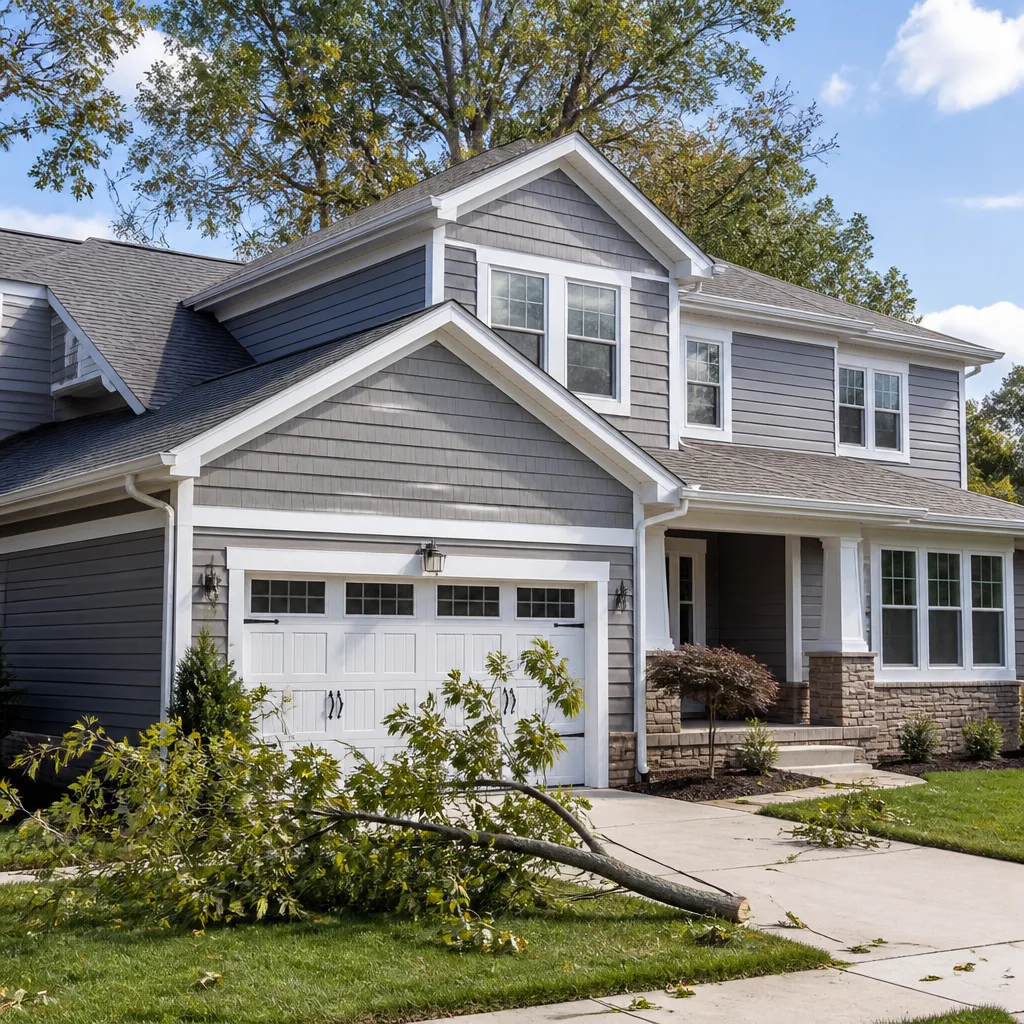
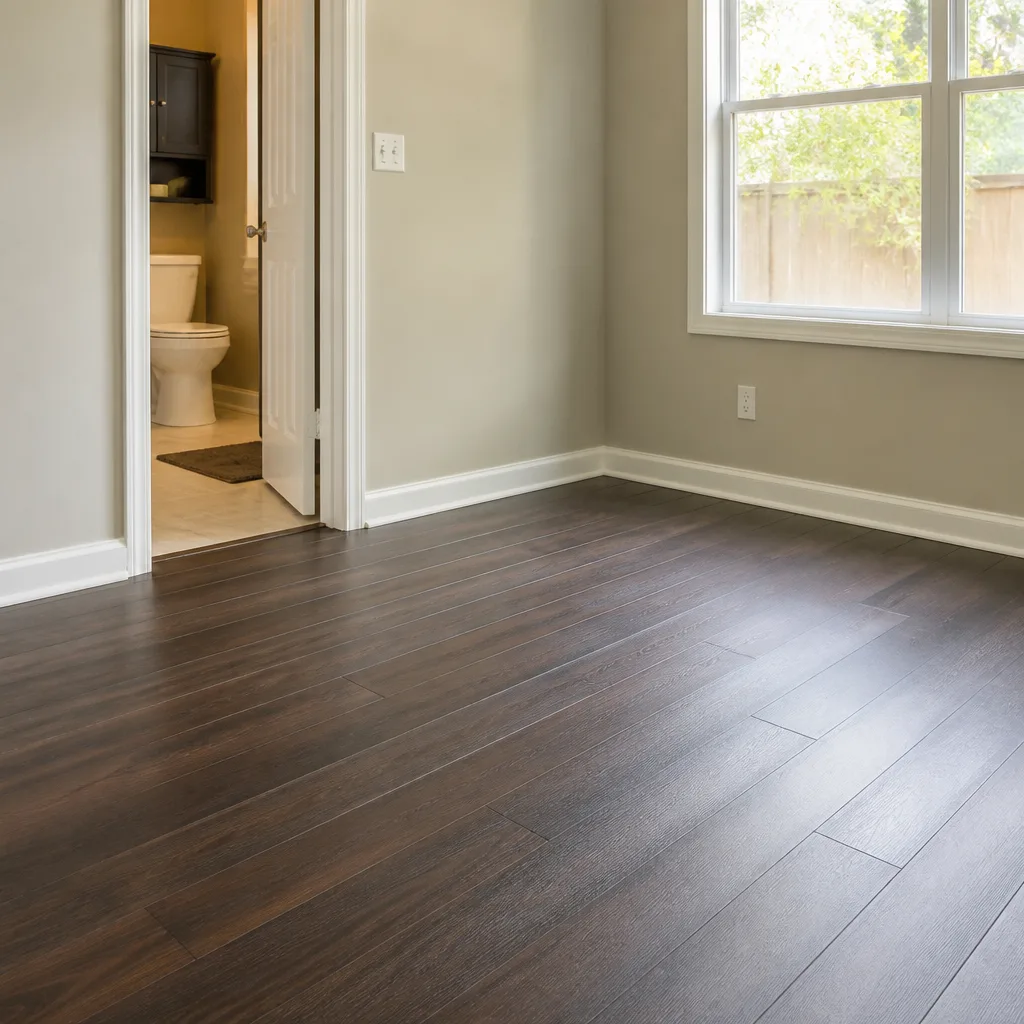
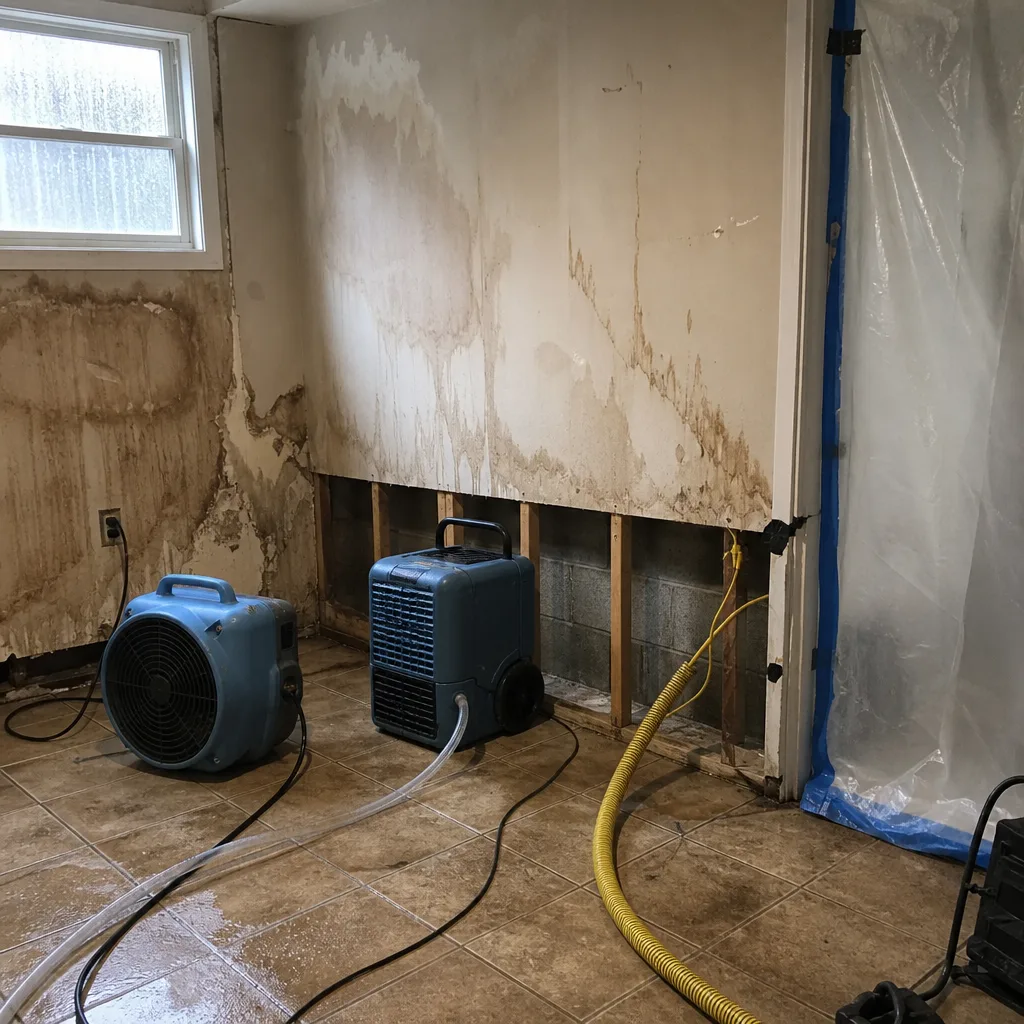 Before
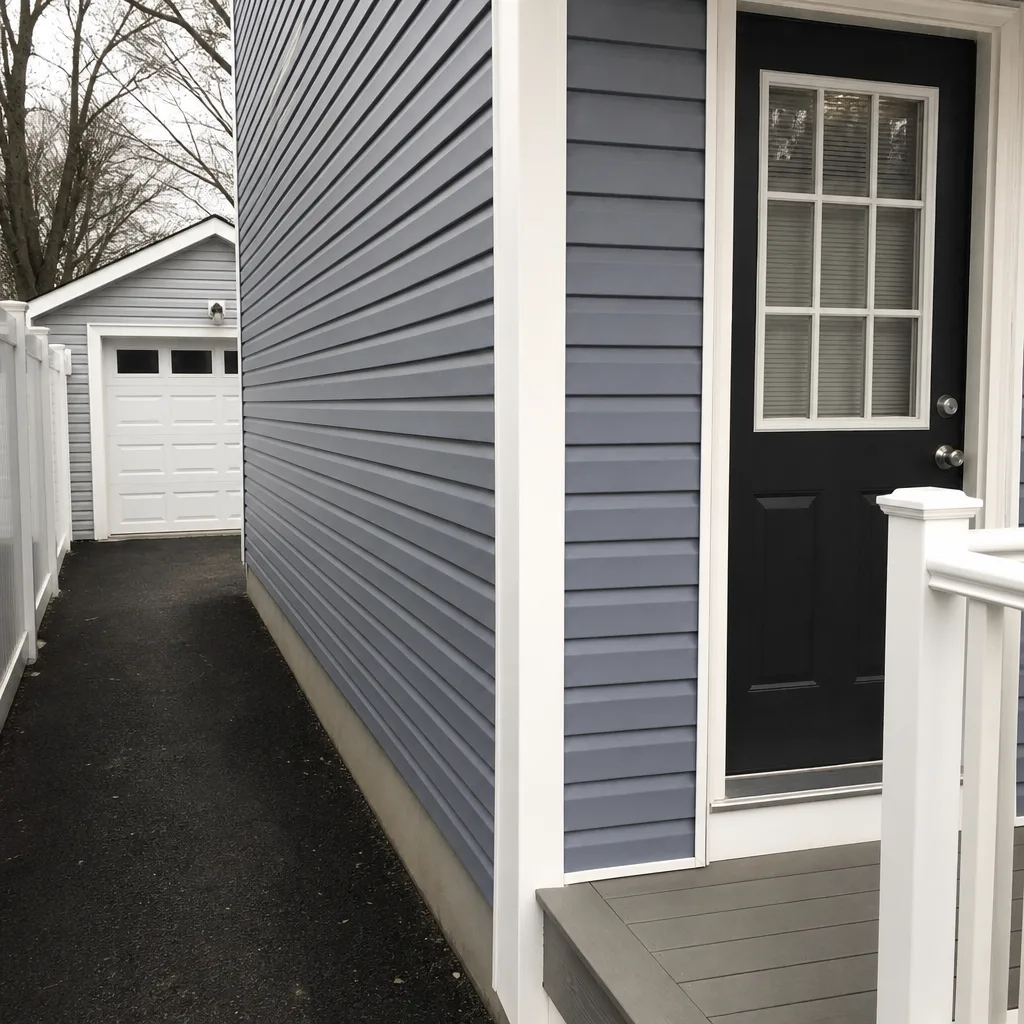 After
After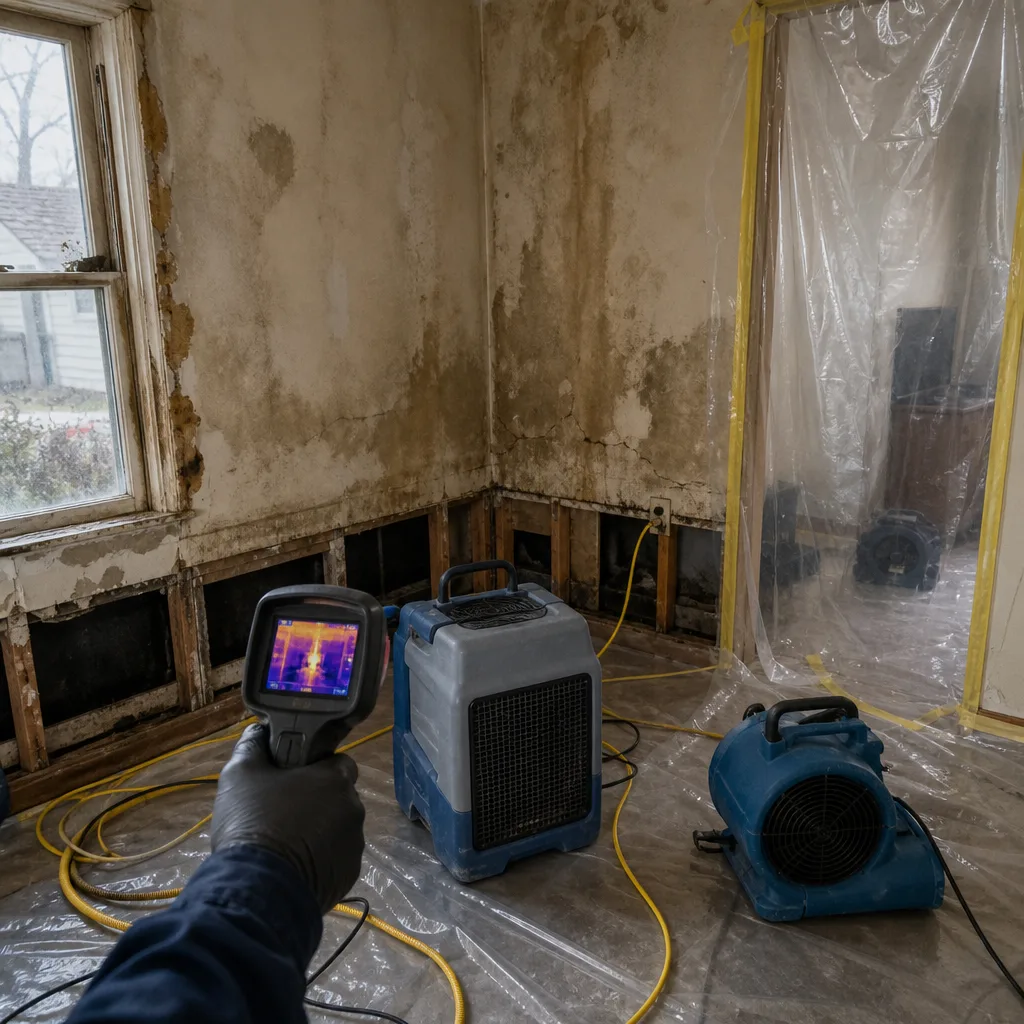 Before
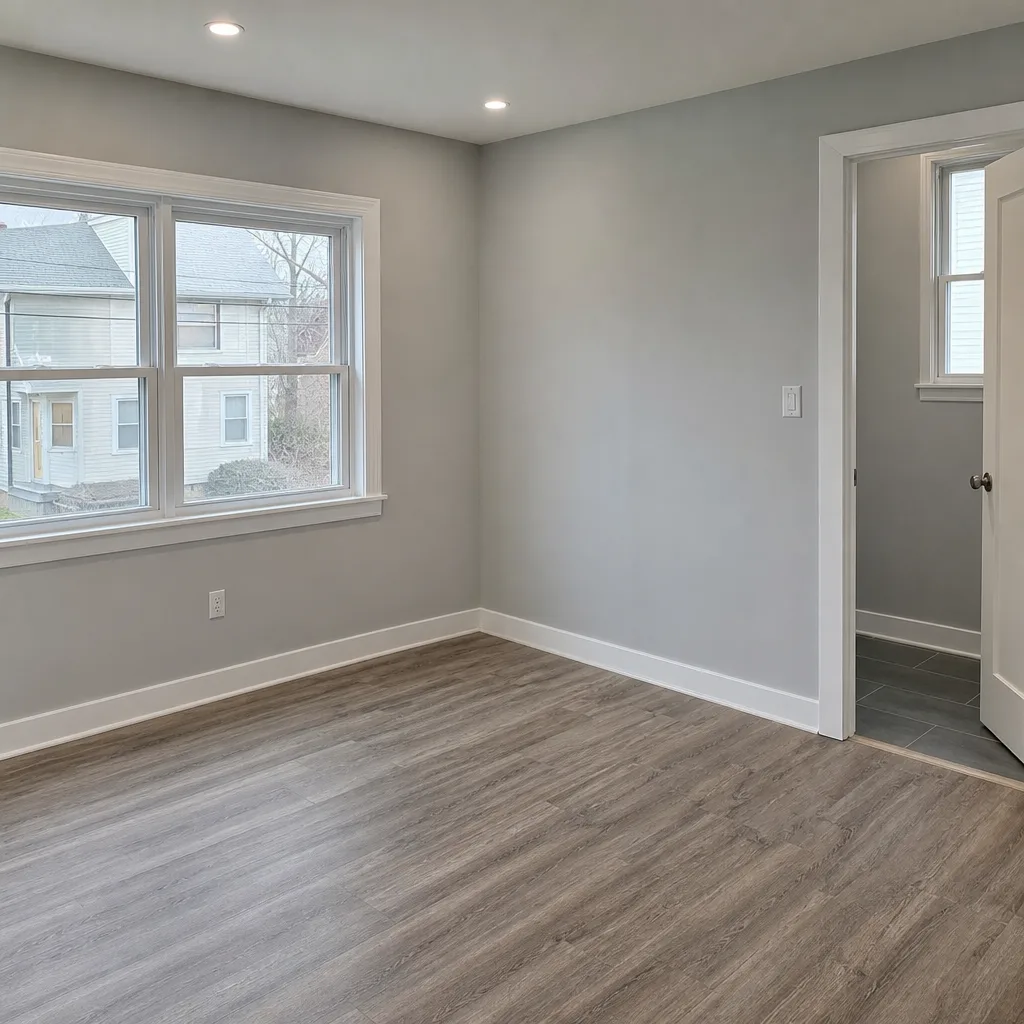 After
After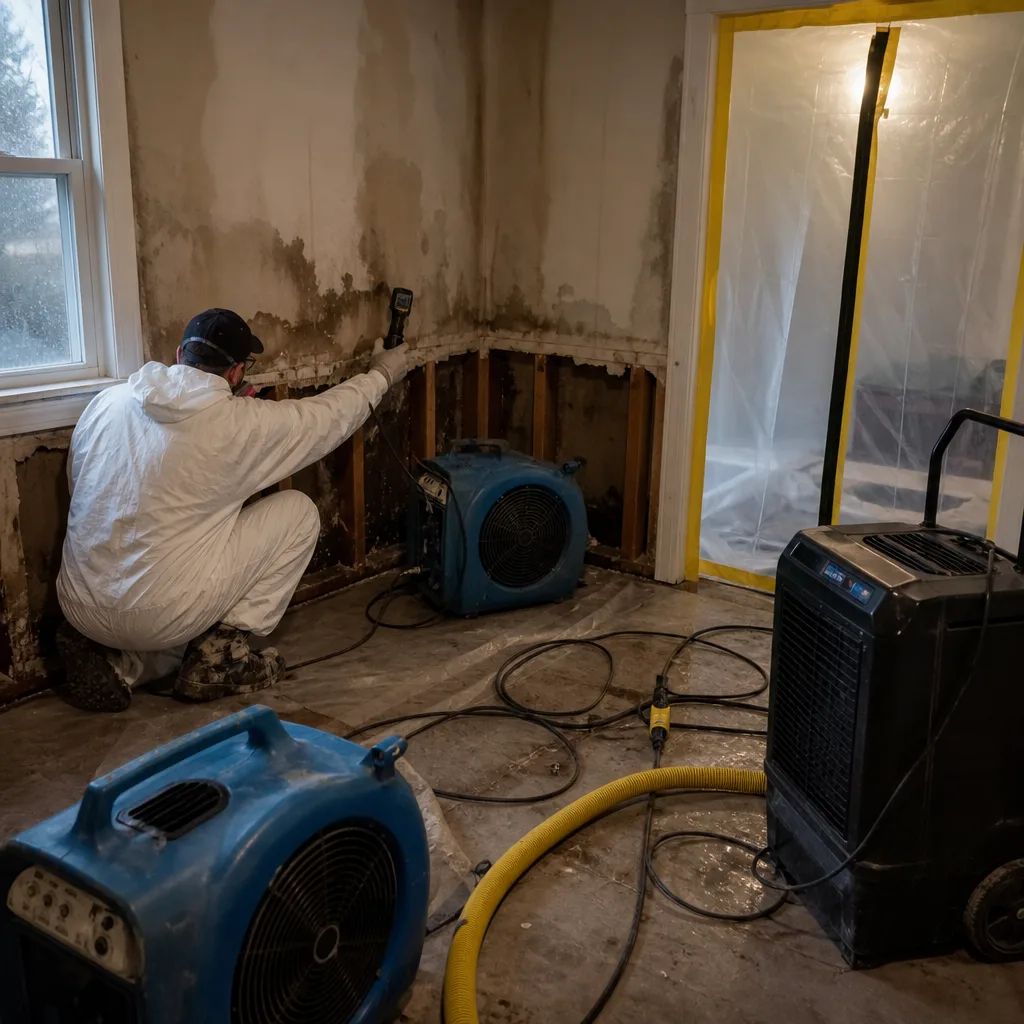 Before
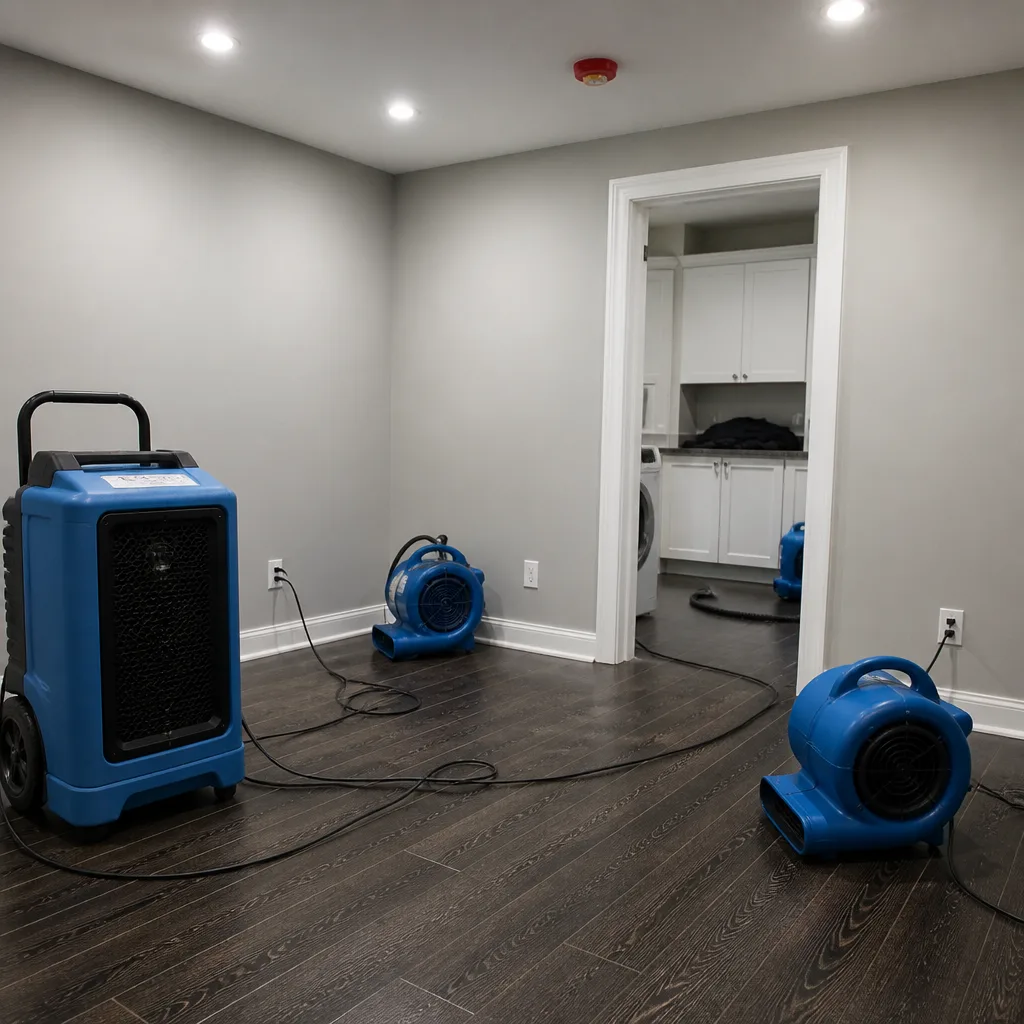 After
After24/7 Emergency Water Damage Restoration in Lyndhurst
A water emergency in Lyndhurst needs a response measured in minutes, not hours. Passaic River backflow and a failed supply line both do the same thing: water keeps moving down through the structure every minute it isn’t pulled out. We answer live at (551) 373-5246 any hour, any day, and a uniformed crew from our Water Damage Restoration team is dispatched immediately into town. The first call gets you a free visual inspection and an honest read on what the water actually did, not a scare estimate. One hour is the difference between drying a basement and rebuilding it.
Understanding Water Damage Restoration Severity in Lyndhurst Properties
Water damage gets classified by what the water touched before it touched your house, and that classification drives every decision after. Category 1 comes from a clean source, a supply line or faucet. Category 2 carries biological or chemical contamination. Category 3 is what the Passaic River leaves in the Riverside section: water that has already passed through storm drains, sewage outfalls, and the Meadowlands, loaded with bacteria and heavy metals. The difference matters because a 1940s Cape Cod basement with Category 3 river water over the sills cannot be dried like a clean pipe burst. It requires full extraction, contaminated materials removal, antimicrobial treatment, and moisture mapping before drying equipment ever gets plugged in. Homes here sit close to or below the seasonal water table, so structural drying has to account for hydrostatic pressure pushing underground water back into the slab and foundation walls. Most Lyndhurst homes were built between the 1940s and 1960s, and many basements were finished decades ago with materials that hold water and hide it at the same time.
Why Lyndhurst Property Owners Choose Floodline Restoration Co.
- 45-minute response commitment - when you call with water moving through a finished basement, our crew is moving toward your street, not sitting on a dispatch list.
- A live person answers, always - at 2 a.m. you get a dispatcher who knows Lyndhurst, asks the right questions, and starts the crew, not a recording telling you to leave a message.
- IICRC-certified crews - WRT and ASD certification as standard, with IICRC Water Damage Restoration trained technicians on every job, plus RIA and IFA standards on our equipment and process.
- Free visual inspection - we walk the damage with you, point to what the moisture meter reads, and hand you a written scope before any work is authorized.
- Direct insurance billing - we talk to your adjuster, send the documentation, and handle the claim paperwork. You are not the messenger.
- One team from extraction to reconstruction - the same crew that pulls the water out is the crew that rebuilds the wall. No handoff, no inherited crew, no second set of strangers in your house.
Our Water Damage Restoration Process
Inspection & Assessment
We arrive, walk the property, and map the moisture with thermal imaging and hygrometers. The goal is a written scope: what is wet, what category the water is, what comes out, what gets dried. Before any fan is plugged in, you know exactly what we found.
Extraction & Stabilization
Standing water comes out first using truck-mounted extraction and submersible pumps. In Lyndhurst basements that means getting water off the floor, out of wall cavities, and from under base cabinets. We stabilize the site so no further damage spreads while drying begins.
Drying & Dehumidification
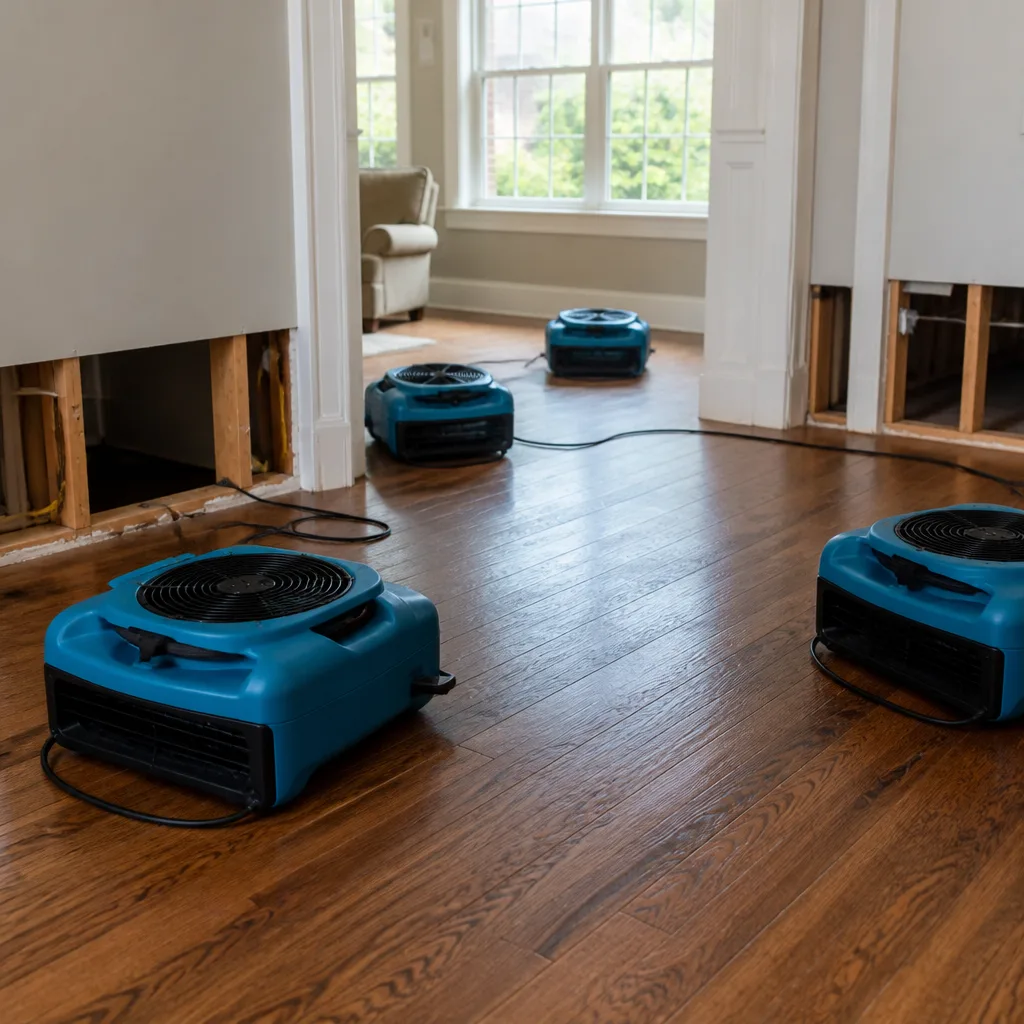
Dri-Eaz dehumidifiers and XPOWER air movers are placed according to the moisture map, not just scattered around. Daily readings get logged, the drying plot gets tracked, and the log is shared with you and your carrier. We run until the dry standard is met, not until the schedule says we are done.
Cleaning & Sanitization
Category 2 and Category 3 water leave contamination behind. Surfaces get cleaned, antimicrobial agents are applied where appropriate, and affected porous materials are removed. HEPA air scrubbing clears the air of spores and particulates during and after the work.
Moisture Verification
Before we call a job dry, we re-test the structure. Tile floors, drywall, framing, subfloor. If readings say moisture is still trapped, we adjust the drying plan and keep going. The log shows it in black and white.
Repairs & Restoration
When the structure is dry, the same crew rebuilds what we removed. Drywall, trim, flooring, painting. Floodline is a full-cycle company, so the crew that started the job finishes the job. No new subcontractor walking your hallway.
Need Emergency Water Damage Restoration in Lyndhurst Now?
Crews minutes away, answering live 24 hours a day. The sooner we start, the less it costs.
Working With Your Insurance Company
Insurance claims in Lyndhurst often carry an extra layer of complexity because of the Passaic River floodplain and the NFIP policies tied to it. We document the loss from the first hour, with photos, moisture readings, and a line-item scope built to carrier standards. When the water is Category 3 river backflow, the documentation has to support the contamination classification or the claim gets underpaid. Our team speaks the language that adjusters and FEMA scope reviewers actually require. We send the documentation directly to your carrier and talk to the adjuster ourselves, so you are never explaining drying logs or elevation certificates on a phone call you did not want in the first place.
What We Provide Your Insurer
- Thorough documentation of the loss
- Photos of all damage, room by room
- Moisture readings and drying logs
- A detailed, line-item scope of work
- Direct coordination with your carrier
Built for Lyndhurst’s Loss Calendar
Lyndhurst does not have one water season. It has four, and each one breaks something different. January and February bring the deep freezes that burst supply lines in the aging rowhouses and two-family homes on the borough’s east side, where original copper and galvanized pipe has been in the walls since the Eisenhower administration. March through May, the Meadowlands water table is already high, and spring rain pushes basements below grade into slow seepage that shows up as musty drywall weeks before homeowners notice the laminate buckling. Summer thunderstorms drop two inches in an hour on ground that cannot absorb it, sending water through foundation cracks and window wells. Then September through November, nor’easters and the tail end of hurricane season put the Passaic River over its banks again. Riverside stays a constant variable. We route crews around Lyndhurst by season, because we know what the calendar will bring before the water does. One number for all of it: (551) 373-5246.
Water Damage Restoration Across Lyndhurst’s Neighborhoods
The Riverside section is the most flood-exposed. Homes off Riverside Avenue and along the short streets running west toward the river have seen repeat inundations since Hurricane Irene and Sandy. These are mostly Cape Cods and smaller ranches built within sight of the water, and many of the basements have been wet before, dried before, and rebuilt before. The drying protocol changes for a repeat-loss property: we assume elevated moisture deep in the masonry and check the foundation walls with more aggressive probes than a first-time loss needs. East of Ridge Road, the housing shifts to denser two-family construction where supply-line failures and water migration through shared walls are the more common call. The Garden Terrace and DeJessa Bridge area around the Meadowlands also deals with a persistently high water table that turns a small foundation crack into a permanently damp lower level. On Stuyvesant Avenue, the mixed commercial and residential buildings above the stores often hide slow roof and parapet leaks that travel down two floors before they show up on a ceiling. We run routes that account for where the buildings are old, where the basements are finished, and where the river always wins.
Specialized Water Damage Restoration Services We Offer in Lyndhurst
Emergency Water Extraction
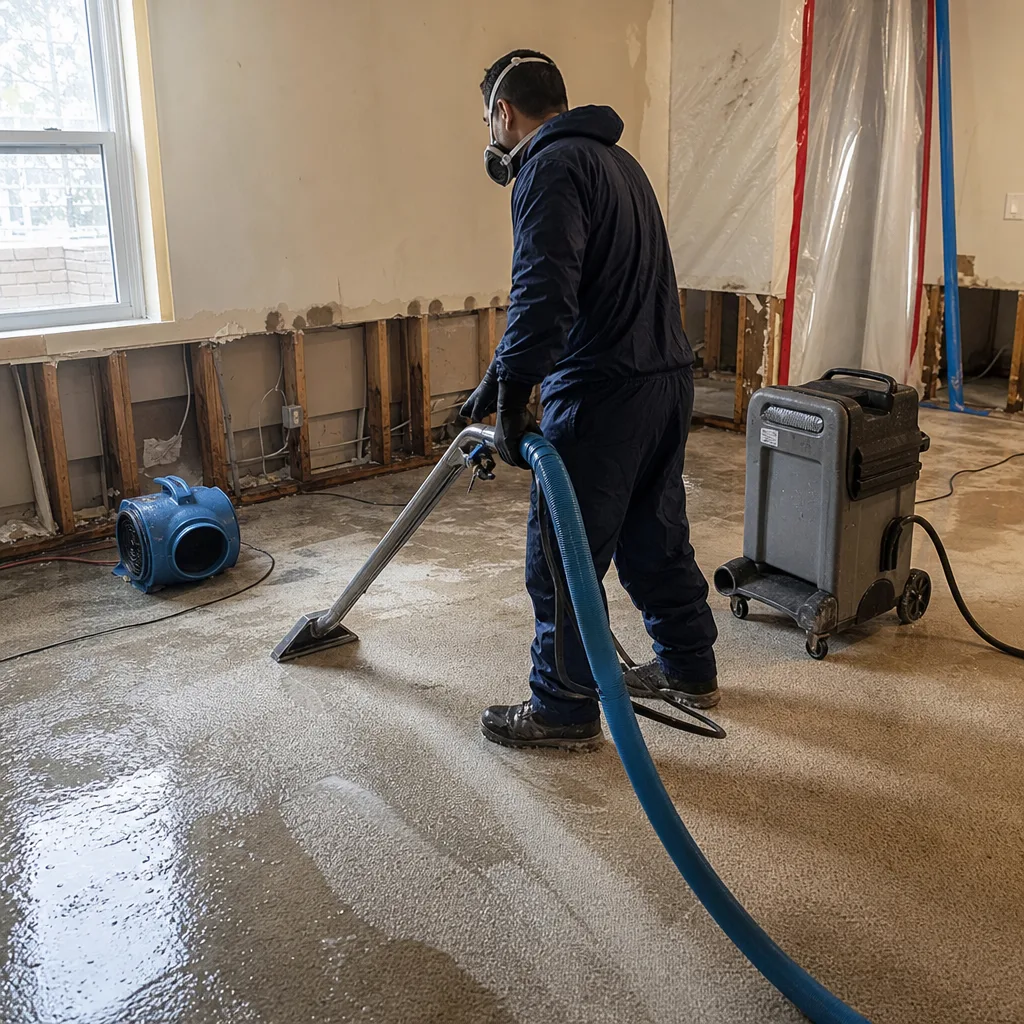
Standing water in a Lyndhurst basement gets pulled out with truck-mounted extraction, submersible pumps, and hard-surface wands that get into the same corners the water did. For Passaic River events, extraction includes removal of the contaminated silt and debris the water leaves behind, not just the water itself.
Flood Cleanup
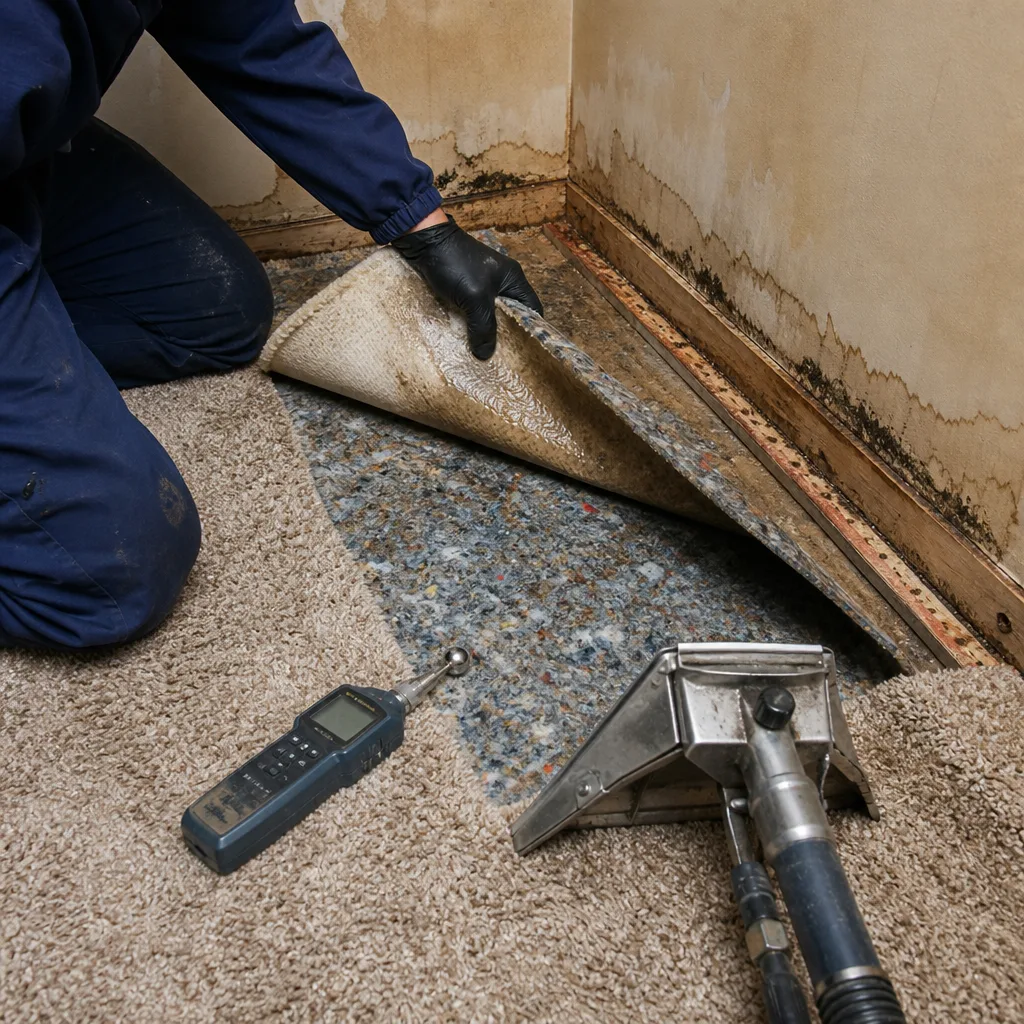
River flooding is a full contamination event. Flood Cleanup in the Riverside section means removing Category 3 water, tearing out soaked wicking materials, applying antimicrobial treatments, and running HEPA air scrubbers until the air in the basement is actually clean enough to work in. This is the work that determines whether mold becomes a secondary problem.
Basement Water Removal
Lyndhurst basements below the seasonal water table fight hydrostatic pressure from below and surface water from above. We remove the interior water, map the residual moisture in the slab and foundation, and install drying systems that account for water still pressing against the outside of the foundation. Basement Water Removal here is rarely a one-day event when the water table is high.
Burst Pipe Restoration
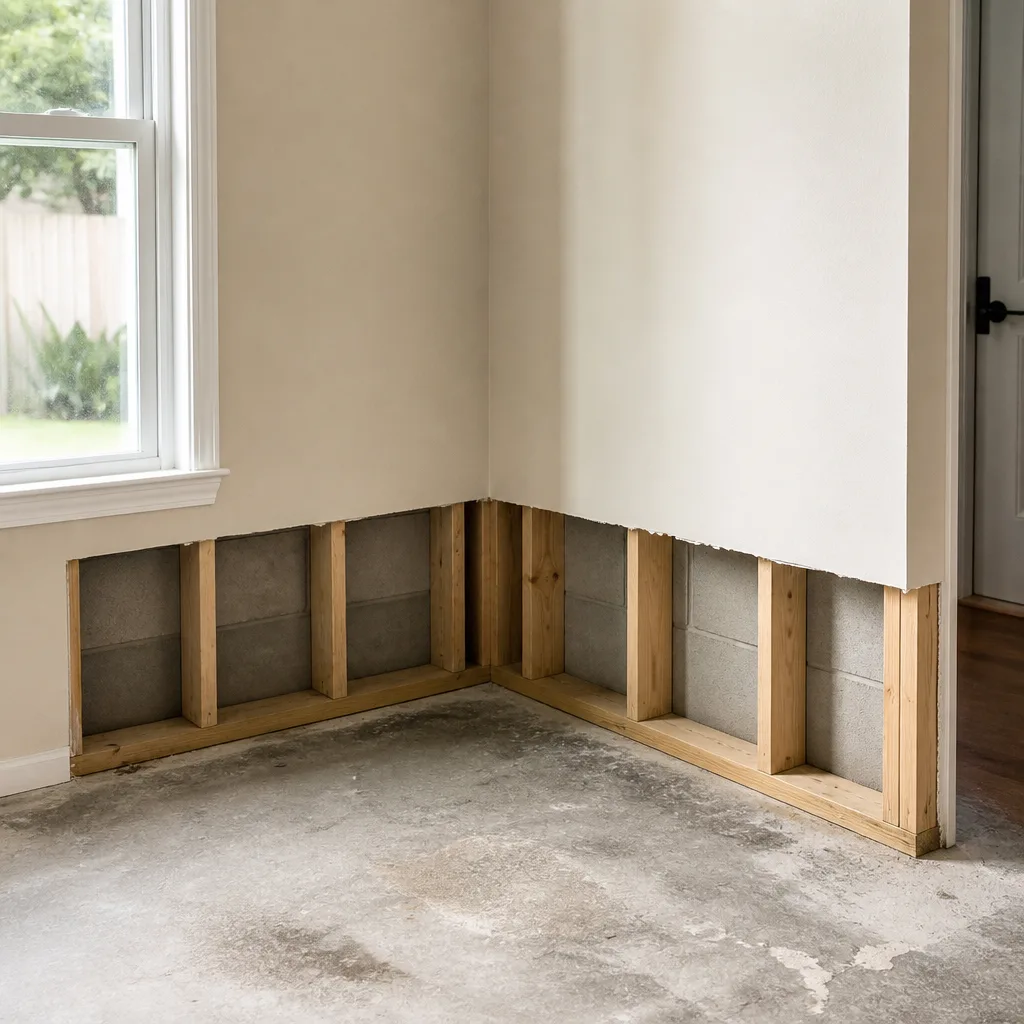
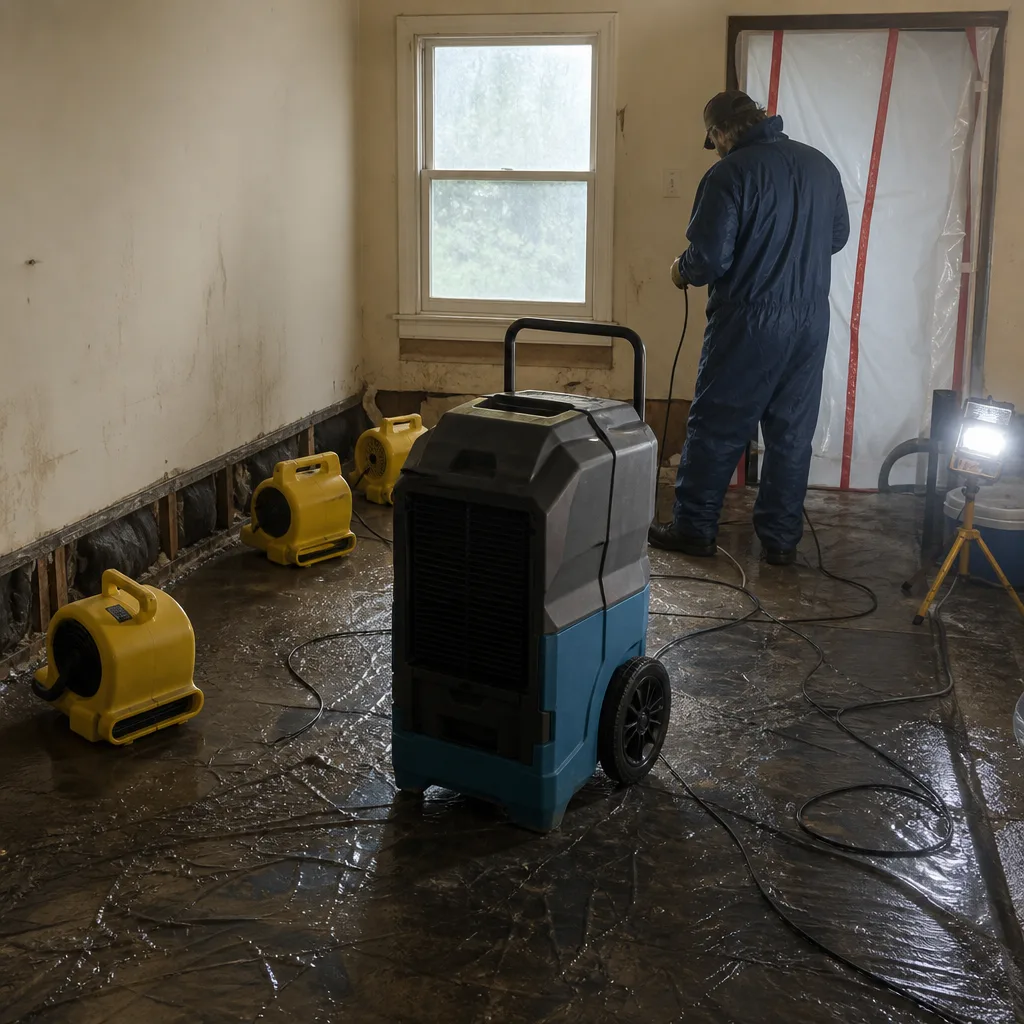
A frozen copper line in a 1950s Lyndhurst two-family can release several gallons per minute behind a wall for hours. We find the failure point, shut it down, extract the damage, and dry the affected cavities without tearing out more drywall than necessary. The goal is to save the structure, not gut it.
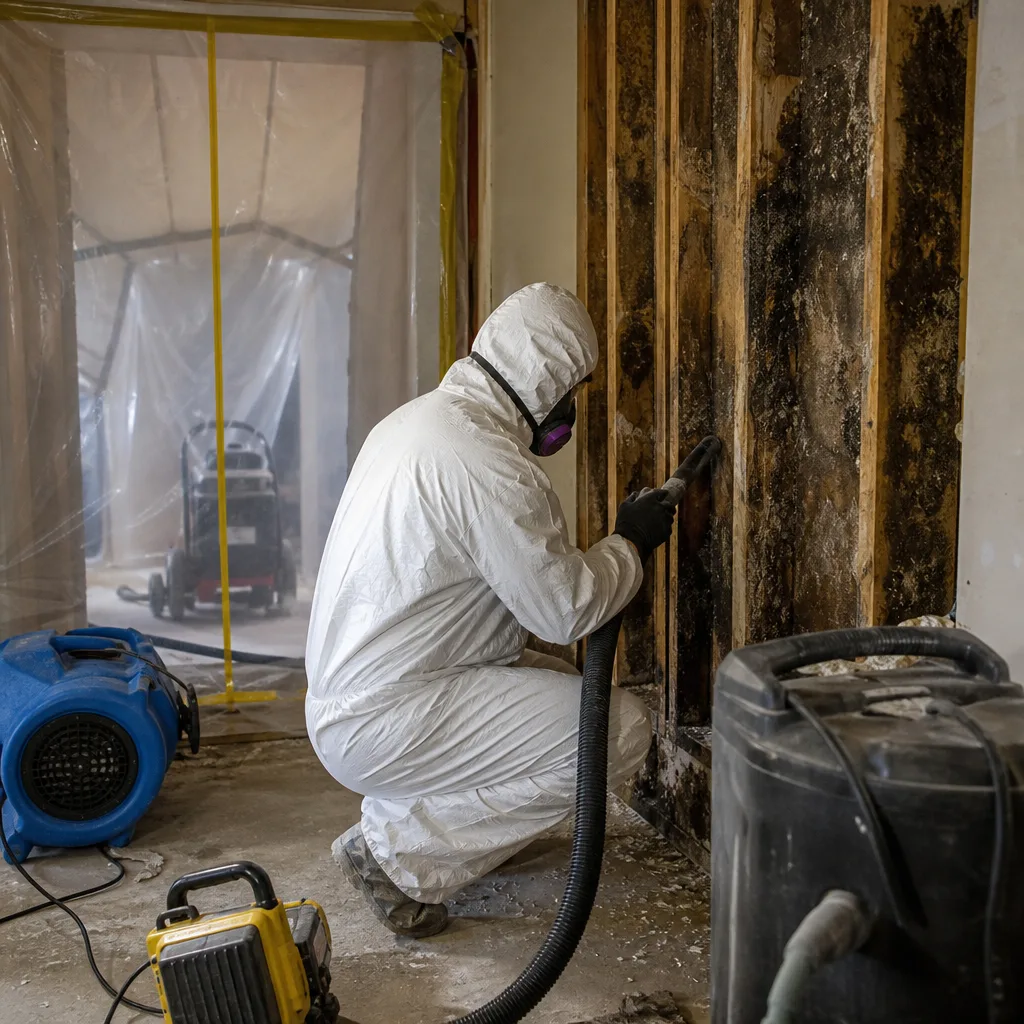
Structural Drying & Dehumidification
Drying a Lyndhurst home properly means running Dri-Eaz and Phoenix dehumidifiers with XPOWER air movers until the framing, subfloor, and drywall actually hit the dry standard. We log daily readings and share them with you, so you can see the moisture curve coming down in real numbers.
What happens when you call
- 1
A real person answersNo phone trees - you reach a local pro.
- 2
You get an upfront price rangeHonest numbers before anyone is dispatched.
- 3
A background-checked tech heads outLicensed & insured, dispatched right away.
- 4
You approve before work beginsNothing starts until you say go.
Water Damage Restoration Costs in Lyndhurst, NJ
Water damage restoration in Lyndhurst runs a real range depending on what happened and how fast it was caught. Emergency water extraction alone, with pumps and trucks, typically runs $500 to $1,400. Structural drying with dehumidifiers and air movers usually lands between $1,200 and $3,800 depending on how many rooms are wet and how long the water sat. Flood cleanup after a Passaic River event, with Category 3 contamination and material removal, most often comes in between $4,000 and $12,000 for a typical Riverside basement, and more if the rebuild is extensive. A burst pipe that was caught early might dry for $1,800. The same pipe running all night becomes a $6,000 job. The variable is time, and the free inspection gives us a hard number before any work gets authorized. Insurance-covered losses are billed directly to the carrier, and the Senior & Veteran 5% discount and $50 Off Any Repair Over $250 apply to covered out-of-pocket work. Call (551) 373-5246 for an exact scope and price.
We Also Serve Cities Near Lyndhurst
Floodline Restoration Co. works the entire Meadowlands region. We regularly respond to water damage calls in Lyndhurst, North Arlington, Rutherford, East Rutherford, and Carlstadt. Crews stage across the corridor so a call in any of these towns gets the same 45-minute response as one in the Riverside section.
Serving Lyndhurst, NJ - Our Local Coverage Area
We’re based in the Lyndhurst area and know this community well. Use the map below to see our service coverage - if you’re nearby, we can almost certainly help.
Lyndhurst Water Damage Restoration Questions, Answered
How quickly should I start water extraction after the Passaic River backs up into my Lyndhurst basement?
Immediately, because Passaic River water is Category 3 and every hour it sits lets contaminated water wick further up drywall, into framing, and under flooring. Call (551) 373-5246 and extraction starts the same visit.
Does Lyndhurst require any special documentation for water damage repairs in the Riverside flood zone?
Homes in the FEMA-designated flood zone frequently need scope-of-work documentation that references elevation certificates and NFIP claim history. We prepare FEMA-compliant scopes and drying logs that hold up under adjuster and floodplain-manager review.
What’s the difference between drying a Lyndhurst basement after river flooding versus after a clean pipe burst?
River flooding is Category 3 water, so porous materials like drywall and carpet pad get removed, not dried. A clean pipe burst is Category 1 and can often be dried in place, saving walls and floors. The equipment is similar, but the protocol is entirely different.
Can you handle a repeat flood claim on a home that’s already had two prior NFIP losses?
Yes. Repeat NFIP loss properties are the reality of the Riverside section, not the exception. We know how to scope the work so the claim documentation accounts for prior damage, building depreciation, and the current loss without getting kicked back for ambiguity.
Why do basements in Lyndhurst stay damp long after floodwaters recede?
The Meadowlands keeps the subsurface water table elevated, and water under hydrostatic pressure keeps pushing into foundation walls and slabs after the river drops. Our drying protocols include readings on the masonry itself so the equipment runs until the structure is dry, not just the air.
Will my insurance cover water damage restoration in Lyndhurst?
Flood damage from river overflows is covered only by flood insurance, typically NFIP. Pipe bursts and appliance failures are generally covered under homeowner’s policies. The specifics depend on your policy, and we work directly with your adjuster either way.
How long does structural drying take in a Lyndhurst basement?
Most Lyndhurst basements dry in 3 to 5 days with professional equipment and daily monitoring. River flooding with Category 3 contamination takes longer because material removal and antimicrobial treatment happen before drying, and the high water table extends the process.
What should I do in the first 30 minutes after discovering water in my Lyndhurst home?
Shut off the water source if it is a plumbing failure, turn off power to the affected area if water is near outlets, and call (551) 373-5246. Do not enter standing water that could be electrically charged or from the river, which is contaminated.
Written by Curt Bowman, Owner at Floodline Restoration Co., serving the Meadowlands region since 2010.