
How to Choose the Right Damage Restoration Company in Kearny
The right damage restoration company in Kearny is one that handles the entire job with its own crew, backs the work with a written guarantee, and bills your insurance carrier directly. If you ask one question before signing anything, make it this: “Who will be on site for the rebuild phase, and are they your employees or subcontractors?” The answer tells you more than fifty online reviews ever will.
If you’d rather not work through a checklist while water is rising, call (551) 373-5246. Floodline Restoration Co. has served Kearny since 2010, and a live person answers at any hour.
Here’s the thing most guides won’t tell you. Checking reviews and confirming a license filters out the obvious bad actors, but it does nothing to separate a capable company from one that will extract the water, hand the rebuild to a stranger, and leave you managing two contractors and an insurance adjuster alone. The most common complaint in restoration reviews isn’t about the emergency response. It’s about the handoff, the moment the restoration company finishes drying and refers you to a separate contractor for repairs, often without ever mentioning that this was the plan.
This guide gives you a Kearny-specific vetting checklist built around the one question that actually separates full-cycle companies from damage-only crews.
Key Takeaways
- Ask who handles the rebuild phase before you sign anything.
- Verify the contractor’s license class in the New Jersey state database. It takes under two minutes.
- Compare written estimates line by line, not by bottom-line number.
- Demand a written workmanship guarantee that specifies duration, coverage, and the remedy process.
- Direct insurance billing protects you from disputed claims and surprise balances.
The Handoff Problem: Why Most Restoration Complaints Happen After the Water Is Gone
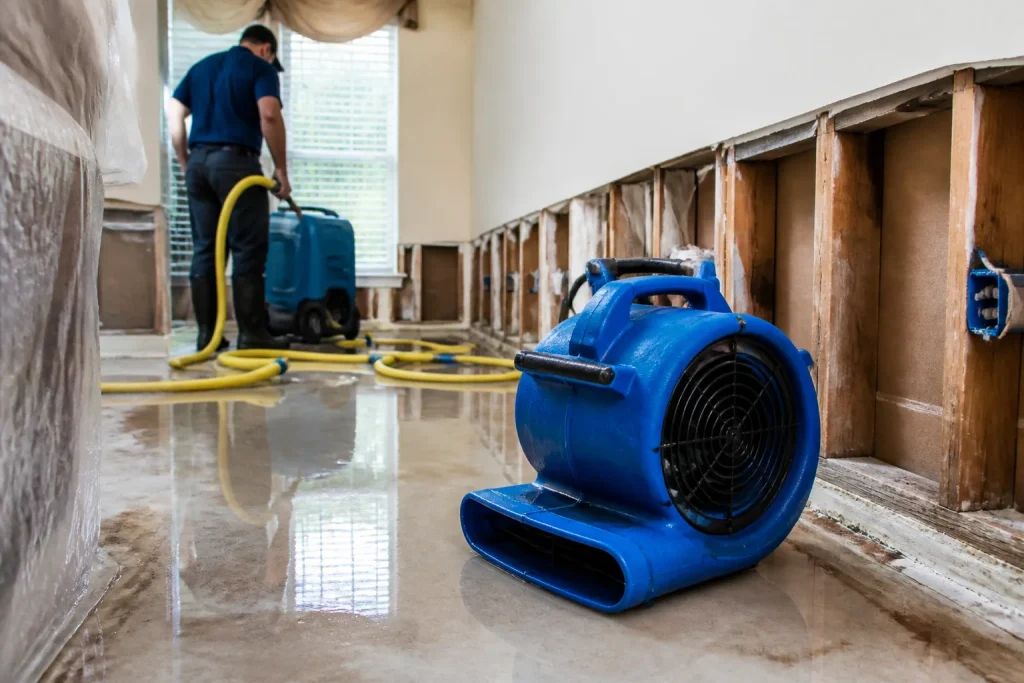
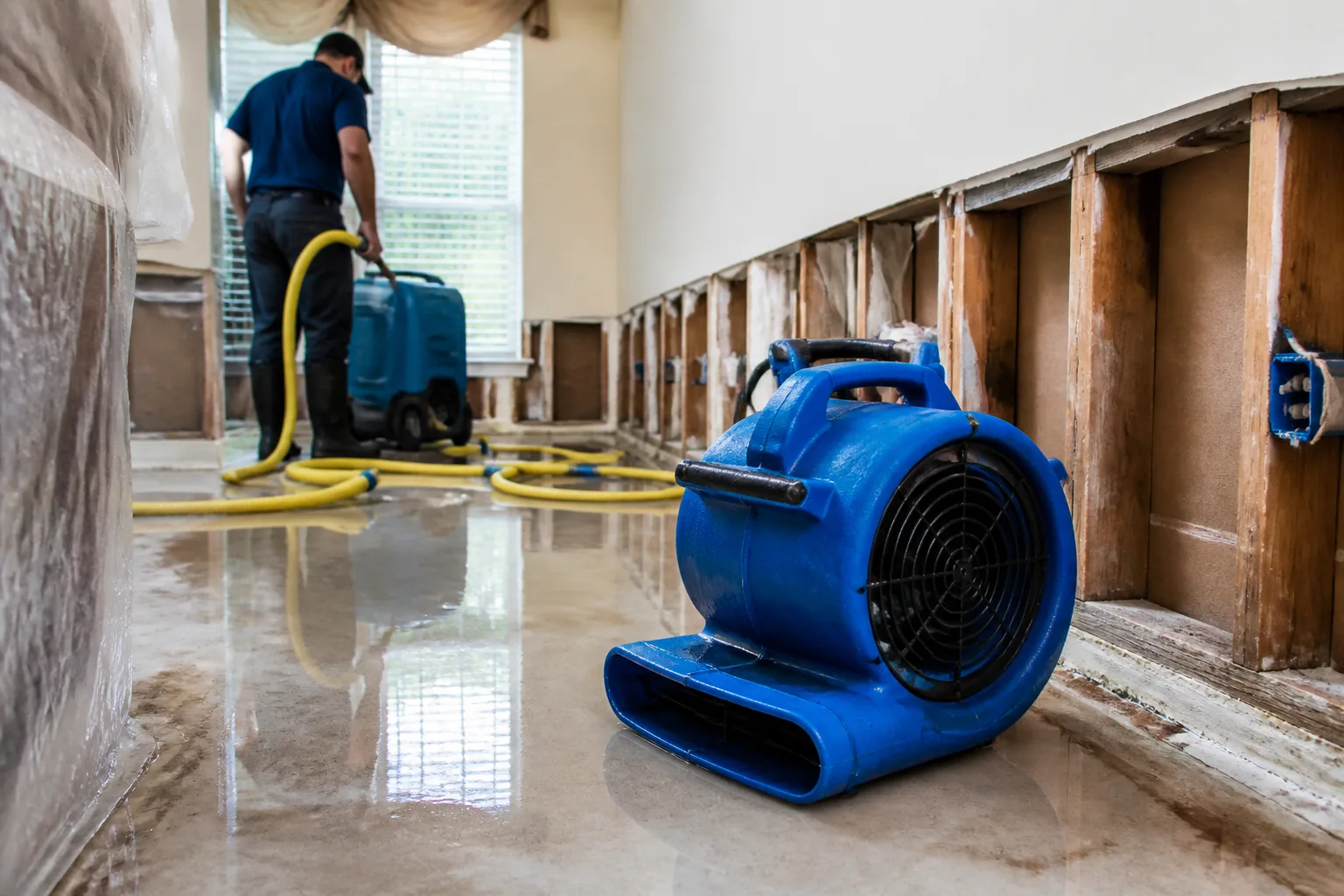
In our experience at Floodline Restoration Co., the emergency response is rarely where the relationship falls apart. A crew shows up, runs extraction equipment, sets up air movers and dehumidifiers, and takes moisture readings. That part goes fine. The trouble starts when the drying is done and the homeowner learns that the rebuild, the drywall, the flooring, the trim, will be handled by a different company entirely. Sometimes the restoration company refers a contractor they claim to work with. Sometimes they hand you a list of three names and wish you luck. Either way, you are now the general contractor, and you did not sign up for that job.
This split is common in the restoration industry because damage control and reconstruction require different skills. Emergency extraction is about speed and equipment. Rebuild is about carpentry, finishes, and permits. Many companies simply don’t employ finish carpenters. They subcontract, or they refer. There is nothing illegal about it, but it changes who is accountable when the baseboard doesn’t sit right or the paint doesn’t match.
You want one name on the contract and one crew in the house. Ask the question directly: “Who will be on site for the rebuild phase, and are they your employees or subcontractors?” If the answer hedges, that’s your answer.
For a deeper look at what proper extraction and drying should involve, see our guide to Water Damage Restoration in Kearny.
What NJ Contractor Licensing Actually Covers for Restoration Work
New Jersey requires home improvement contractors to register under the Contractors’ Registration Act, but some restoration companies also carry a Home Improvement Contractor (HIC) license through the Division of Consumer Affairs. What matters for restoration work is the specific license class the company claims and whether it is current. You can verify a contractor in under two minutes by searching the New Jersey Division of Consumer Affairs license database at njconsumeraffairs.gov. Type in the company name, confirm the registration is active, and check whether any complaints or actions are on file.
Here’s what to look for in Kearny specifically. Many property owners don’t realize that mold remediation and fire damage restoration can involve materials and techniques that fall outside a basic contractor registration. Ask what certifications the technicians hold. Look for IICRC training (the Institute of Inspection, Cleaning and Restoration Certification) and RIA membership (the Restoration Industry Association). These are not government licenses. They’re industry standards, and they matter because they tell you the crew has been trained to a measurable benchmark, not just hired off a corner.
Floodline Restoration Co. technicians are background-checked, uniformed, and trained to IICRC, RIA, and IFA standards. We’re happy to show you the paperwork. Any reputable company should be.
How to Compare Written Estimates Apples-to-Apples in Kearny
A lowball estimate is not a bargain. It’s a line-item omission waiting to become a mid-job surprise. When you compare written estimates from restoration companies in Kearny, don’t look at the bottom number first. Look at whether the estimate includes the same scope of work.
Every legitimate restoration bid should include these line items:
- Water extraction volume and equipment type (which machines, how many)
- Drying time estimate with daily moisture readings
- Antimicrobial application where applicable
- Demolition scope: exactly what gets removed and why
- Debris removal and disposal fees
- Rebuild materials with brands or grades specified
- Permit costs, if the job requires them
- A written workmanship guarantee with a duration
When one bid comes in thousands lower, the missing pieces are usually demolition depth, drying time, or rebuild materials. The low bidder plans to discover those costs after the walls are open. That’s not a square deal. In Kearny, where older housing stock means lathe and plaster under drywall and layers of history behind kitchen cabinets, the difference between a real estimate and a lowball shows up fast once demolition starts.
A written estimate for mold work should specify the containment setup and the post-remediation verification process. If you’re facing that situation, our page on Mold Remediation in Kearny explains what a proper remediation protocol includes.
When to Call a Pro
Some things you can handle with a mop and a fan. Others need professional-grade equipment and a moisture map. Here’s the honest line. If the water came from a clean source like a supply line and the affected area is under ten square feet and dried within 24 hours, you might be fine with a shop vac and open windows. If the water came from a sewage backup, if it sat for more than a day, if it wicked up drywall or under flooring, or if you smell anything musty, call a professional before the damage spreads.
We pulled a sewage backup out of a basement over in the Manor section of Kearny last year where the homeowner had been airing out the room for four days. The moisture had wicked four feet up the drywall. A four-hour mitigation job became a two-day tear-out and rebuild. The bill was triple what same-day extraction would have cost. When water sits, the job grows. That’s not a scare tactic. That’s how moisture behaves in a Kearny basement in July.
What a Written Workmanship Guarantee Should Actually Say
“Satisfaction guaranteed” is a marketing phrase. It means nothing legally. A real workmanship guarantee names a duration, states what it covers, and describes the remedy process.
Here’s what to look for on paper:
- Duration: The guarantee should run at least 90 days. Anything less and you may not discover a bad seam or a failing patch until the first rain or the first freeze.
- Coverage: The guarantee should specify that it covers workmanship defects on both the mitigation and the rebuild. If the rebuild was subcontracted, the guarantee should still rest with the company you hired, not some third party.
- Remedy process: The document should say how a claim works. Who do you call? How fast do they respond? Is there any exclusion for water damage that recurs due to a new event, as opposed to a failed repair?
Floodline Restoration Co. puts this in writing and calls it the 90-Day Done Right Promise. We call it the Keystone Standard internally. If it’s not done right, we make it right. No paperwork battles, no arguing. It’s tied to the K.E.Y.S. values code our founder Curt Bowman established when he started the company in 2010: Krafted right, Every time, Your home first, Standing behind it. Every Floodline job carries that promise in writing.
Why Direct Insurance Billing Changes the Contractor’s Accountability
Direct insurance billing gets talked about like a convenience feature, the way a car wash offers free vacuums. It’s not. It’s a structural change in who the contractor answers to and who carries the risk.
Here’s how it works. When a restoration company bills your carrier directly, the company submits its documentation, its moisture logs, its photos, and its invoices to the adjuster. The carrier pays the contractor according to the policy. You are not fronting the money and waiting for reimbursement. More importantly, you are not the middleman between an adjuster who wants to pay less and a contractor who wants to charge more. That argument happens without you in the room.
Direct billing also disciplines the contractor. When a company depends on carrier payment, it has to justify every line item with documentation. The adjuster won’t pay for vague scope. The moisture log has to show the dry standard was met. The demo photos have to match the estimate. Companies that bill direct build their paperwork to carrier standards, which means the homeowner gets the same documentation the insurance company gets. That’s accountability you can see.
For fire loss specifically, the documentation burden is heavier, and carriers scrutinize line items closely. Our Fire & Smoke Damage Restoration in Kearny page covers what that documentation should include.
The Equipment Question: Why the Brand Names Matter
Most homeowners never think about the difference between a rental dehumidifier and a professional-grade unit until the third week of drying when the floors are still reading 19% moisture. Professional restoration equipment is engineered for speed and depth. A Dri-Eaz or Phoenix dehumidifier pulls water vapor out of structural materials at a rate a box-store rental unit cannot match. XPOWER air movers create the airflow that drives evaporation. Injectidry systems dry wall cavities from the inside without tearing open drywall. B-Air equipment handles the heavy-volume commercial drying when a big loss hits a building with multiple units affected.
The point isn’t the brand name on the sticker. It’s the difference between drying the surface and drying the structure. Surface drying leaves moisture behind walls, under cabinets, inside floor assemblies. That moisture becomes mold, odor, and warping within weeks. A company using professional-grade equipment is also more likely to be moisture-mapping from day one and logging daily readings until the dry standard is met. Ask what equipment they run. If the answer is vague, the drying probably will be too.
The Bottom Line
Choosing a damage restoration company in Kearny comes down to four questions. Who handles the rebuild and are they employees? What does the written guarantee actually say? Will the estimate hold up when the walls are opened? And will the company bill the carrier directly or leave you holding the paperwork?
Floodline Restoration Co. has answered those questions the same way since Curt Bowman founded the company in 2010: same certified crew from extraction to rebuild, a 90-Day Done Right Promise in writing, no-surprise pricing, and direct insurance billing on every job. We answer the phone with a live person at 2 a.m., not a recording. We serve Kearny and the surrounding communities with background-checked, uniformed technicians trained to IICRC, RIA, and IFA standards.
If you’re in Kearny and facing water, mold, fire, or storm damage, call us at (551) 373-5246 for a free estimate. The line the water left is where we start.
Frequently Asked Questions
Verify the company’s registration with the New Jersey Division of Consumer Affairs at njconsumeraffairs.gov, confirm the registration is active, and ask for proof of IICRC certification for technicians. A legitimate company will show you the paperwork without hesitation. Call Floodline Restoration Co. home at (551) 373-5246 and we’ll walk you through what to check.
Most policies cover sudden and accidental water damage, such as a burst pipe or appliance failure, but not gradual leaks or flood damage from rising groundwater. The fastest way to know is to have the restoration company document the damage and coordinate with your adjuster directly. Floodline Restoration Co. bills carriers directly and submits photo documentation and moisture logs with every claim.
Floodline Restoration Co. has a live dispatcher answering the phone 24/7, every day. A certified crew reaches the job the same visit, and extraction is typically running within hours of your call, not days. In most cases, we complete the mitigation in a single visit using professional-grade Dri-Eaz, Phoenix, XPOWER, B-Air, and Injectidry equipment.
If the affected area is small, the water is clean, and you can dry it fully within 24 hours, a DIY effort may work. If water has wicked into drywall, flooring, or wall cavities, or if the source was sewage, call a professional. Moisture left behind becomes mold and structural damage. Call (551) 373-5246 for an honest assessment, free of charge.
Written by Curt Bowman, Owner at Floodline Restoration Co., serving Kearny since 2010.
Need Damage Restoration Help?
Call Floodline Restoration Co. - licensed & insured, here with fast after-hours help in Kearny.
(551) 373-5246