
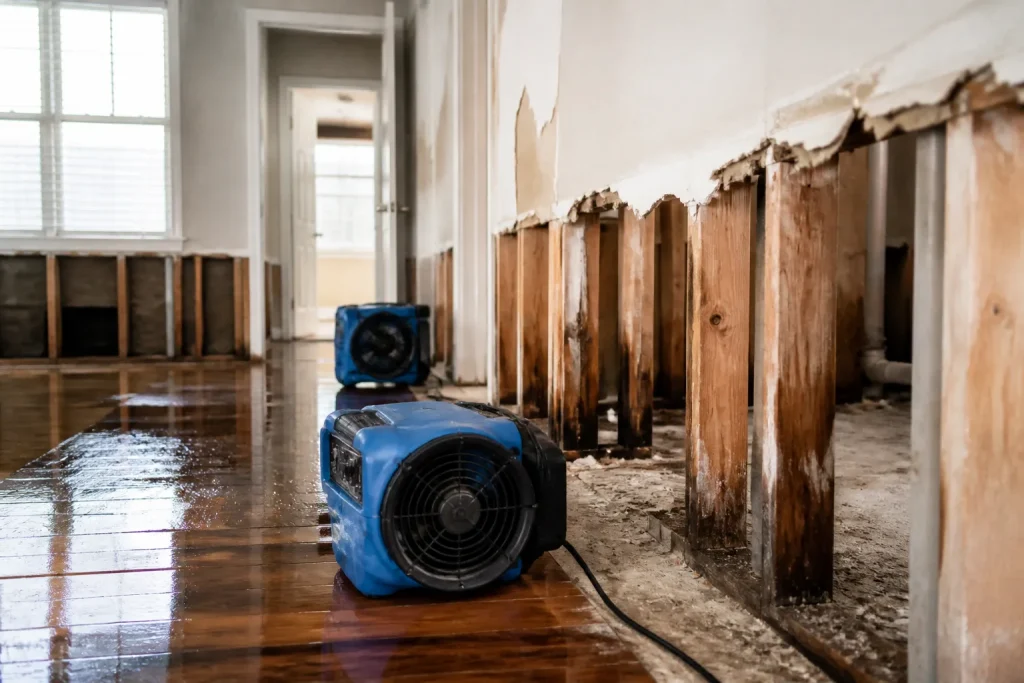
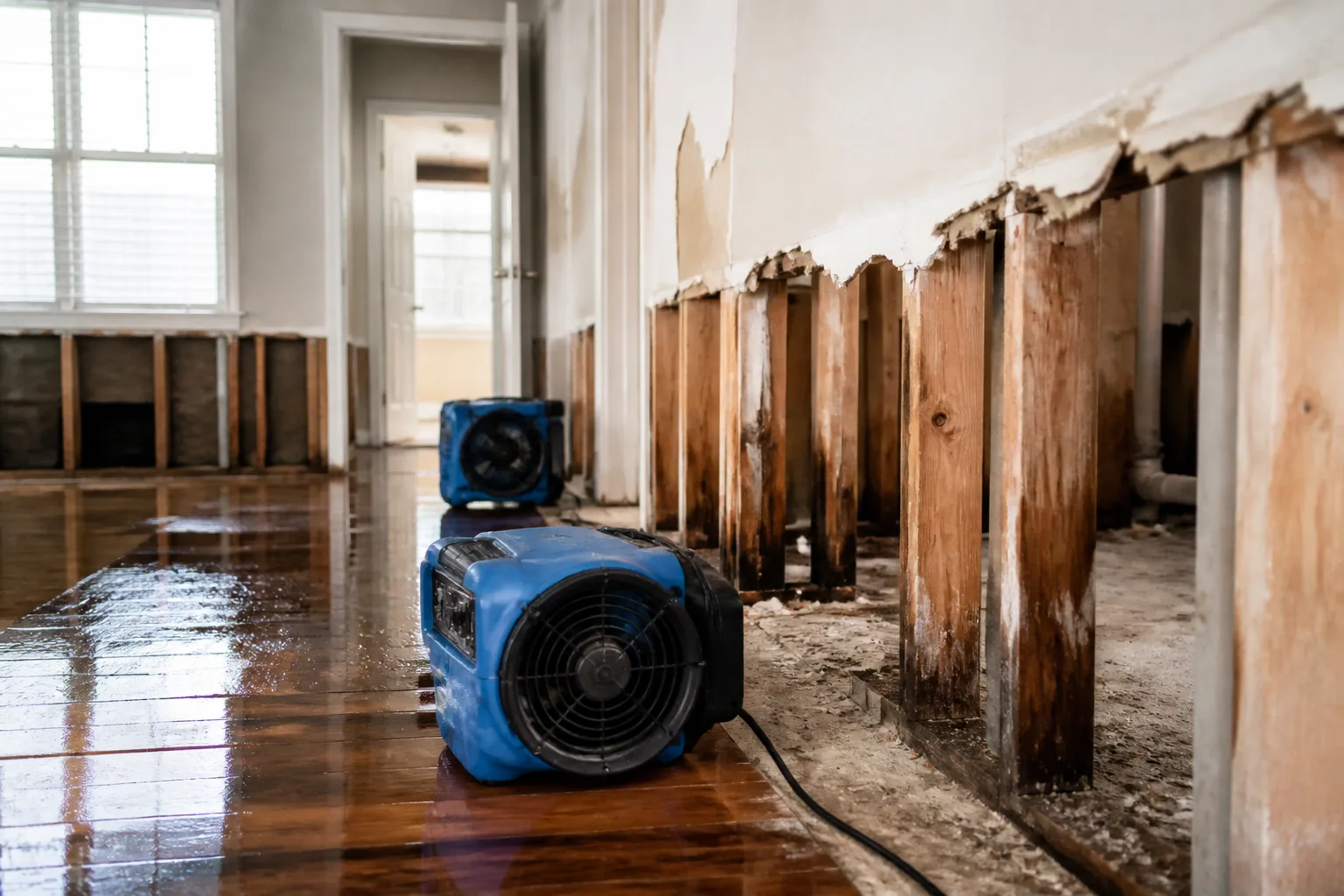
Water Damage Restoration What It Really Costs: What Kearny Homeowners Pay in 2026
Most Kearny homeowners will pay between $3,800 and $9,500 for water damage restoration in 2026, with the final number hinging on one factor more than any other: how many hours passed before extraction started. A Category 1 clean water event caught within the first day can often be resolved for under $4,000. The same square footage, left wet for 72 hours, frequently lands between $8,000 and $15,000 once microbial growth, material disposal, and rebuild labor enter the equation. If you need a fast answer for your specific situation, call (551) 373-5246 for a free estimate.
Every 24-hour delay in extraction after a water event pushes a Category 1 (clean water) job toward Category 2 (contaminated) classification under IICRC standards. That reclassification typically adds $2,000 to $4,000 to the final invoice and changes what your insurance carrier will cover. The price ranges you see online, that wide “$1,500 to $15,000” spread, are useless when you’re standing in three inches of water in a Kearny basement. What matters is the clock, the source, and whether the company doing the work handles the whole job or hands you off between extraction and rebuild.
What Has the Biggest Effect on Water Damage Cost in Kearny?
The honest answer is elapsed time, and we say this after 15 years of walking Kearny basements, kitchens, and utility rooms after the water’s already done its work. Water doesn’t stop moving when it pools. It wicks into drywall, soaks through subfloor, climbs the paper facing on insulation, and finds the gap between the sill plate and the foundation. The longer it sits, the more material has to come out, and the more labor and disposal fees go on the invoice.
Here’s the cost structure most national websites won’t show you, because it doesn’t fit a tidy table:
- First 6 hours: Water is still largely on the surface. Extraction, drying equipment, and monitoring typically run $2,500 to $3,500 for a single room or partial basement.
- 24 to 48 hours: Drywall wicking has started. Baseboards are swelling. Carpet pad is saturated. Expect $4,500 to $7,000 with some material removal.
- 72 hours or more: The water has climbed, and so has the category. Microbial growth is a real concern. Demolition expands, drying times lengthen, and the total often crosses $9,000, sometimes higher in older Kearny homes with plaster walls and layered flooring.
The second factor is the source of the water. A supply line break under the kitchen sink is cleaner than a backed-up sanitary line from the street. A failed sump pump in a Kearny basement that runs wet after a heavy storm picks up whatever was already in that groundwater. The dirtier the source, the more protective containment, antimicrobial treatment, and material replacement are required. Floodline Restoration Co. has handled water damage restoration in Kearny from all three sources, and the source determines the category, and the category determines the protocol. That’s not a sales line. It’s IICRC standard S500.
The Three Cost Tiers in Kearny: What Each One Actually Runs
When a homeowner calls us from Kearny, the job almost always falls into one of three patterns. Each has its own typical price range based on what we’ve invoiced across hundreds of local jobs, and each reacts differently to speed.
Tier 1: Basement Sump Failure
This is the most common water event in Kearny, especially in the lower-lying streets near the Passaic River and the older housing stock built before exterior drainage was standard. A sump pump fails during a storm, or the power goes out and the backup doesn’t kick in. Water rises from the floor drain, saturates carpet, pads, and whatever’s stored at ground level.
Typical range: $2,800 to $6,500. The lower end applies when the pump fails while the homeowner is home and extraction starts within hours. The upper end reflects situations where the failure happened overnight or while traveling, and the water sat for a full day or more. In South Kearny, where the water table sits high, we see more Category 2 classifications on sump failures simply because the groundwater entering the home already carries silt and bacteria.
Tier 2: Supply Line Burst in Older Pipe Systems
Many Kearny homes still run original galvanized or early copper supply lines. These systems fail at threaded joints, especially in winter when the ground shifts and the pipes flex. A burst supply line under a kitchen or bathroom sink releases clean water, but it’s pressurized water, meaning it keeps flowing until the valve is closed. What starts as a Category 1 can flood multiple rooms in under an hour.
Typical range: $4,000 to $9,000. The spread widens because supply-line bursts in two-story Kearny homes often involve ceiling drywall on the first floor, insulation in the wall cavity, and hardwood flooring that cups within a day. The water is clean, which helps, but the damage pattern is larger. We’ve pulled carpet and pad out of a Colonial over by West Hudson Park where a second-floor supply line let go at 9 a.m. and sheeted through the dining room ceiling by noon. That job came in just under $7,000 with drying and rebuild.
Tier 3: Storm-Surge Intrusion Near the Hackensack River Corridor
The homes along the Hackensack River corridor and the low streets around Gunnell Oval face a different problem: river water and storm surge that enters through foundation walls, window wells, and floor drains. This water carries bacteria, petroleum residue from road runoff, and silt. Under IICRC rules, it’s a Category 3 job from the moment it touches the finished space.
Typical range: $7,500 to $15,000 and higher. Category 3 means contaminated water. The protocol requires full removal of saturated porous materials including drywall, insulation, carpet, pad, and often furniture that can’t be properly cleaned. Disposal fees in Hudson County add up fast. Antimicrobial treatment is mandatory, and drying takes longer because containment barriers and air scrubbers run continuously. Floodline Restoration Co. uses Dri-Eaz and Phoenix drying systems on these jobs specifically because they hold consistent performance over the multi-day drying windows Category 3 work requires.
Why the Water Category Changes the Bill More Than the Square Footage
Insurance adjusters, restoration estimators, and honest contractors all talk in categories. Homeowners rarely hear about them until they’re standing in the damage. Here’s what the three categories mean in dollar terms in Kearny:
- Category 1: Clean water. Supply lines, tub overflows, appliance malfunctions with fresh water. Lowest labor cost. Fewest disposal fees. Drying is usually 3 to 5 days.
- Category 2: Contaminated water. Sump failures with groundwater, washing machine overflow, dishwasher backflow. Requires antimicrobial treatment, faster material removal, and containment. Adds $2,000 to $4,000 over Category 1 for the same square footage.
- Category 3: Severely contaminated water. Sewage, river water, street flooding. Highest labor and disposal cost. Full PPE for technicians. Materials come out, not dry out. Often adds $4,000 to $8,000 over Category 1.
The frustrating truth for Kearny homeowners is that time moves a job up these categories. A clean supply line break becomes Category 2 after 48 hours because standing water grows bacteria even if it started clean. That’s why the first phone call matters. The sooner extraction begins, the lower the category stays, and the lower the invoice. A 90-minute response versus a next-day response can be the difference between a $3,500 dry-out and a $7,000 demolition and rebuild. We’ve watched it happen in the same month, on the same street, in the same floor plan.
Split-Service Billing vs. Full-Cycle: The Hidden Line Items That Appear
Here’s a cost driver that rarely shows up in generic pricing guides. Most restoration companies in northern New Jersey are either mitigation contractors who stop at drying, or reconstruction firms who won’t touch wet material. When the job crosses from mitigation into rebuild, the homeowner gets a second crew, a second estimate, a second project manager, and a second set of overhead costs. We call it the handoff tax, and it can add 20 to 30 percent to the total cost of a major water event in Kearny.
The line items that appear in split-service jobs include:
- Re-mobilization fees for the rebuild crew to set up on a site they didn’t dry
- Re-scoping costs for a second estimator to re-measure what the mitigation crew removed
- Coordination fees when the two companies don’t agree on who removes what
- Extended monitoring charges when the drying crew won’t sign off to a rebuild crew they don’t know
Floodline Restoration Co. runs the full cycle from first extraction to finished rebuild with the same crew on the Floodline Restoration Co. home dispatch board. That’s not a convenience pitch. It means the estimator who writes the scope on day one is accountable for the finished room on day thirty. The homeowner gets one invoice, one point of contact, and one company standing behind the result. Our 90-Day Done Right Promise, the Keystone Standard, applies to the whole job, not just the drying phase. If something isn’t done right, we make it right, in writing, with no arguing.
Direct Insurance Billing vs. Out-of-Pocket Reimbursement: Which Costs Less
The way a restoration bill gets paid changes what the homeowner actually spends, even when the total job cost is identical. In Kearny, most homeowners carry a standard HO-3 policy with a deductible between $1,000 and $2,500. The question is how the claim runs.
With direct insurance billing, the restoration company works directly with the adjuster, sends the estimate, photo documentation, and moisture logs to the carrier, and invoices the insurer for the covered portion after the deductible. The homeowner writes one check for the deductible, and the carrier pays the rest. This approach creates a record the adjuster can approve without re-litigating every line item. It also prevents the homeowner from becoming the messenger between a contractor and an insurance desk, which is a full-time job nobody applies for.
With out-of-pocket reimbursement, the homeowner pays the full invoice, then submits receipts to the carrier and waits. The risk is that the adjuster disputes line items the restoration company already priced, leaving the homeowner stuck negotiating retroactively. We’ve seen Kearny homeowners wait 30 to 60 days for reimbursement, and we’ve seen carriers push back on drying charges that were reasonable but poorly documented.
The effective cost difference matters more than the invoice difference. Direct billing keeps the estimator and the adjuster talking to each other in real time. Our technicians take photo documentation at every phase and hand the moisture log to the homeowner and the carrier daily until the dry standard is met. That record is what gets claims approved without a fight, and it’s part of why we bill carriers directly whenever the policy allows.
What the 90-Day Guarantee Is Worth in Real Dollars
A warranty sounds like paper until you need it. Consider what happens without one. A drying job is “complete” when the moisture meter reads below the dry standard. But some water damage hides. A pocket of moisture behind a baseboard, a sill plate that never quite dried, a wall cavity that got sealed up too soon. Six weeks later, you smell it. The paint is bubbling. Mold is behind the wall.
Without a written workmanship guarantee, that callback is a new job. A new diagnosis, new cutting, new drying, new rebuild. In Kearny, that callback typically runs $2,000 to $5,000 depending on what was missed and what has to come out again. The homeowner pays it or fights a company that’s already been paid once.
With the 90-Day Done Right Promise, that callback doesn’t cost the homeowner a dollar. If it’s not done right, we make it right. Simple as that. It’s backed by the K.E.Y.S. values code: Krafted right, Every time, Your home first, Standing behind it. We’ve had to honor it, and we’ve done it without a blinking phone call or a stack of paper. That promise is worth the deductible on your insurance policy, and then some.
If you’re also dealing with secondary damage, our mold remediation in Kearny service handles what happens when water sat too long, and fire and smoke damage restoration in Kearny covers the other end of the disaster spectrum. Both run through the same dispatch board and the same guarantee.
The Bottom Line
Water damage restoration in Kearny costs between $3,800 and $9,500 for most homes in 2026. Basement sump failures run $2,800 to $6,500, supply line bursts run $4,000 to $9,000, and storm-surge intrusion near the Hackensack River corridor runs $7,500 to $15,000 and up. The number that determines your bill isn’t square footage. It’s hours elapsed. Speed keeps the water category low, keeps materials from being demolished, and keeps the insurance claim cleaner.
If you’re in Kearny and need a restoration company that starts at the water line and doesn’t stop until the rebuild is done, Floodline Restoration Co. offers free estimates with no obligation. A live person answers the phone at (551) 373-5246, day or night. We’ll be there when we say, and we’ll stand behind the work in writing.
Frequently Asked Questions
Most Kearny homeowners pay between $3,800 and $9,500, with smaller Category 1 jobs starting around $2,500 and Category 3 storm-surge jobs exceeding $15,000 in severe cases. The biggest variable is how long the water sat before extraction began. Call (551) 373-5246 for a free, specific estimate.
Most standard HO-3 policies cover sudden and accidental water damage, including burst supply lines and sump failures, subject to your deductible. Sewage backup and groundwater intrusion often require additional endorsements. Floodline Restoration Co. bills insurance carriers directly and provides photo documentation and daily moisture logs to support your claim.
Floodline Restoration Co. answers the phone with a live dispatcher 24 hours a day, 7 days a week. A certified crew can typically reach a Kearny home within the same visit, and extraction starts immediately. The first 24 hours are the most critical window for controlling category classification and final cost.
If the water is Category 2 or higher, or if moisture sat for more than 48 hours, a cleaning is not enough. Trapped moisture behind walls and under flooring will support mold growth and structural damage. A proper moisture map with daily readings tells the full story. We hand you that log daily until the dry standard is met, so you know exactly what’s dry and what isn’t.
Written by Curt Bowman, Owner at Floodline Restoration Co., serving Kearny since 2010.
Need Damage Restoration Help?
Call Floodline Restoration Co. - licensed & insured, here with fast after-hours help in Kearny.
(551) 373-5246