
Free visual inspection and a written scope of work before any mitigation begins - photos, moisture readings, and drying logs go in your claim file
The scope we write is the scope we bill. Anything new gets shown to you, in writing, before we touch it.
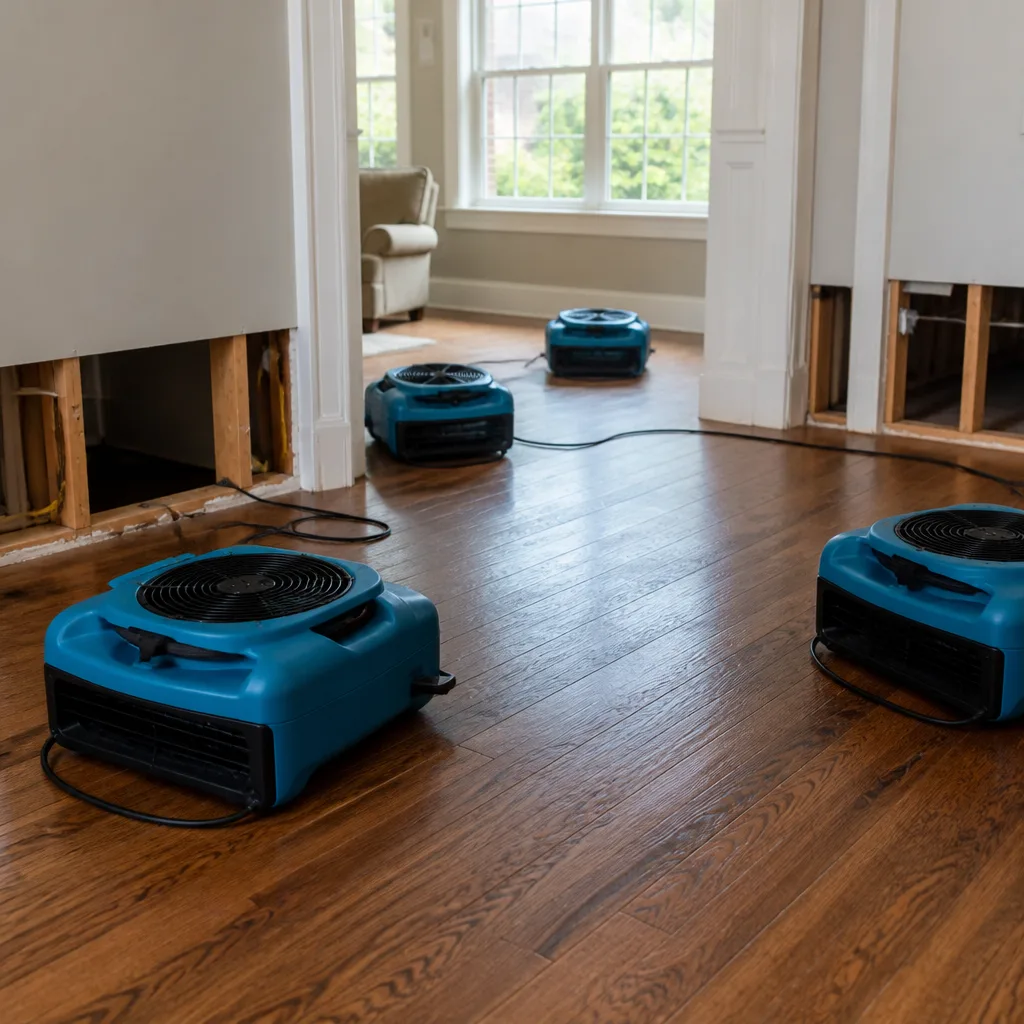
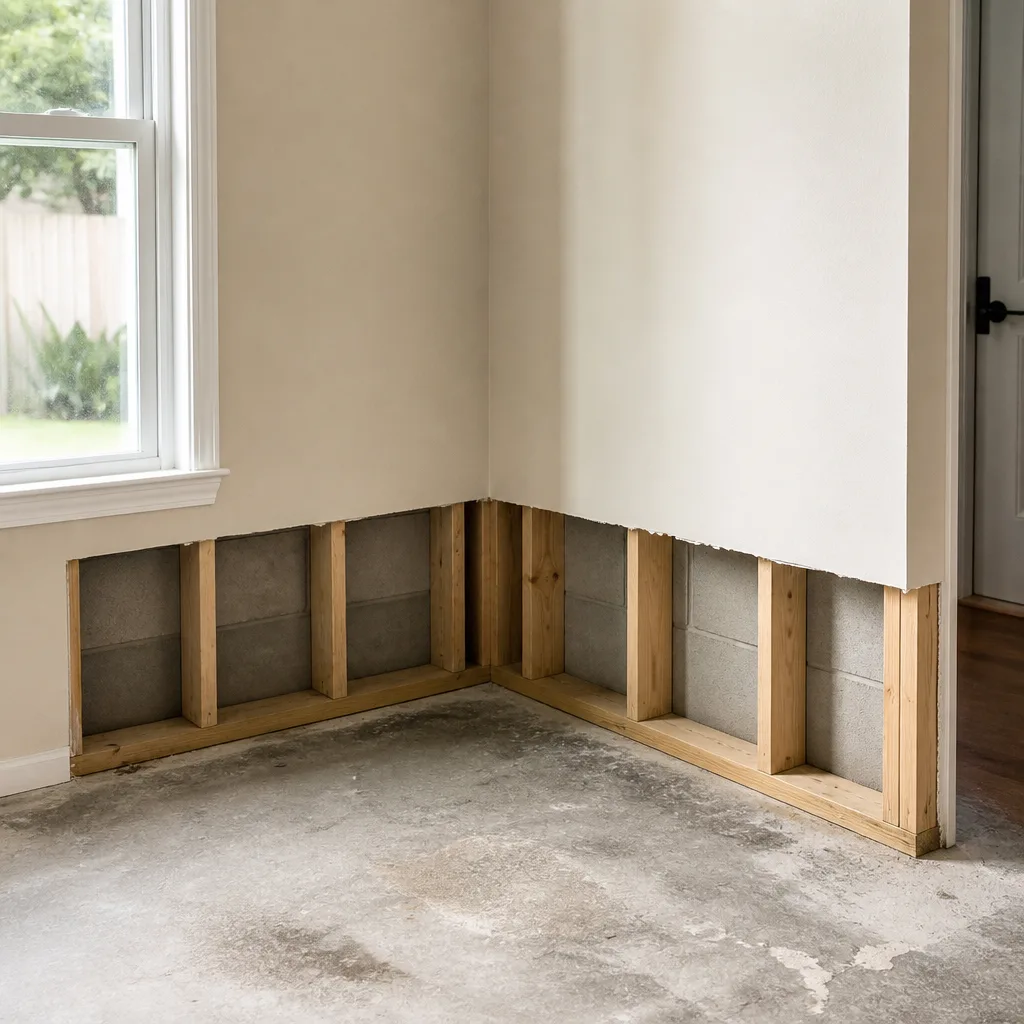
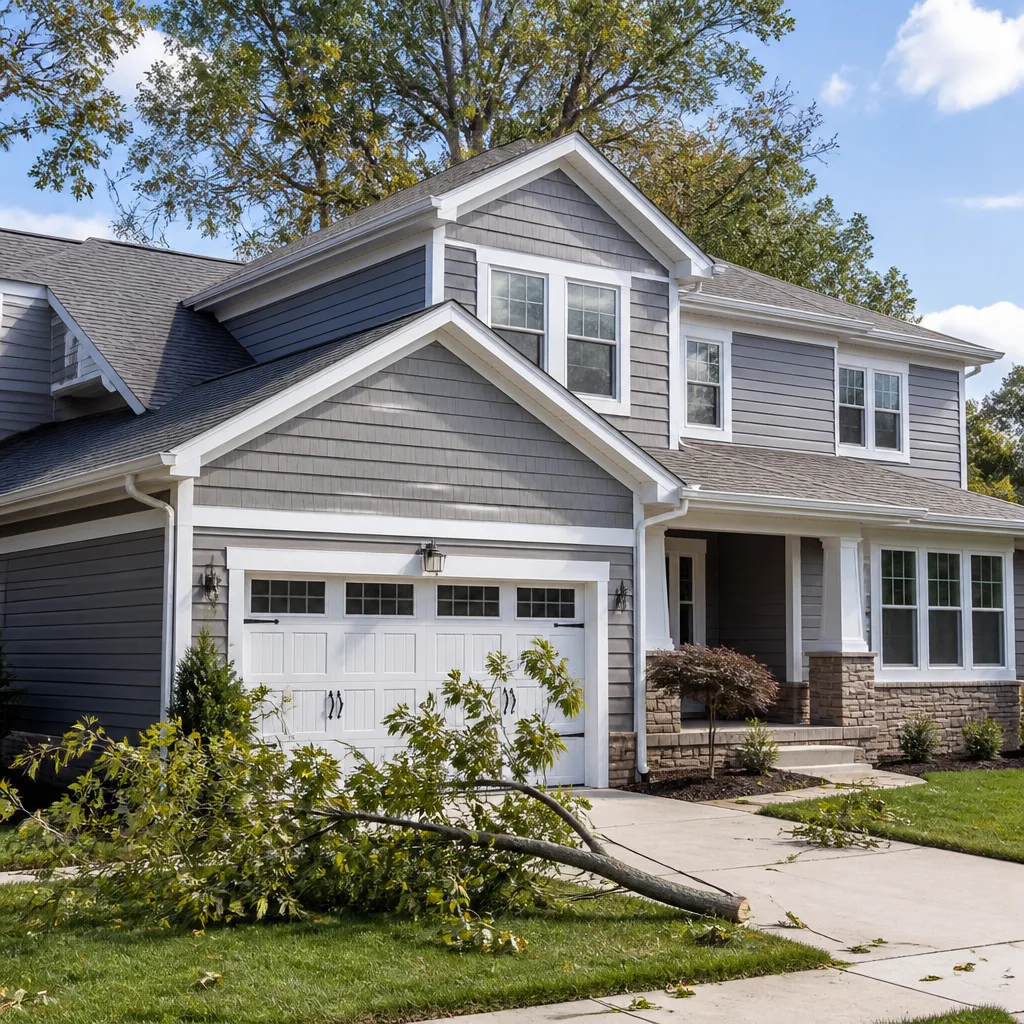
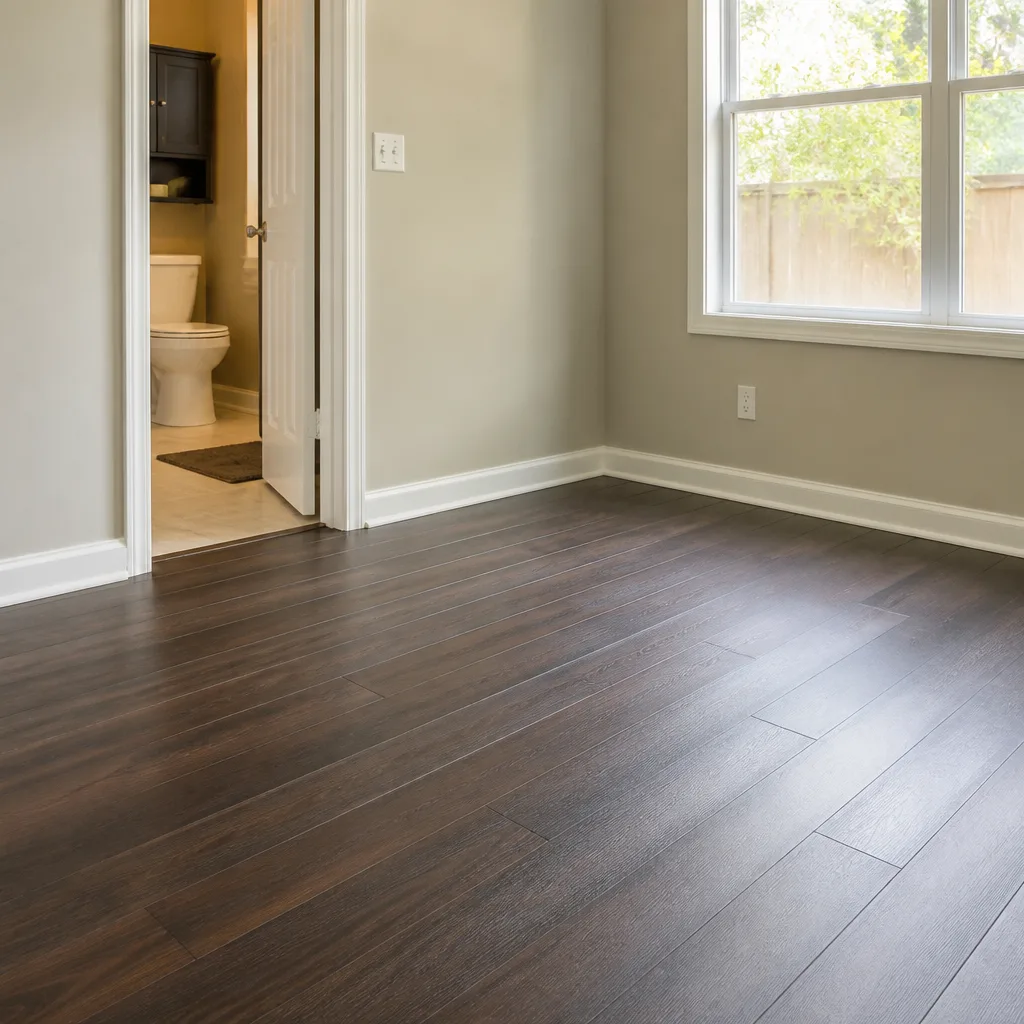
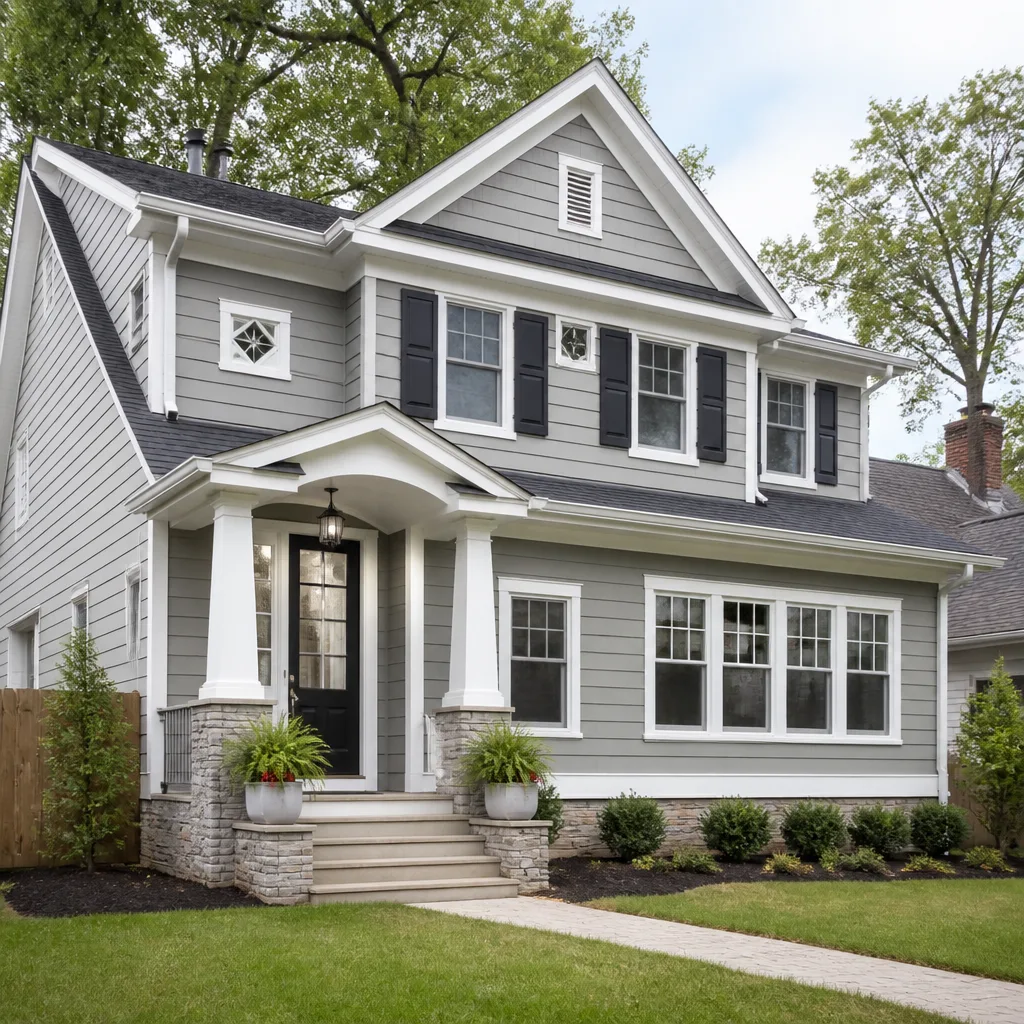
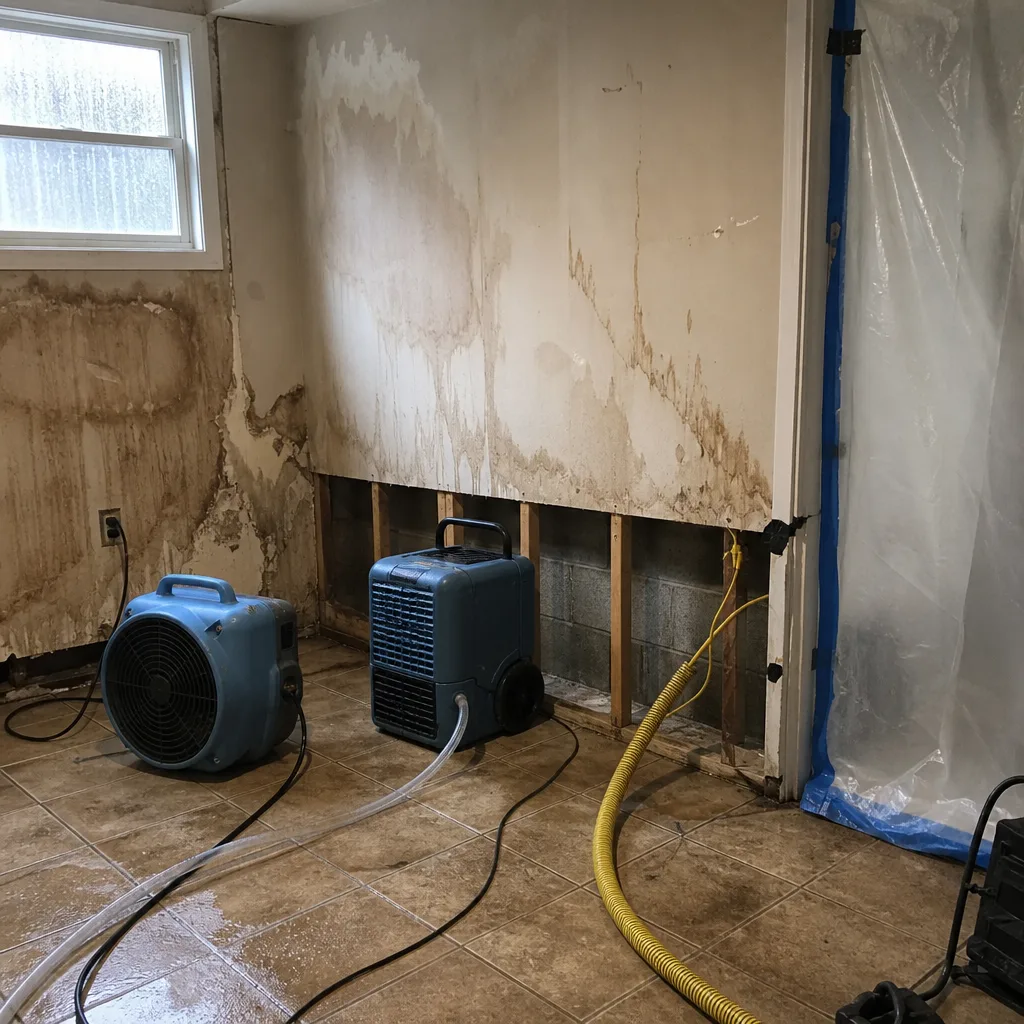 Before
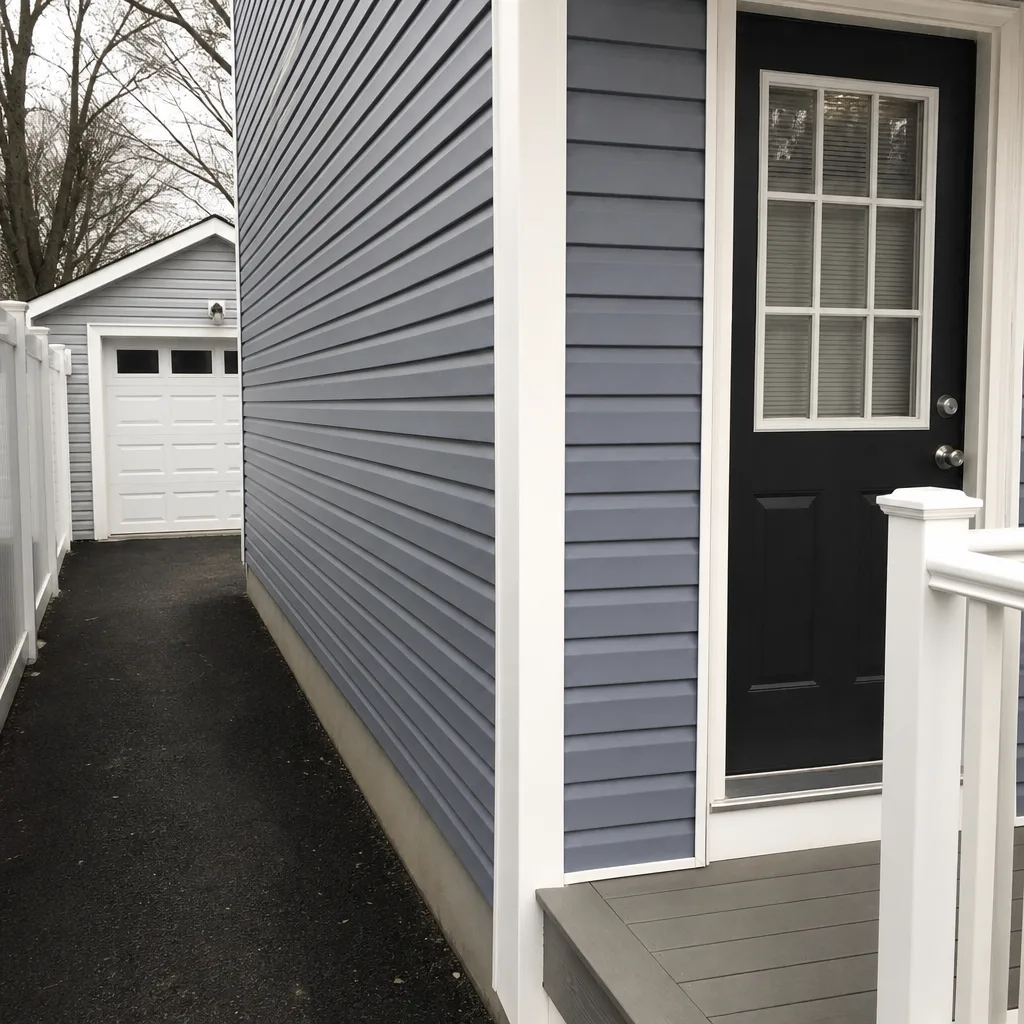 After
After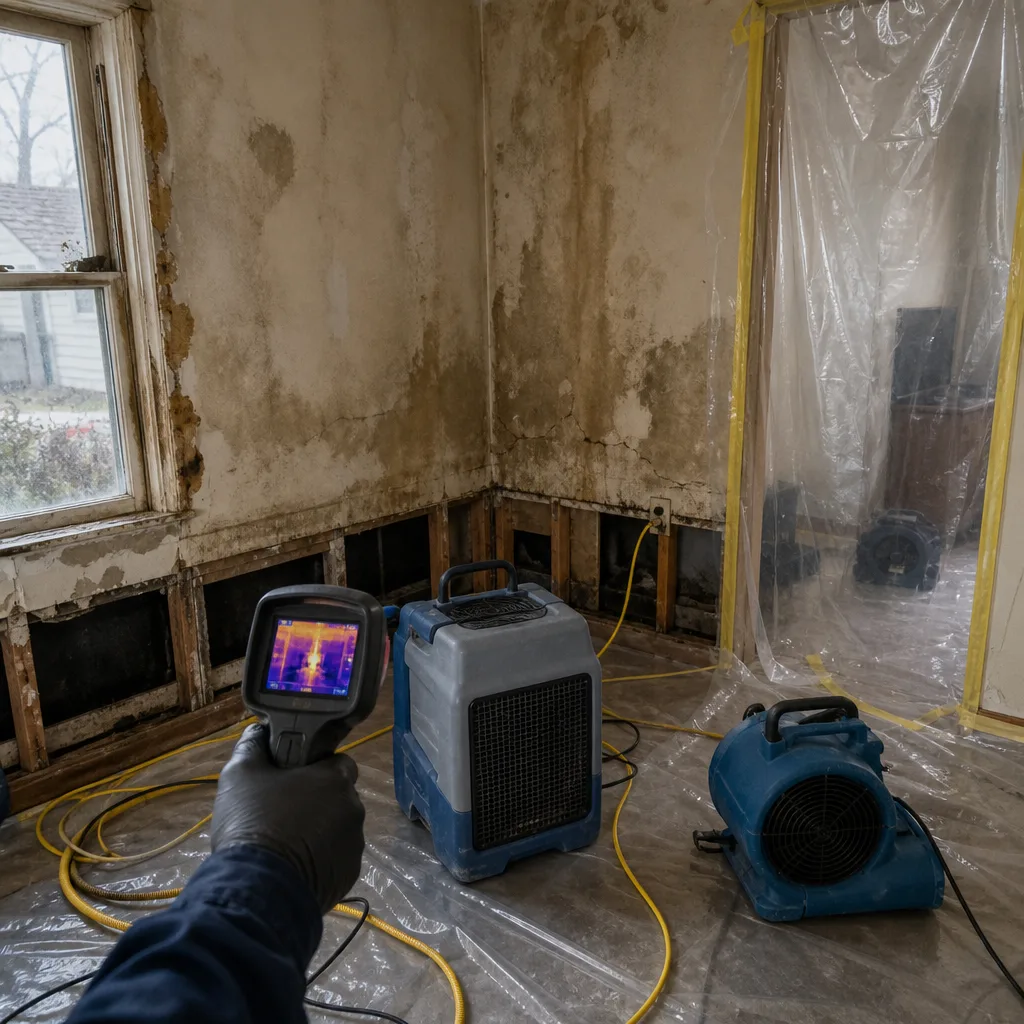 Before
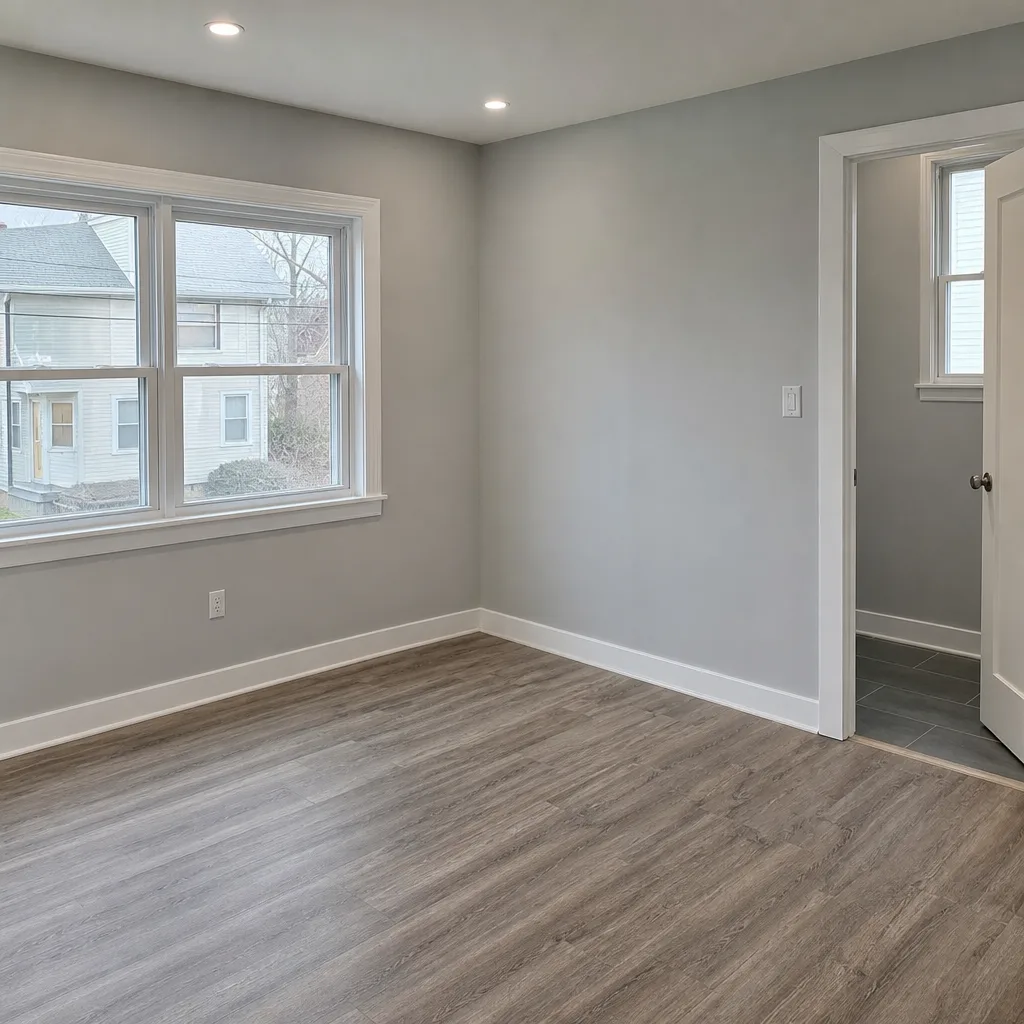 After
After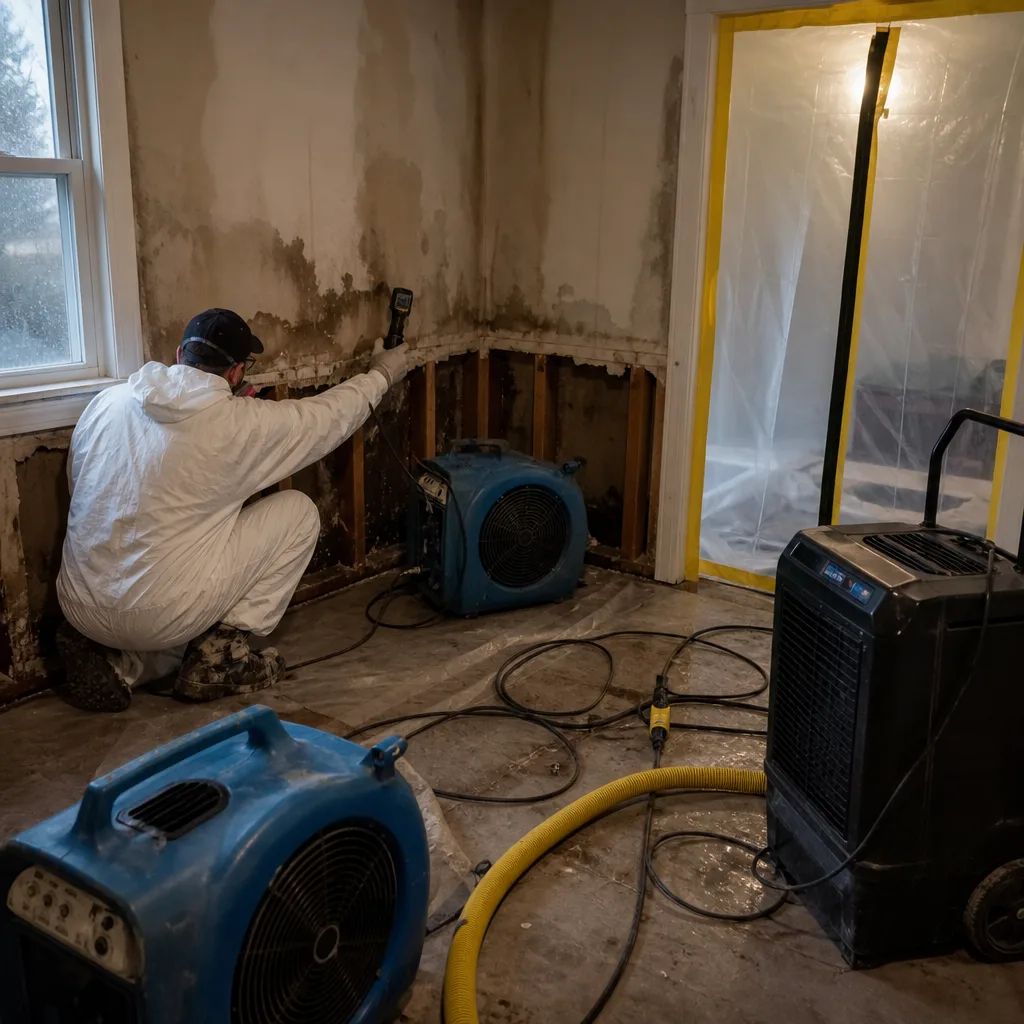 Before
 After
After24/7 Emergency Mold Remediation in Lyndhurst
Mold remediation in Lyndhurst typically costs $1,800-$6,500 depending on the size of the affected area, and we can usually have a certified crew at your door within 45 minutes of your call. Call (551) 373-5246 any hour, any day - a live dispatcher picks up, not a recording. If you’re standing in a Lyndhurst basement with water seeping up through the slab or noticing that musty smell spreading through the first floor, the first 24 to 48 hours decide whether you’re dealing with a $2,000 cleanup or a $15,000 teardown-and-rebuild. The Meadowlands water table doesn’t wait for business hours, and neither do we.
Understanding Mold Remediation Severity in Lyndhurst Properties
Most Lyndhurst homes fall into a specific risk profile we know well: Cape Cods, ranches, and two-families built from the 1940s through the 1960s, with semi-finished basements that sit right at or below the seasonal water table. That construction stock responds to moisture differently than newer homes with vapor barriers and perimeter drains. When mold takes hold, we classify the job by how far the colonization has spread and whether the source water was Category 1 (clean), Category 2 (gray), or Category 3 (black water from the Passaic River or sewage backflow). A small surface patch on drywall gets containment, HEPA scrubbing, and antimicrobial treatment. A colonized wall cavity behind 1960s wood paneling in a Riverside two-family requires full containment with negative air pressure, removal of affected material, and post-remediation clearance testing. We don’t guess. We moisture-map the structure, log readings daily, and only call the job done when the dry standard is met and verified.
Why Lyndhurst Property Owners Choose Floodline Restoration Co.
- 45-minute response commitment, day or night. Our nearest crew stages locally, and we don’t make you wait for someone to drive in from another county.
- A live person answers, 24/7. You call at 2 a.m. and a dispatcher who knows Lyndhurst picks up. No answering service, no “leave a message.”
- IICRC-certified crews who know mold - WRT and AMRT certified. That means Water Damage Restoration Technician and Applied Microbial Remediation Technician credentials, backed by RIA and IFA training standards.
- Free visual inspection before any work starts. If a Lyndhurst homeowner has a suspect patch of discoloration, we come out, assess it without obligation, and tell you honestly whether you need remediation or just a dehumidifier.
- Direct insurance billing, NFIP claims included. We coordinate with your carrier and your flood adjuster, and we don’t ask you to play messenger.
- One team from first extraction to final rebuild. We don’t remediate and then hand you off to some other contractor for reconstruction. The same crew that sets the containment rebuilds the wall. Done right, backed in writing.
Our Mold Remediation Process
Inspection & Assessment
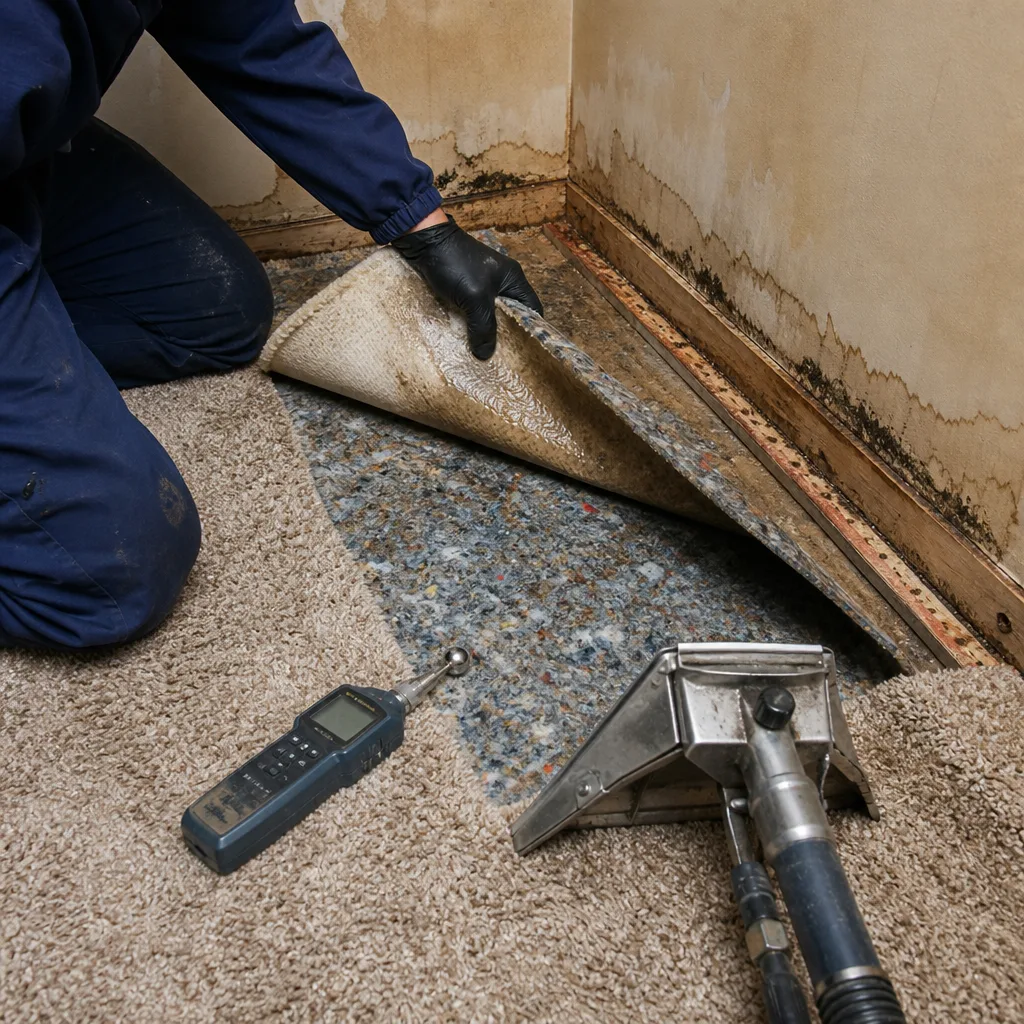
We start with a visual inspection, then pull thermal imaging and moisture meters to find what’s wet and where mold is hiding. In Lyndhurst, that usually means checking behind the wood paneling that’s still common in Riverside two-families and under the baseboards of 1950s finished basements. If testing is needed, we run it before writing a scope, not after.
Containment & Source Control
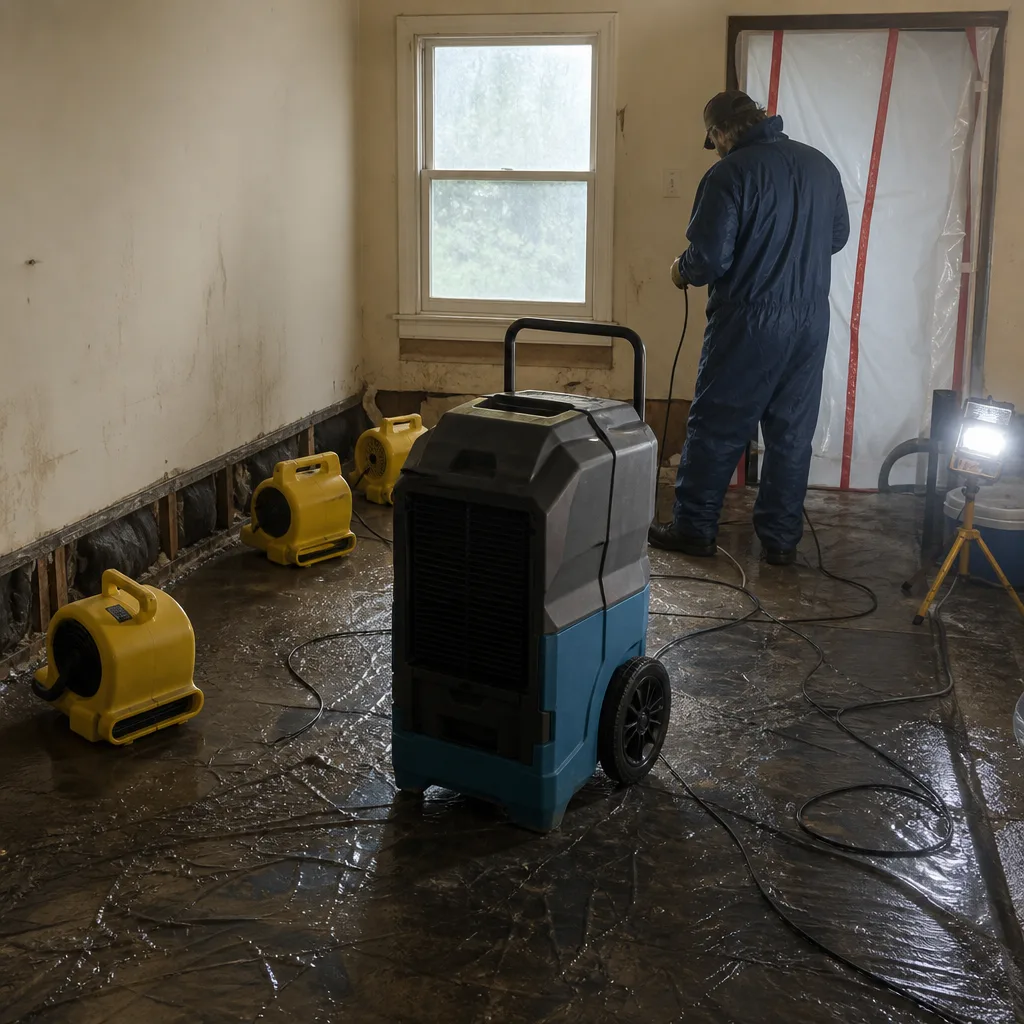
Before we touch any mold, we seal the work area with 6-mil poly sheeting and set up negative-air HEPA scrubbers. This keeps spores from migrating to clean rooms in a house that’s already been through a flood. The goal is to trap the problem, not spread it.
Drying & Dehumidification
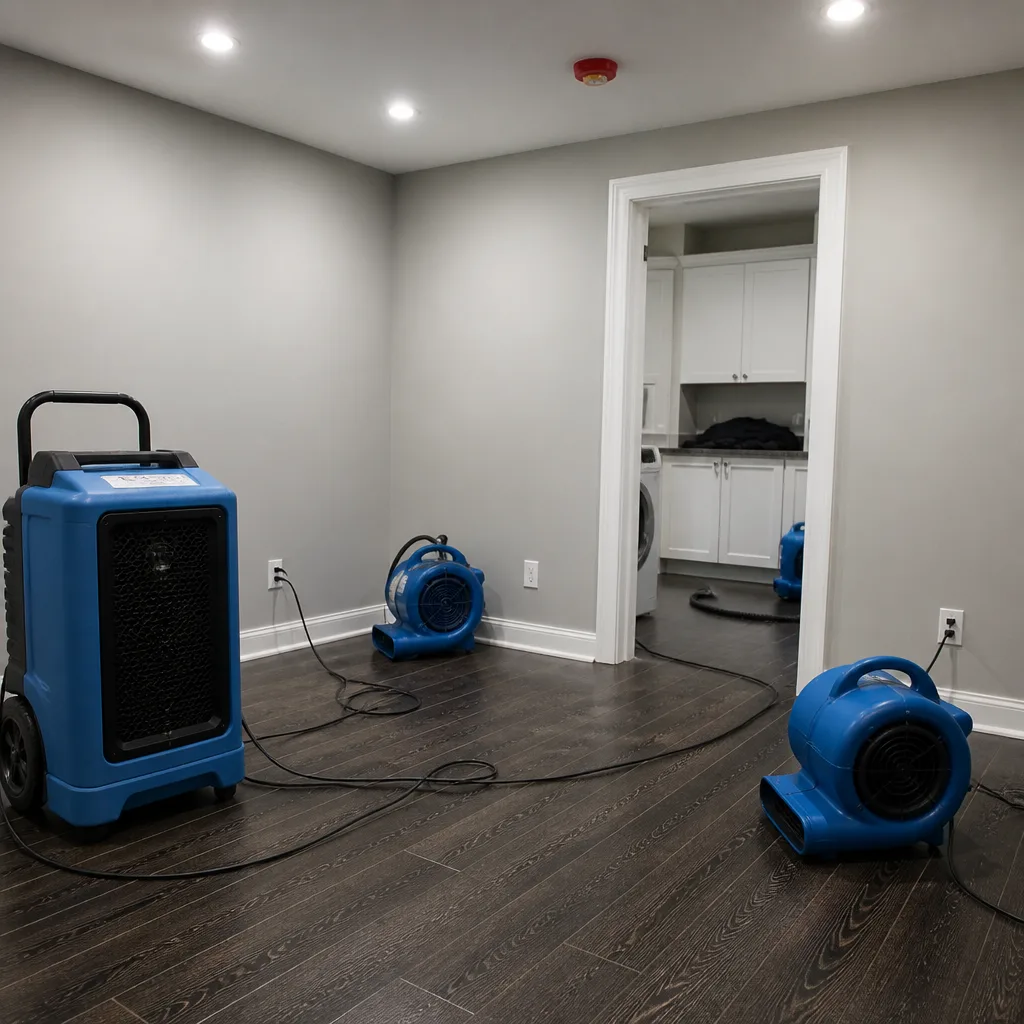
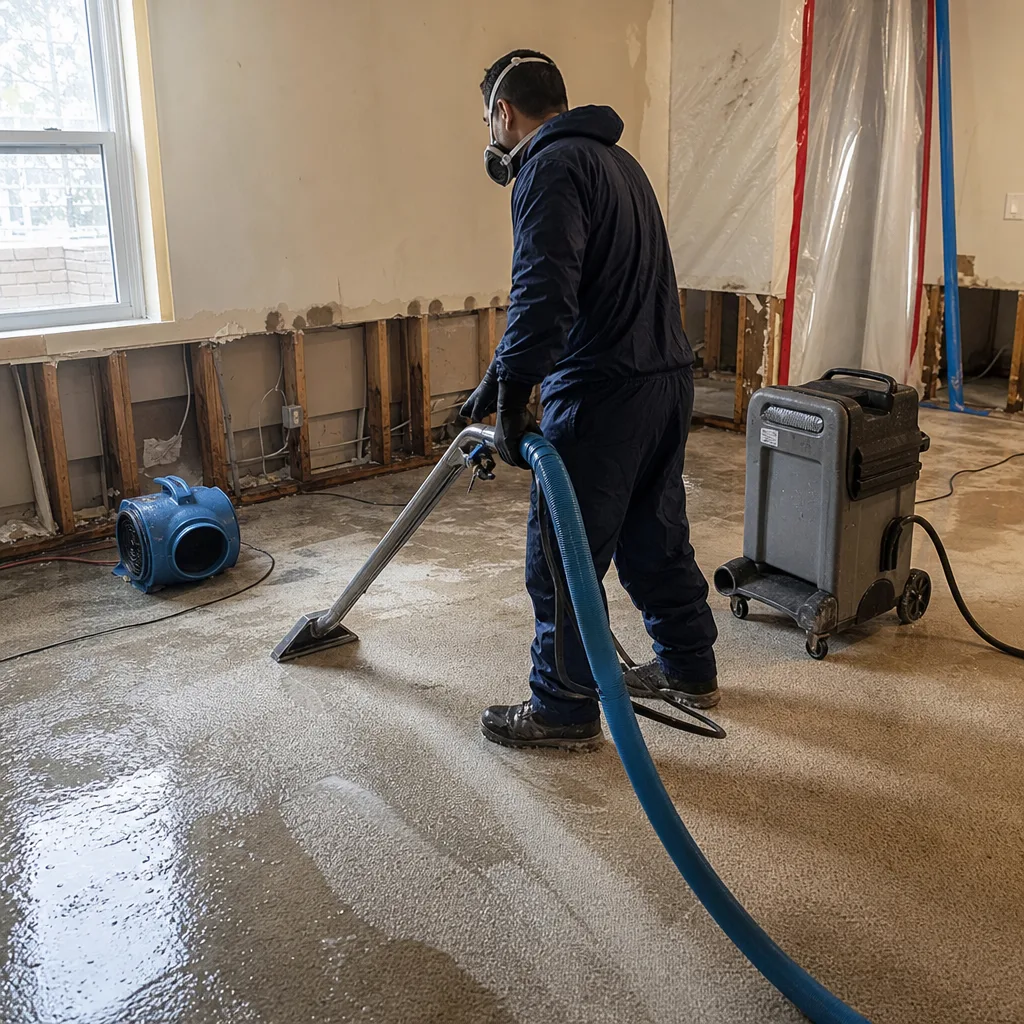
We run Dri-Eaz desiccant and LGR dehumidifiers with XPOWER air movers until every affected surface reaches the dry standard. Daily moisture readings get logged - the same log your NFIP adjuster will want to see. In Lyndhurst’s Meadowlands-adjacent basements, this step often takes longer than the extraction itself because the surrounding soil holds water.
Removal & Cleaning
Saturated drywall, fiberglass insulation, and any porous material that’s been colonized comes out and is bagged for disposal per local and IICRC standards. Hard surfaces get HEPA-vacuumed, scrubbed, and treated with an EPA-registered antimicrobial. Framing gets sanded if needed and treated to prevent regrowth.
Air Quality Restoration
After removal and cleaning, we run HEPA air scrubbers for at least 24-48 hours to pull residual spores from the air. Post-remediation verification testing confirms the indoor air is back to normal background levels before we tear down containment. You breathe easier because the numbers say you can.
Repairs & Restoration
The same crew that did the extraction and remediation now rebuilds: new drywall, fresh insulation, baseboards, flooring, paint. When we finish, you get a moisture log, a clearance report, and the 90-Day Done Right Promise in writing. No handoffs, no new faces, no surprises.
Need Emergency Mold Remediation in Lyndhurst Now?
Crews minutes away, answering live 24 hours a day. The sooner we start, the less it costs.
Working With Your Insurance Company
Floodline Restoration Co. has been handling insurance claims since Curt Bowman founded the company in 2010, and we’ve built our documentation process around what adjusters actually require. From the first hour on site, we photograph everything, log moisture readings daily, and write scopes of work that reference the specific conditions in your Lyndhurst home, including elevation data and FEMA-compliant mitigation language where an NFIP policy is involved. We talk directly to your adjuster, answer their questions, and send them the documentation they need. You shouldn’t have to be the go-between. That’s part of the square deal.
What We Provide Your Insurer
- Thorough documentation of the loss
- Photos of all damage, room by room
- Moisture readings and drying logs
- A detailed, line-item scope of work
- Direct coordination with your carrier
Built for Lyndhurst’s Loss Calendar
Lyndhurst’s mold season doesn’t follow one clean arc - it follows the river and the water table. Spring thaw in the Passaic River watershed pushes groundwater up against 1940s and 1950s basement slabs with no vapor barrier, and that’s when we see the first wave of musty-smell calls from homeowners who haven’t had visible flooding at all. Summer brings sudden thunderstorms that overwhelm the borough’s storm drains, and the low-lying streets west of Riverside Avenue absorb the runoff. Fall and winter nor’easters are the heavy hitters: river backflow floods finished basements with Category 3 water, and mold growth begins before the floodwaters fully recede. We’ve built our dispatch around this calendar because we’ve been answering Lyndhurst calls through every season of it. When the water rises, we’re already staged nearby.
Mold Remediation Across Lyndhurst’s Neighborhoods
Riverside, the section along the Passaic River, is where our most involved mold jobs cluster. These streets saw repeat flooding during Hurricane Irene in 2011 and Superstorm Sandy in 2012, and many of those same basements are now on their second or third remediation with an active NFIP claim history. Homes here - two-families and compact Capes - often have semi-finished basements with wood paneling over original plaster, and the mold we find hides behind those panels where the moisture wicked up from the foundation. Over by Valley Brook Avenue and the streets closer to the Meadowlands’ edge, we see more crawl space and sill plate problems: groundwater keeps the earth beneath the house damp year-round, and without a proper vapor barrier, that moisture climbs up into the floor joists. The neighborhoods south of Kingsland Avenue, toward the border with North Arlington, run into original 1950s ranches with basements that were never meant to be finished but got finished in the 70s and 80s - and now those finished walls trap moisture against the block. Different streets, different failure modes, same outcome if it’s not caught early: mold where you can’t see it, doing damage you can smell.
Specialized Mold Remediation Services We Offer in Lyndhurst
Mold Inspection & Testing
Not every musty basement in Lyndhurst has a full mold problem - sometimes it’s just trapped humidity. Our inspection starts with a visual walkthrough, then thermal imaging and moisture meters to find what’s wet. If we take samples, we send them to an independent lab and you get a clear report. If you don’t need remediation, we’ll tell you that and recommend a dehumidifier instead of selling you a job.
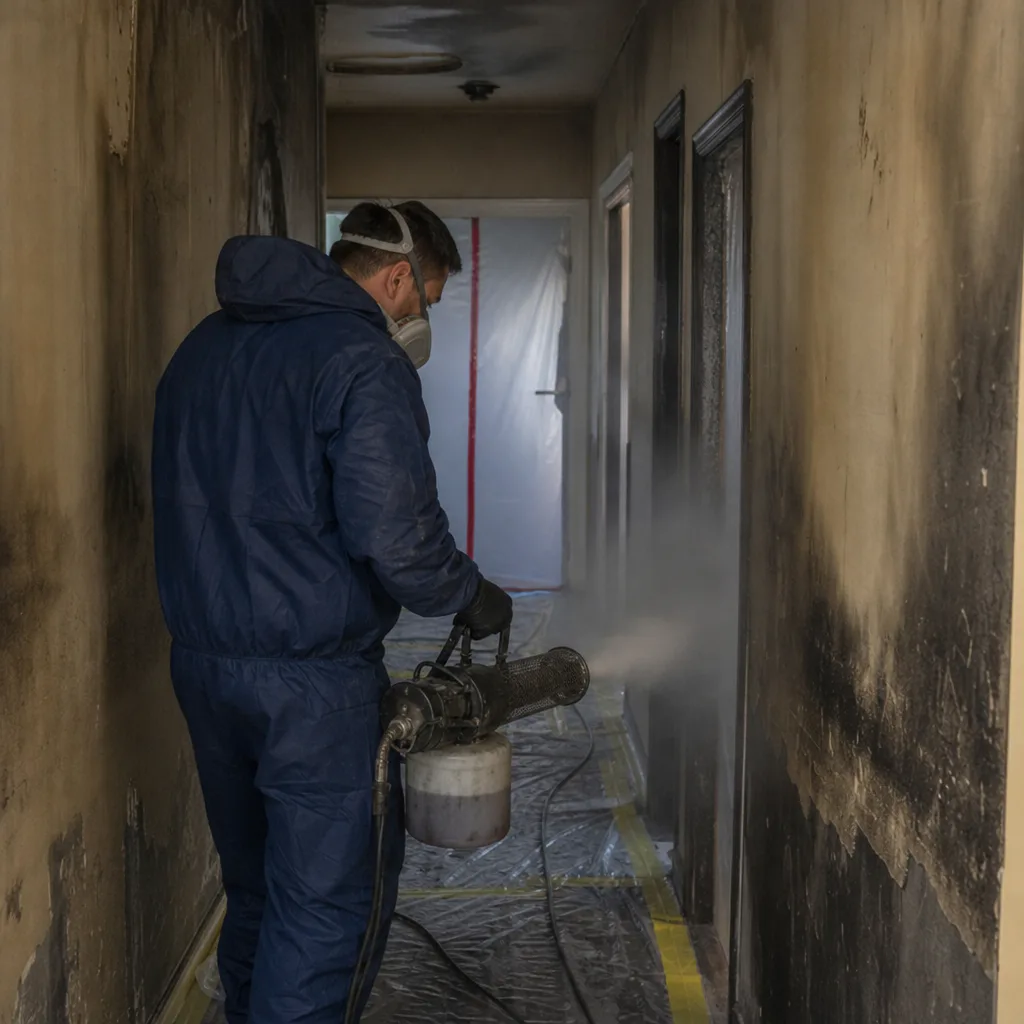
Mold Removal
For confirmed mold, we set containment, remove affected materials, and clean hard surfaces with professional protocols. In Lyndhurst’s older homes, this often means working around original plaster walls that adjacent rooms still rely on - we cut precisely, remove what must go, and leave the structural integrity intact.
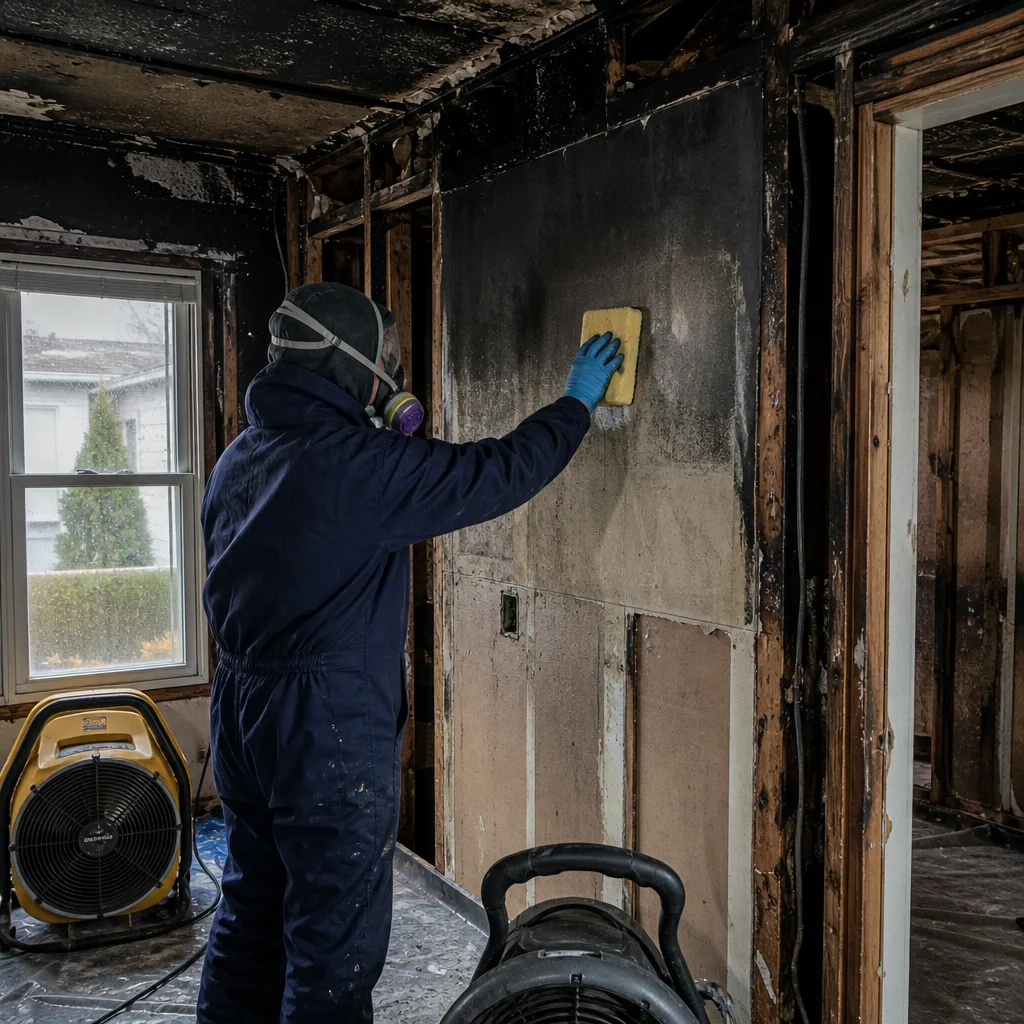
Black Mold Remediation
Stachybotrys chartarum - what most people call black mold - shows up in Lyndhurst basements after prolonged water exposure, especially after Category 3 river floods. It needs full containment, negative air pressure, and careful material removal. Our crews are AMRT-certified for exactly this work, and we don’t cut corners on it. If black mold is present, you want a trained professional in there with the right PPE and the right protocol, and that’s what we bring. Attempting to remove it yourself without proper containment can release spores throughout the home; this is work for a certified remediation team.
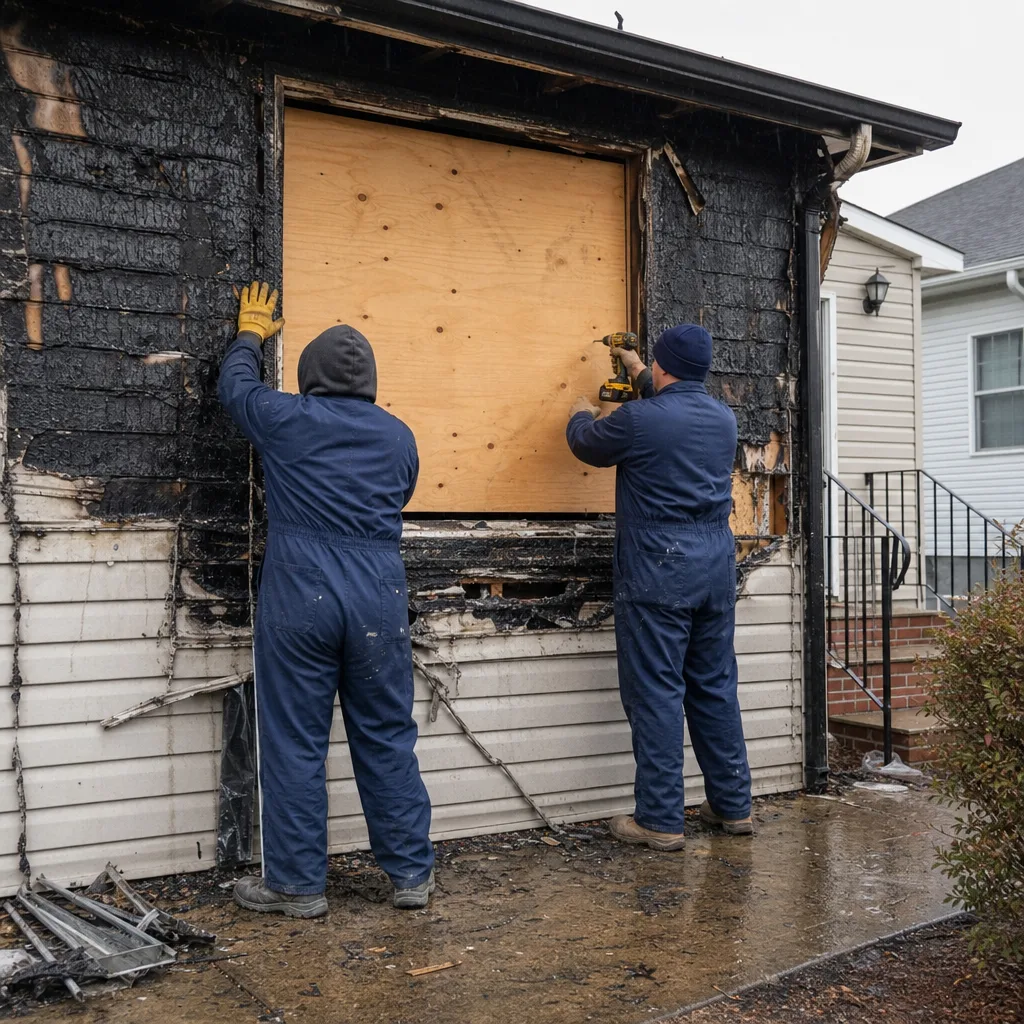
Air Quality Restoration
After mold is removed, the air inside a Lyndhurst home can still carry spores that settled during the event. We run HEPA air scrubbers until lab testing confirms the air is clean. This is the step that keeps the smell from returning and gives you confidence nothing invisible is still circulating.
Crawl Space Treatment
Homes near the Meadowlands edge of Lyndhurst often have crawl spaces instead of full basements, and those crawl spaces sit inches above year-round groundwater. We install vapor barriers, address drainage, and treat any mold that’s already there. Done right, a treated crawl space stops musty air from rising into the living space above - and that’s a difference you’ll notice in the first week.
Moisture & Humidity Control
The long-term answer for many Lyndhurst basements is managing the moisture that feeds mold in the first place. We size and install dehumidifiers, recommend vapor barriers, and correct grading issues where possible. A dry basement in the Meadowlands watershed doesn’t happen by accident; it happens with the right equipment and the right plan.
What happens when you call
- 1
A real person answersNo phone trees - you reach a local pro.
- 2
You get an upfront price rangeHonest numbers before anyone is dispatched.
- 3
A background-checked tech heads outLicensed & insured, dispatched right away.
- 4
You approve before work beginsNothing starts until you say go.
Mold Remediation Costs in Lyndhurst, NJ
For a Lyndhurst home, here’s what you can expect. A small mold patch - say, a 10-square-foot area behind a bathroom wall - typically runs $1,800 to $3,200 including containment and clearance. A standard finished-basement remediation after a nor’easter flood, with wall and flooring removal, usually lands between $3,500 and $6,500 depending on square footage and how much cabinetry or finishes need to come out. Full basement remediation with black mold, structural drying, and rebuild work can reach $12,000 or more in a Riverside two-family with paneling and multiple wall cavities affected. What moves the price: how much material comes out, whether the foundation needs treatment, and whether your NFIP policy requires elevation-certificate-aware documentation. We always start with a free visual inspection, and we give you a written scope of work before anything starts - so the number doesn’t change on you. Call (551) 373-5246 and we’ll come look.
We Also Serve Cities Near Lyndhurst
Our crews cover Lyndhurst and the surrounding Bergen County communities regularly: North Arlington, Rutherford, East Rutherford, and Carlstadt. If you’re in any of these towns and need Mold Remediation, the same team and the same 45-minute response commitment applies.
Serving Lyndhurst, NJ - Our Local Coverage Area
We’re based in the Lyndhurst area and know this community well. Use the map below to see our service coverage - if you’re nearby, we can almost certainly help.
Lyndhurst Mold Remediation Questions, Answered
How does the Meadowlands water table affect mold growth in Lyndhurst basements even when there’s no visible flooding?
The Meadowlands water table sits high year-round, so the soil under many Lyndhurst basements holds moisture even during dry weeks. That moisture migrates through concrete slabs and block walls as vapor, raising indoor humidity and feeding mold behind walls and under flooring. No standing water needed. If you’re running a dehumidifier and still smelling must, the problem may be below the slab, not above it.
What kind of water damage documentation does my Lyndhurst NFIP claim need for mold remediation?
NFIP claims for mold remediation generally require documentation that the mold resulted from a covered flood event: photos of floodwater entry, floodwater depth or elevation data, a line-item scope of work that distinguishes flood damage from pre-existing moisture issues, and a moisture log showing drying progress. Curt Bowman’s team has handled NFIP claims in the Riverside section for years, and we write our scopes to move through the process without stalling. Call (551) 373-5246 and we’ll walk you through it.
Are 1960s finished basements in Lyndhurst worse for hidden mold than newer homes?
Yes, and the reasons are structural. 1960s finished basements in Lyndhurst typically have no vapor barrier under the slab, original concrete block walls that wick groundwater, and finishes like wood paneling or drywall nailed directly to furring strips with no air gap. That creates a hidden cavity where moisture collects and mold grows unseen. Newer homes have code-required moisture barriers and better drainage, which is why the same flood produces a bigger mold problem in a 1963 ranch than a 2005 colonial.
How quickly do I need mold remediation after a Lyndhurst nor’easter floods my basement?
You have about 24 to 48 hours before mold begins to colonize on drywall, carpet, and insulation after a flood event. In a Lyndhurst basement with warm indoor temperatures and Meadowlands humidity, that window can be even shorter. Call (551) 373-5246 the moment the water recedes or as soon as you can safely enter. The faster we extract and start drying, the less remediation you’ll need.
Can mold remediation in a Lyndhurst crawl space stop musty smells from entering the house above?
Yes. Musty smells in a Lyndhurst home often originate in the crawl space, where damp earth and moldy joists send odor and mold spores upward through gaps in the floor. Crawl space treatment - vapor barrier installation, joist cleaning, antimicrobial application, and humidity control - directly addresses the source. When the crawl space is dry and treated, the smell upstairs typically clears within a week.
How fast can you actually get to a Lyndhurst home?
Our nearest crew reaches most Lyndhurst addresses within 45 minutes of your call, 24 hours a day. We stage locally because the borough’s flood-driven mold problems don’t wait for regular business hours. Call (551) 373-5246 and a live dispatcher will give you a real arrival time.
Will my insurance cover mold remediation in Lyndhurst?
It depends on your policy and the source of the moisture. Standard homeowners policies often cover mold remediation only when the mold was caused by a covered peril like a sudden pipe burst. Flood-driven mold falls under NFIP, which has its own documentation rules. We’ll review your policy with you, document everything properly from the first hour, and coordinate directly with your adjuster so the claim moves.
Do I need full mold remediation or just a cleanup?
That’s what the inspection determines. A small surface patch on a wall can sometimes be cleaned without full remediation. Mold behind paneling, inside wall cavities, or covering more than about 10 square feet almost always requires containment and material removal. We’ll tell you honestly which situation you’re in and quote accordingly. The free inspection costs you nothing, and we won’t oversell you a job you don’t need.
What should I do in the first 30 minutes after I discover mold in my Lyndhurst home?
Stay out of the affected area if you can, and don’t try to scrub or spray it - disturbing mold releases spores into the air and spreads the problem. Shut doors to contain the area, run a fan only if it’s blowing outward through a window, and call (551) 373-5246. We’ll talk you through what you’re seeing and dispatch a crew if it warrants it.
Written by Curt Bowman, Owner at Floodline Restoration Co. - the full-cycle restoration company that starts at the floodline and doesn’t hand the job off until mold remediation and rebuild are done by the same certified crew, with a moisture log and the 90-Day Done Right Promise in your hands.