
Free visual inspection and a written scope of work before any mitigation begins - photos, moisture readings, and drying logs go in your claim file
The scope we write is the scope we bill. Anything new gets shown to you, in writing, before we touch it.
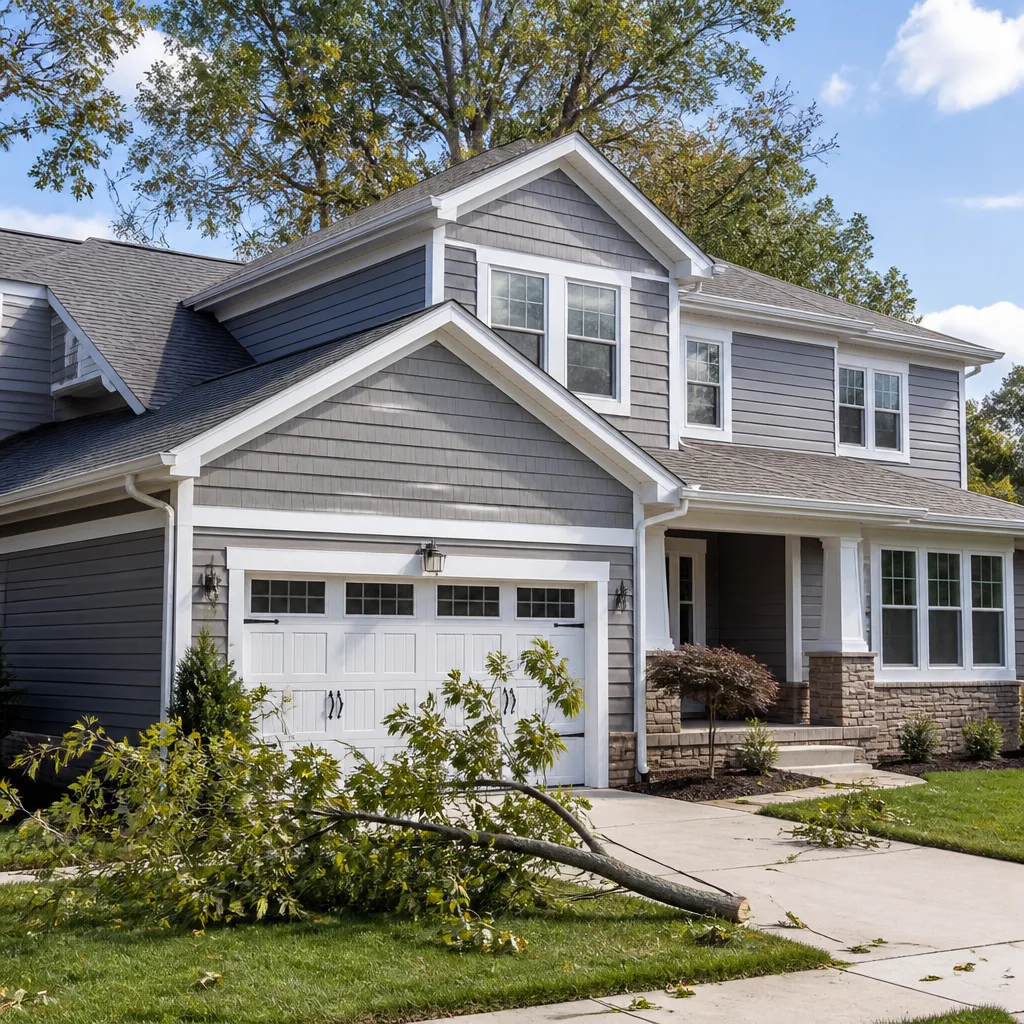
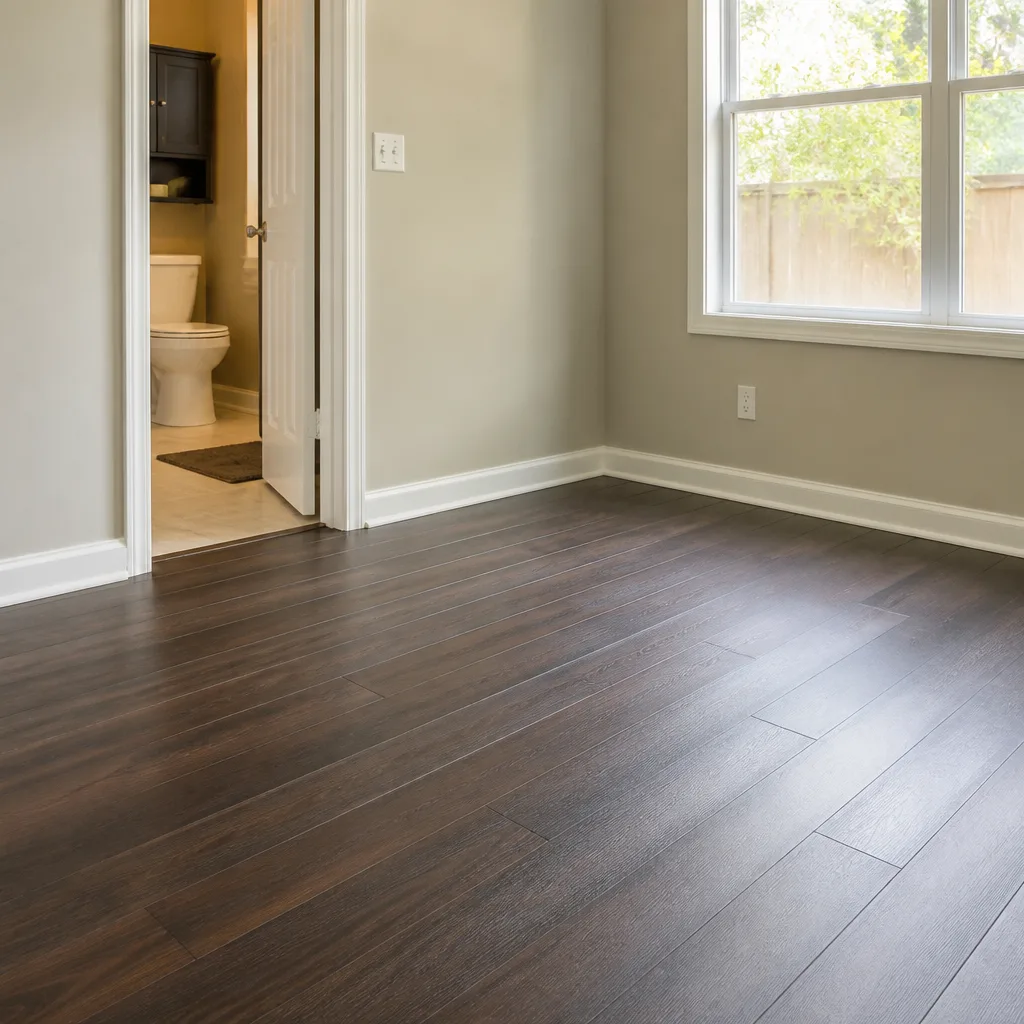
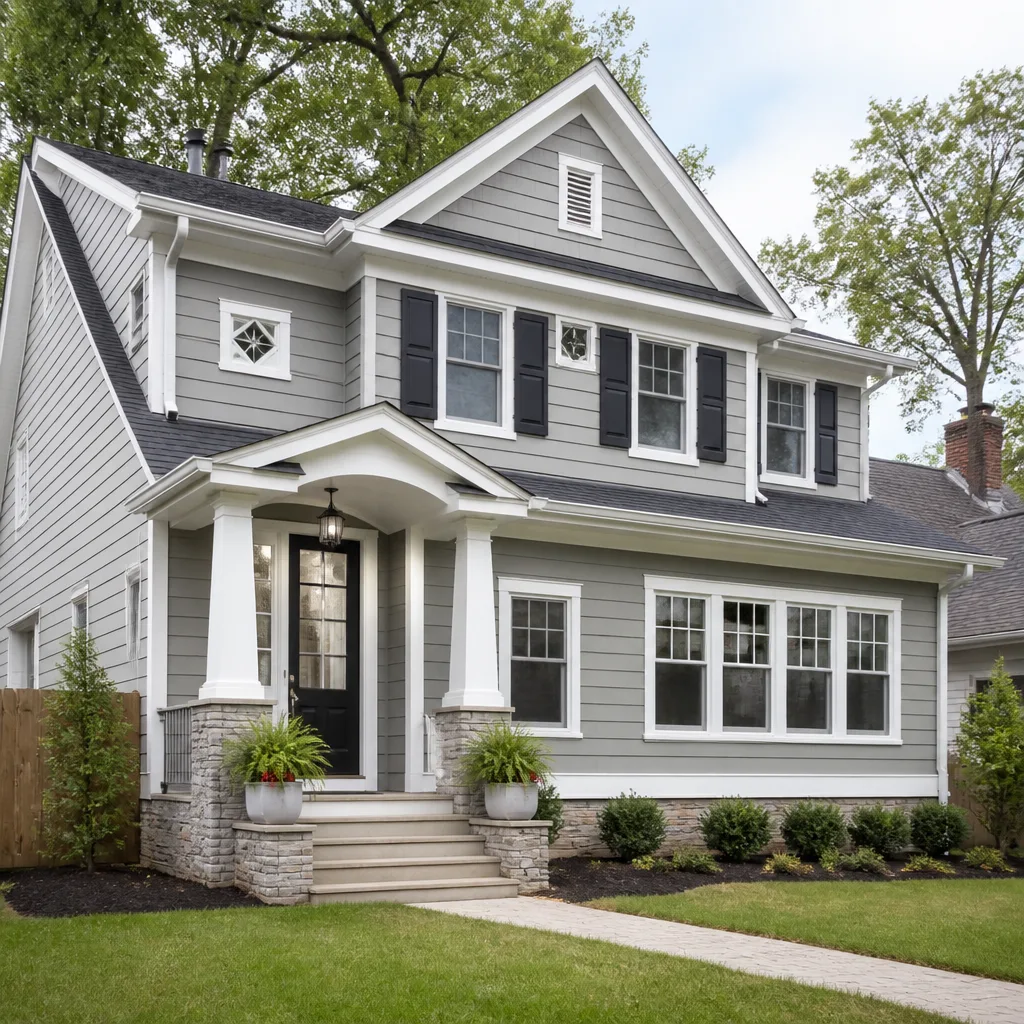
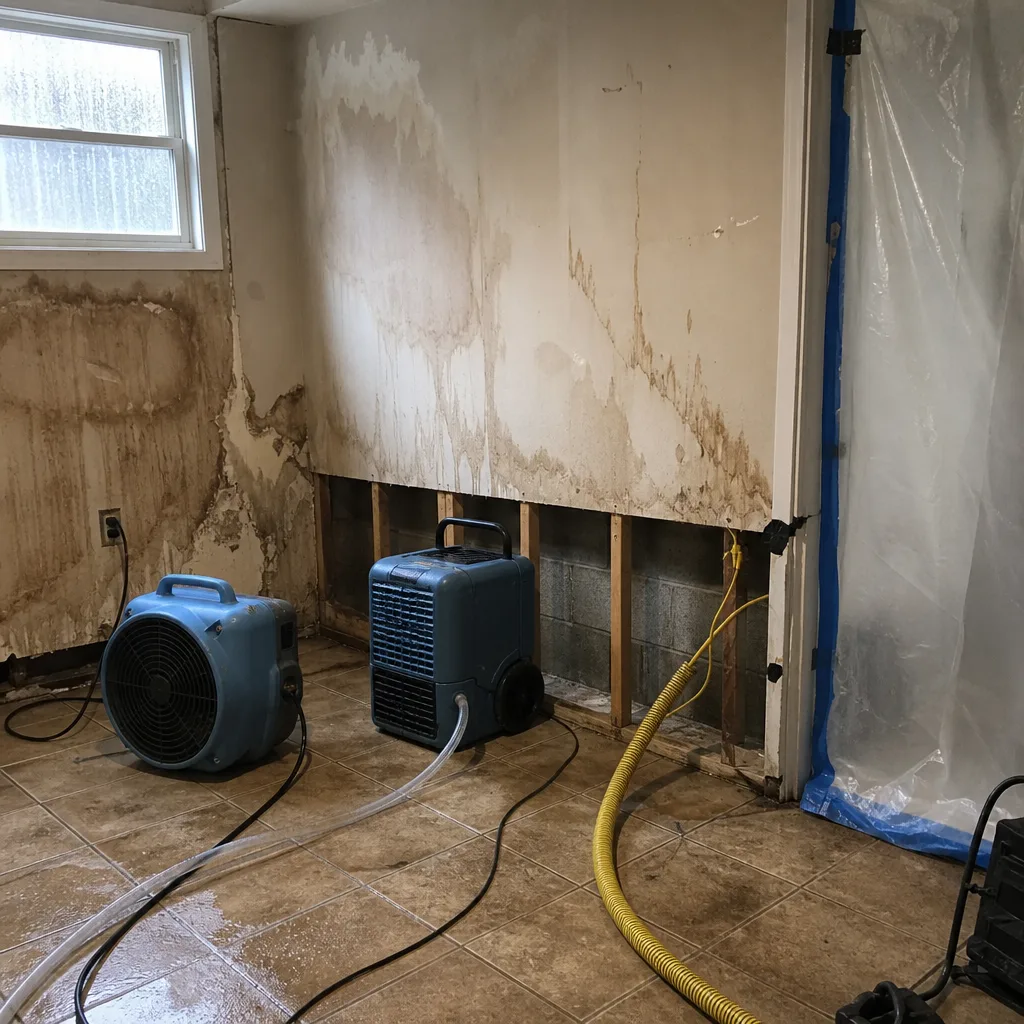 Before
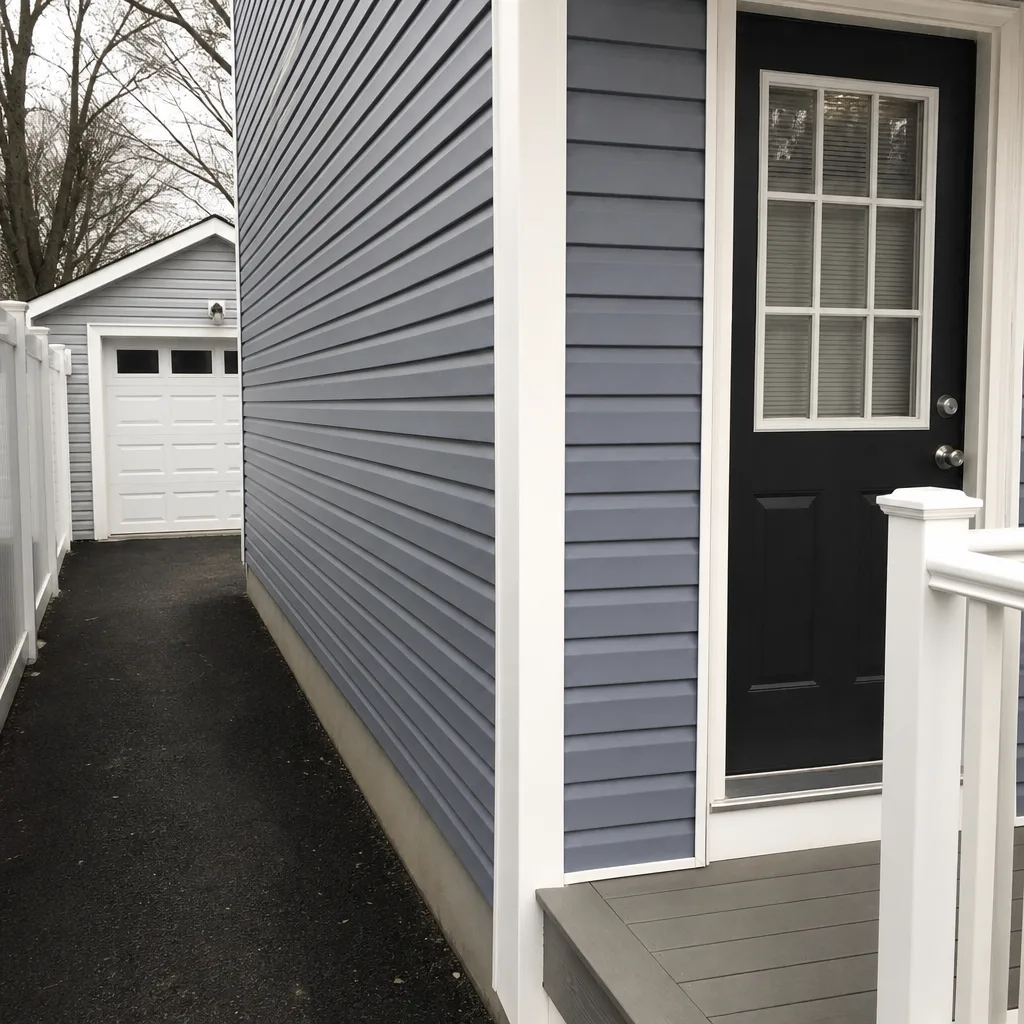 After
After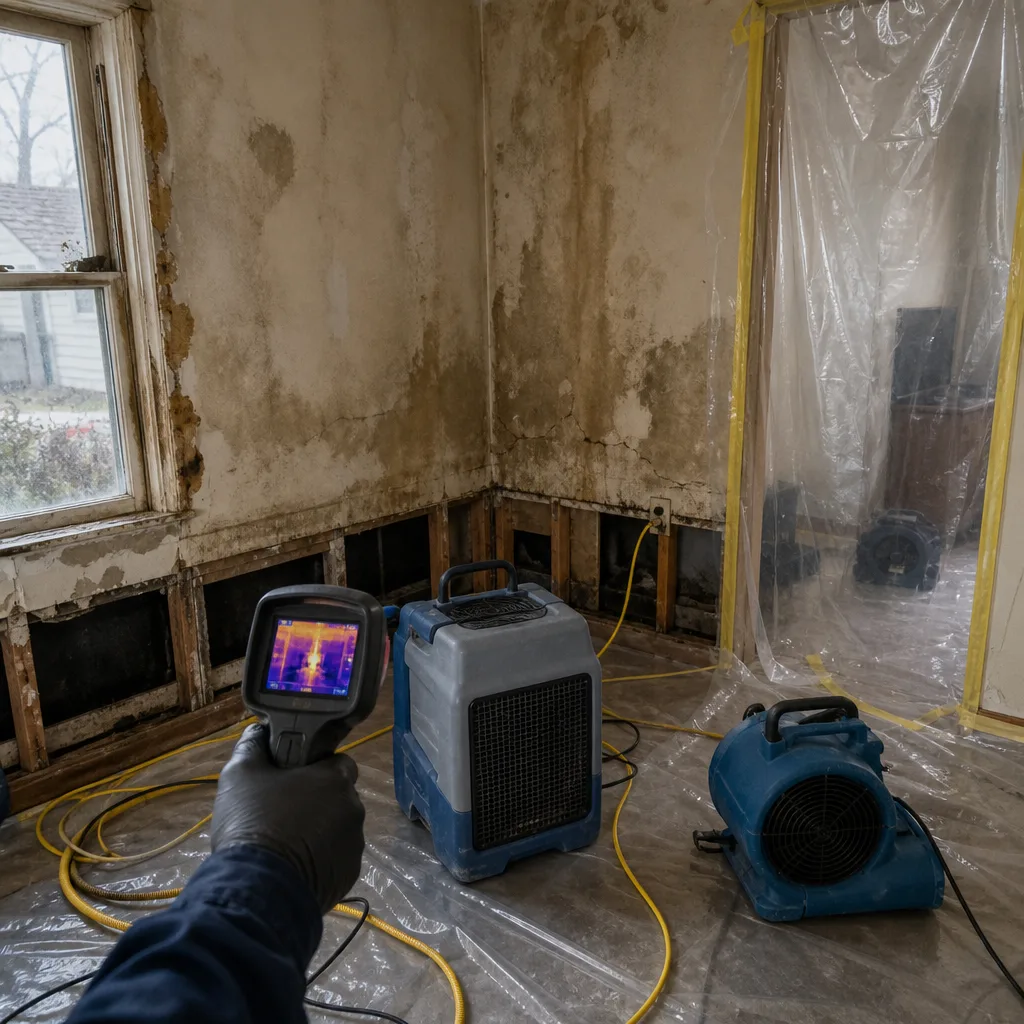 Before
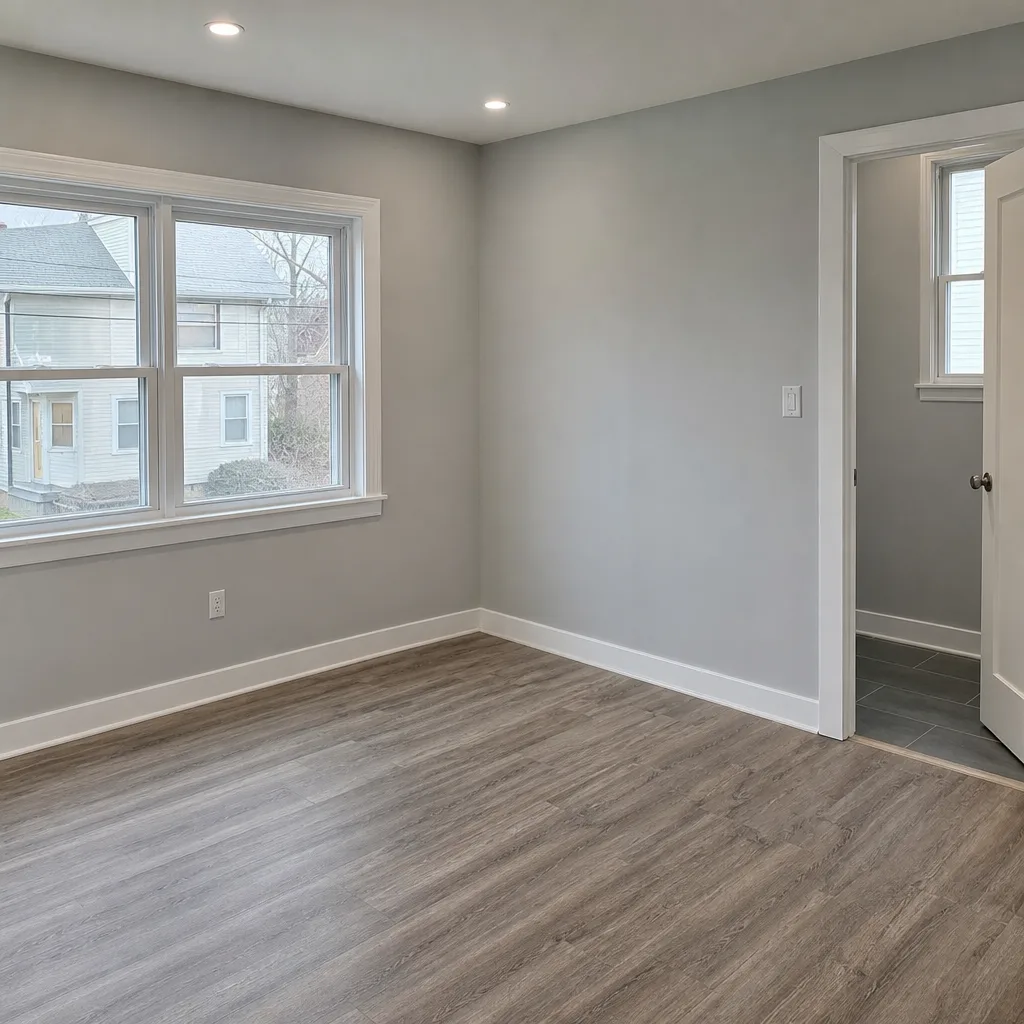 After
After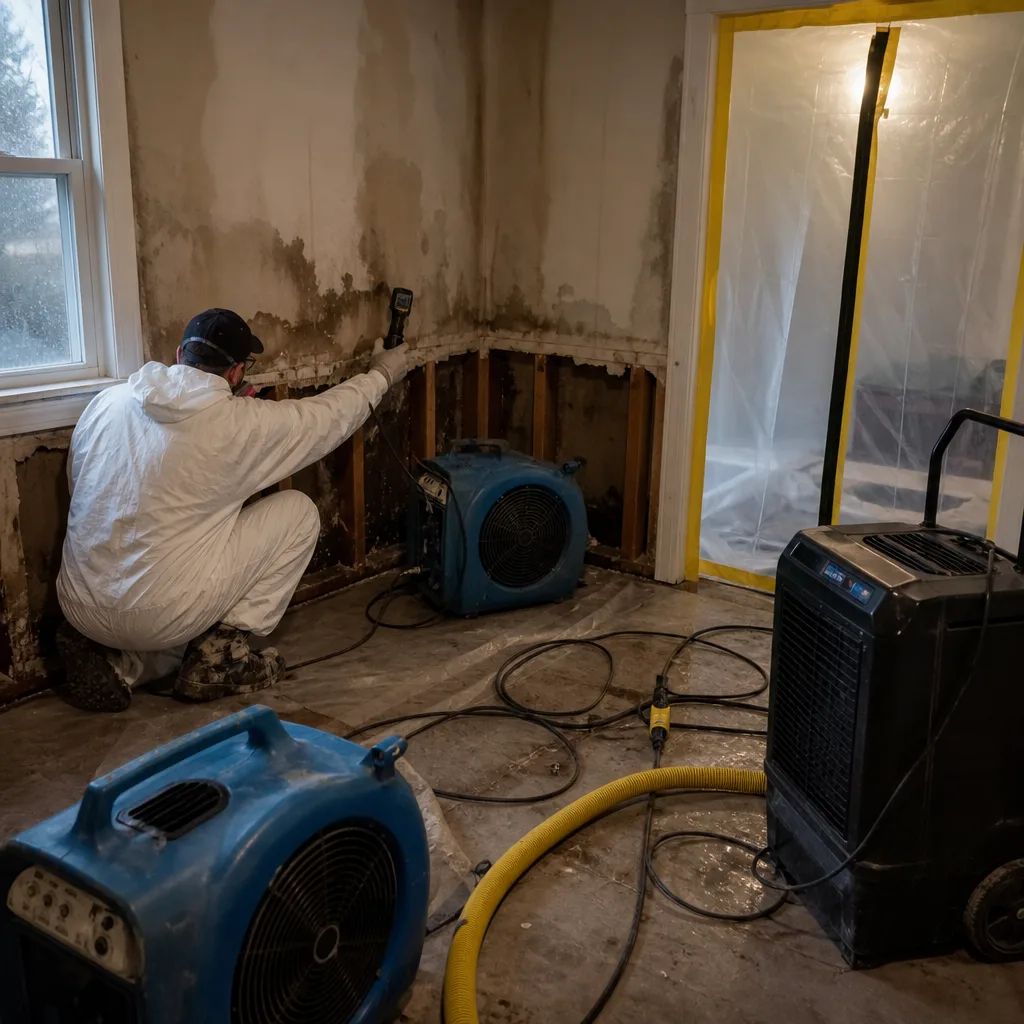 Before
 After
After24/7 Emergency Storm & Disaster Restoration in North Bergen
Storm damage in North Bergen moves fast, and so do we. Our crews dispatch from across the township and arrive ready to extract water, board up broken windows, tarp exposed roofs, and stop secondary damage the same visit. Call (551) 373-5246 any hour, any day. A live person answers, not a recording, and a certified technician reaches your property fast because we know every route from the Palisades slope to the western flats near the Turnpike.
The first hour after a storm is when most avoidable damage happens. Water migrating through shared brick walls, wind-driven rain pushing through compromised parapet walls, and backed-up floor drains in low-lying basements all compound quickly. We respond within 45 minutes in the North Bergen area and begin extraction or stabilization the same visit.
Understanding Storm & Disaster Restoration Severity in North Bergen Properties
Storm damage in North Bergen typically falls into three categories, and the building stock here determines how they play out. In the dense 1940s through 1960s brick apartment buildings that dominate the township, Category 1 water from a burst supply line becomes Category 2 or 3 quickly as it picks up contaminants from shared chases, cast-iron drain stacks, and common masonry. Wind-driven rain through parapet walls introduces Category 3 water directly, carrying whatever the storm picked up off roofs and street surfaces.
Moisture mapping tells us what the eye misses. In multi-unit buildings, water from one apartment migrates vertically and laterally through connected wall cavities and ceiling spaces. We use thermal imaging and hygrometers to trace that migration before we start drying, because setting up air movers in the affected unit alone leaves hidden moisture in adjacent spaces. That hidden moisture is what creates mold within 48 hours and turns a single-unit claim into a multi-unit mitigation project.
Why North Bergen Property Owners Choose Floodline Restoration Co.
- 45-minute response commitment. We dispatch crews positioned around North Bergen and typically arrive within 45 minutes of your call, around the clock.
- 24/7 live answer from a real person. No automated systems. A dispatcher picks up at 2 a.m., asks the right questions, and routes a crew immediately.
- IICRC-certified crews. Our technicians hold WRT, FSRT, and AMRT certifications and train to IICRC, RIA, and IFA standards. No subcontractors with unknown credentials.
- Free visual inspection. We walk the property, map the damage, and hand you a written scope before any work begins. No pressure, no inflated estimates.
- Direct insurance billing. We work with your carrier, provide line-item documentation, and bill them directly. You never play messenger.
- One team from extraction to reconstruction. The same certified crew that pumps the water also hangs the drywall. No handoffs, no inherited strangers.
Our Storm & Disaster Restoration Process
Inspection & Assessment
We arrive, walk every affected space, and use thermal imaging and moisture meters to map water migration through walls, floors, and common chases. In North Bergen multi-family buildings, we check adjacent units and shared shafts before we touch any equipment.
Extraction / Stabilization
We remove standing water with truck-mounted and portable extraction units, then stabilize the structure with emergency board-up and roof tarping where storm openings exist. This stops further water from entering while we plan the drying.
Drying & Dehumidification
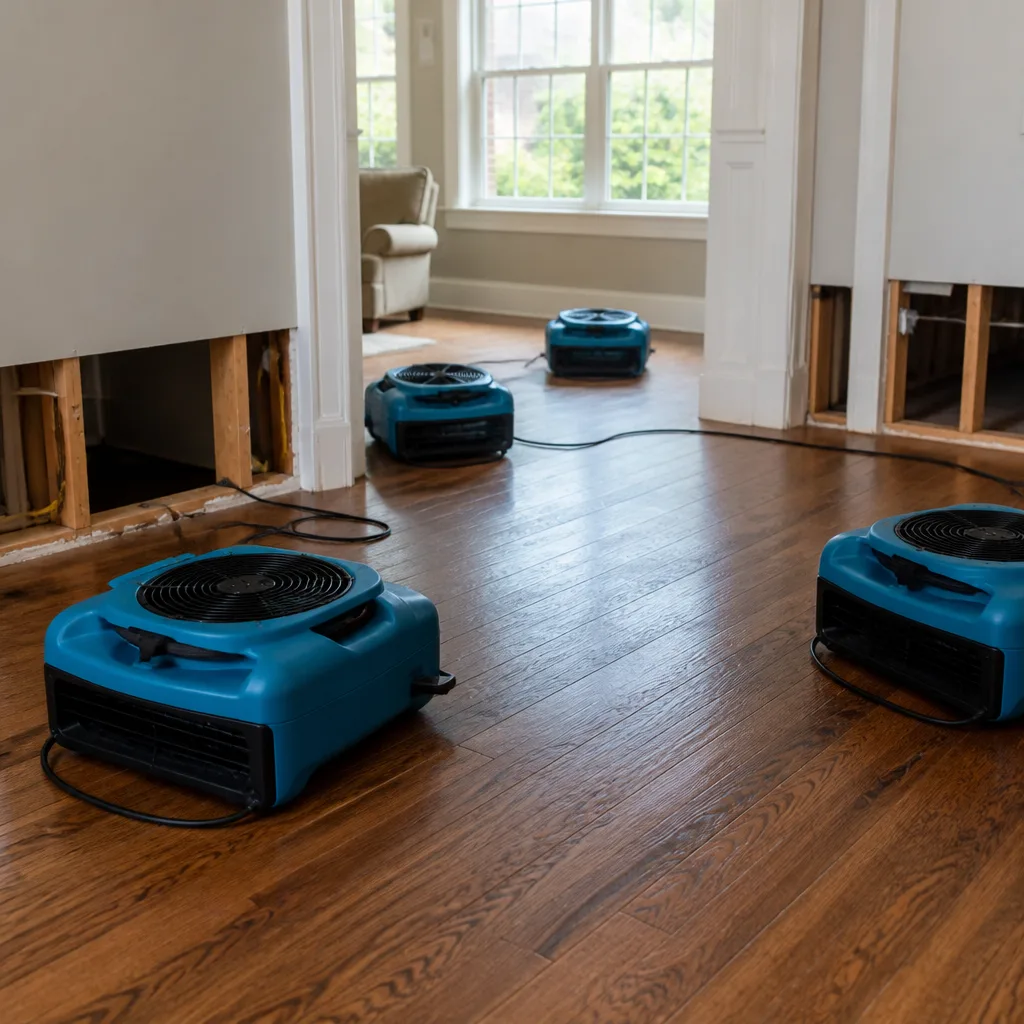
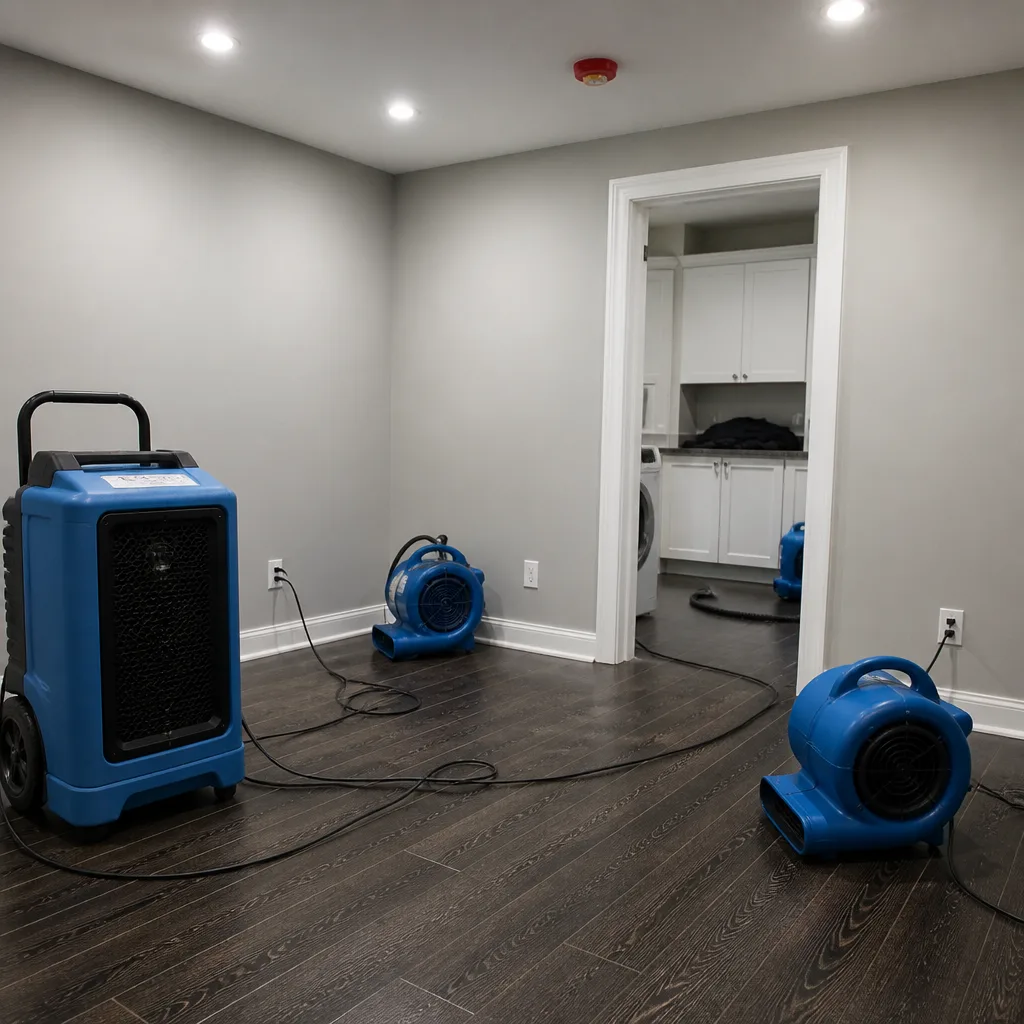
We place Dri-Eaz dehumidifiers and XPOWER air movers according to the moisture map, not guesswork. In low western North Bergen basements near the Meadowlands, we account for rising water table conditions and extend drying timelines accordingly.
Cleaning & Sanitization
Category 3 water requires antimicrobial treatment and controlled disposal of contaminated materials. We clean and sanitize all affected surfaces, including shared building systems where storm water backed up through floor drains.
Specialty Treatment
For wind-driven rain intrusion, we address parapet walls, brick facades, and roof membrane failures before interior finishes are restored. Unsealed envelope gaps wick water back into the structure and blow drying timelines on north and east exposures.
Repairs & Restoration
We rebuild what we removed. Drywall, flooring, trim, paint, and structural repairs happen on a written scope you approved before we started. The job is done when your property looks like the storm never touched it, and our 90-Day Done Right Promise backs every phase in writing.
Need Emergency Storm & Disaster Restoration in North Bergen Now?
Crews minutes away, answering live 24 hours a day. The sooner we start, the less it costs.
Working With Your Insurance Company
Insurance claims after storm damage in North Bergen come down to documentation. We start building the file the moment we arrive: photos of every room, moisture readings before and during drying, a line-item scope of work, and daily drying logs with our IICRC-certified techs’ signatures. Your adjuster gets everything we produce, and we communicate with them directly so you don’t spend your evenings on hold. Most storm and flood claims in this market involve multiple units in connected buildings. We handle that complexity and bill your carrier directly for the covered scope. If the adjuster questions any line item, we explain it with documentation, not arguments.
What We Provide Your Insurer
- Thorough documentation of the loss
- Photos of all damage, room by room
- Moisture readings and drying logs
- A detailed, line-item scope of work
- Direct coordination with your carrier
Built for North Bergen’s Loss Calendar
North Bergen sees specific storm threats on a predictable calendar. January deep freezes burst supply lines in under-insulated exterior walls along the Palisades slope, where aging brick buildings face prolonged cold exposure. Spring thaw sends runoff down steep grades and seeps into hillside basements through foundation cracks. Summer thunderstorms overwhelm the township’s combined sewer outflows and flash-flood western intersections near Paterson Plank Road and Tonnelle Avenue.
Fall and winter nor’easters deliver the most expensive damage: prolonged wind-driven rain against east-facing parapet walls and brick facades. Water forces its way through mortar joints and roof membrane seams, then migrates downward through multiple floors. Every one of these failure modes requires a different extraction and drying plan, and our crews know which one applies before they park the truck.
Storm & Disaster Restoration Across North Bergen’s Neighborhoods
The damage pattern changes depending on which side of the township you live on. East of Boulevard East, on the Palisades slope, we see fast stormwater runoff eroding foundation walls and pushing into hillside basements through grade-level openings. Properties along Kennedy Boulevard and the numbered streets running east from Bergenline Avenue sit on steeper grades and face wind-driven rain exposure from the Hudson River side. West of Tonnelle Avenue near Braddock Park and the Turnpike corridor, the picture flips: the ground sits on former meadowland, drainage is slow, and basements flood from below when the water table rises during heavy rain events. A basement on 79th Street near the park floods for entirely different reasons than a basement on a cliff-side block east of Boulevard East, and treating both the same way wastes time and money.
In the dense brick apartment buildings clustered around Bergenline Avenue and north toward the Fairview border, one apartment’s leak becomes a vertical problem. Water follows cast-iron drain stack chases and common masonry through floors and walls. We routinely find moisture in units two floors below the source, and our containment plans account for that shared-wall reality. It’s a response pattern unique to North Bergen’s housing stock, and it shapes how we stage every job here.
Storm Damage in North Bergen: Two Flood Profiles in One Township
Most restoration companies in Hudson County treat North Bergen like any other dense urban township. That’s a mistake. The township’s split topography creates two completely different storm-restoration failure modes within the same municipal boundary. On the eastern hillside, fast-moving Palisades runoff erodes foundations and backs up into hillside basements through grade-level openings and stairwell drains. On the western flatlands near Braddock Park and the Meadowlands edge, basements flood from below as the water table rises faster than residential sump pumps can evacuate it. Weehawken deals with the hill problem. Secaucus deals with the flatland problem. North Bergen deals with both at once, and a technician who doesn’t recognize which profile a given block sits on will extract water and watch it return within hours.
On a 1960s brick six-unit near Braddock Park, a nor’easter pushed wind-driven rain through a parapet wall and sent Category 3 water cascading down shared walls into three stacked apartments. Our techs ran moisture mapping on every floor of the connected units, cut containment around the affected stairwell cores to stop lateral spread, and used our Dri-Eaz dehumidifiers and XPOWER air movers to hit drying logs on the structural framing within five days, while coordinating pack-out of stored tenant goods from the basement boiler room, where water had backed up through floor drains during the storm-surge window. That job required understanding both failure modes at once.
Specialized Storm & Disaster Restoration Services We Offer in North Bergen
Storm Damage Cleanup
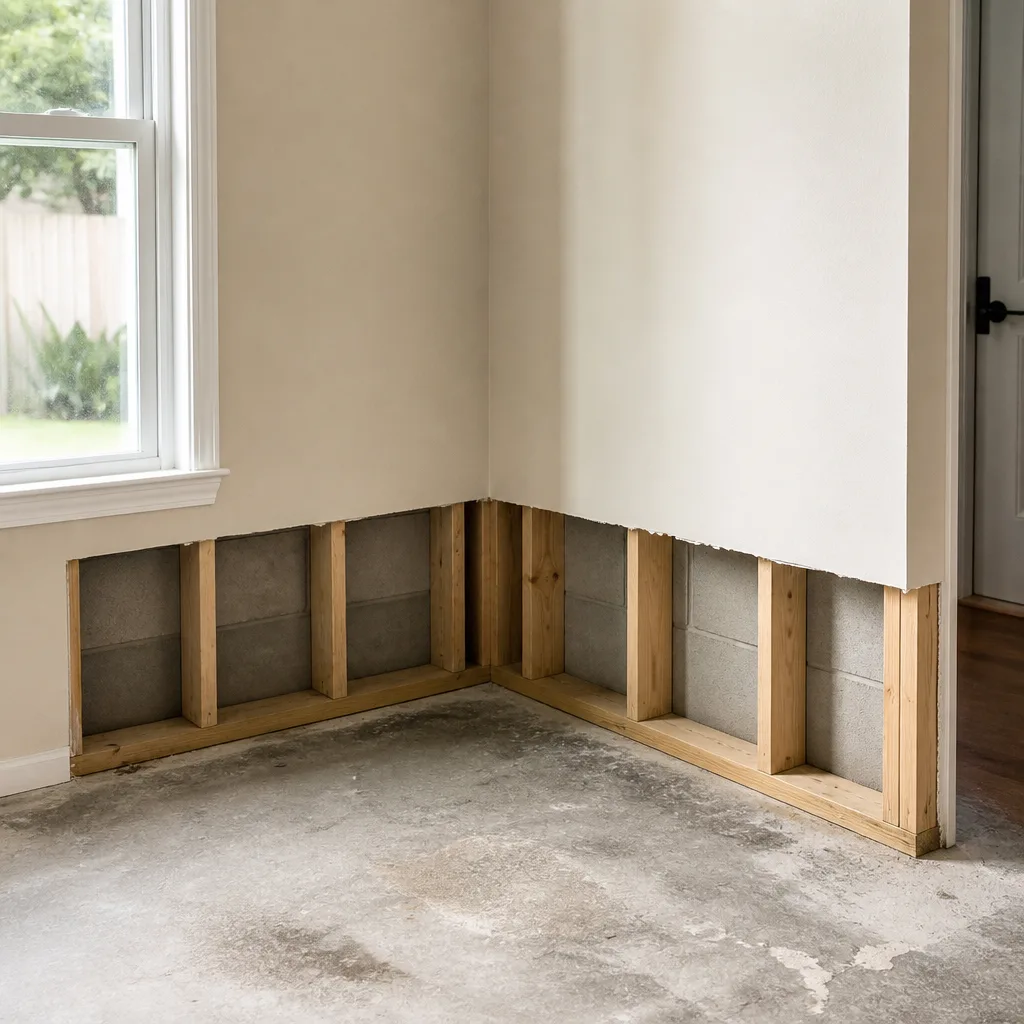
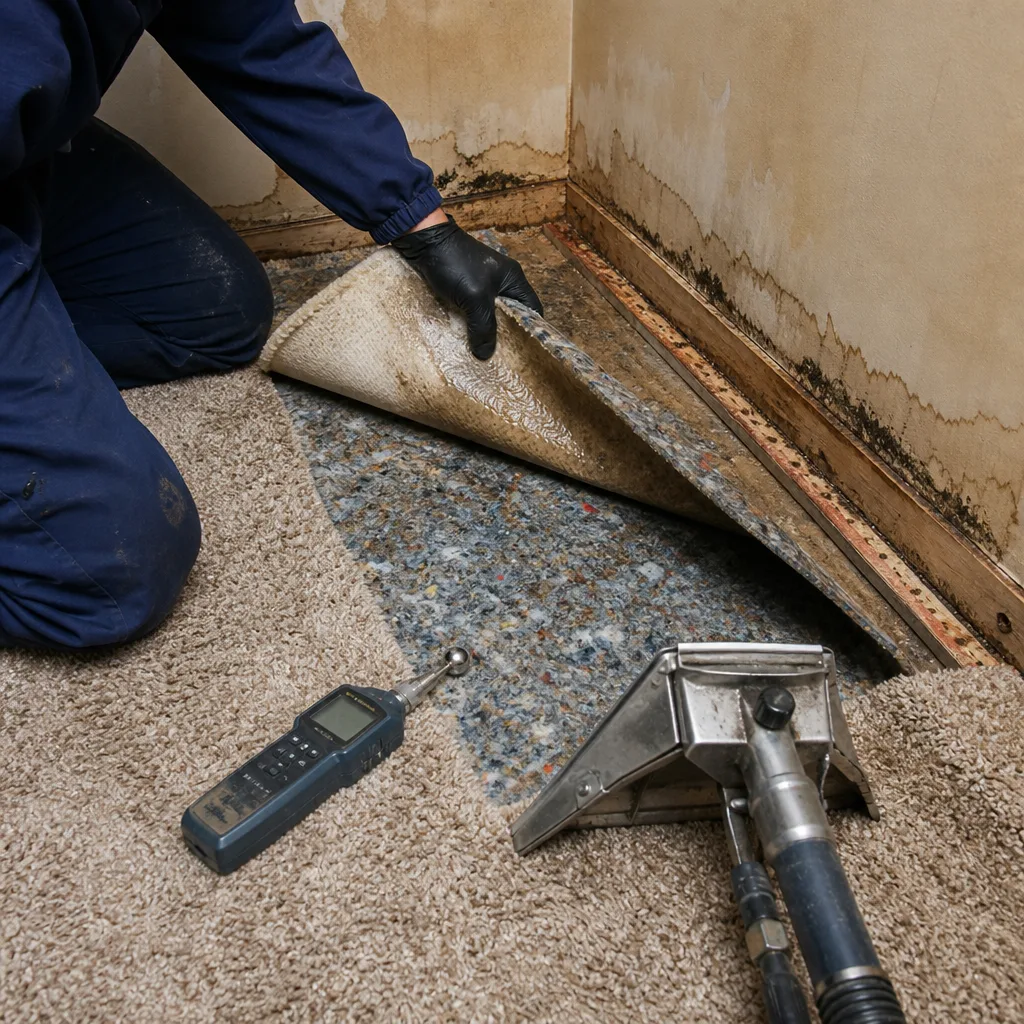
After a storm passes, North Bergen properties need fast removal of waterlogged drywall, soaked insulation, and storm debris that holds moisture against framing. We cut out affected materials to the moisture map lines, not further, and haul everything off site the same day. In multi-unit buildings, we coordinate with building management to keep common areas passable while we work.
Flood Damage Restoration
Western North Bergen basements near the Meadowlands flood from below, and standard extraction alone doesn’t solve that. We account for rising groundwater conditions, install temporary flood barriers where practical, and run extended structural drying with daily moisture readings until the drying standard is met. On the Palisades side, our approach shifts to surface runoff control and foundation sealing before interior drying begins.
Emergency Board-Up
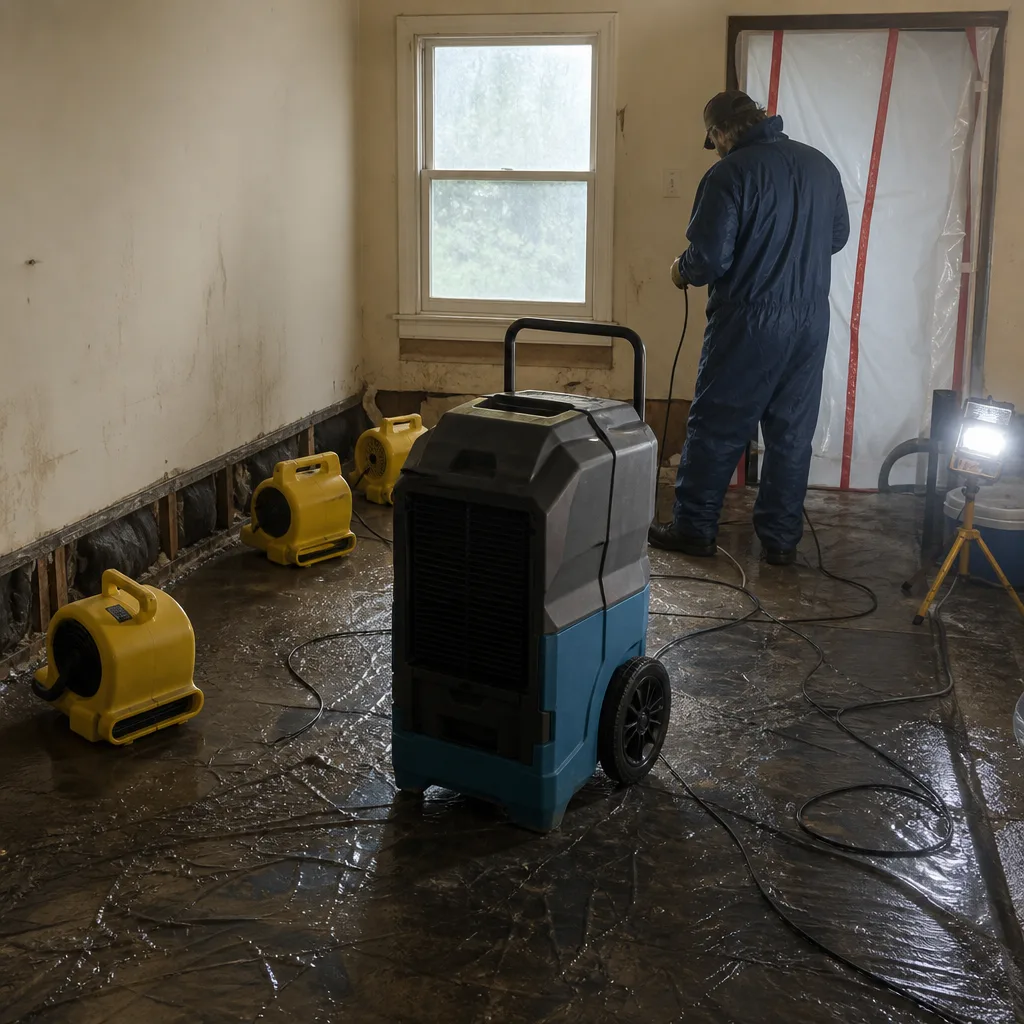
Broken windows and storm-battered doors in North Bergen brick buildings need secure board-up immediately, both for security and to stop wind-driven rain from entering the envelope. We board up openings on the first visit, using perimeter-sealed plywood and tamper-resistant fasteners that hold through whatever the next storm brings.
Roof Tarping
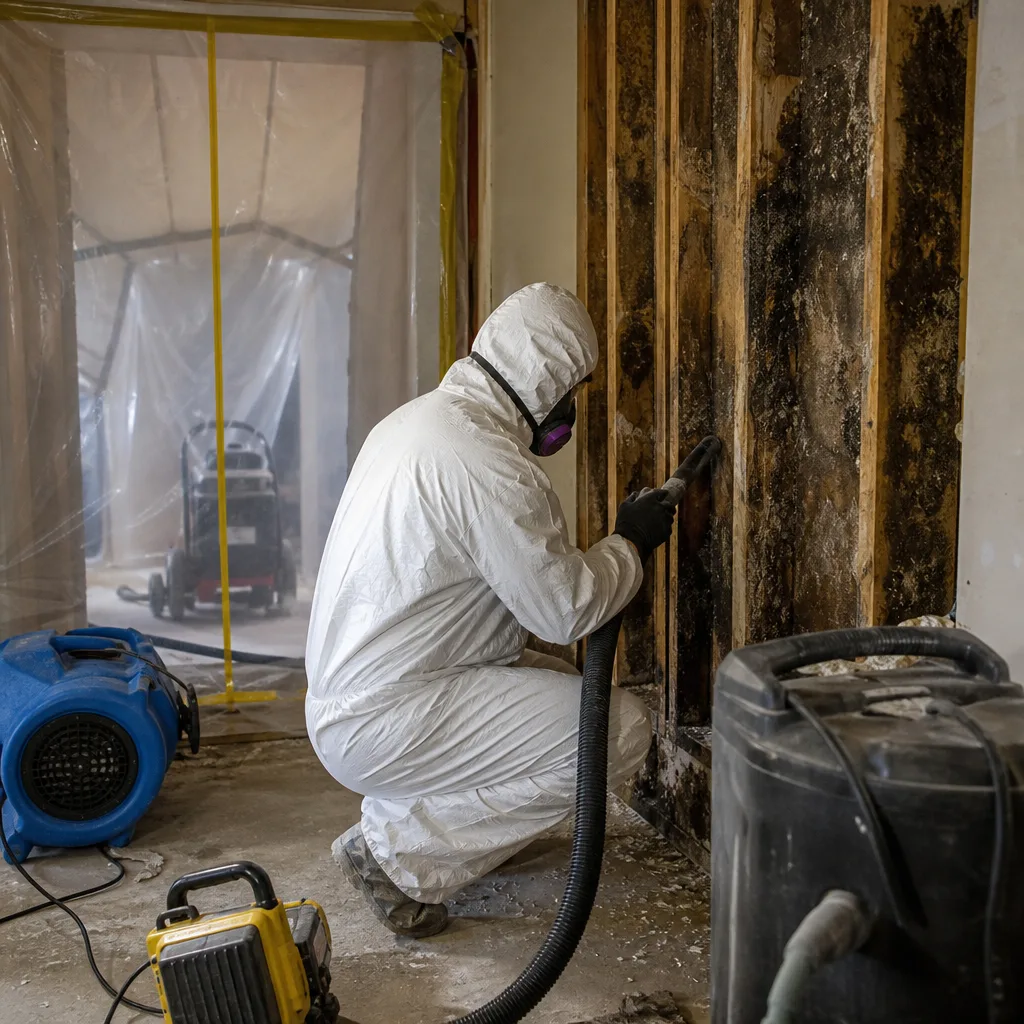
Flat and minimally sloped roofs on 1940s to 1960s North Bergen apartment buildings fail at parapet walls and membrane seams during nor’easters. We tarp exposed roof sections the same visit, sealing edges to prevent wind lift, and document the condition for your insurance adjuster. Tarping buys time for permanent repairs without letting more water into the structure.
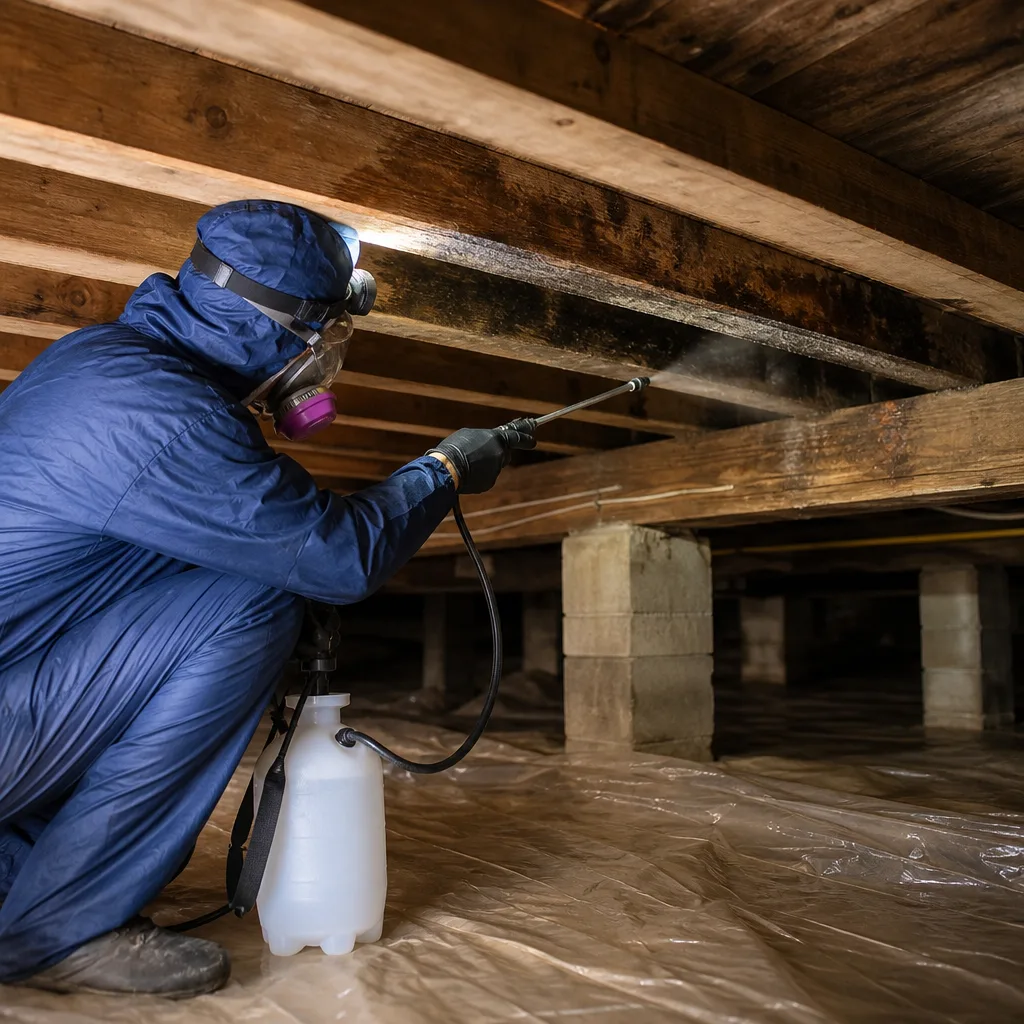
Debris Removal
Storm debris left against a building holds moisture and creates conditions for mold and pest intrusion. We remove fallen branches, torn roofing material, and scattered insulation from the property, then document the condition for your claim file. In North Bergen’s dense lots, we also clear curb areas where township collection windows are tight after major storms.
What happens when you call
- 1
A real person answersNo phone trees - you reach a local pro.
- 2
You get an upfront price rangeHonest numbers before anyone is dispatched.
- 3
A background-checked tech heads outLicensed & insured, dispatched right away.
- 4
You approve before work beginsNothing starts until you say go.
Storm & Disaster Restoration Costs in North Bergen, NJ
What you’ll pay depends on which North Bergen flood profile you live in and how far the water traveled. Here are honest ranges for this market. A single-family basement extraction with drying on a Palisades-side property typically runs $2,800 to $5,500, while the same square footage on the western flatlands near the Meadowlands often runs $4,000 to $8,000 because of extended structural drying timelines driven by the rising water table. Emergency board-up for a broken window or door in an apartment building runs $400 to $1,200 per opening. Roof tarping for a flat-roof brick building section runs $800 to $2,200 depending on parapet height and access. Full storm damage cleanup that involves multi-unit drying and rebuild in a connected North Bergen building runs $15,000 to $45,000+ depending on how many units are involved and whether shared system replacement is required.
Insurance typically covers storm and flood damage when the cause is a covered peril, and we bill your carrier directly for the covered scope. Senior and veteran homeowners receive a 5% discount on our work, and the $50 off any repair over $250 offer applies to storm-related repairs. Call (551) 373-5246 for a free visual inspection and a written scope. No surprises on the bill.
We Also Serve Cities Near North Bergen
Our crews work throughout Hudson County and the surrounding area. In addition to North Bergen, we provide Storm & Disaster Restoration in Weehawken, Union City, Secaucus, and Hoboken. If you’re in a neighboring town and dealing with storm damage, call the same number. We dispatch from locations across the region and reach each city within the same emergency response window.
Serving North Bergen, NJ - Our Local Coverage Area
We’re based in the North Bergen area and know this community well. Use the map below to see our service coverage - if you’re nearby, we can almost certainly help.
North Bergen Storm & Disaster Restoration Questions, Answered
Why do North Bergen homes west of Tonnelle Avenue need longer structural drying after a storm than homes on the Palisades side?
Because the water table on the western flatlands rises faster than residential sump pumps can evacuate it. The ground near the Meadowlands holds water against basement walls and slabs, which keeps re-wetting structural materials long after extraction. We run extended drying timelines and daily moisture readings on those blocks. Call (551) 373-5246 for an assessment of your specific property.
Can a single apartment water leak in a North Bergen brick building really affect units below and beside mine?
Yes. In the dense 1940s through 1960s brick buildings that dominate North Bergen, water migrates vertically through cast-iron drain stack chases and common masonry, and laterally through connected wall cavities. We routinely find moisture in units two floors below the source. That’s why we moisture-map adjacent units before starting drying in the affected one.
Why does North Bergen experience two completely different kinds of storm flooding in the same township?
North Bergen’s split topography creates two failure modes. The eastern Palisades slope catches fast stormwater runoff that erodes foundations and backs up into hillside basements through grade-level openings. The western flatlands near the Meadowlands flood from below as the water table rises during heavy rain. No other township in the area faces both at once, which is why restoration here requires local diagnostic knowledge.
After a nor’easter, where should I check for hidden wind-driven water damage in a flat-roofed North Bergen brick building?
Check the parapet walls first. Wind-driven rain pushes water through mortar joints and roof membrane seams at parapet connections, then it migrates downward through interior walls. Also check ceiling corners on the top floor, around drain stack penetrations, and along exterior brick faces. Water intrusion at these points often shows no visible damage for days while moisture accumulates inside wall cavities.
What does Category 3 water mean for my flooded North Bergen basement after a Meadowlands backflow event?
Category 3 water is grossly contaminated. When the Meadowlands water table backs up through floor drains during a storm surge, it carries sewage, street runoff, and likely bacteria. Any porous materials touched by that water, including drywall, insulation, and carpet, require removal and disposal according to IICRC standards. Non-porous surfaces need antimicrobial treatment. This is not a DIY clean-up situation.
How fast can you actually get to my North Bergen property during a storm?
We commit to a 45-minute response in the North Bergen area, around the clock. We station crews across the township specifically so we can reach both the Palisades side and the western flats quickly during major storm events. Call (551) 373-5246 and a live dispatcher routes the nearest available certified crew.
Will my insurance cover storm and flood damage restoration in North Bergen?
Most standard homeowners and commercial policies cover storm damage when the cause is a covered peril like wind or burst pipes. Flood damage from rising water tables or storm surge may require a separate flood policy, depending on your coverage. We document everything from the first hour, bill your carrier directly, and communicate with your adjuster so you know exactly what’s covered.
What should I do in the first 30 minutes after storm water enters my North Bergen home?
Call us first at (551) 373-5246. Then shut off electricity to affected areas if it’s safe to reach the panel without stepping in water. Move valuables and important documents to higher ground. Don’t enter standing water in a basement, especially in western North Bergen where backflow events introduce sewage. Our crew arrives fast and handles everything from there. The first 30 minutes determine whether you’re dealing with extraction alone or extraction plus demolition.
Written by Curt Bowman, Owner at Floodline Restoration Co., serving North Bergen and the surrounding Hudson County area since 2010.