
Free visual inspection and a written scope of work before any mitigation begins - photos, moisture readings, and drying logs go in your claim file
The scope we write is the scope we bill. Anything new gets shown to you, in writing, before we touch it.
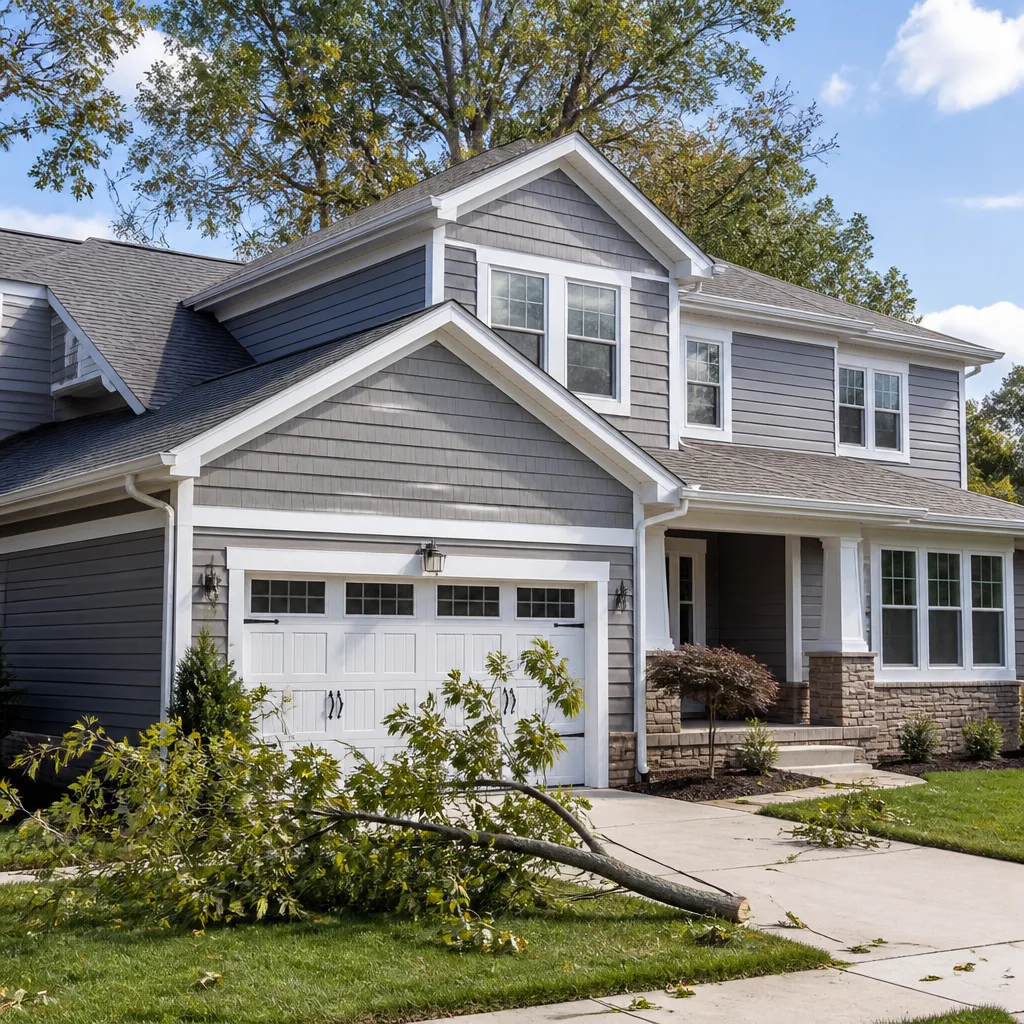
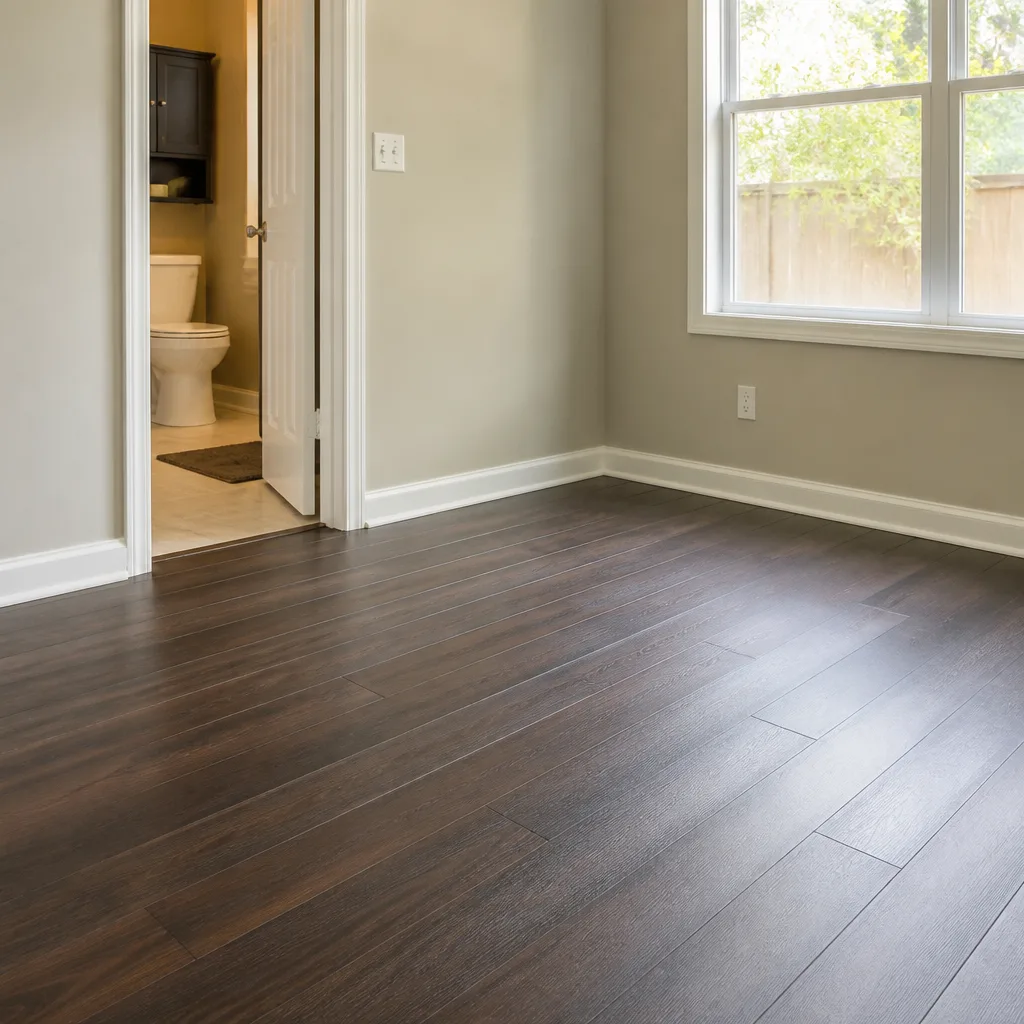
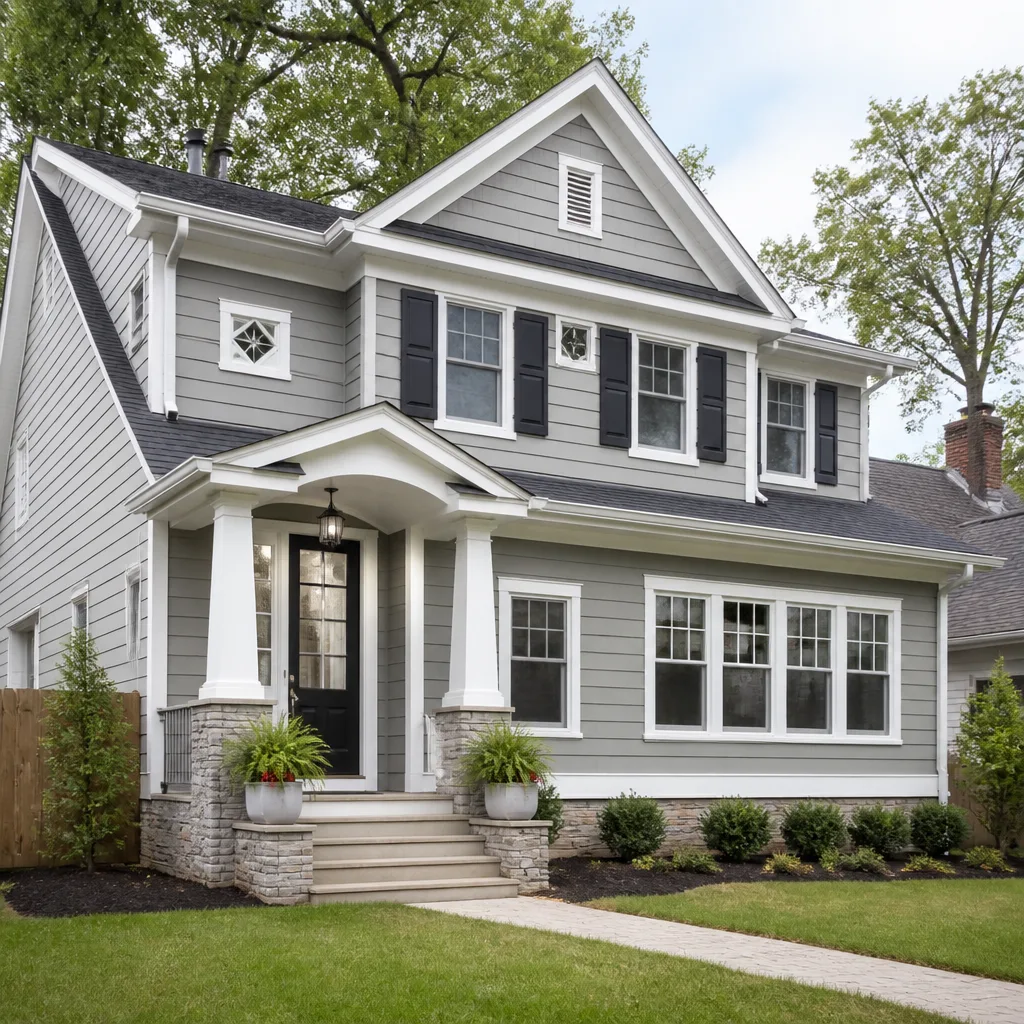
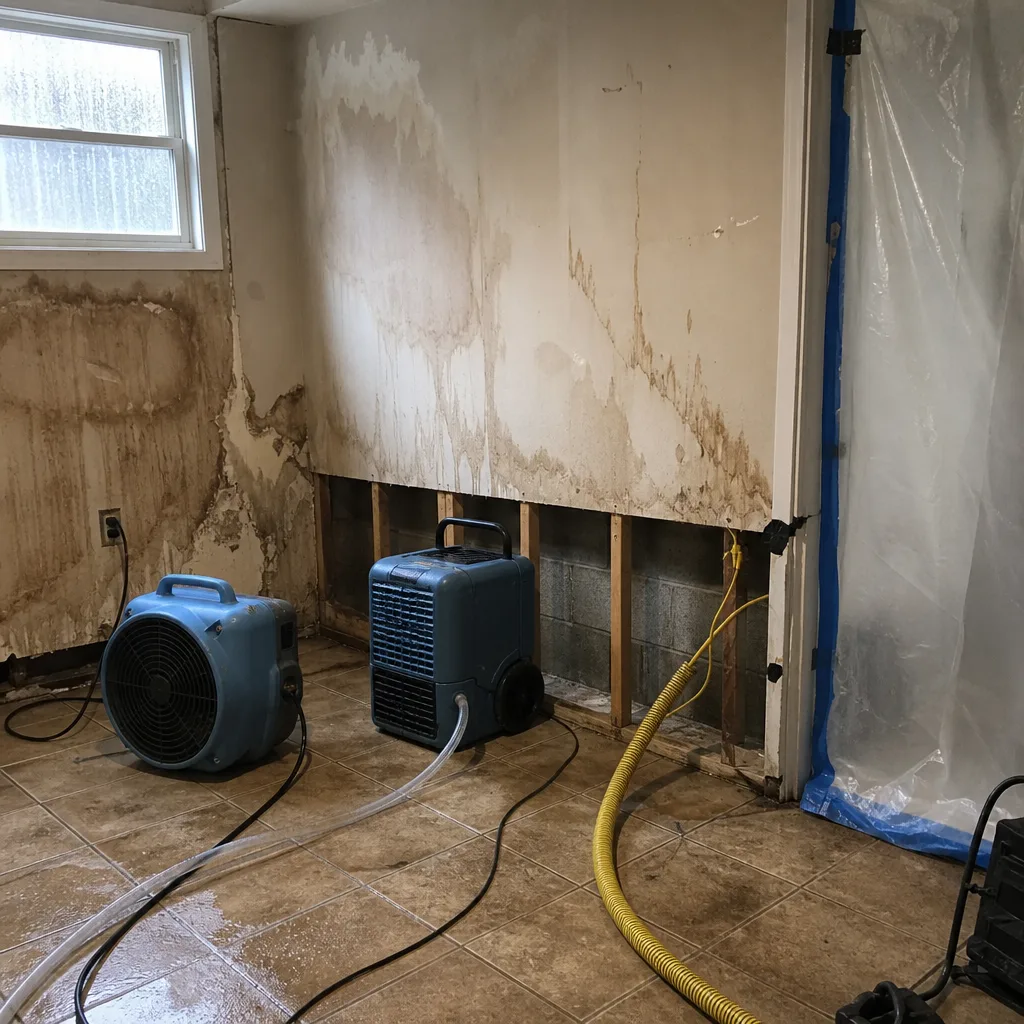 Before
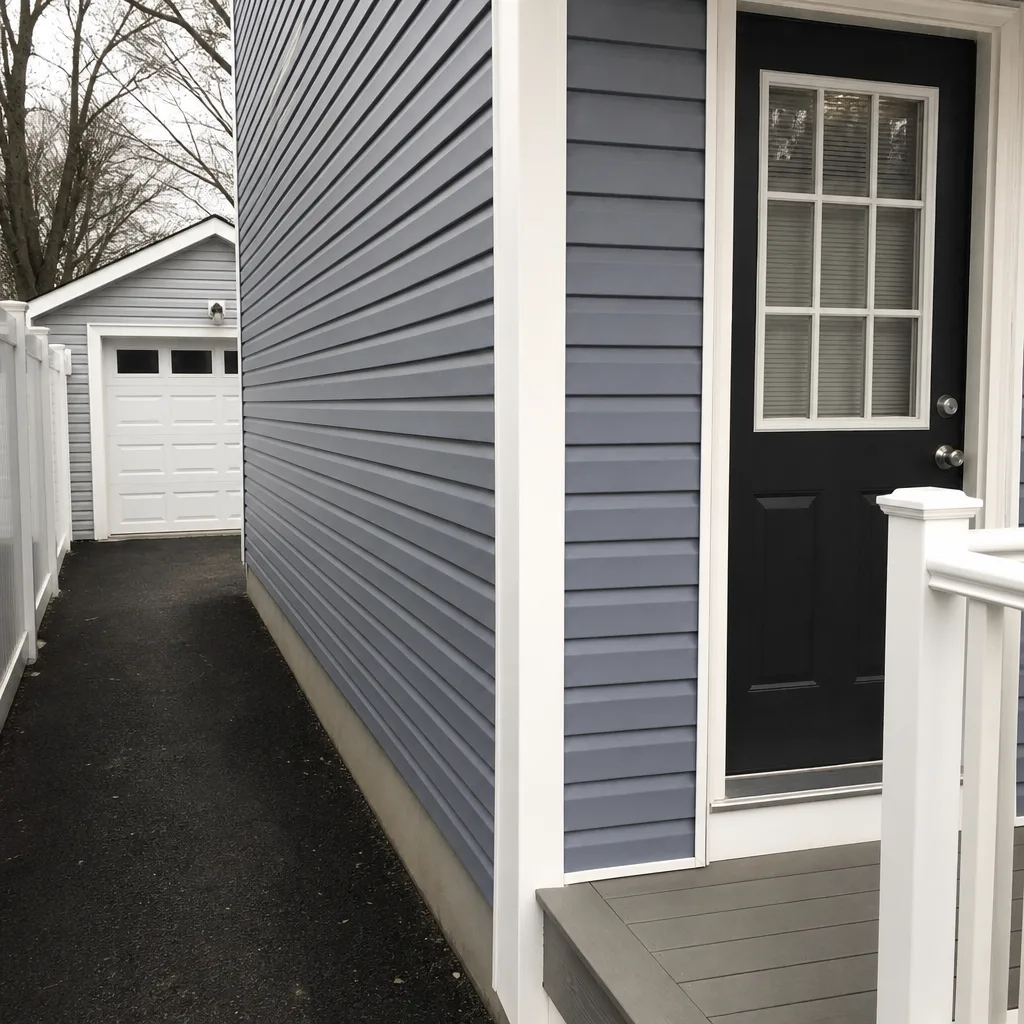 After
After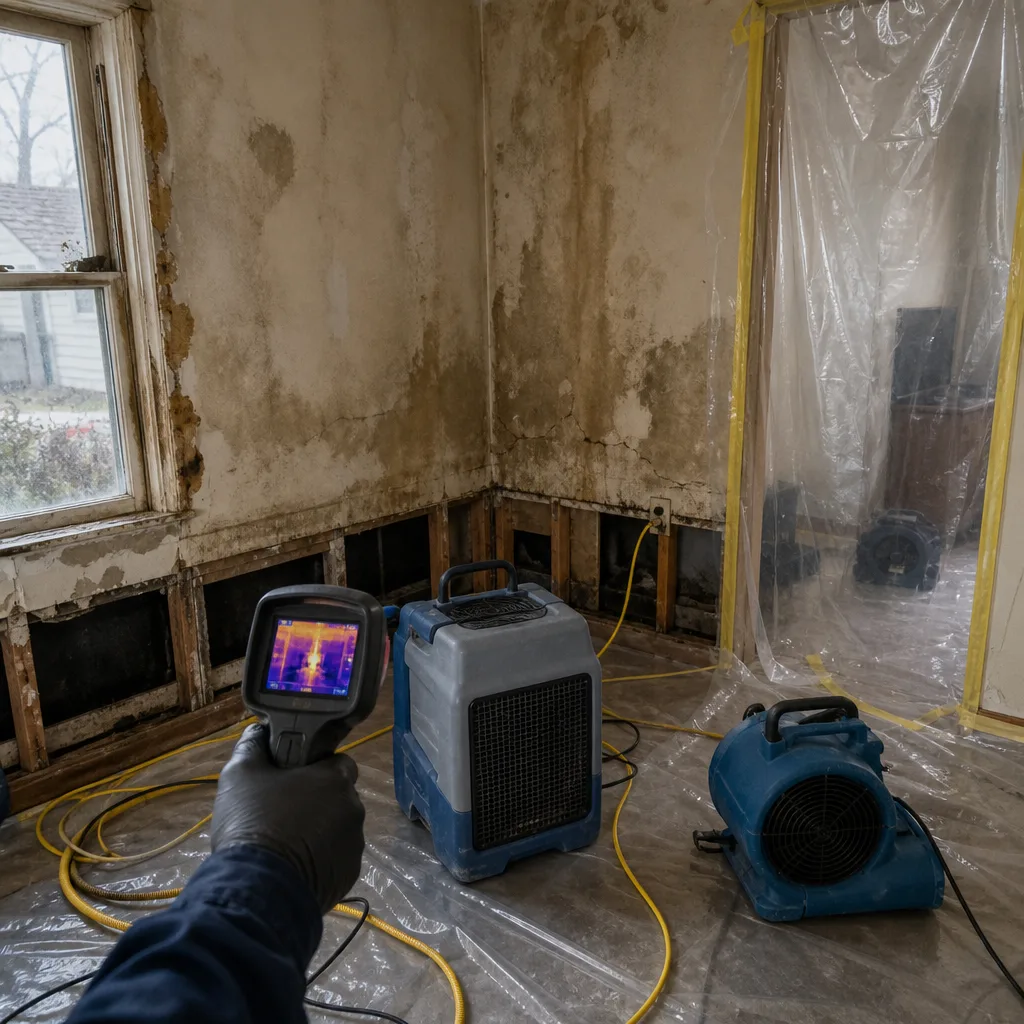 Before
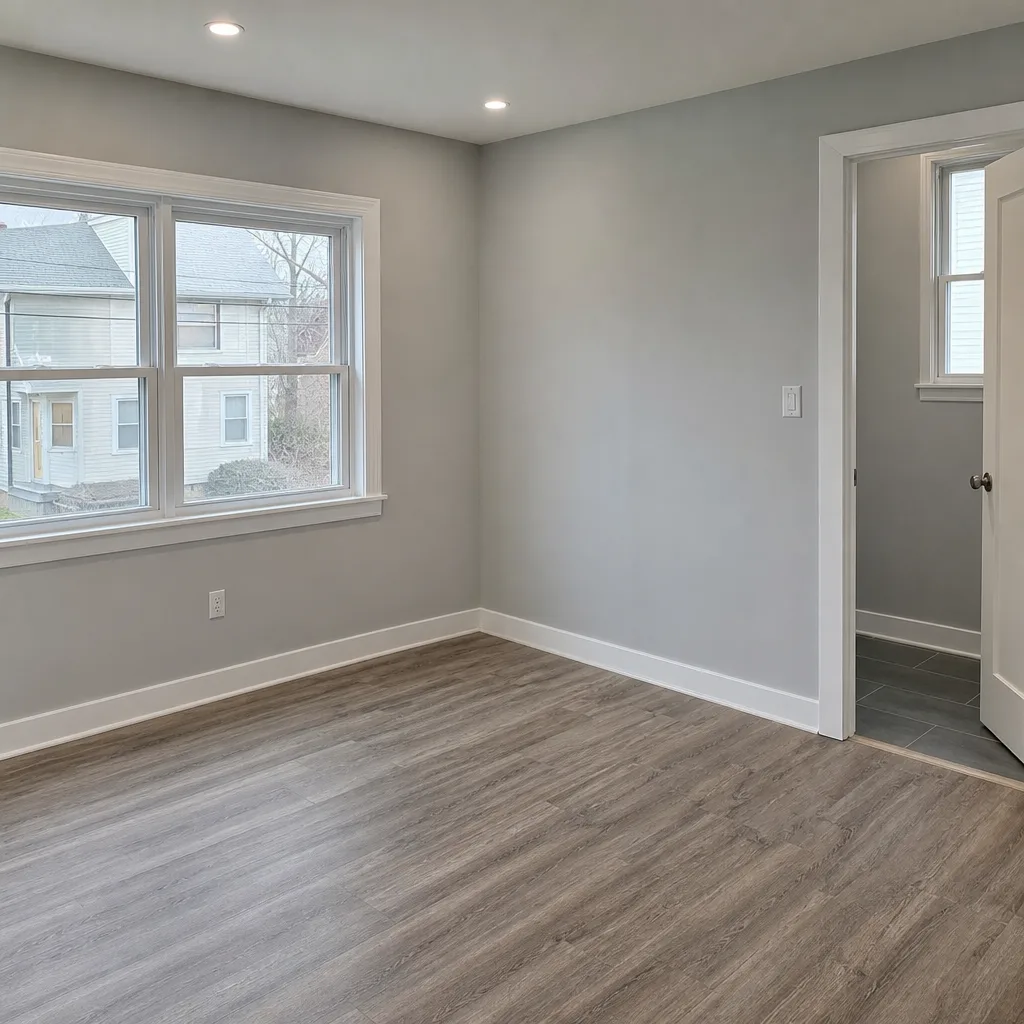 After
After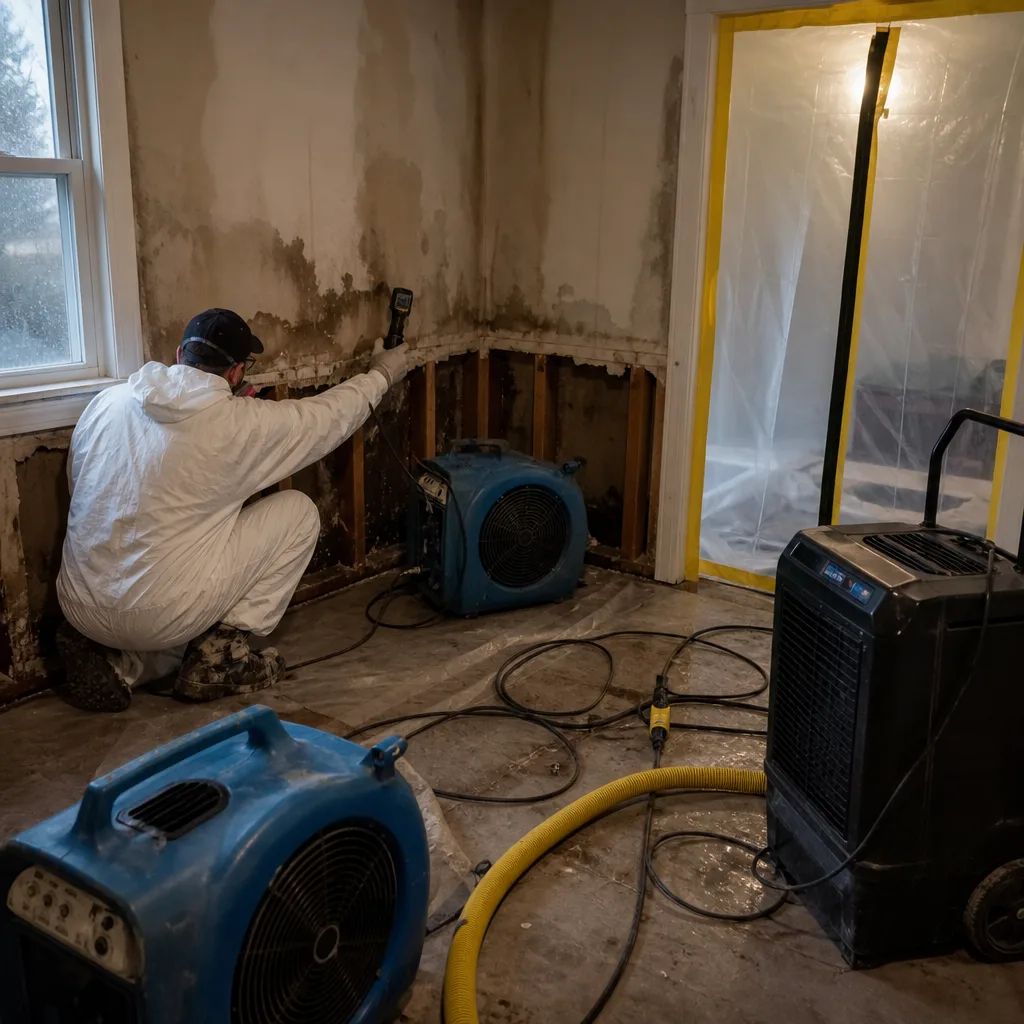 Before
 After
After24/7 Emergency Commercial Restoration in Kearny
When water is rising through a basement floor drain on Kearny Avenue at 2 a.m., every minute counts. Call (551) 373-5246 and a live dispatcher answers immediately, not a recording. Our crews are minutes from Kearny’s commercial corridors, and we arrive prepared to start extraction the same visit. The first hour after a flood, sewer backup, or Kearny Fire & Smoke Damage Restoration need decides whether inventory survives, whether drywall can be dried in place or must be cut out, and whether your business closes for three days or three weeks. We provide a free visual inspection every time, and we tell you honestly what you’re facing before any work begins.
Understanding Commercial Restoration Severity in Kearny Properties
Commercial restoration in Kearny is rarely a simple Category 1 clean-water loss. The town’s combined storm/sanitary sewer system, dense early-20th-century building stock, and low-lying position between the Passaic River and former Meadowlands wetlands push most water events toward Category 3 contamination faster than in neighboring towns. Category 1 water comes from a clean supply line. Category 2 carries significant contamination: detergent discharge, sump overflow, condensation lines. Category 3 is grossly contaminated, holding sewage, river water, or storm runoff that has mixed with sanitary waste. That distinction changes everything: containment barriers, antimicrobial application, disposal of porous materials, and a separate insurance pathway. Moisture mapping with hygrometers and thermal imaging tells us where water has migrated inside wall cavities and under slab floors. In Kearny’s older brick and frame commercial buildings, water travels through plaster-and-lath walls and original mortar joints in ways a surface reading misses. Structural drying then runs on professional-grade Dri-Eaz and Phoenix equipment until moisture readings drop below the dry standard, not just until the floor looks dry.
Why Kearny Property Owners Choose Floodline Restoration Co.
- Live answer, every call, 24 hours a day. You speak to a person on the first ring, at 2 a.m. or 2 p.m., and a crew is dispatched toward Kearny immediately.
- IICRC-certified technicians on every job. Our crews hold WRT, FSRT, and AMRT certifications, and they follow the protocols those credentials require, not shortcuts.
- Free visual inspection before any work begins. We look first, show you what we found, and put the scope in writing. No pressure, no guessing.
- Direct insurance billing. We bill your carrier directly and handle adjuster communication so you never play messenger between Floodline and the insurance company.
- One team from extraction to reconstruction. The same crew that reads the moisture map on day one runs daily readings and rebuilds what needs rebuilding. No handoffs, no inherited strangers.
- Background-checked, uniformed technicians. You know exactly who is in your building, and every job is backed by our 90-Day Done Right Promise in writing.
Our Commercial Restoration Process
Inspection & Assessment
We arrive, walk the space with you, and document everything: water category, affected square footage, materials involved, and what can be saved. A written scope follows before any equipment is placed.
Extraction & Stabilization
Standing water comes out first with truck-mounted and portable extractors. We stabilize the building: shutting off water sources, containing contamination, and protecting undamaged areas.
Drying & Dehumidification
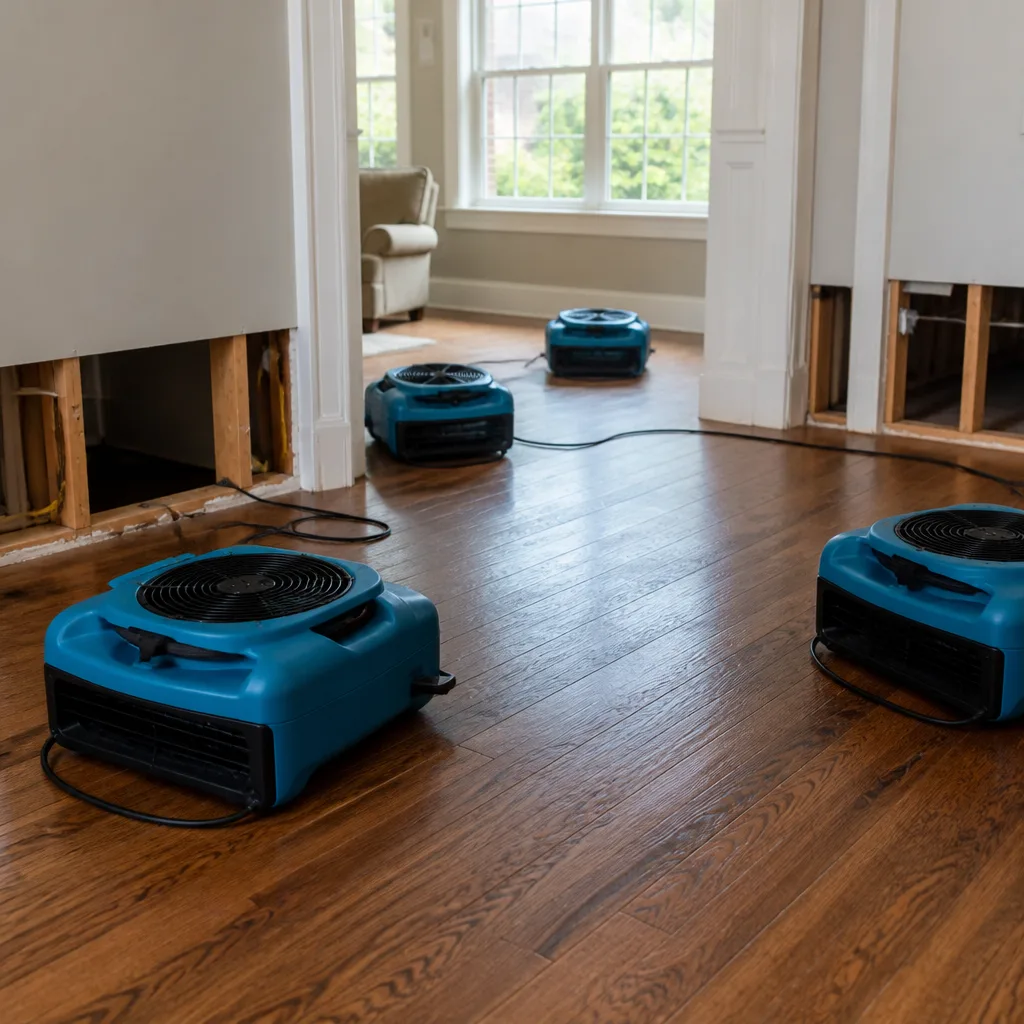
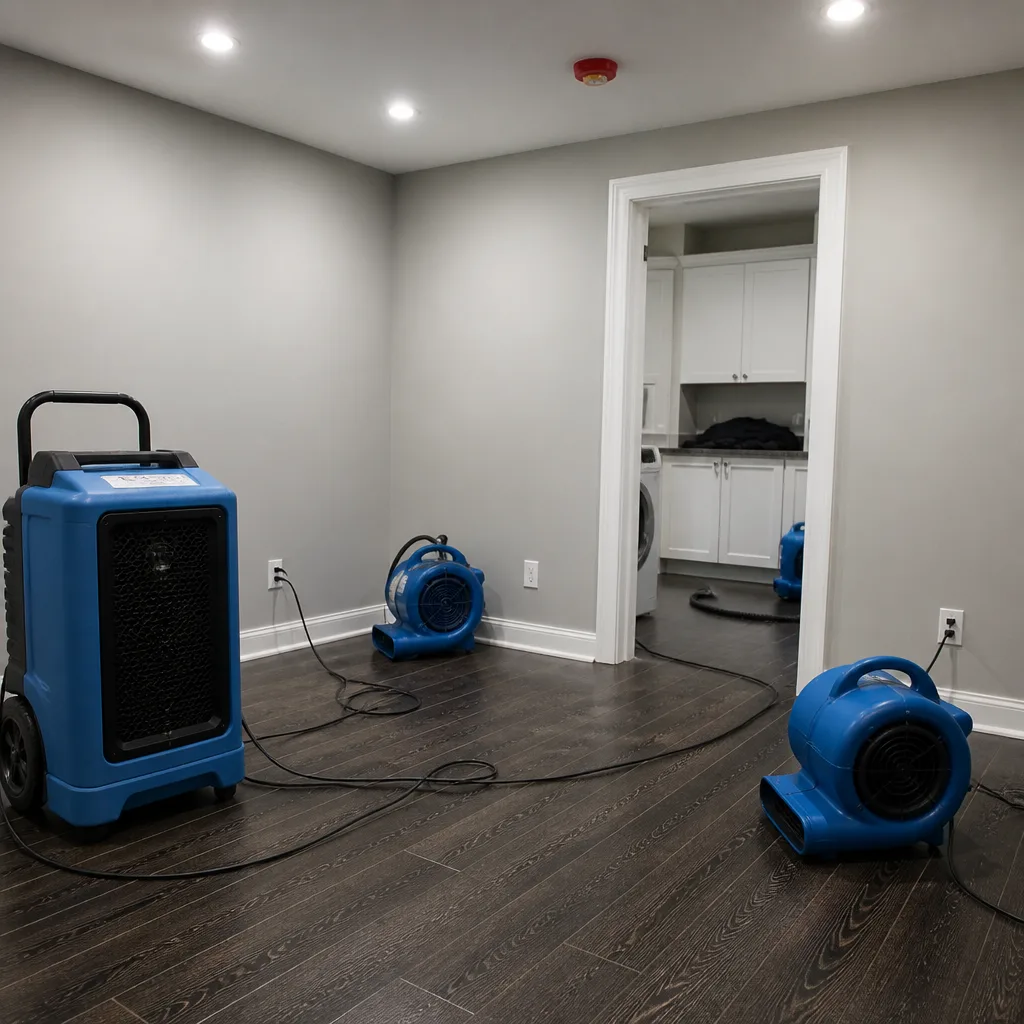
Professional-grade air movers and desiccant dehumidifiers run around the clock. Daily moisture readings are logged until slab and wall readings drop below the dry standard, which in Kearny’s saturated fill sections often takes longer than standard projections.
Cleaning & Sanitization
Category 3 jobs receive full containment, HEPA air scrubbing, and antimicrobial treatment. Salvageable inventory gets packed out, cleaned, and inventoried. What cannot be cleaned safely is disposed of under biohazard protocol.
Specialty Commercial Treatment
Retail fixtures, office partitions, inventory, and business records each need different handling. We run document recovery, electronics evaluation, and specialized drying for hardwood, tile over slab, and wall systems common in Kearny’s older commercial buildings.
Repairs & Restoration
The same crew rebuilds what needs rebuilding: drywall, flooring, millwork, paint. We hand you a moisture log, a completed scope, and our 90-Day Done Right Promise. Done right, and backed in writing.
Need Emergency Commercial Restoration in Kearny Now?
Crews minutes away, answering live 24 hours a day. The sooner we start, the less it costs.
Working With Your Insurance Company
Commercial claims in Kearny get complicated when sewer backups and flood events overlap. Your carrier may classify a loss one way on the phone, then revise it once our documentation shows what actually happened. We create that trail from the first hour: photos of standing water, sewer cleanout inspection notes, moisture readings, and a line-item scope that uses industry-standard pricing. We communicate directly with your adjuster, send documentation the same day it’s generated, and push back when a scope understates the actual work. You focus on your business. We handle the claim.
What We Provide Your Insurer
- Thorough documentation of the loss
- Photos of all damage, room by room
- Moisture readings and drying logs
- A detailed, line-item scope of work
- Direct coordination with your carrier
Built for Kearny’s Loss Calendar
Kearny’s commercial losses follow a rhythm, and so do we. January and February bring deep freezes that burst supply lines in unheated back rooms and basement sprinkler risers along Bergen Avenue and Kearny Avenue storefronts. Spring thaw pushes groundwater into foundations already wicking moisture from the high water table in the filled Meadowlands sections, and basement seepage becomes a standing problem through April. Summer thunderstorms overwhelm the combined sewer system in under an hour, sending Category 3 water through floor drains in low-lying retail blocks east of Kearny Avenue. Autumn nor’easters bring both wind and water, with the Passaic River acting as a persistent threat to commercial buildings on the western edge of town. Superstorm Sandy and Hurricane Ida both proved that even moderate storms produce months of Storm & Disaster Restoration in Kearny in this town. The calendar does not surprise us. We plan for it.
Commercial Restoration Across Kearny’s Neighborhoods
Kearny’s commercial landscape stretches thin and varied, and each corridor has its own loss pattern. Along Kearny Avenue, the town’s main commercial spine, we respond mostly to older two- and three-story mixed-use buildings where a storefront sits above a full basement and a residential tenant lives above. Water in the basement means a business interruption downstairs and a displaced family upstairs, so speed and coordination matter double. In the blocks east of Kearny Avenue toward the old Meadowlands fill, soil stays saturated year-round, and foundation bleeding is the recurring call. South Kearny’s industrial edge near the Passaic River sees different damage entirely: flooding meets heavy equipment, bulk inventory, and loading docks, and restoration has to work around operational schedules. Around Bergen Avenue and the side streets that feed it, dense storefront rows with shared party walls mean one building’s fire or water event becomes a neighbor’s smoke migration or wicking moisture problem within hours. We know the streets, the building types, and what a loss usually looks like before we walk in.
Specialized Commercial Restoration Services We Offer in Kearny
Office & Retail Restoration
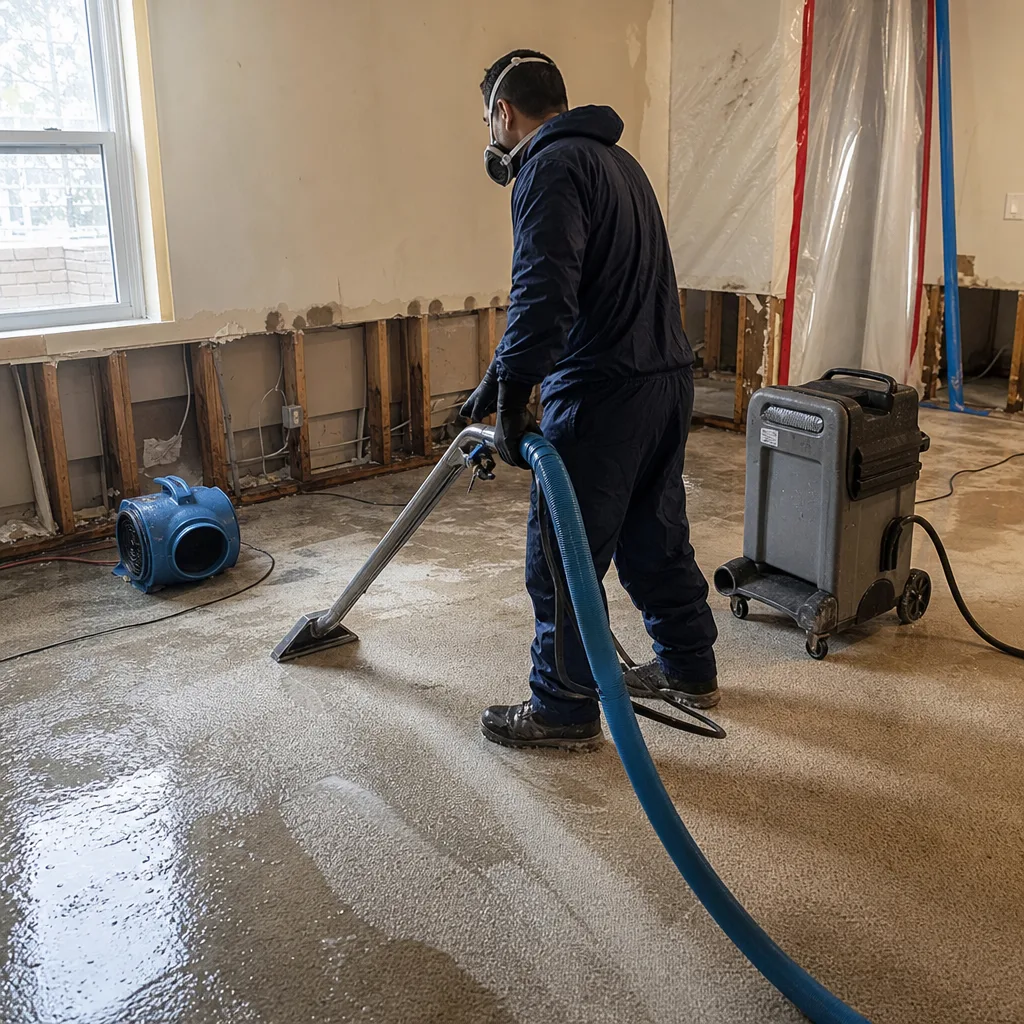
A flooded storefront on Kearny Avenue is not just water damage. It is lost sales hours, damaged inventory, and a tenant who cannot open. We dry the structure, pack out sellable goods, clean what is recoverable, and rebuild the space so you can get the doors back open. For office spaces, we address water migration into wall cavities and under raised flooring systems common in converted older buildings, and we coordinate work around your business hours where possible.
Business Interruption Minimization
Every hour a Kearny business stays closed costs real money. Our 24/7 dispatch and rapid response are built exactly for this. Crews arrive fast, start extraction immediately, and set up containment so undamaged portions of your building can stay operational during remediation. We document everything for your business interruption claim, including dates, hours, and the scope of what had to close and when.
Industrial Facility Cleanup
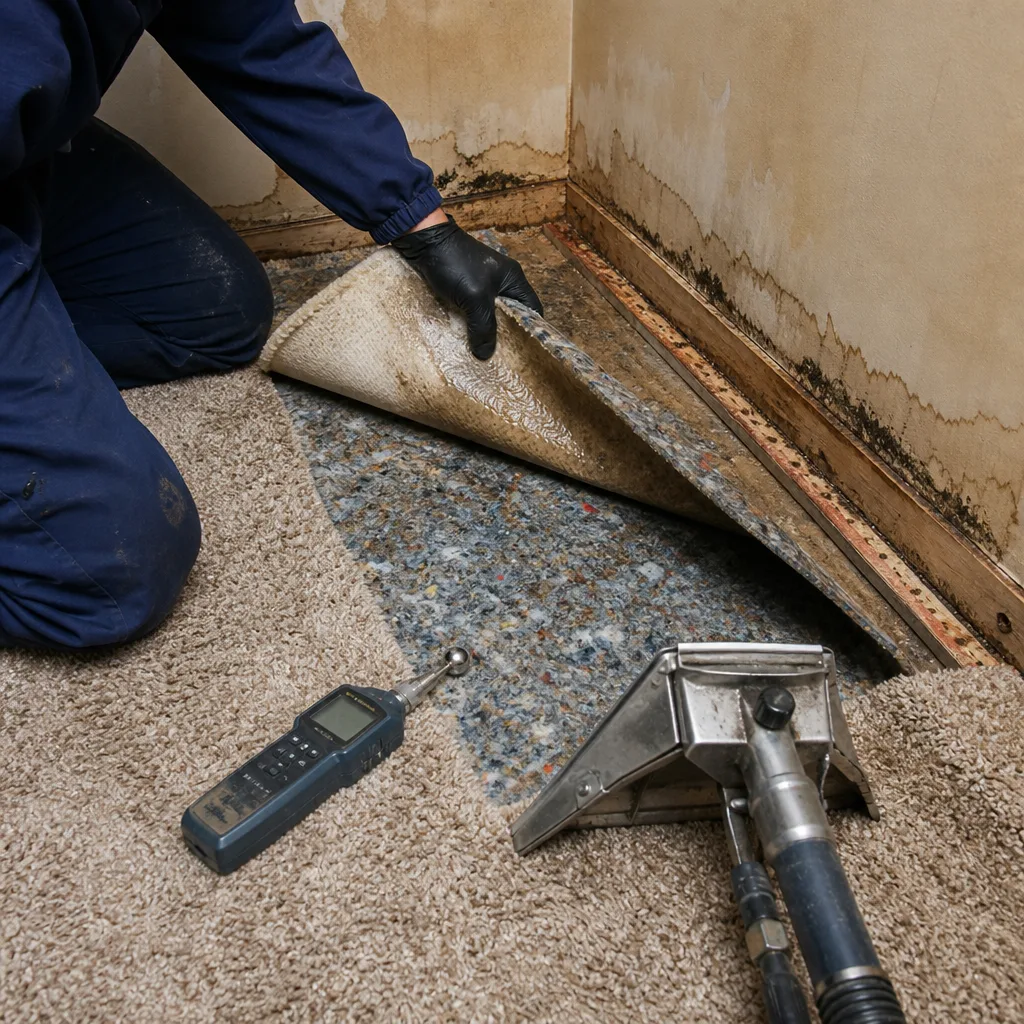
South Kearny’s industrial buildings and warehouses need a different approach: larger extraction capacity, freight-elevator access for equipment, coordination with facility managers, and a real plan for battery charging and equipment staging. We run larger desiccant units, longer drying runs, and staged containment for occupied sections. The goal is keeping your operation moving while we dry the part that flooded.
Large-Loss Response
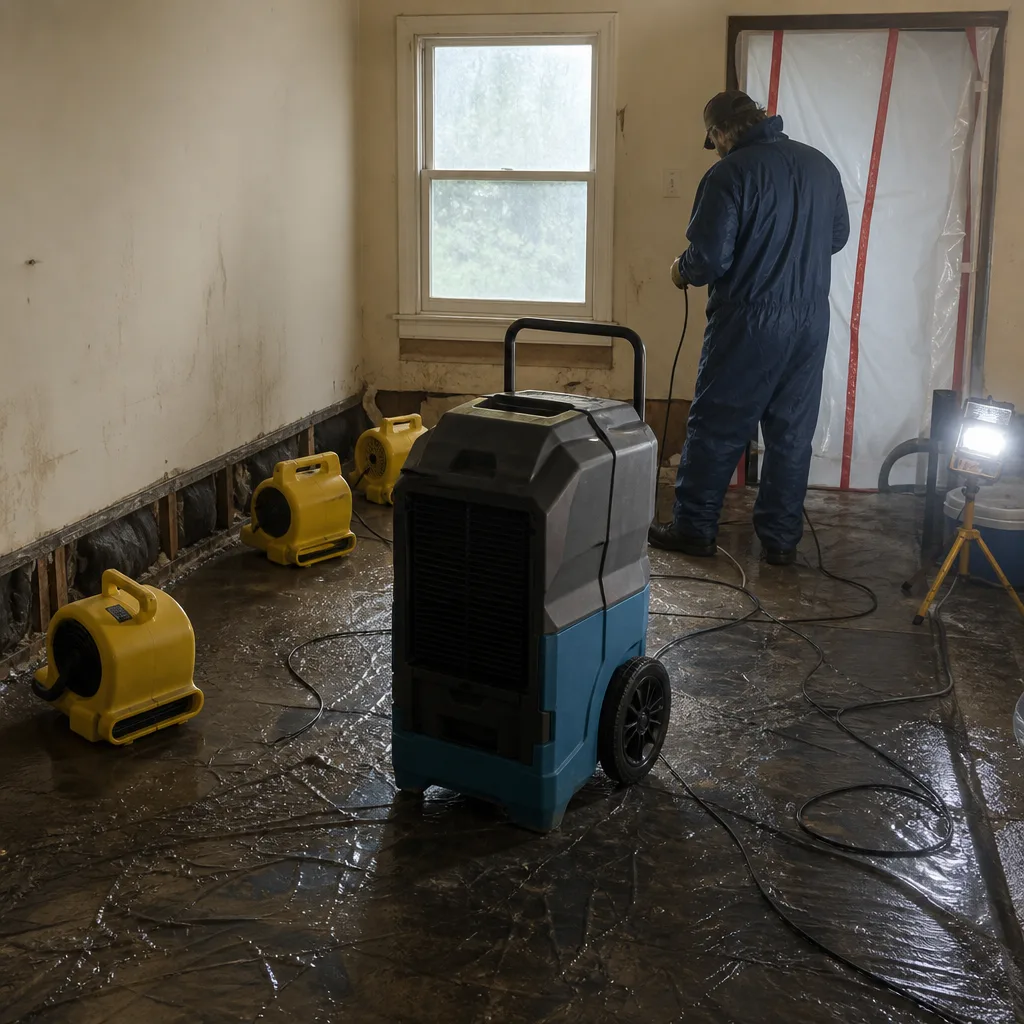
When a storm or a broken main hits an entire building or a row of storefronts, the scope changes. Floodline Restoration Co. brings multiple crews, staged equipment, and a single point of contact who runs the whole job. We handle the insurance paperwork, the drying logs, the disposal, and the reconstruction, and we do it without splitting the job between three different companies. That is how we built our Commercial Restoration reputation over 42 years in the trade.
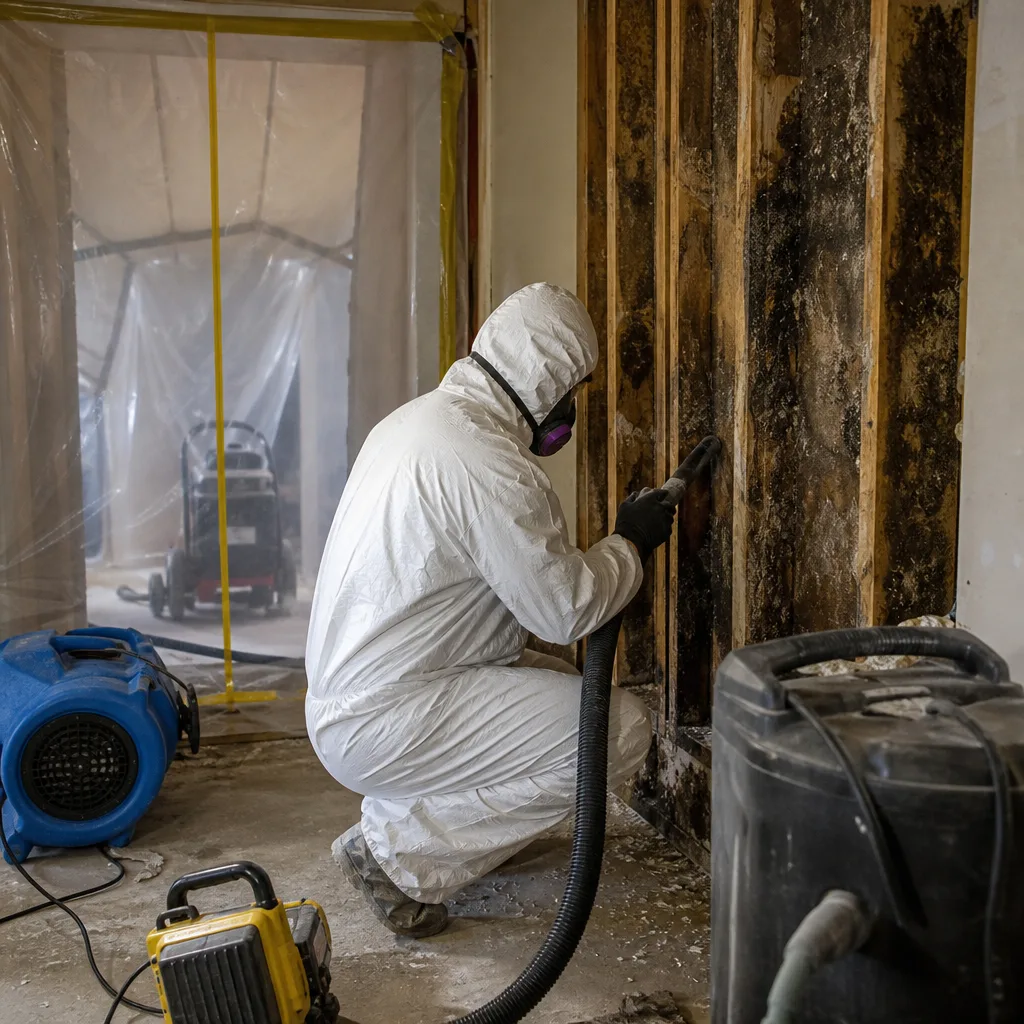
Multi-Unit & HOA Restoration
Condominium buildings and apartment complexes in Kearny carry a special burden: one water event affects multiple units, shared mechanical rooms, and the building envelope itself. We work with property managers and HOAs on scoping, scheduling, and communication, and we document per-unit damage so claims stay clean. Our crews handle the common areas, the affected units, and the rebuild without bouncing between subcontractors.
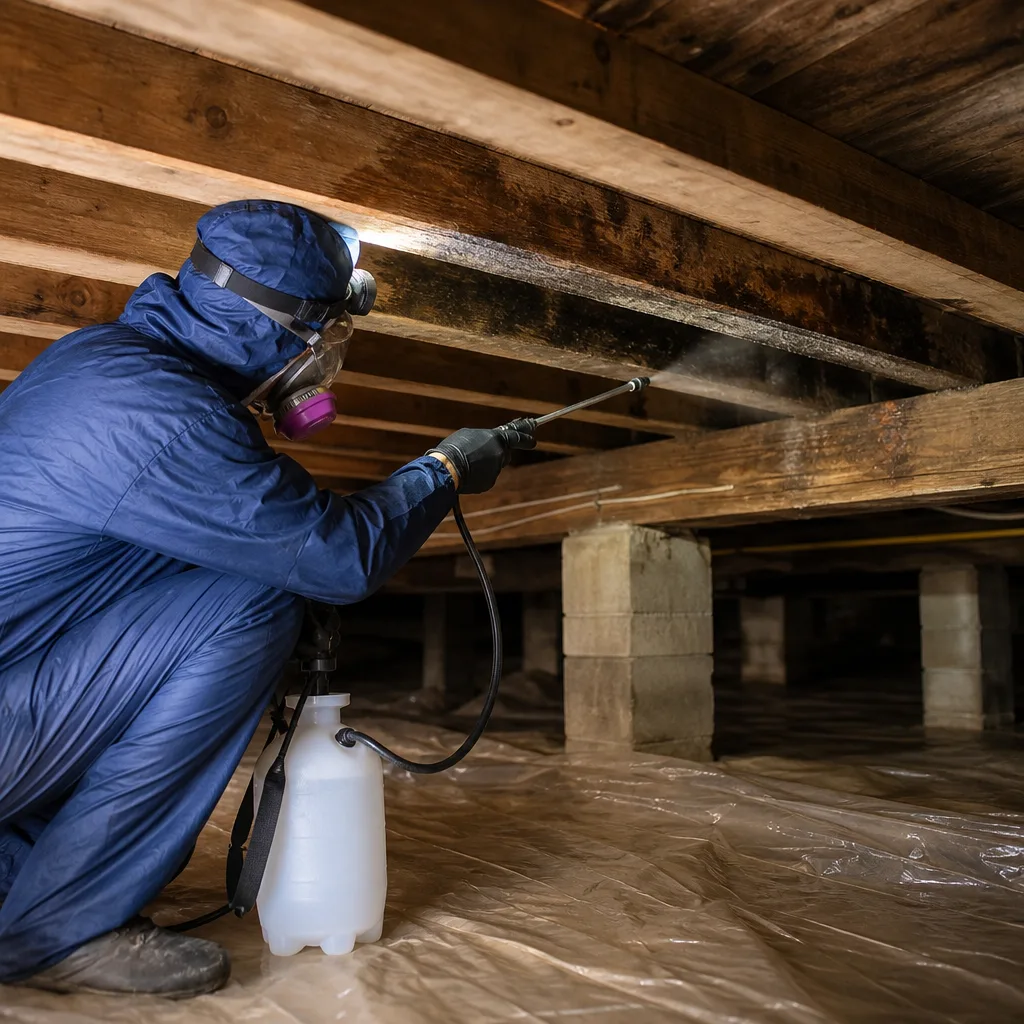
What happens when you call
- 1
A real person answersNo phone trees - you reach a local pro.
- 2
You get an upfront price rangeHonest numbers before anyone is dispatched.
- 3
A background-checked tech heads outLicensed & insured, dispatched right away.
- 4
You approve before work beginsNothing starts until you say go.
Commercial Restoration Costs in Kearny, NJ
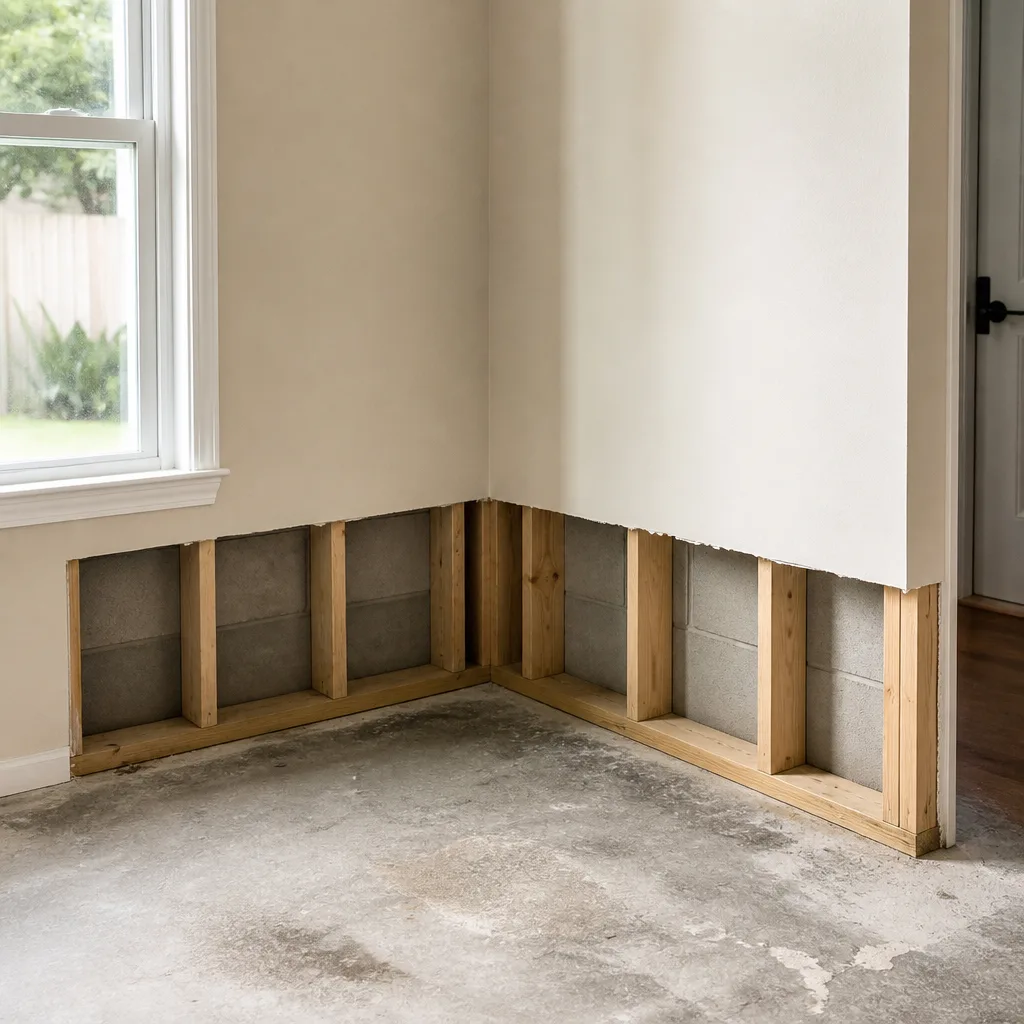
What you pay for commercial restoration in Kearny depends on water category, square footage, and what materials were damaged, but honest ranges help you plan. A small Category 1 clean-water dry-out in a single storefront or office typically runs $1,800 to $4,500. A Category 3 sewer backup in a basement or ground-floor commercial space, with containment, antimicrobial treatment, and pack-out of inventory, commonly lands between $6,000 and $18,000. A full commercial flood cut-and-rebuild, where drywall is removed to four feet, floors replaced, and the space reconstructed, often runs $25,000 to $80,000 depending on size and finishes. The fastest way to a firm number is a free inspection, which costs you nothing and puts a written scope in your hands before any work starts. Call (551) 373-5246 and we will walk the space with you.
We Also Serve Cities Near Kearny
Our crews work throughout the Kearny area, including Kearny itself, plus Harrison, North Arlington, Lyndhurst, and Secaucus. If your building is within ten minutes of Kearny Avenue, we are already close.
Serving Kearny, NJ - Our Local Coverage Area
We’re based in the Kearny area and know this community well. Use the map below to see our service coverage - if you’re nearby, we can almost certainly help.
Kearny Commercial Restoration Questions, Answered
Why does a sewer backup in a Kearny commercial basement automatically jump to Category 3 when the building next door in Harrison would treat the same water as Category 2?
Kearny’s combined storm/sanitary sewer system means rainwater and raw sewage share the same pipes. When the system surcharges during heavy rain, what comes up through a floor drain is Category 3, grossly contaminated, no matter what it looks like. Harrison and North Arlington sit on separate systems in many sections, so the identical water event stays Category 2. The category controls everything: containment, antimicrobial treatment, disposal, and insurance. In Kearny, if the sewer cleanout shows backup, we treat it as Category 3 immediately. That is the correct IICRC protocol, and it protects your staff, your inventory, and your claim. Call (551) 373-5246 and we will inspect it properly.
Our storefront on Kearny Avenue has water in the basement every time it rains for more than an hour. Can we just hire a mitigation tech after each event, or do we need a different commercial restoration approach?
If your basement floods on a repeat schedule, you need both: immediate mitigation for this event and a real assessment of why it keeps happening. Floodline Restoration Co. will extract and dry the current loss, then document what we find at the sewer cleanout and foundation walls. In many Kearny buildings, the fix is a backwater valve on the sewer line, a sump pump upgrade, or regrading at the foundation. We handle the restoration first, then give you a straight answer on prevention, with written scopes for both. One crew, two problems solved. Call us at (551) 373-5246.
How long can a small commercial space off Bergen Avenue stay closed after a flood before mold growth forces us to throw away inventory and drywall?
Mold Remediation - Kearny experts know mold can begin colonizing wet drywall and porous inventory within 24 to 72 hours in a warm building. In Kearny’s older commercial spaces, the high ambient humidity and saturated fill under the slab shorten that window. You have roughly 48 hours to get professional drying started before you start losing materials that could have been saved. If you call us the same day water appears, we can usually protect most of what is there. Waiting five days almost always means a cut-out and disposal scope. The free inspection call is (551) 373-5246.
Do commercial restoration techs in Kearny need to test for asbestos on every job, or only in old apartment buildings?
In Kearny’s commercial stock, which runs heavily to buildings from the 1890s through the 1940s, asbestos-containing floor tile, pipe insulation, and plaster are common. Any demolition that will disturb those materials legally requires testing and, if positive, abatement before we cut. Our crews are trained to spot suspect materials early. We stop, test, and coordinate abatement rather than create a larger problem and a job shutdown. The rule is simple: if we are cutting into a pre-1980 building, we check first. That is not a delay; that is doing it right.
Our restaurant near the Passaic River got flooded by Ida. The insurance adjuster called it a Category 1 loss, but our kitchen floor drains backed up sewage two hours later. Which category controls the restoration scope?
The higher category always controls. If any portion of the affected area contains Category 3 water, the entire connected area is treated as Category 3. That means containment, antimicrobial treatment, disposal of porous food-contact surfaces, and full documentation of the backup. Your adjuster’s first phone call does not change what our moisture readings and cleanout inspection show. We document the backup with photos and notes, then handle the claim directly with your carrier. And we stand behind the work with our 90-Day Done Right Promise.
How fast can a commercial restoration crew actually reach our building in Kearny?
We answer live, 24 hours a day, and dispatch toward Kearny immediately. In most cases, a crew reaches a building on Kearny Avenue, Bergen Avenue, or the surrounding blocks within 45 minutes to an hour of your call. That is part of how we kept our Commercial Restoration team the one property owners call first. For a business watching water rise, that first hour is the difference between drying in place and a full cut-out.
Is commercial restoration in Kearny more expensive than in nearby towns like Harrison or Secaucus?
Slightly, and for reasons specific to this town. Kearny’s combined sewer system elevates more jobs to Category 3, which requires containment, antimicrobial treatment, and more disposal. The saturated fill under the eastern sections also extends drying timelines, meaning equipment runs longer. A Category 3 basement job in Kearny might run 15 to 25 percent higher than an otherwise identical Category 2 job in Harrison, entirely because of the sewer and soil conditions here. We give you a written scope before work begins, so you know the number upfront.
What should we do in the first 30 minutes after water appears in our Kearny commercial building?
Shut off power to the affected area if you can do so safely without walking through standing water. Do not enter standing water in a Kearny basement; if the sewer system has backed up, that water is contaminated. Call (551) 373-5246. A live person answers, and we walk you through what to check and what not to touch while the crew is on the way. If you know where the sewer cleanout is, leave it for us to inspect. Opening it yourself can release sewage gases into the building.
Written by Curt Bowman, Owner at Floodline Restoration Co., serving Kearny and surrounding Hudson County communities since 2010.