
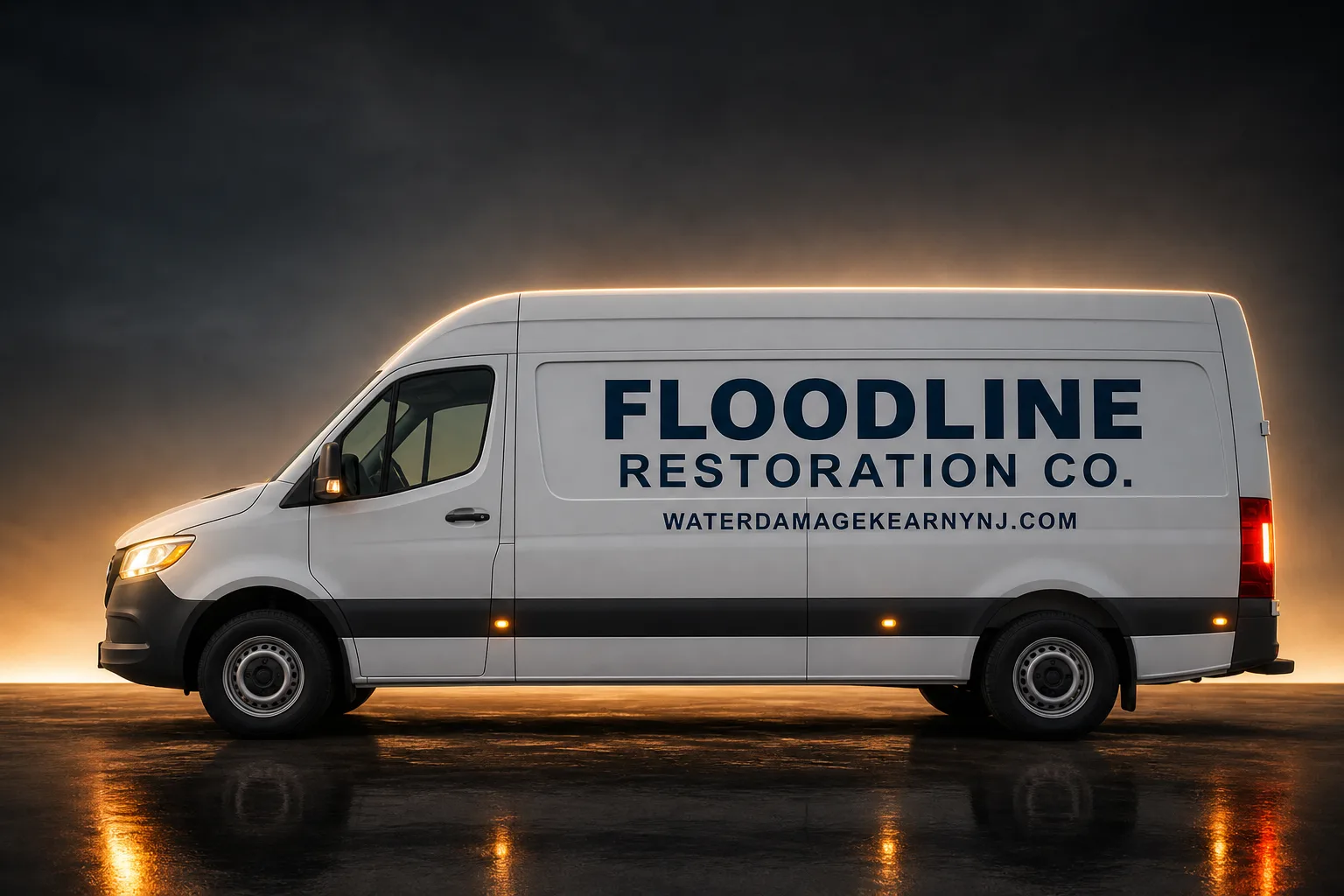
Free visual inspection and a written scope of work before any mitigation begins - photos, moisture readings, and drying logs go in your claim file
The scope we write is the scope we bill. Anything new gets shown to you, in writing, before we touch it.
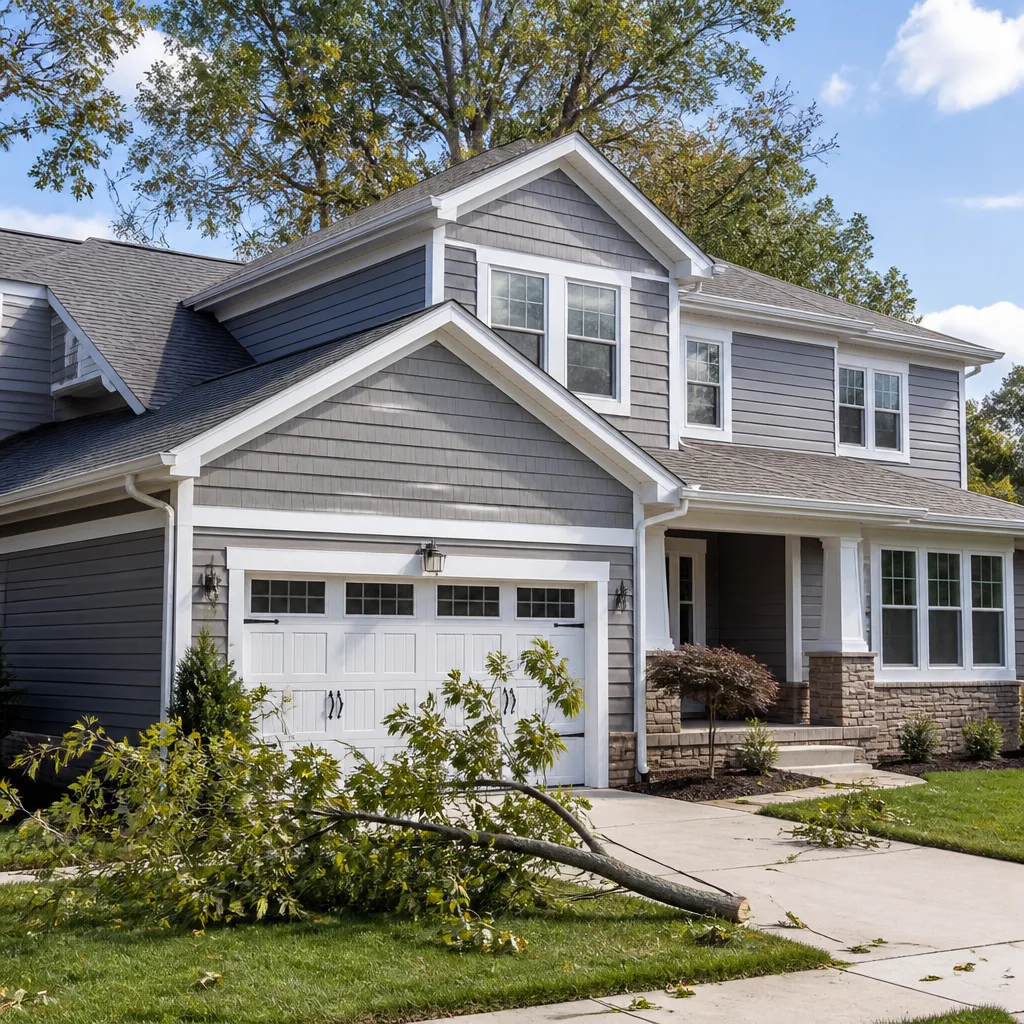
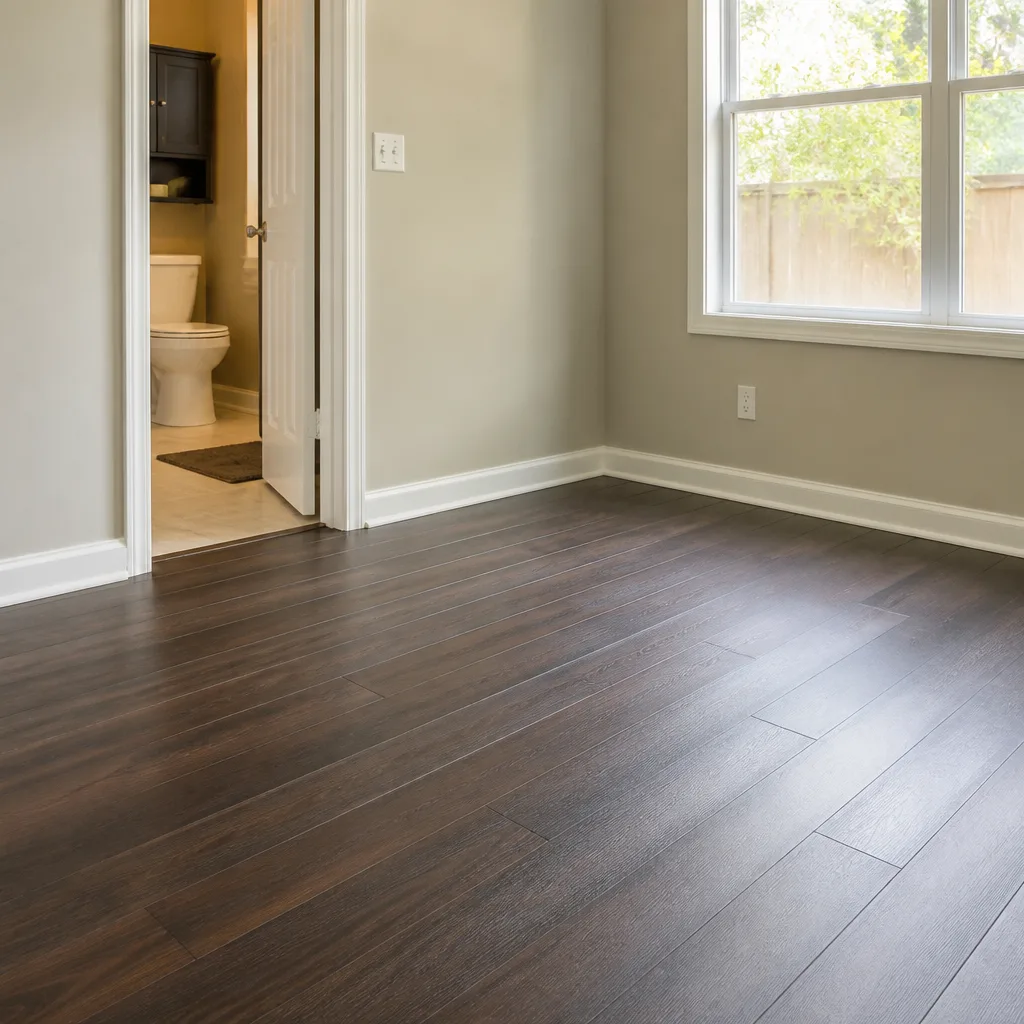
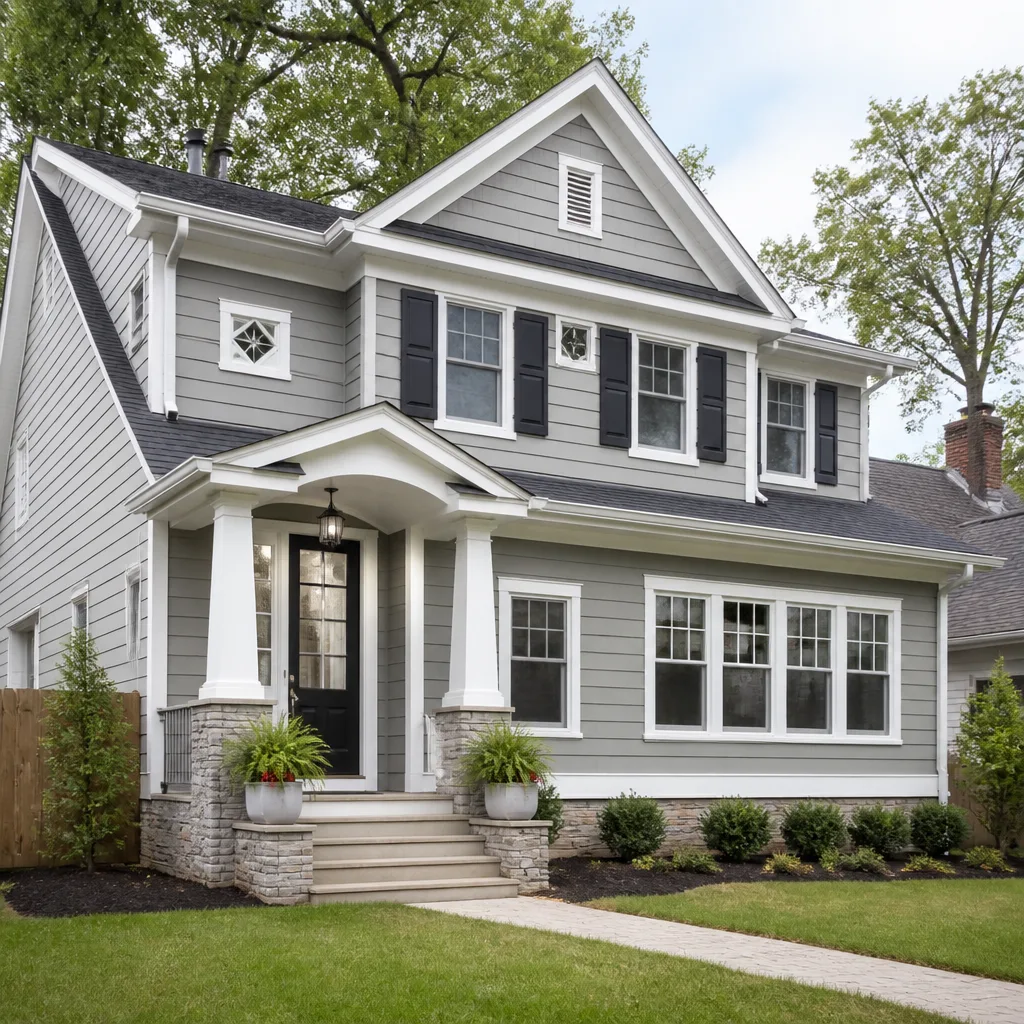
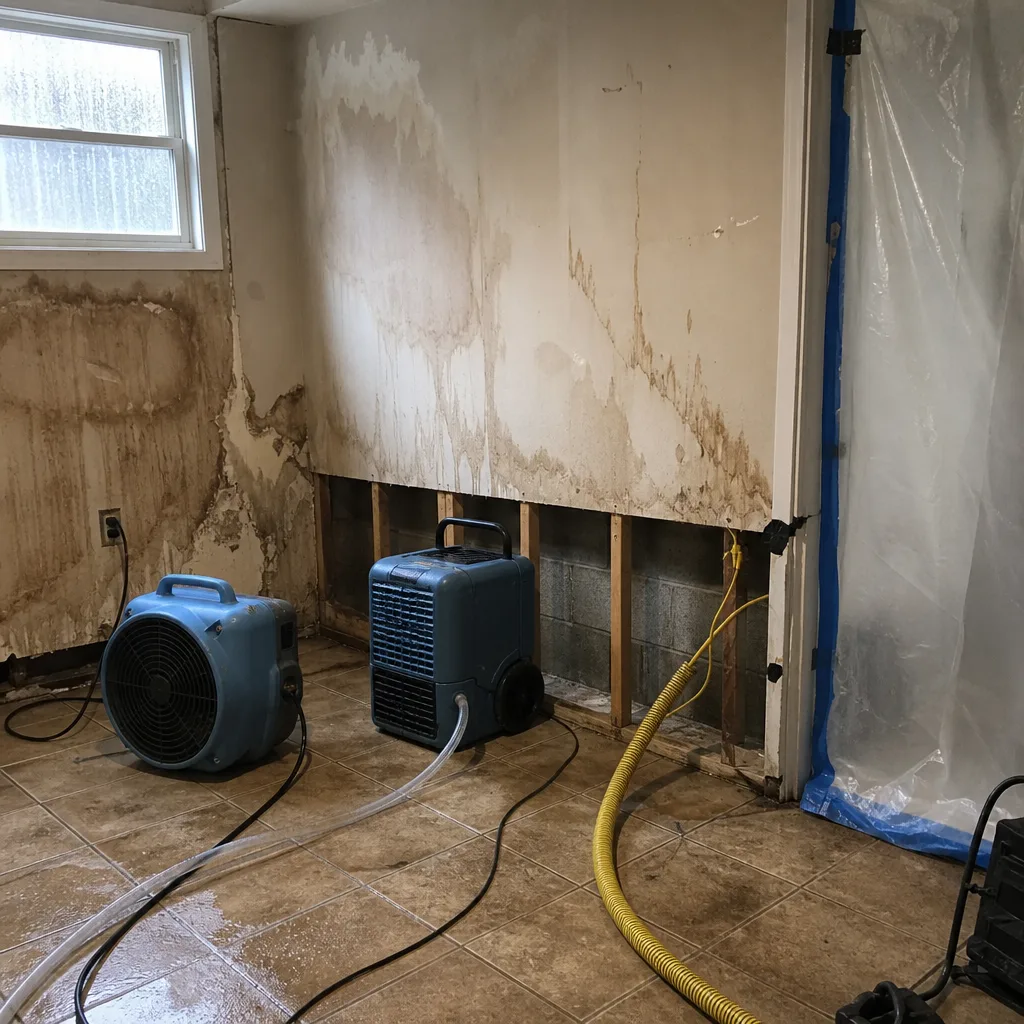 Before
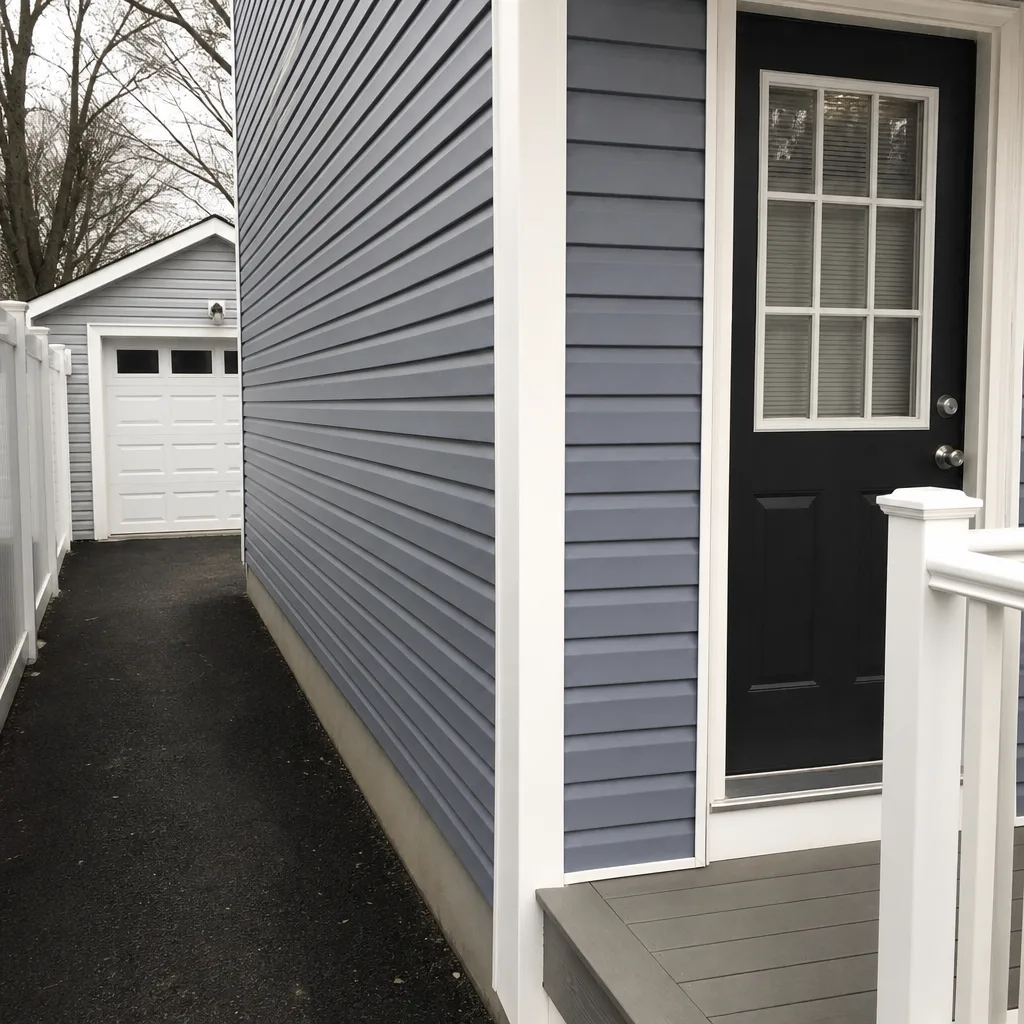 After
After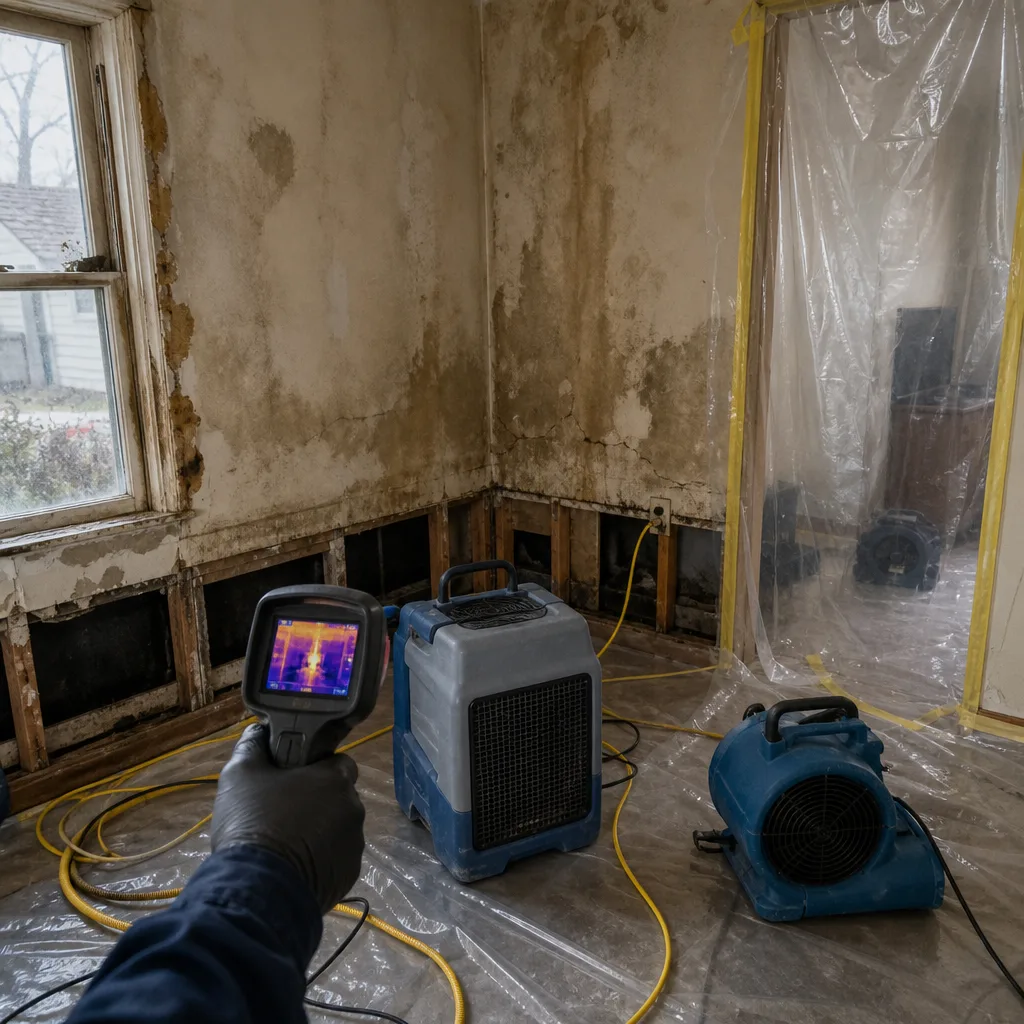 Before
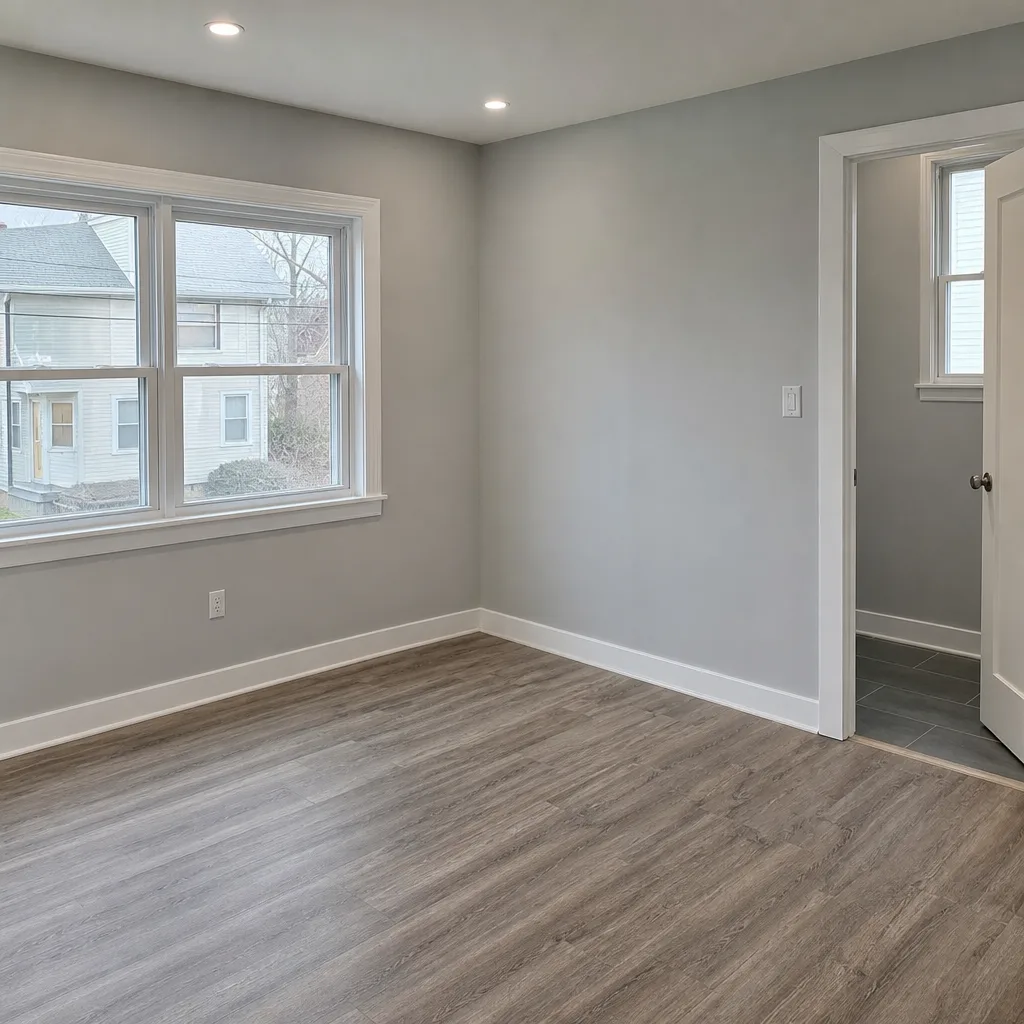 After
After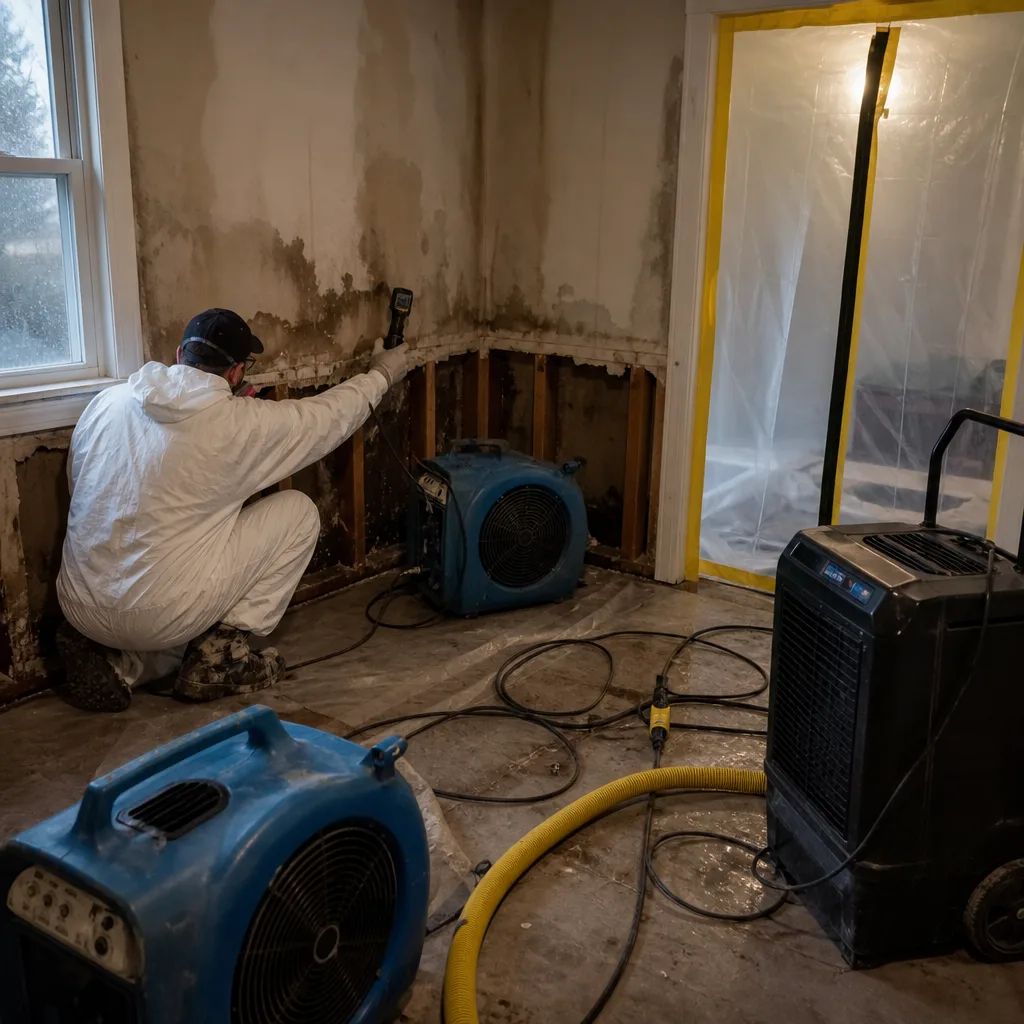 Before
 After
After24/7 Emergency Sewage Cleanup in West New York
When sewage backs up into a West New York apartment or business, every hour it sits means more contamination, more damage, and a harder restoration. We answer the phone live 24 hours a day, and our crews are dispatched inside the West New York area within minutes, not the next morning. A category 3 black water spill inside a pre-war walk-up or a River Road high-rise cannot wait until regular business hours. Call (551) 373-5246 the moment you see or smell sewage, and a certified crew arrives fast to start extraction the same visit, before contaminants soak any deeper into floors, walls, or the units below.
Understanding Sewage Cleanup Severity in West New York Properties
Sewage is classified as Category 3 water, the most hazardous of the three water categories recognized by the restoration industry. Category 1 is clean water from a supply line or faucet. Category 2, often called gray water, carries some contamination from washing machines or dishwashers. Category 3 is grossly contaminated water containing human waste, bacteria, viruses, and pathogens that can cause serious illness. In West New York’s stacked, pre-WWII walk-ups, Category 3 water does not stay in one unit. Cast-iron soil stacks run through multiple floors without cleanouts, so a backup in one line can saturate ceilings and wall cavities on three or four floors before the ground-floor tenant notices a stain. Moisture mapping with thermal imaging and hygrometers tells us how far the contamination has actually traveled, not just where the visible water sits. That full vertical column of units above any reported leak must be assessed every time, because what looks like a small toilet overflow can be a building-wide sewage migration through shared masonry walls and ceiling chases.
Why West New York Property Owners Choose Floodline Restoration Co.
- 45-minute response commitment. We dispatch the moment you call, and because we stage crews to serve West New York specifically, the truck is usually at your door well within the hour, not the next day.
- A real person answers, always. No automated phone tree, no “leave a message after the tone.” At 2 a.m. during a sewage backup, you’ll speak to a live dispatcher who can send help immediately.
- IICRC-certified crews trained in WRT and AMRT. Sewage cleanup requires more than a mop and bleach. Our technicians hold certification in water damage restoration and applied microbial remediation, and they’re background-checked and uniformed.
- Free visual inspection. Before any work begins, we walk the affected area, explain what we’re seeing, and give you a clear picture of what needs to happen. No charge for the assessment.
- Direct insurance billing. We document everything from the first hour, communicate directly with your adjuster, and bill the carrier for covered losses. You never play messenger.
- One team from extraction to reconstruction. The same Floodline Restoration Co. crew that extracts the sewage, dries the structure, and sanitizes the space also rebuilds what was torn out. No mid-job handoff to an unknown subcontractor.
Our Sewage Cleanup Process
Inspection & Assessment
We start by locating the source of the backup and mapping the full extent of contamination. In West New York walk-ups, that means checking the units above and below, not just the room where water is visible. Thermal imaging and moisture meters tell us how far Category 3 water has migrated through ceilings, party walls, and chases.
Extraction & Stabilization
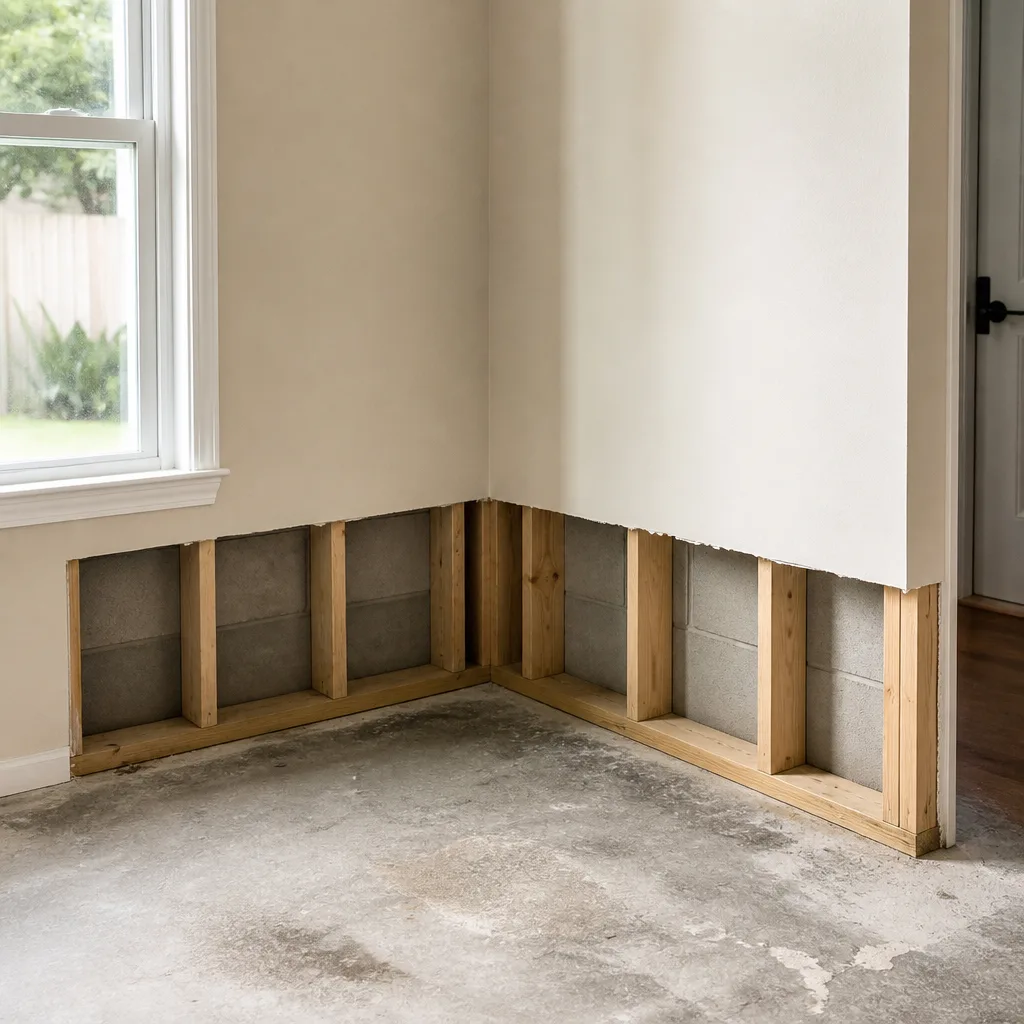
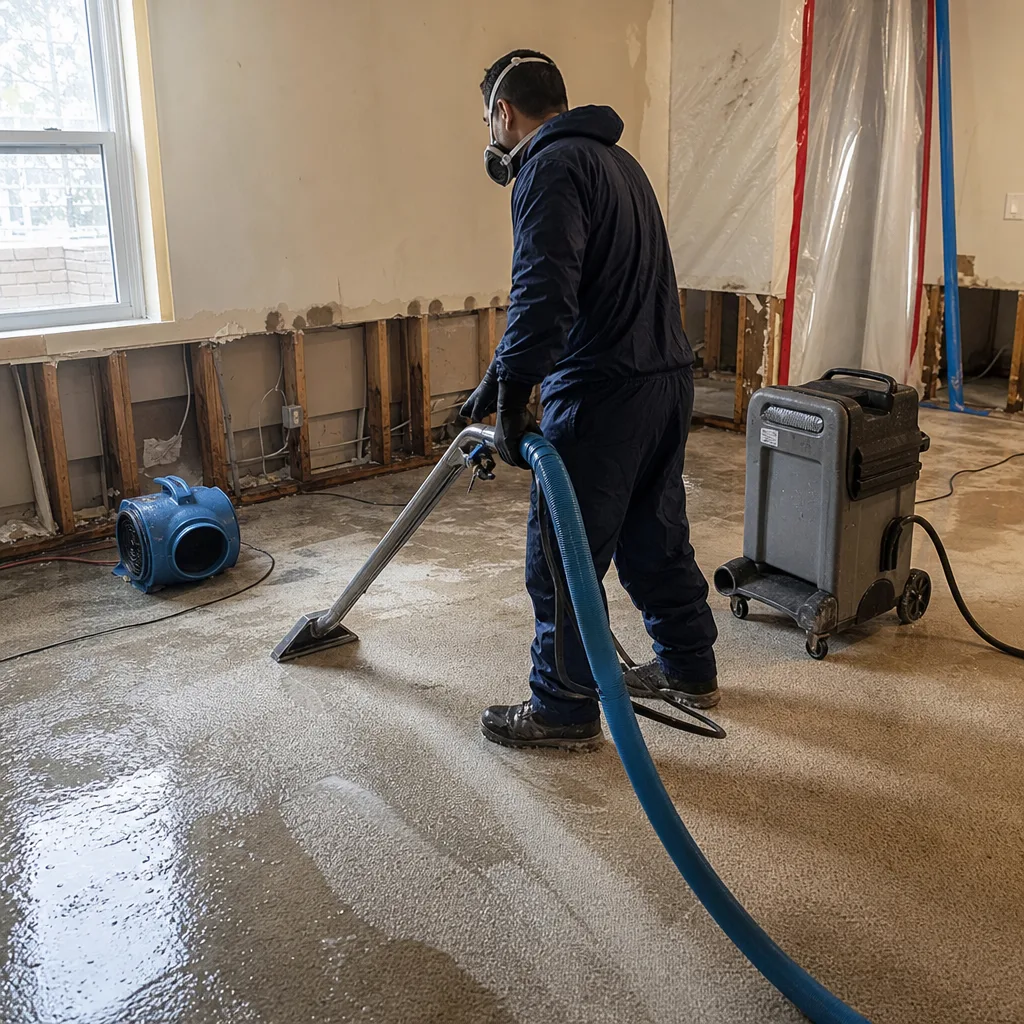
Using truck-mounted and portable extraction units, we remove standing sewage and contaminated water immediately. Contaminated materials like soaked drywall, carpet, and padding are cut away and bagged for disposal. Our goal is to stop the spread of contamination within the first hour of arrival.
Drying & Dehumidification
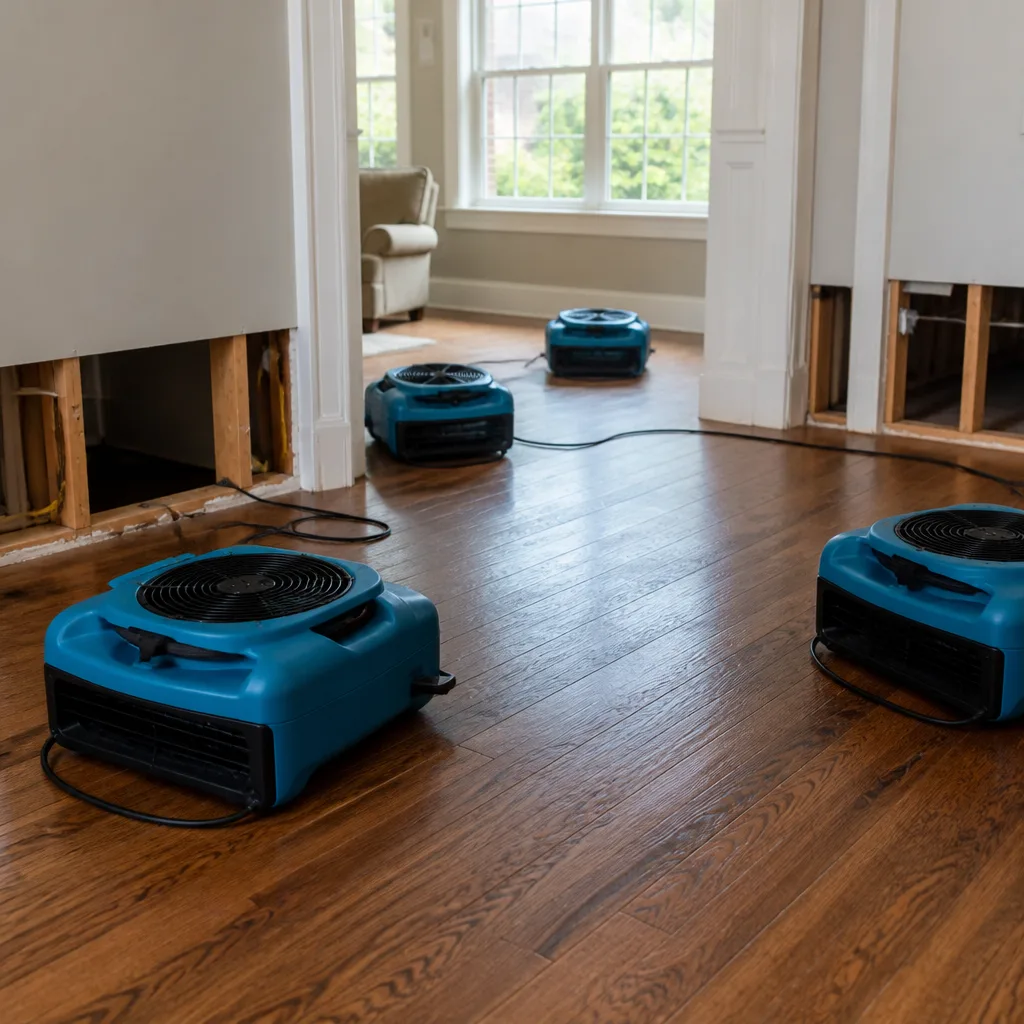
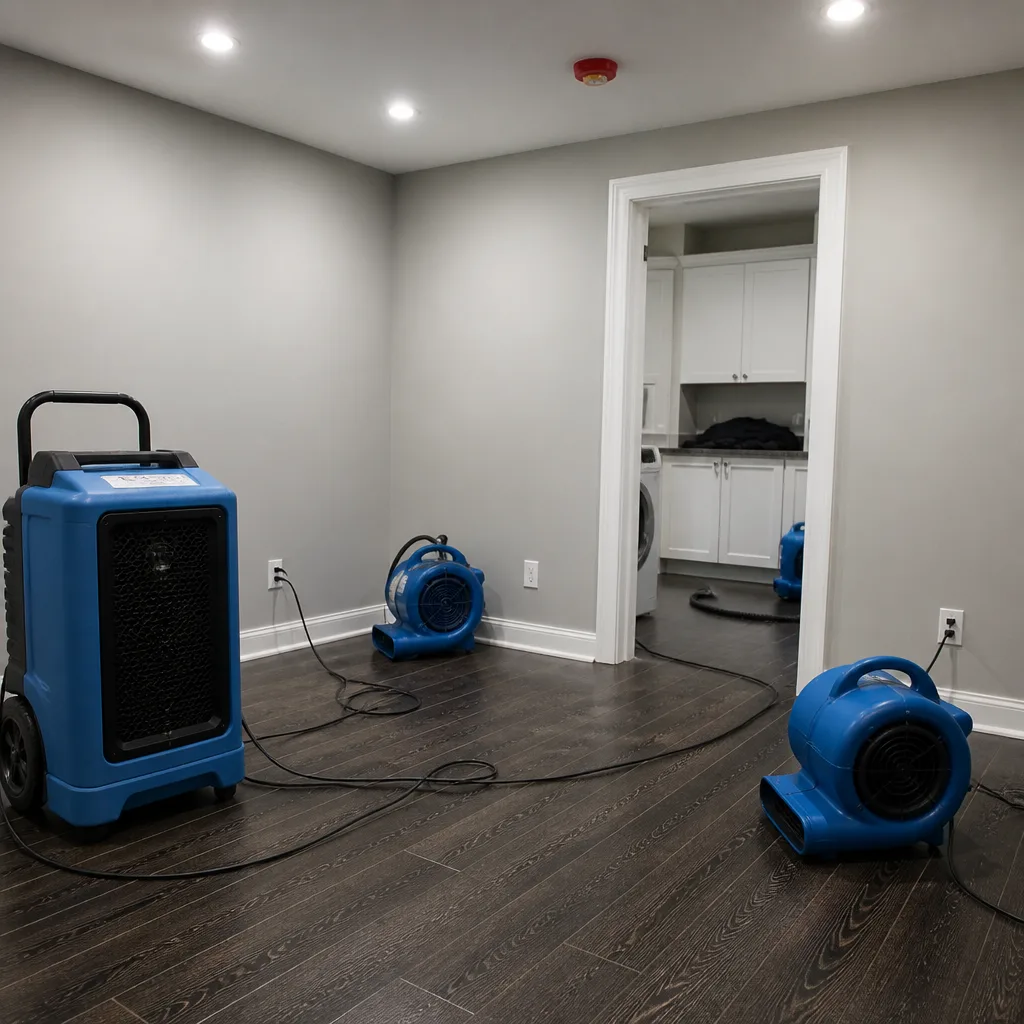
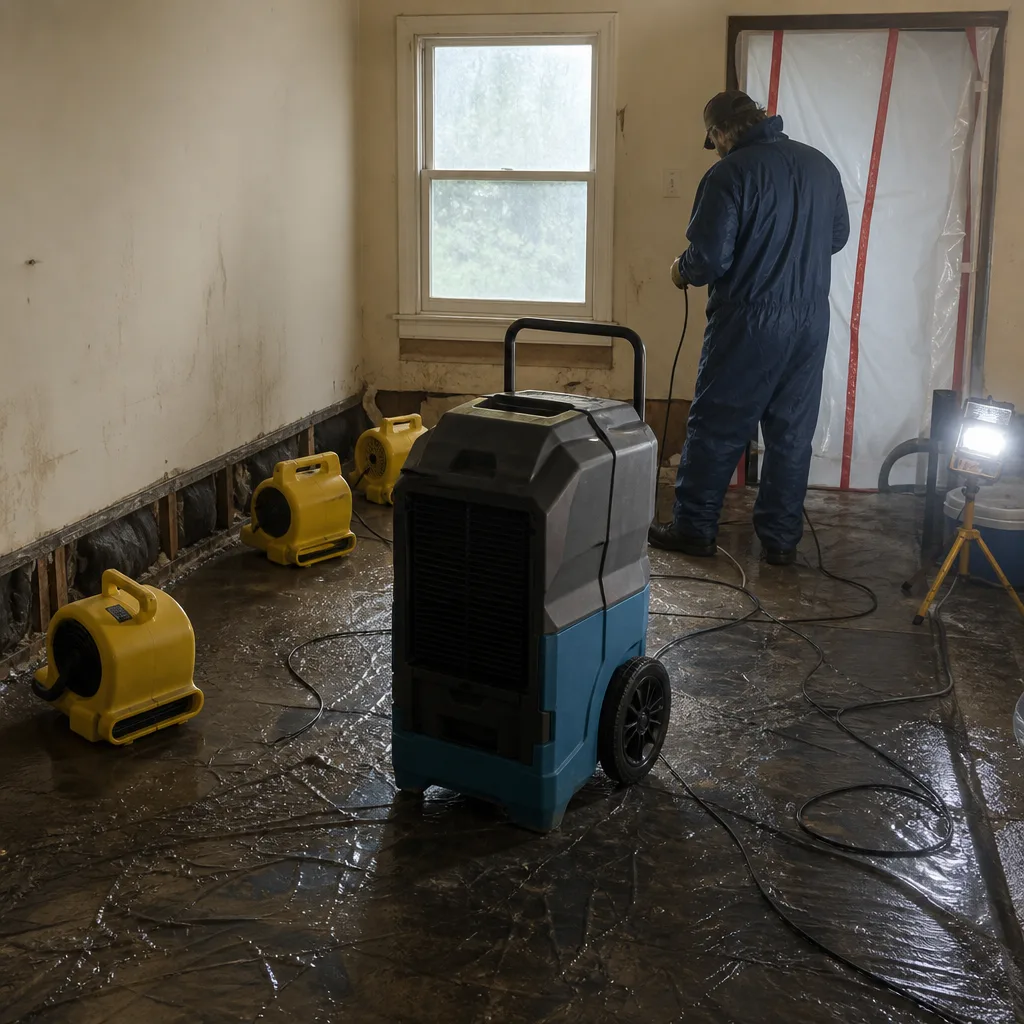
We place professional-grade dehumidifiers and high-velocity air movers to dry the structure to documented standards. Dri-Eaz and XPOWER equipment runs continuously, and we take daily moisture readings until the dry standard is met. That moisture log goes to you and your insurer.
Cleaning & Sanitization
Every affected surface is cleaned with professional-grade antimicrobials and sanitizers designed for Category 3 water. HEPA scrubbers run during the process to capture airborne contaminants and prevent cross-contamination to unaffected units.
Odor Removal & Containment
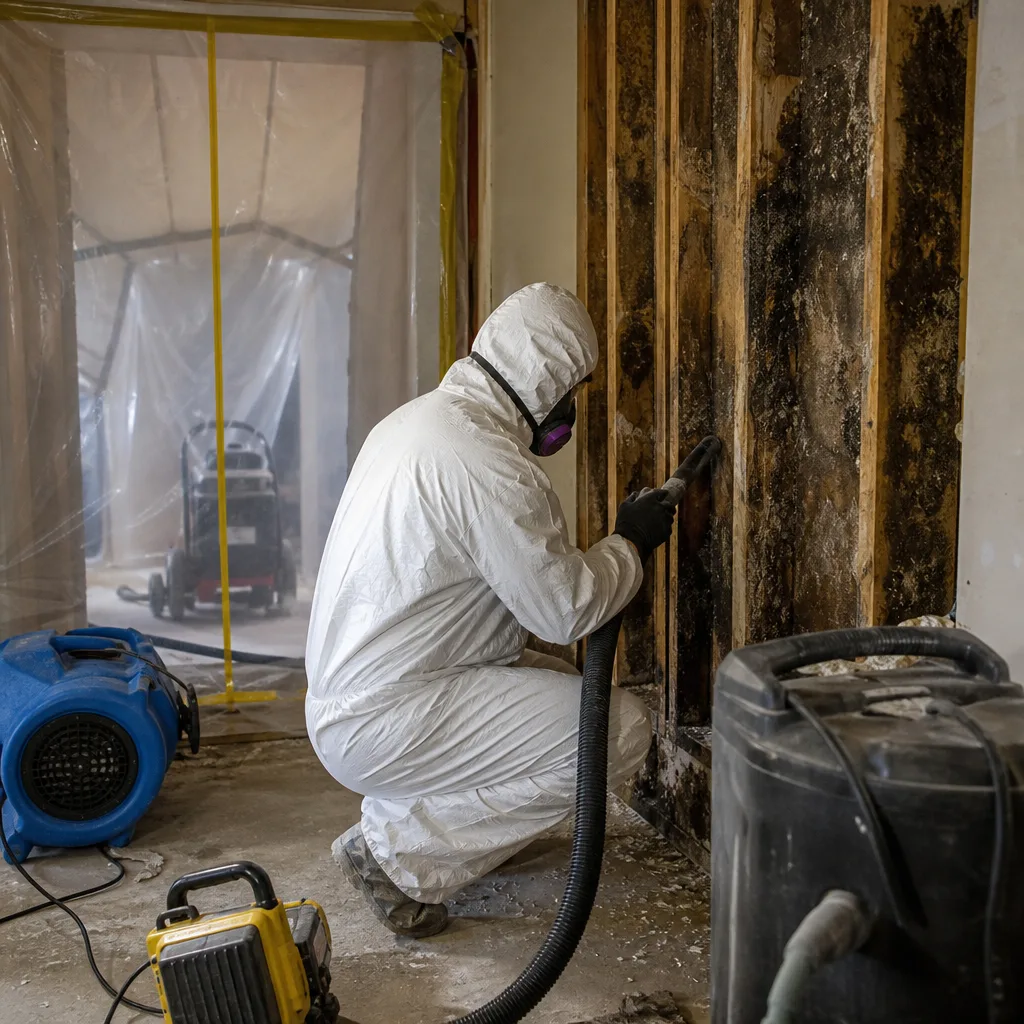
Sewage smells embed into porous materials and linger long after the water is gone. We set up containment barriers and negative air pressure to isolate affected areas, then use hydroxyl generators and thermal fogging to neutralize odors in wall cavities and building materials.
Repairs & Restoration
Once the space is dry, sanitized, and verified, we rebuild what was removed: drywall, flooring, trim, and cabinetry. Because the same Floodline Restoration Co. crew handles the rebuild, the work is what we call done right. Backed in writing by the 90-Day Done Right Promise.
Need Emergency Sewage Cleanup in West New York Now?
Crews minutes away, answering live 24 hours a day. The sooner we start, the less it costs.
Working With Your Insurance Company
Most homeowners and condo policies in West New York cover sudden and accidental sewage backups, but the claim goes smoothly when documentation starts the same hour the damage happens. We photograph every affected area before we move anything, record moisture readings room by room, and prepare a line-item scope of work using industry-standard pricing your adjuster recognizes. Our team communicates directly with your insurance carrier, providing the evidence they need to approve covered work without delay. For West New York apartment buildings where multiple units and multiple policies are involved, this documentation becomes even more important, because each affected tenant’s carrier may need separate loss details.
What We Provide Your Insurer
- Thorough documentation of the loss
- Photos of all damage, room by room
- Moisture readings and drying logs
- A detailed, line-item scope of work
- Direct coordination with your carrier
Built for West New York’s Loss Calendar
Sewage backups in West New York do not happen on a random schedule. They follow the town’s buildings, weather, and aging infrastructure. January and February bring deep freezes that crack and separate old cast-iron waste lines behind uninsulated masonry walls. When a frozen soil stack thaws, the result is often a slow sewage leak that runs through multiple floors before anyone sees it. Spring thaw and heavy March rains push groundwater into aging basement drains and overloaded municipal sewers, and in low-lying blocks near the Hudson River waterfront, storm surge and nor’easter flooding can force sewage back through floor drains in ground-floor units and basements. Summer thunderstorms overwhelm the older combined sewer lines that run beneath Bergenline Avenue, sending Category 3 water up through toilets and tubs on the lowest floors first. In fall, the shift from dry to wet weather causes the older cast-iron stacks to expand and contract, cracking at joints. West New York’s sewage cleanup season is effectively year-round, which is why we keep crews staged to respond in the middle of the night, not just during business hours.
Sewage Cleanup Across West New York’s Neighborhoods
Our crews know the difference between a pre-war walk-up off Bergenline Avenue and a high-rise tower on River Road, because the response is rarely the same. Around Bergenline Avenue, the commercial corridor, mixed-use buildings mean a sewage backup in a ground-floor shop can force water up through the apartments above, and we coordinate with both the business owner and the residential tenants at the same time. Bound in tight, narrow interior staircases with no freight elevator standard in these older buildings means our crews carry extraction equipment up five or six flights by hand, staging in hallways and on landings without blocking access for other residents. The area of town around 60th Street near the old high school and the residential blocks climbing the Palisades includes some of the oldest housing stock in West New York, with original cast-iron plumbing that has been patched and repitched over decades. Our crews serving this part of town expect to find lateral lines that have shifted and separated, which is often the true source of a repeat backup. Further south, near the Hudson River waterfront, the newer towers behind the floodwall along River Road require a different strategy entirely: large-loss protocols, freight elevator coordination, building management sign-offs, and mechanical room access to isolate the affected vertical riser.
Specialized Sewage Cleanup Services We Offer in West New York
Sewage Backup Cleanup
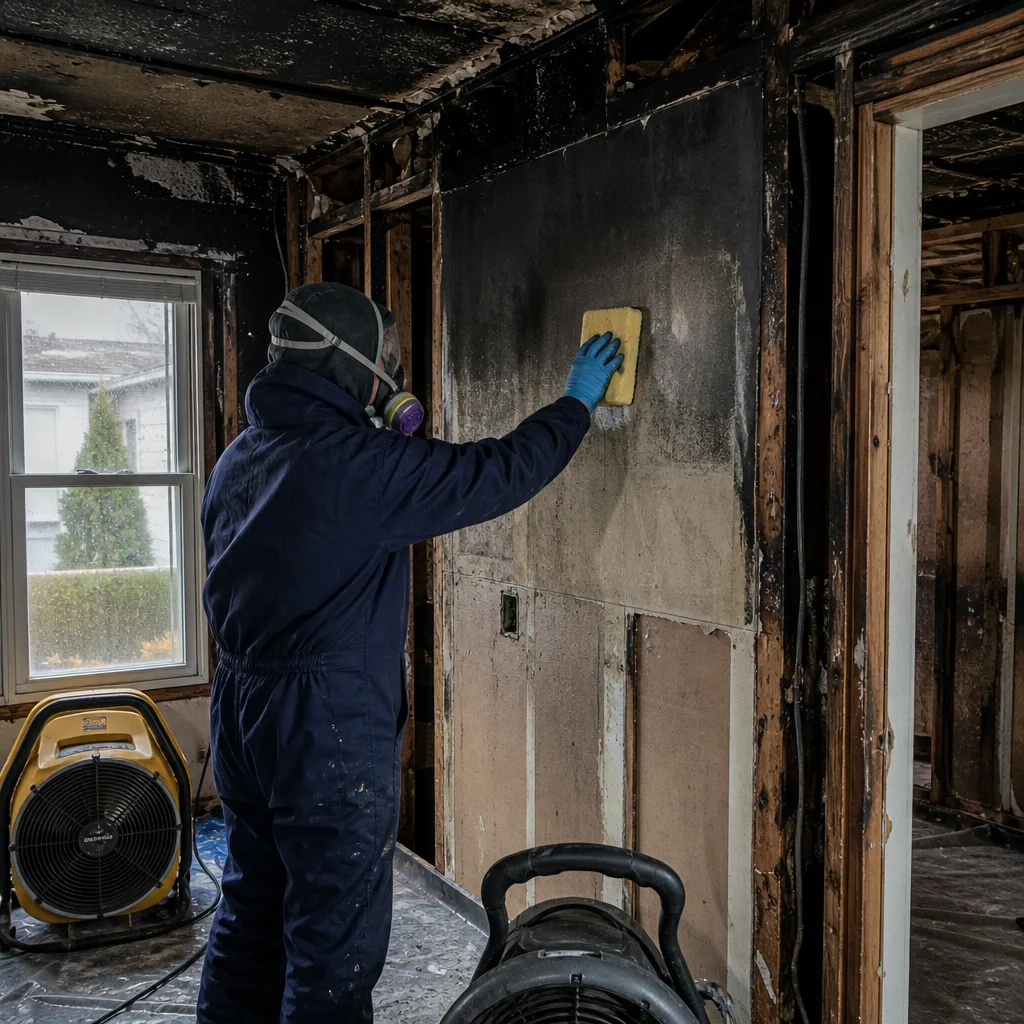
A sewage backup in West New York is rarely contained to one unit. Cast-iron soil stacks run vertically through entire buildings, and when one floor backs up, the water seeks the lowest point it can find. Our Sewage Cleanup team traces the full path of contamination, cuts out saturated materials, and sanitizes every affected surface. We do not just clean the bathroom where the overflow appeared; we check every unit below it.
Black Water Extraction
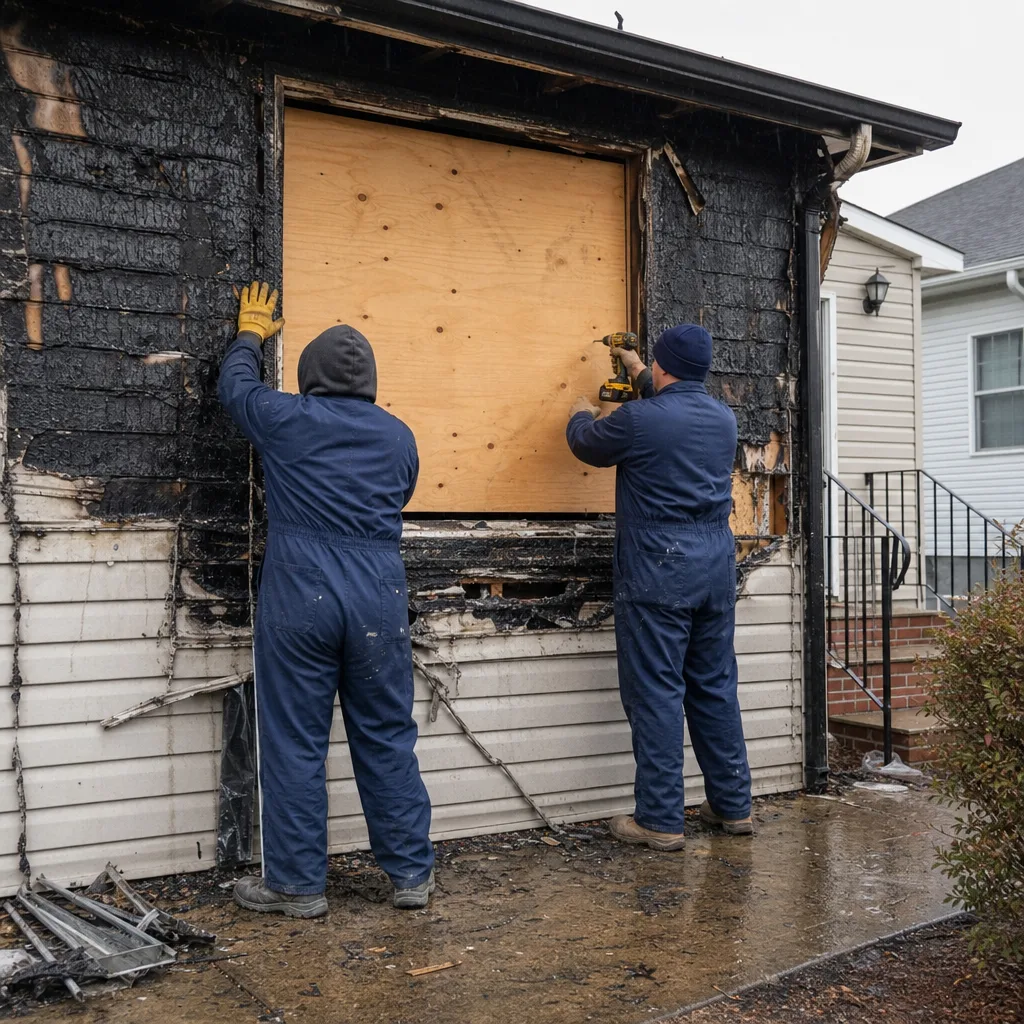
Category 3 black water carries pathogens that can cause hepatitis, E. coli infection, and serious respiratory illness. Standing sewage in a West New York apartment must be extracted immediately, with the affected area contained to prevent airborne contaminants from spreading through hallways and adjacent units. Our extraction trucks and portable units handle everything from a single toilet overflow to a full basement deep in sewage.
Toilet Overflow Cleanup
A toilet overflow is never just a toilet cleanup. In West New York’s older buildings, the overflow often signals a blockage deeper in the shared waste line, which means other units on the same stack will soon back up too. We sanitize the immediate area, then camera the line to identify where the clog actually sits, so the issue does not return next week.
Septic Failure Cleanup
A few older properties on the outer edges of West New York still operate on septic systems, and when a tank fails or a drain field saturates, raw sewage surfaces in yards, crawls, and basements. We excavate, extract, and restore the affected area, coordinating with local health codes for disposal and sanitation requirements.
Sanitization & Disinfection
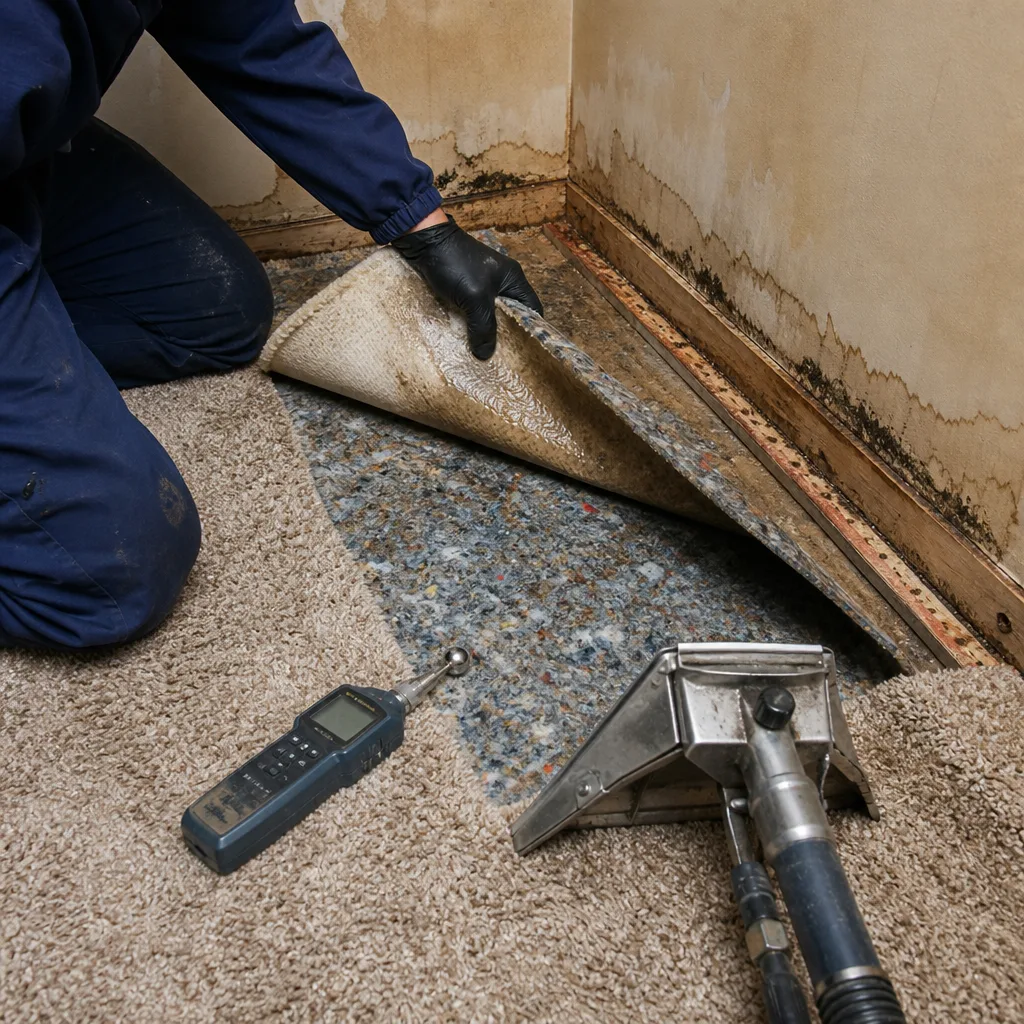
Once the standing sewage is gone, the real work begins. We apply professional-grade antimicrobials to every surface the Category 3 water touched, including wall cavities, subflooring, and the inside of adjacent closets and chases. HEPA air scrubbers run during the entire process to trap airborne bacteria and mold spores. In multi-unit buildings, we also sanitize shared hallways and stairwells that may have been contaminated during resident traffic.
Crawl Space Sewage Removal
West New York’s older low-rise buildings and the occasional single-family home often have tight crawl spaces where sewage lines run beneath the structure. A cracked waste line in a crawl space can go undetected for weeks, saturating the soil and floor joists above. We remove contaminated material, dry the space to standard, and treat the area so the building is safe to occupy.
What happens when you call
- 1
A real person answersNo phone trees - you reach a local pro.
- 2
You get an upfront price rangeHonest numbers before anyone is dispatched.
- 3
A background-checked tech heads outLicensed & insured, dispatched right away.
- 4
You approve before work beginsNothing starts until you say go.
Sewage Cleanup Costs in West New York, NJ
A straightforward toilet overflow cleanup in West New York, contained to one bathroom with no structural damage, typically runs $900 to $2,400. A sewage backup that affects multiple floors in a walk-up off Bergenline Avenue, requiring demolition of wet drywall, extraction, drying, and sanitization across two or three units, commonly lands between $4,000 and $12,000 per affected unit. Full crawl space sewage removal with excavation and structural drying runs $5,000 to $15,000 depending on the size of the space and the extent of saturation. In waterfront high-rises where building management, freight elevator access, and large-loss protocols are involved, total restoration costs frequently exceed $20,000. Most policies cover sudden and accidental sewage backup damage, subject to your specific coverage limits. The best way to get a firm number is a free visual inspection. We assess the actual scope, write it down, and agree on a figure before any work begins. Call (551) 373-5246 and one of our crews will be there the same visit.
We Also Serve Cities Near West New York
Floodline Restoration Co. responds to sewage cleanup calls throughout northern Hudson County and the surrounding area. In addition to West New York, our crews regularly serve Kearny, Harrison, North Arlington, and Lyndhurst, with the same 24/7 live dispatch and the same 90-Day Done Right Promise in writing.
Serving West New York, NJ - Our Local Coverage Area
We’re based in the West New York area and know this community well. Use the map below to see our service coverage - if you’re nearby, we can almost certainly help.
West New York Sewage Cleanup Questions, Answered
How do you handle sewage cleanup in a West New York walk-up when the backup affects multiple floors but only one tenant called?
We treat any backup in a multi-story building as a vertical stack problem first, not a single-unit problem. We locate the blockage and assess every unit above and below the affected line, because Category 3 water moves downward through chases, party walls, and ceiling cavities. We document each affected unit separately so the building owner and each tenant’s insurance carrier get their own loss file. Call (551) 373-5246 and our team will coordinate the full building response.
Can you restore my original hardwood floors after a sewage backup in a pre-WWII tenement off Bergenline Avenue?
In most cases, yes. Original hardwood from the 1920s and 1930s is often thicker and denser than modern flooring and can frequently be dried, sanded, and refinished rather than replaced. The key is speed: the faster we extract the sewage and begin drying, the better the chance the floor survives. We evaluate each floor board by board and give you a straight answer about what can be saved.
Will your sewage cleanup equipment fit through the narrow interior stairs and alley-load doors of older West New York apartment buildings?
Yes. We use portable extraction units, compact dehumidifiers, and modular air movers specifically because we work in old West New York walk-ups with narrow staircases, no freight elevators, and limited street parking. Our crews carry equipment by hand up five or six flights when needed, and we stage gear in stairwells without blocking resident access. The equipment is smaller than what big-box restoration franchises run, but inch for inch it moves more air and pulls more water.
How fast can you respond to a sewage backup in a waterfront high-rise on River Road?
We aim to have a crew on site within 45 minutes of your call, including high-rises along River Road. For tower buildings, we coordinate with the front desk, building management, and freight elevator operators as we roll, so there is no delay at the loading dock. Our dispatchers are live 24/7, and we keep crews staged to serve West New York specifically. Call (551) 373-5246 and we will start the process immediately.
Do I need to evacuate my unit during sewage cleanup in a densely populated West New York building?
Not always. If the affected area can be fully contained with plastic sheeting and negative air pressure, you can usually remain in the unaffected parts of your unit while we work. However, if the contamination is widespread, if the unit is small, or if you have respiratory conditions, we may recommend temporary relocation until the area is dry and sanitized. We give you a clear recommendation based on the actual scope, not a blanket answer.
Is sewage backup covered by my homeowners insurance in West New York?
Most standard homeowners and condo policies cover sudden and accidental sewage backup damage, but many have specific sub-limits for sewer and drain backup claims, often $5,000 to $25,000. Flood damage from rising river water or storm surge is generally excluded unless you carry separate flood coverage. We document everything from the first hour and work directly with your adjuster to maximize what your policy pays. Call (551) 373-5246 and we will help you understand your coverage.
How long does sewage cleanup and drying take in a West New York apartment?
Extraction and sanitization of the visible contamination typically happens within the first 24 to 48 hours. Structural drying can take three to five days depending on the depth of saturation, the building materials involved, and whether we are drying one unit or multiple affected floors. In older West New York buildings with masonry walls and lath and plaster, full drying can take longer because these materials hold moisture differently than modern drywall. We provide a written drying plan and daily moisture readings so you see the progress.
What should I do in the first 30 minutes after I notice sewage backing up in my West New York home?
First, stop using all water in the unit and, if possible, shut off the water supply to the affected fixture. Do not flush toilets or run sinks or washing machines. Move people and pets away from the affected area, and do not attempt to clean the sewage yourself. Turn off electricity to the affected rooms if the breaker is accessible and dry. Then call (551) 373-5246. The first 30 minutes determine how much of your home can be saved versus replaced.
Written by Curt Bowman, Owner at Floodline Restoration Co., serving Sewage Cleanup in West New York with 24/7 live dispatch and certified crews.