
Free visual inspection and a written scope of work before any mitigation begins - photos, moisture readings, and drying logs go in your claim file
The scope we write is the scope we bill. Anything new gets shown to you, in writing, before we touch it.
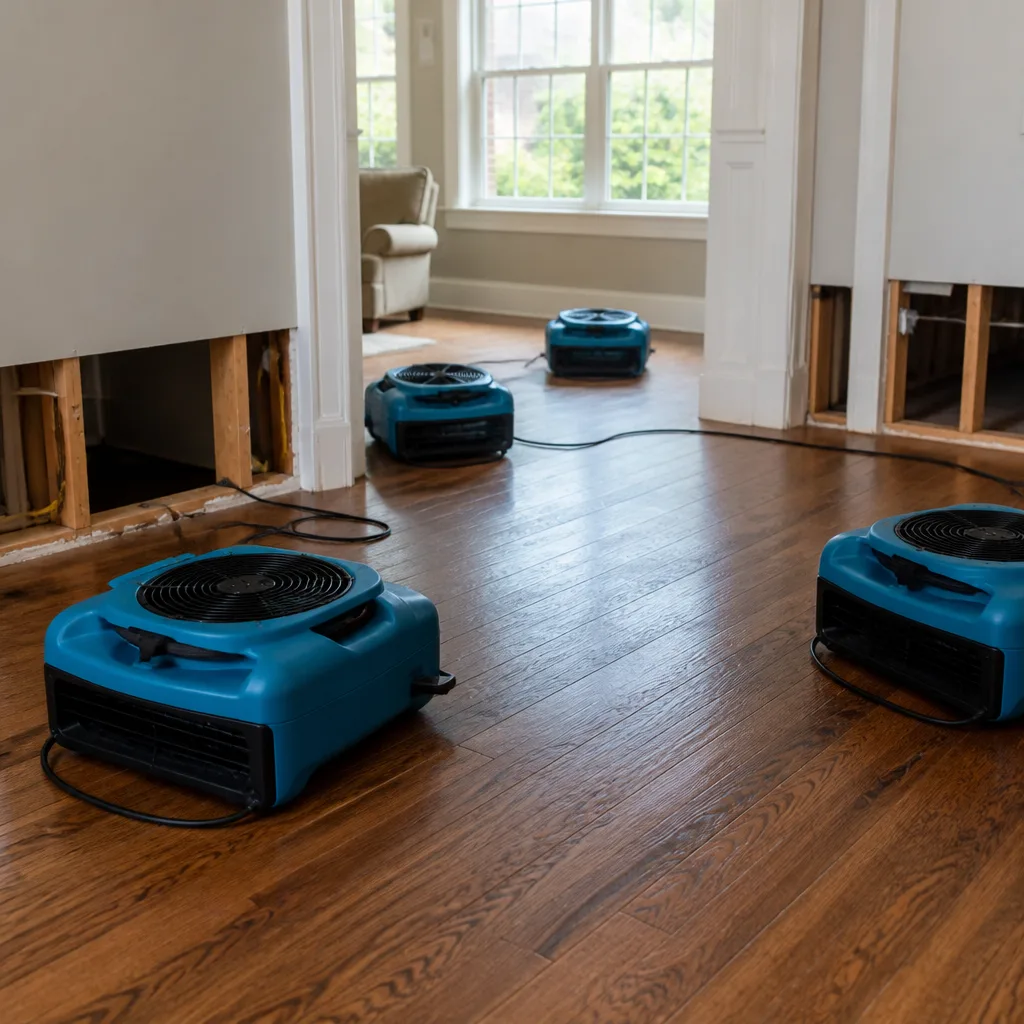
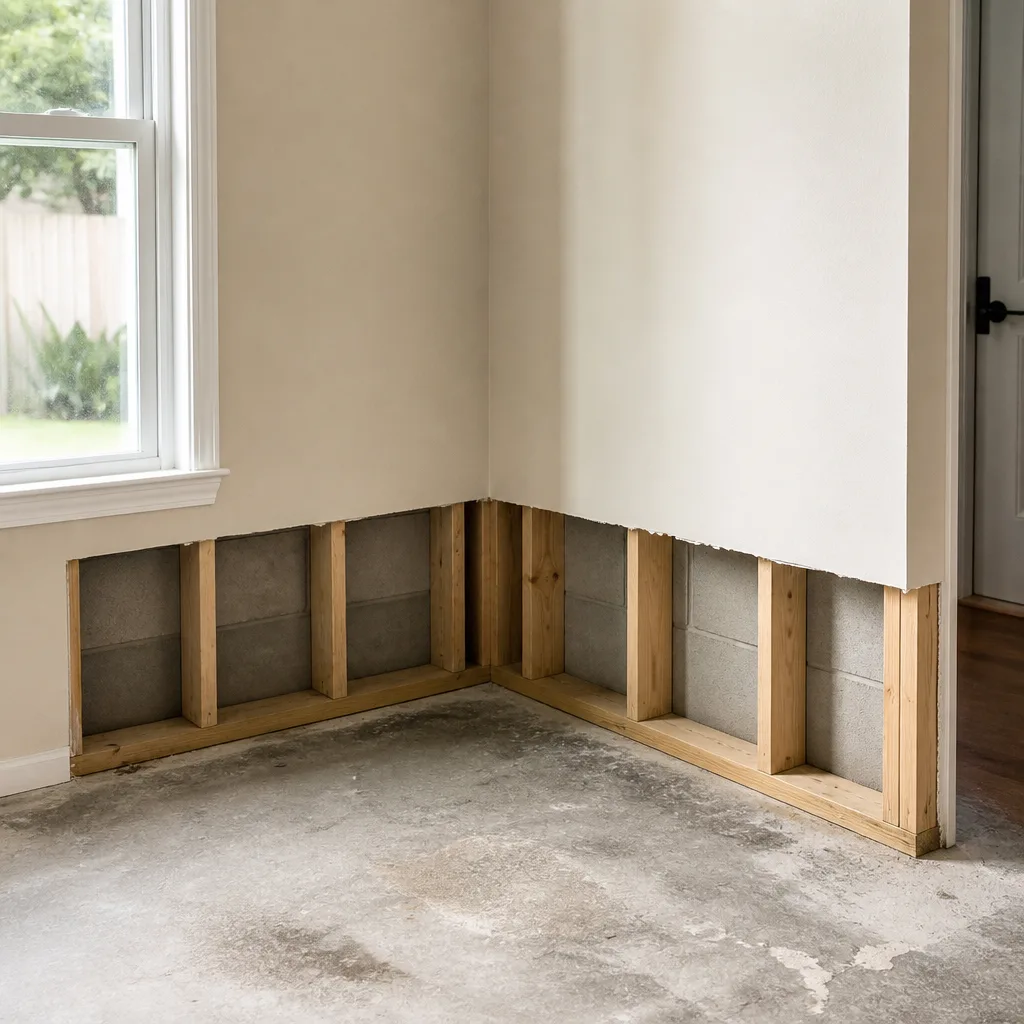
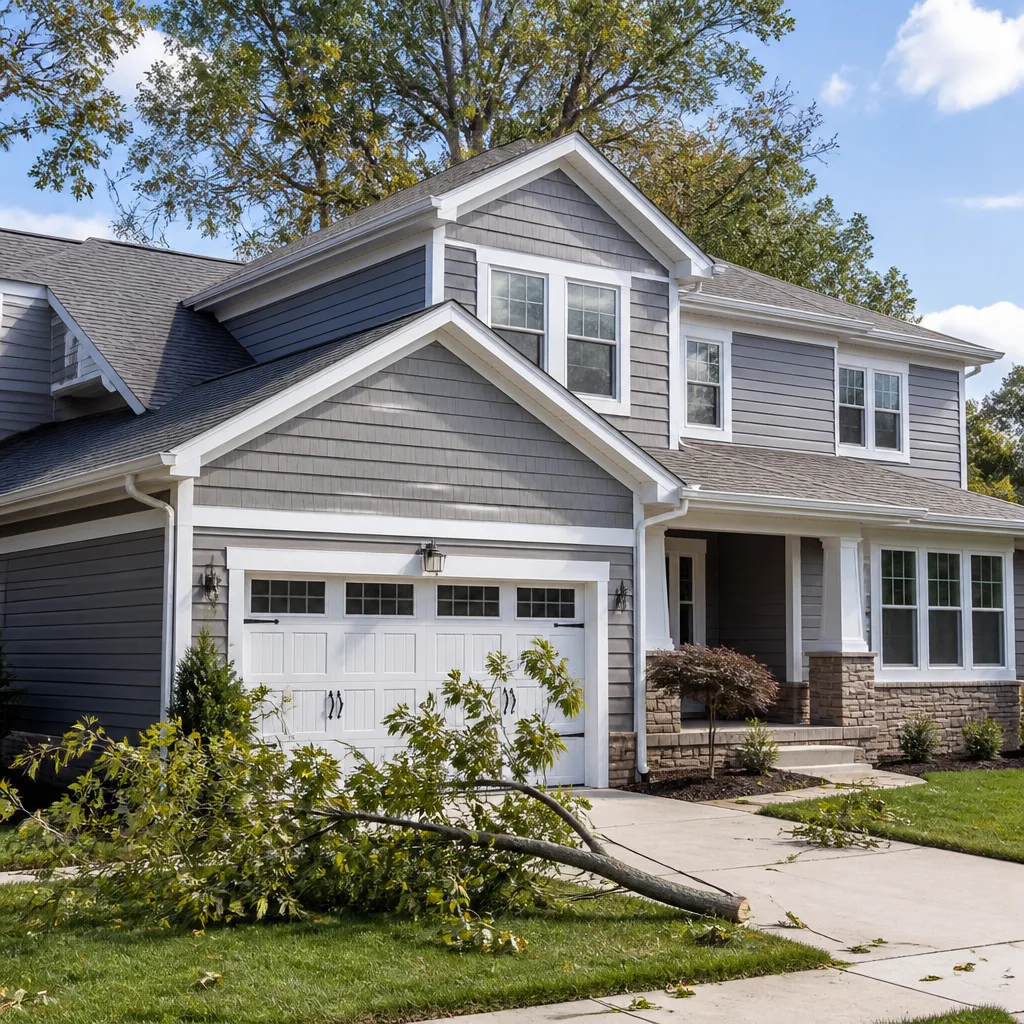
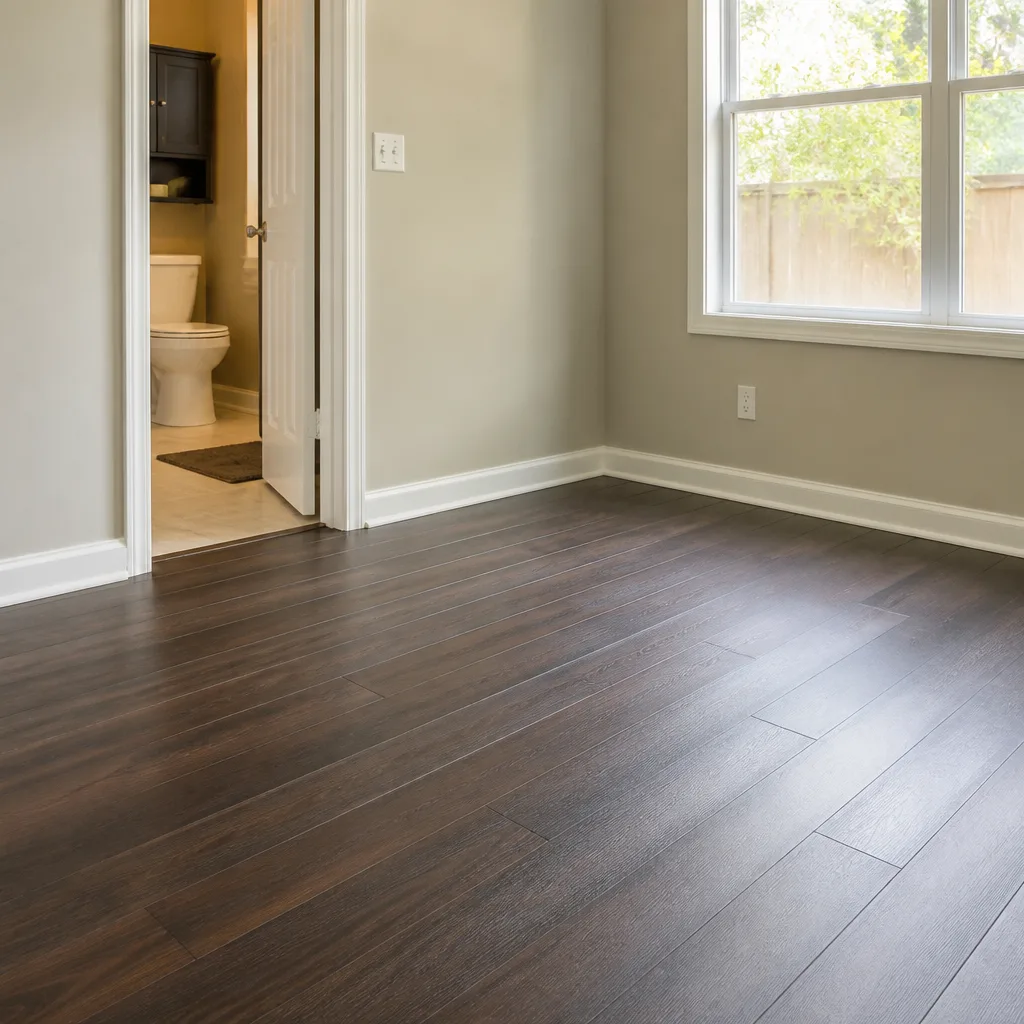
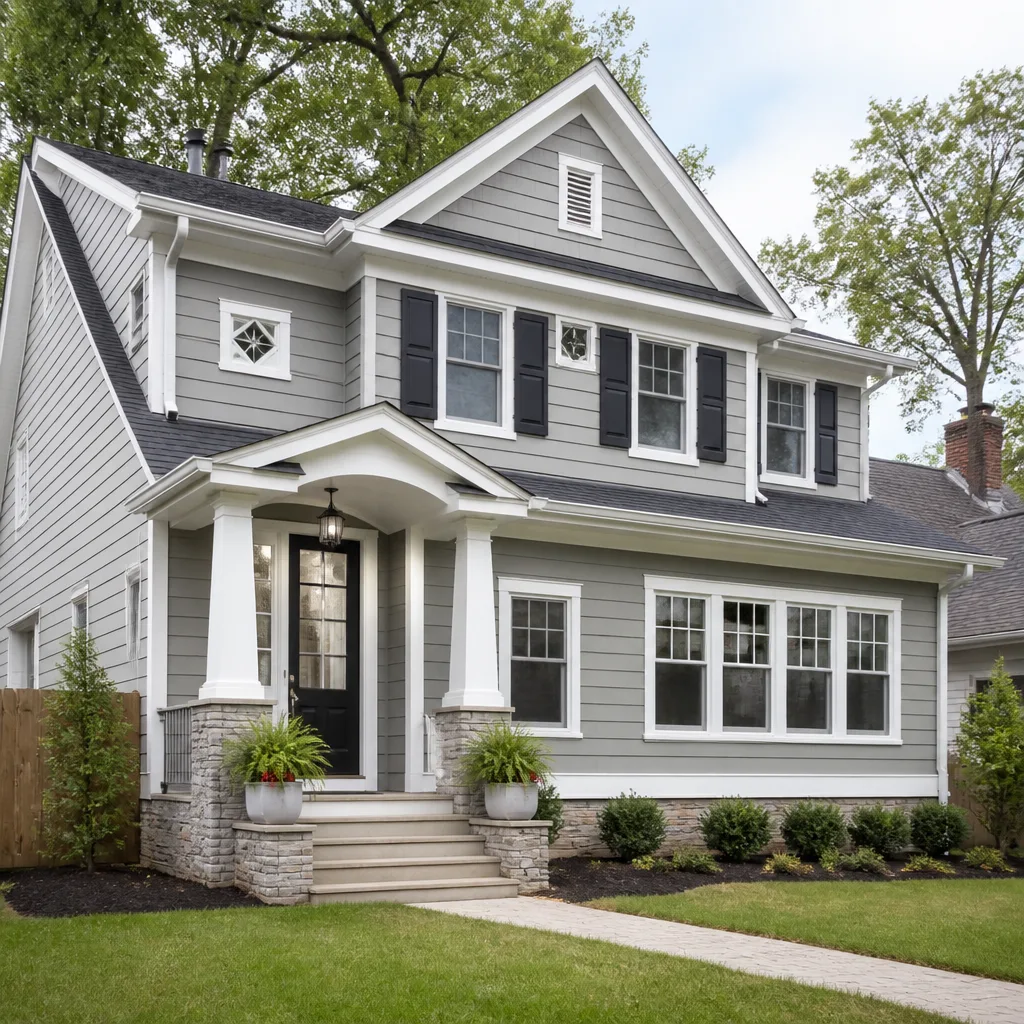
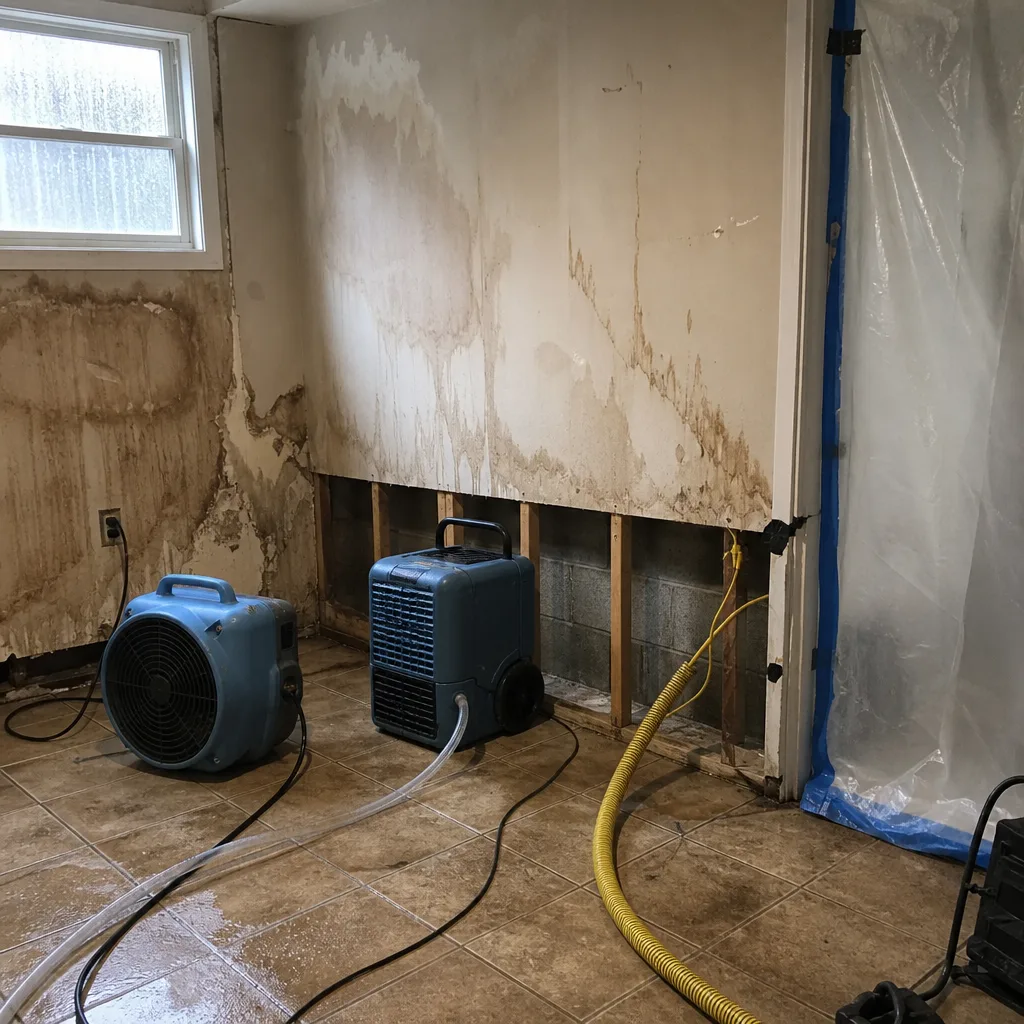 Before
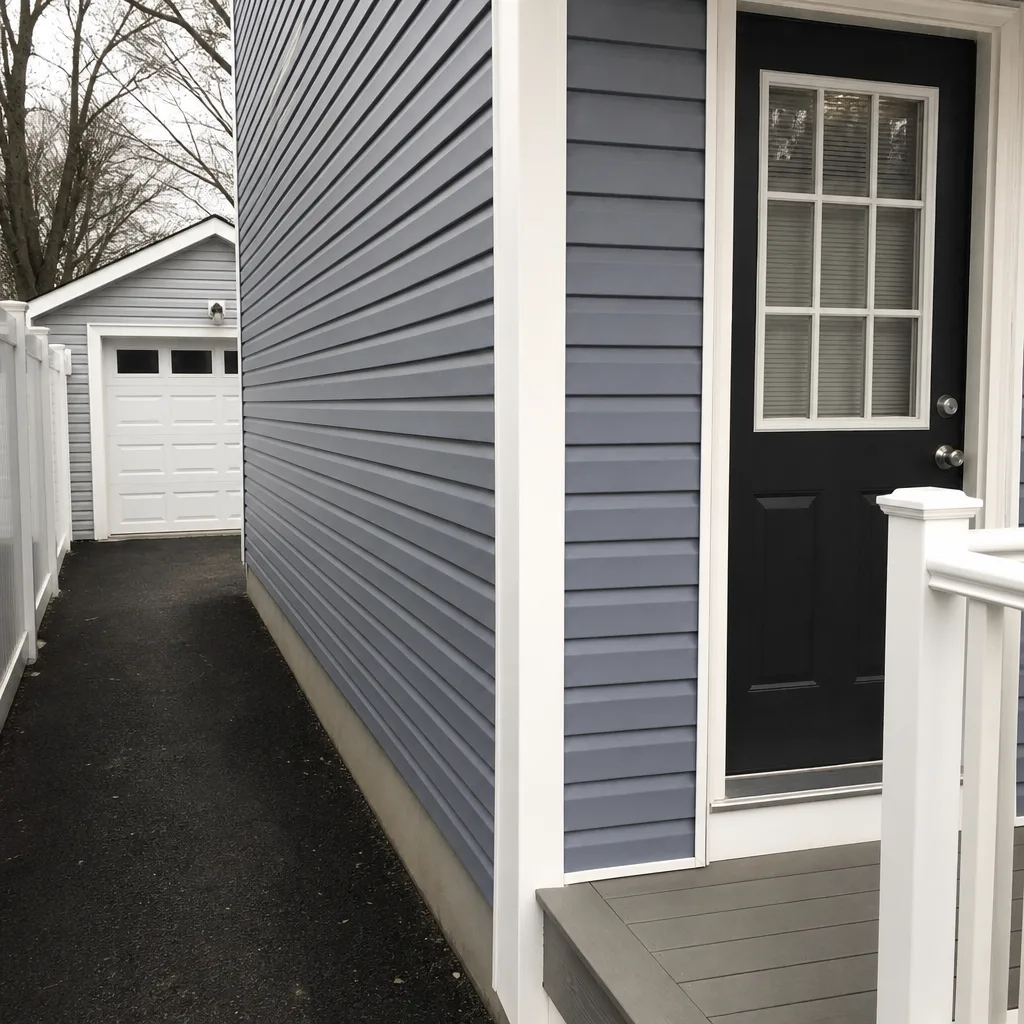 After
After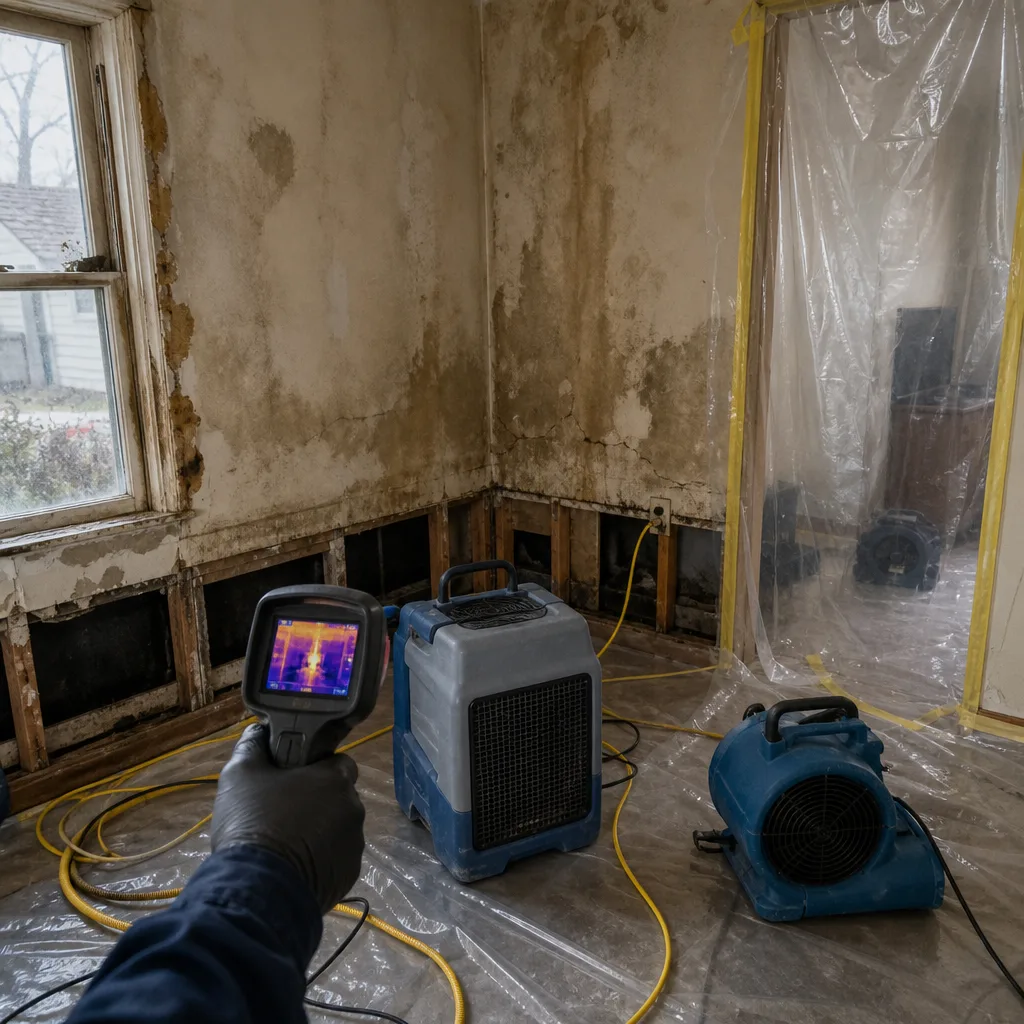 Before
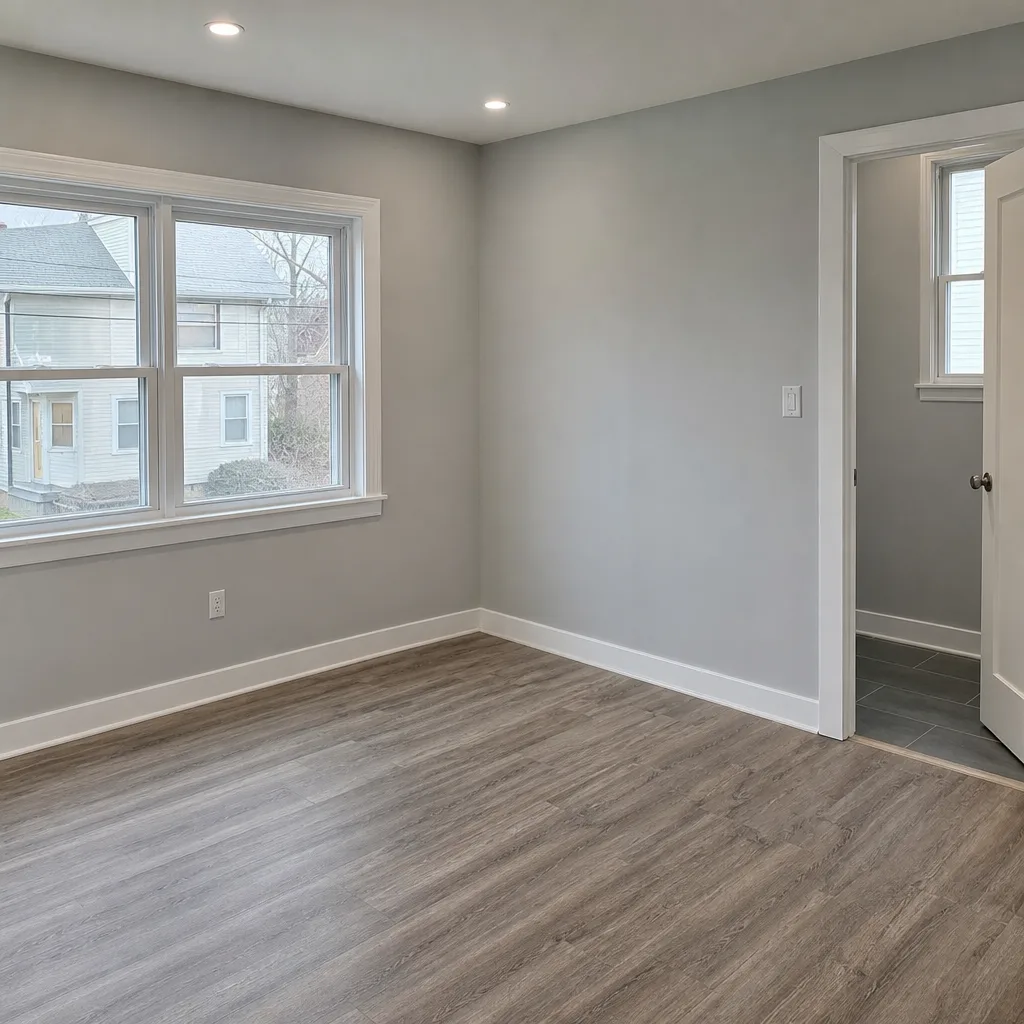 After
After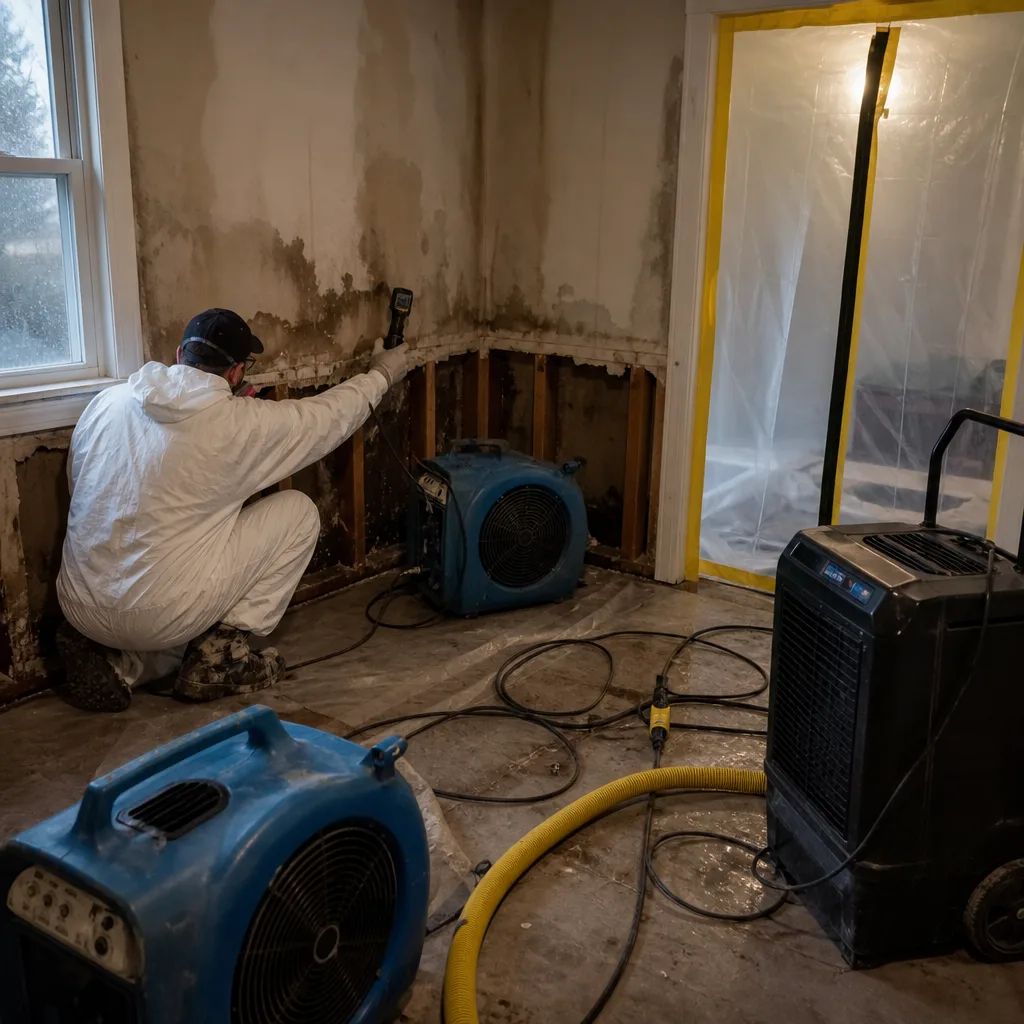 Before
 After
After24/7 Emergency Mold Remediation in West New York
Mold in a West New York apartment building doesn’t wait, and neither do we. A water leak above you, a sewage backup in the cast-iron stack, or storm surge from the Hudson can start mold growth within 48 hours. When that happens, you need a real person on the phone, not a recording. Floodline Restoration Co. answers live at (551) 373-5246 around the clock, every day of the year. Our crews are dispatched inside the West New York area with professional-grade Dri-Eaz and Phoenix equipment on the truck, so containment and drying start the same visit. The first hour after you notice a leak determines whether you’re dealing with a cleanup or a full-scale remediation across multiple floors. Call now and we’ll get a certified technician to your building for a free visual inspection, fast.
Understanding Mold Remediation Severity in West New York Properties
West New York’s housing stock creates mold problems that flat-out don’t exist in suburban single-family homes. The town is one of the most densely populated municipalities in the United States, packed with pre-WWII brick tenements and early 20th century walk-ups along the Palisades. In these buildings, original cast-iron and galvanized plumbing runs through shared walls and between floors. When a pipe lets go on the fourth floor, water travels down through the building’s bones. By the time the ground-floor tenant sees a stain, mold may already be established in wall cavities on three separate levels. Severity matters. Minor surface mold on non-porous surfaces is a cleaning job. Mold that has penetrated lath-and-plaster, original wood floor cavities, or the shared masonry between units requires full containment, air scrubbing with HEPA filtration, and clearance testing after the work is done. We assess the entire vertical column above any reported leak, not just the unit where the call originated. That’s the only way to make sure the job is done once and done right.
Why West New York Property Owners Choose Floodline Restoration Co.
- A 45-minute response commitment to West New York addresses. Our dispatcher has a live map of crew locations, and they route the nearest certified team to your building when you call.
- A real person answers, 24/7. At 2 a.m. on a Tuesday, you’ll talk to a live dispatcher who can send a crew immediately. No phone trees, no callbacks.
- IICRC-certified technicians. Our crews hold WRT (Water Damage Restoration Technician) and AMRT (Applied Microbial Remediation Technician) certifications, trained to the standards that matter for your building’s age and construction.
- A free visual inspection with no obligation. We walk the affected area, explain what we see in plain language, and give you a written scope of work so you know exactly what you’re facing.
- Direct insurance billing. We document everything from the first hour and communicate directly with your adjuster. You don’t play messenger between us and your carrier.
- One team from the first extraction to the finished rebuild. No mid-job handoff to a subcontractor you’ve never met. The same Floodline Restoration Co. crew that sets containment handles the restoration and any reconstruction, backed by the 90-Day Done Right Promise in writing.
Our Mold Remediation Process
Inspection & Assessment
We start with a full visual and moisture inspection of the affected unit and adjacent apartments above and below. In West New York’s older walk-ups, we check the full vertical column of the building because water migrates through shared stacks and party walls. Thermal imaging and moisture meters map the true extent of the water event before any work begins.
Containment & Stabilization
We set up physical containment with negative air pressure and HEPA air scrubbers to stop spores from spreading to occupied units. In buildings where residents live above and below the affected area, this step protects everyone. We also stop the source of the moisture, whether it’s a leak, seepage, or condensation.
Drying & Dehumidification
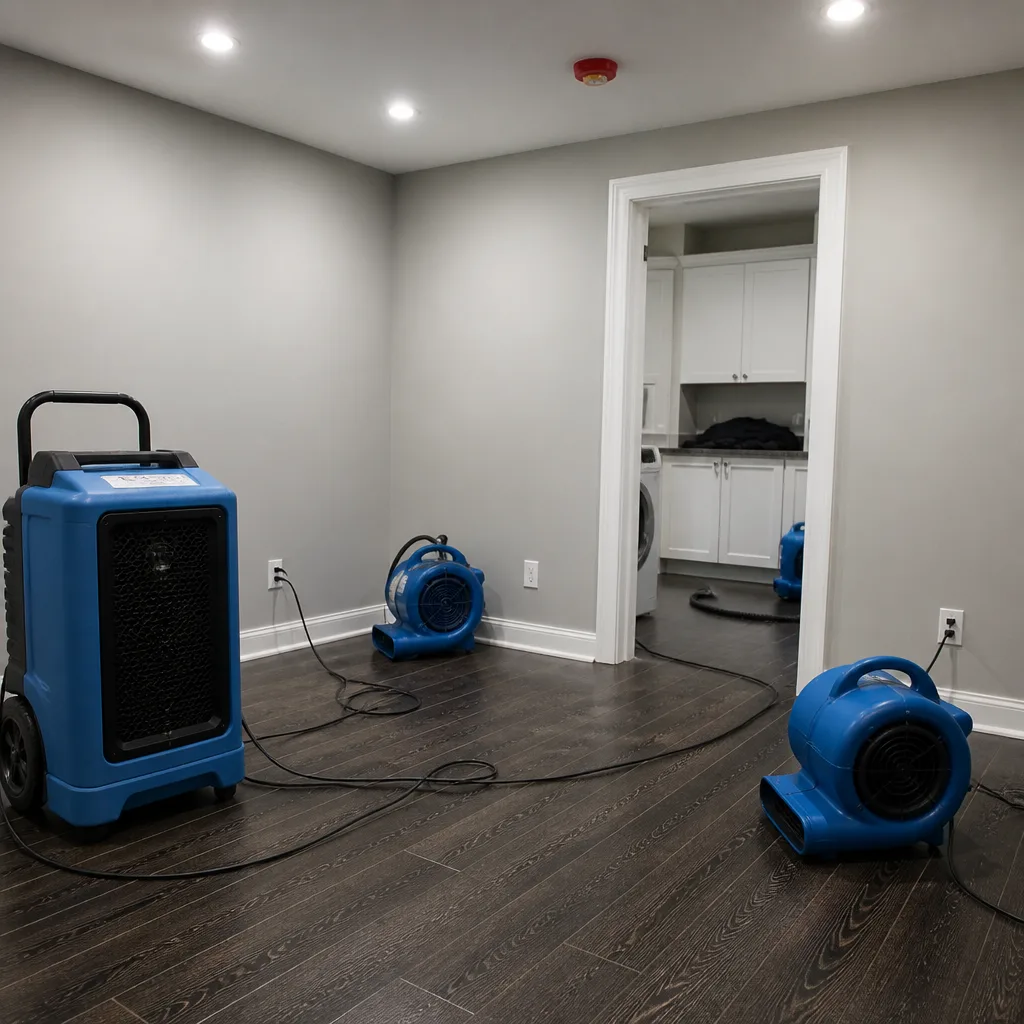
Near the Hudson River, ambient humidity runs high, so drying takes real equipment and daily readings. We run Injectidry structural drying systems for cavities and Dri-Eaz dehumidifiers in open spaces, with moisture logs updated every day until the dry standard is met and documented.
Cleaning & Sanitization
We physically remove mold from affected surfaces using professional antimicrobial treatments and HEPA vacuuming. In pre-war units with original lath-and-plaster, this means careful handling of surfaces that can’t simply be cut out and replaced without disturbing the building’s character.
Air Quality Restoration
After cleaning, we run air scrubbers and HEPA filtration to bring airborne spore counts back to normal background levels. For West New York apartment buildings with connected floor cavities, this step is essential. We perform post-remediation verification to confirm the air is clean before we clear containment.
Repairs & Restoration
Once the mold is gone, we handle the rebuild: drywall, plaster, paint, flooring, and any structural repairs. The same crew that dealt with the mold finishes the job, so you’re not left coordinating with a second contractor. Every step is backed by the 90-Day Done Right Promise, given to you in writing.
Need Emergency Mold Remediation in West New York Now?
Crews minutes away, answering live 24 hours a day. The sooner we start, the less it costs.
Working With Your Insurance Company
Mold claims in West New York apartment buildings can get complicated. The water event is covered, the mold remediation is covered, but the carrier needs documentation that’s airtight from day one. Floodline Restoration Co. handles that for you. We photograph every square foot, log moisture readings with dated records, and prepare a line-item scope of work that speaks the carrier’s language. Our team coordinates directly with your adjuster, so you’re not stuck relaying messages. If you’ve been burned by a contractor before, this is different. We give you a square deal and handle the paperwork with the same care we bring to the physical cleanup.
What We Provide Your Insurer
- Thorough documentation of the loss
- Photos of all damage, room by room
- Moisture readings and drying logs
- A detailed, line-item scope of work
- Direct coordination with your carrier
Built for West New York’s Loss Calendar
West New York has a mold season that starts earlier and lasts longer than towns inland. The town’s direct Hudson River frontage means ground-floor and basement units in those lower-elevation blocks near the waterfront stay damp through nor’easters and high-tide events. The older blocks up on the Palisades escarpment deal with something else entirely: freeze-thaw cycles each winter that crack flat roof membranes and parapet copings. That’s why we get a flood of ceiling water-intrusion calls every March and April, when the ice lets go and water finds every crack. Summer brings thunderstorm flash flooding that overwhelms old storm drains along Kennedy Boulevard and 60th Street. Year-round, the original cast-iron soil stacks in buildings around Bergenline Avenue corrode and crack, sending slow leaks through multiple floors. We know this calendar because we work it every year, and our crews are staged to respond to West New York addresses within 45 minutes when your call comes in.
Mold Remediation Across West New York’s Neighborhoods
The building you live in shapes the mold problem you’ll have, and West New York’s neighborhoods each have their own patterns. In the blocks around Bergenline Avenue, the pre-war walk-ups from the 1920s and 1930s share masonry party walls and run cast-iron stacks vertically through five and six floors. That’s where we see the worst sewage-related mold, because a backup on one floor goes everywhere. Down by the waterfront near Port Imperial Boulevard, the post-2000s high-rise towers have complex mechanical and HVAC systems. A condensation leak from a chiller or a failed pump can push humid air into dozens of units, and mold spreads through shared ductwork before anyone smells it. The area around Hudson Avenue and 60th Street, with its mix of older brick buildings and newer infill, catches both the escarpment seepage problems and the street-flooding issues that come off the Palisades. And near Miller Stadium, where many buildings have below-grade units, groundwater seepage through old fieldstone or brick foundations is a slow, steady source of ambient moisture that feeds mold in basements and crawl spaces. When our Mold Remediation team works in West New York, we know the building type and the block before we arrive.
Specialized Mold Remediation Services We Offer in West New York
Mold Inspection & Testing
In West New York’s stacked buildings, a mold inspection means more than checking one room. We test the affected unit, the units above and below if there’s a shared stack, and the common areas if a hallway or stairwell is involved. For buildings with original lath-and-plaster walls, we use moisture mapping to find hidden pockets of damp inside wall cavities where surface tests miss the problem. You get a written report with our findings and a clear recommendation, so you know exactly what you’re dealing with before any dollars are spent.
Mold Removal
We remove mold physically, not just cosmetically. That means full containment with negative air pressure, HEPA vacuuming, and antimicrobial treatment on every affected surface. In West New York’s dense apartment buildings, containment setup is the hardest and most important part of the job, because you can’t just open a window and let spores blow across the Palisades breeze into a neighboring unit. Our crews have done this in occupied buildings where families stayed in their apartments above and below the work area, and we handle it with the care that situation demands.
Black Mold Remediation
Black mold (Stachybotrys) gets attention because it’s the one people fear by name, and in West New York’s humid riverfront environment, it takes hold in chronically damp materials. We treat it with the same protocol as any other significant mold species: source removal, containment, drying, cleaning, and verification. The difference is that we’re particularly aggressive about finding the moisture source, because near the Hudson, black mold rebounds within days if the dampness isn’t fully eliminated.
Air Quality Restoration
After a mold event in a West New York building, the air holds what the water left behind. We run professional HEPA air scrubbers and negative air machines through the entire structure or the affected area, not just the single room you can see damage in. In buildings where original wood-framed floor cavities connect one unit to the next, air quality testing before and after remediation is the only way to prove the job is complete. Our post-remediation verification gives you that proof on paper.
Crawl Space Treatment
Many of the older brick buildings in West New York have shallow crawl spaces or small sub-floor areas that hold moisture against floor joists for years. In the humid air near the Hudson, that’s a mold incubator. We treat these spaces with a combination of moisture control, source removal, and antimicrobial application, and we’ll recommend the right long-term fix for your building’s foundation type so the problem doesn’t return.
What happens when you call
- 1
A real person answersNo phone trees - you reach a local pro.
- 2
You get an upfront price rangeHonest numbers before anyone is dispatched.
- 3
A background-checked tech heads outLicensed & insured, dispatched right away.
- 4
You approve before work beginsNothing starts until you say go.
Mold Remediation Costs in West New York, NJ
Mold remediation in West New York typically runs between $1,500 and $6,000 for a contained event in one or two rooms of a standard apartment. A multi-floor remediation involving a shared waste stack or party wall, which is common in the pre-war walk-ups around Bergenline Avenue, usually falls between $8,000 and $25,000, depending on how many floors and units are affected. A simple wall cleaning with HEPA vacuuming in a single closet might run $800 to $1,500. Waterfront high-rise HVAC mold events can exceed $30,000 when ductwork and mechanical rooms are involved. What moves the price: the number of floors affected, whether lath-and-plaster walls require restoration instead of replacement, and the length of drying time needed in Hudson River humidity. Most of our clients in West New York have the work covered by insurance, because the mold is tied to a documented water event, which is why our documentation process from the first hour matters so much. The fastest way to get a firm number is a free visual inspection. Call (551) 373-5246 and our technician will walk your building with you and give you a written scope with real prices, not a vague range.
We Also Serve Cities Near West New York
If you own property in Kearny, Harrison, North Arlington, or Lyndhurst, you’re dealing with the same pre-war housing stock and Hudson-adjacent humidity, and we serve those towns with the same 45-minute response commitment. The same crews that know West New York buildings inside and out cover these nearby communities too, so you get the benefit of our experience with dense, older construction no matter where your property sits.
West New York Mold Remediation Questions, Answered
Why does mold remediation in West New York often require access to multiple apartments?
In West New York’s pre-war tenements, water and mold travel vertically through shared cast-iron stacks and horizontally through party walls. A leak on the fifth floor saturates the ceiling of the fourth, the wall cavity of the third, and the floor joists of the second. If we only remediate the unit where the leak was first reported, mold remains alive and spreading in the units above and below. That’s why our technicians assess the full vertical column of any affected building before starting work, and we’ll coordinate with your building manager or neighbors to get the access we need.
How quickly should I respond to a water leak in a West New York apartment building to prevent mold?
Within 24 hours, and ideally within the first few hours. Mold begins to establish on wet building materials in 24 to 48 hours, and near the Hudson River, the consistently high humidity accelerates the timeline. In older buildings with original lath-and-plaster walls, the paper backed plaster and wood lath provide a perfect food source. If you see a stain, smell a musty odor, or notice peeling paint or bubbling plaster, call (551) 373-5246 immediately. A same-visit response can stop a small leak from turning into a three-floor remediation.
Do West New York buildings with original lath-and-plaster walls need different mold testing than modern drywall units?
They do. Lath-and-plaster walls hold moisture differently than modern drywall. The plaster itself is porous, and the wood lath behind it soaks up water and keeps it against the framing for weeks. Surface testing alone won’t reveal mold that’s growing behind the plaster, inside the wall cavity. That’s why our inspection protocol for pre-war West New York buildings includes moisture mapping with thermal imaging and hygrometers, plus cavity sampling where conditions warrant. Drywall buildings reveal their moisture much more readily, so the testing approach is different and often faster.
What makes the Hudson River waterfront complex different from older inland buildings when it comes to mold?
The new high-rise towers along the waterfront near Port Imperial have complex HVAC and mechanical systems that move air through dozens of units. Mold from a condensation leak, a failed pump, or a humidified common area spreads through shared ductwork before anyone sees visible growth. In contrast, the older inland buildings spread mold through structure and plumbing, not air handling. The remediation approach for waterfront towers involves containment at the mechanical room level, duct cleaning and HEPA air scrubbing for affected air paths, and coordination with building engineering to correct the moisture source so the problem doesn’t independently return.
Can you handle mold caused by a sewage backup in a pre-war building with cast-iron stacks?
Yes, and this is work we know deeply. Cast-iron soil stacks in West New York’s 1920s and 1930s buildings have no cleanouts and have been corroding for close to a century. A single backup saturates walls and ceilings on three or four floors. We contain each affected floor, use Injectidry structural drying to pull moisture from the wall cavities, and run Dri-Eaz dehumidifiers until moisture readings return to pre-loss levels. Then we physically remove the affected materials, sanitize, and verify with post-remediation testing. We’ve done this exact job in buildings along Bergenline Avenue, and we document every step for your insurance carrier.
How long does mold remediation take in a West New York apartment building?
A contained single-unit job typically takes three to five days. A multi-floor event involving a shared waste stack or party walls, which is common in the older buildings around Bergenline Avenue, usually runs seven to fourteen days from first containment to post-remediation clearance. Drying time in the Hudson River humidity can extend the schedule if the moisture has been present for a long time. Our crew gives you a realistic timeline during the free inspection, and we update you daily with moisture readings until the job is done.
Can I stay in my apartment during mold remediation?
It depends on the severity and the location of the affected area. For small contained jobs in one room, residents typically stay. For larger jobs where containment runs through a living space or where a shared corridor is affected, you may need to relocate temporarily, especially if you have respiratory sensitivities. Our technicians will give you a straight answer during the assessment, not a vague maybe. We’ll also work with your insurance carrier, because temporary relocation coverage is often included in mold claims when the affected area makes the unit uninhabitable.
What should I do in the first 30 minutes after I discover a mold problem in my West New York apartment?
Don’t disturb the mold or try to scrub it yourself: agitating spores spreads them through the air and into other rooms. Turn off any fans or HVAC systems that could circulate contaminated air. If there’s an active leak, shut off the water at the source if you can safely reach it. Move furniture and belongings away from the affected area if possible. Then call (551) 373-5246 and describe what you see. Our dispatcher will ask you a few questions and route the nearest certified crew to your building. The first 30 minutes of calm, correct action can keep a small problem small.
Serving West New York, NJ - Our Local Coverage Area
We’re based in the West New York area and know this community well. Use the map below to see our service coverage - if you’re nearby, we can almost certainly help.
Call Floodline Restoration Co. for Mold Remediation in West New York
When mold is moving through your walls and you need someone who knows West New York’s buildings, call (551) 373-5246. A live dispatcher answers around the clock, and a certified crew can be at your address within 45 minutes. We give you a free visual inspection, a written scope of work, and direct insurance billing, so you get the job done right the first time, backed by the 90-Day Done Right Promise in writing. That’s the Keystone Standard, and it’s how Curt Bowman has built Floodline Restoration Co. since 2010: Krafted right, Every time, Your home first, Standing behind it.
Written by Curt Bowman, Owner at Floodline Restoration Co., serving West New York and the surrounding Hudson County communities.